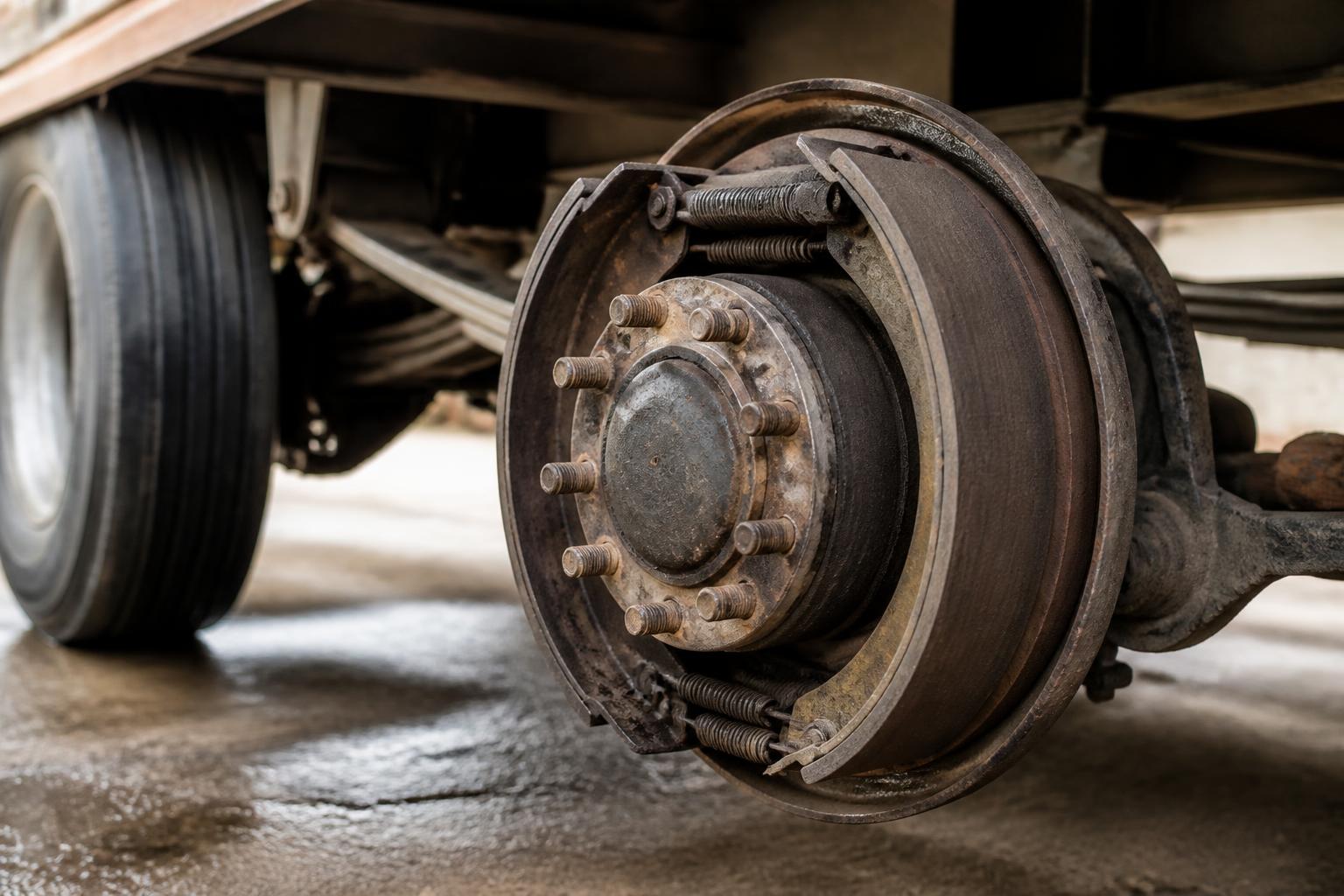
If you are asking whether a trailer can fail MOT on brakes, the short answer is yes. Brake defects are one of the most common reasons a trailer does not pass annual test, and they range from obvious faults such as poor brake effort or a seized brake, through to imbalance, air leaks, worn components, and electronic braking system issues.
For operators, this matters because brake faults rarely stay as paperwork problems. They affect stopping performance, tyre wear, heat build-up, roadworthiness and uptime. Whether you run a single trailer or a mixed fleet moving through Suffolk, Ipswich, Felixstowe, Stowmarket, Bury St Edmunds, Newmarket and Elmswell, it is worth treating any brake concern as a test issue and a safety issue at the same time.
Yes, brake defects can fail a trailer at MOT
A trailer can absolutely fail MOT on brakes if the braking system does not meet the required condition or performance standard at test. In UK goods vehicle testing, trailers are assessed on both the physical condition of brake components and the actual braking performance achieved during the test.
That includes trailers with conventional service brakes, parking brakes where fitted, and electronic control systems such as ABS and EBS. The exact layout varies by trailer type and age, but the principle is the same. If the trailer cannot brake properly, cannot brake evenly, or has defects that make the system unsafe or non-compliant, it can fail.
Typical brake-related fail points include:
- insufficient service brake performance
- significant brake imbalance across an axle
- a wheel not braking, or braking too aggressively
- air leaks affecting brake operation
- damaged or insecure brake chambers, pipes or hoses
- worn or contaminated linings or pads
- cracked, scored or excessively worn drums or discs
- maladjustment, seized adjusters or poor stroke settings
- parking brake defects, where applicable
- ABS warning faults
- EBS faults where fitted
- missing, damaged or insecure wiring to brake control systems
On many modern trailers, brake electronics matter as much as the mechanical parts. A trailer may have sound linings and chambers, but if the ABS warning system is not functioning correctly, or the EBS has a recorded fault affecting brake control, that can still become a test issue.
There is also a practical difference between trailer categories and ages. Some older trailers have simpler systems and fewer electronic checks. Newer trailers, particularly those working trunk routes and container work around Felixstowe and the A14, are more likely to have EBS, sensor wiring, modulator valves and warning system dependencies that need proper diagnosis, not guesswork.
Where rules differ between the UK and the EU generally, the annual roadworthiness framework is similar in broad safety terms, but the test procedures, defect categorisation and administration you deal with in day to day operation are the UK MOT system for goods trailers. For operators here in Suffolk, what matters is whether the trailer meets UK test requirements on the day.
What brake problems are most likely to be found
In workshop reality, the brake faults that cause trouble are usually not exotic. They are wear, sticking, leakage, contamination, poor adjustment, and faults that have been left until the trailer is due test.
Poor brake performance is one of the biggest ones. That might mean the trailer simply does not generate enough braking force overall, or it reaches the required figures on one axle but not another. Common causes include worn linings, glazed friction surfaces, seized components, weak chambers, poor adjustment, or a system that is not applying correctly under load simulation.
Brake imbalance is another regular issue. One side of an axle can brake harder than the other, or one axle can contribute much less than the rest. Operators often notice this late, because a trailer can still feel usable while dragging slightly, pulling under braking, or wearing tyres unevenly. At test, imbalance is much easier to expose.
Worn components are routine findings. That includes:
- brake pads or linings near or below limit
- scored or heat-damaged discs and drums
- worn camshafts, bushes or rollers
- cracked return springs
- sticking calipers
- seized or over-stroking brake actuators
- slack adjusters not taking up correctly
Air leaks are also very common on trailers. A small leak at a hose, coupling, valve, chamber or pipe union might not stop the trailer moving, but it can still affect response times, reserve pressure and brake consistency. If the leak is serious enough, it becomes a direct roadworthiness and MOT problem.
Then there are warning system faults. ABS faults are frequently ignored too long because the trailer still appears to brake. But ABS is part of the braking system, and a warning lamp issue, sensor fault, damaged exciter ring, broken cable or modulator problem can all lead to defects being recorded. If you are already seeing intermittent warnings, it is worth reading our guide to roadside checks or workshop testing for trailer ABS faults.
With EBS trailers, faults can be less obvious from the driver’s seat. You may have stored fault codes, a communication issue, degraded control mode, or a sensor fault affecting how the trailer meters braking. That is why proper diagnostics matter. Swapping obvious parts without checking the system usually costs more time in the end.
Binding brakes are another repeat offender, especially after periods of standing, seasonal corrosion, or heavy route work with repeated heat cycles. A binding brake can show up as overheating, smell, smoke, rapid lining wear, blueing on the drum or disc, and poor roller results at test. If that is what you are dealing with on the road, our article on what to check first with trailer brakes binding on the A14 sets out the usual first steps.
How brake performance is checked during test
At MOT, trailer brakes are not judged by appearance alone. The test combines condition checks with measured performance checks.
The first part is visual and physical inspection. The tester is looking for the condition, security and operation of brake components. That can include brake hoses, pipes, couplings, chambers, load sensing equipment where fitted, calipers, drums, discs, mountings, wiring to ABS or EBS components, and signs of leakage, damage, corrosion, fouling or insecure installation.
Obvious signs of trouble can be enough to fail a trailer before performance testing is even considered. For example, a damaged brake chamber, a seriously chafed air line, or a disconnected ABS cable is not something that gets waved through because the trailer still rolls.
The next key stage is brake performance testing, usually on a roller brake tester. This measures the braking force produced at each wheel position and allows the tester to assess overall service brake performance and imbalance. In simple terms, the test shows whether the trailer can generate enough braking effort and whether it does so evenly.
On a good result, you should see stable, progressive braking effort across the axle set, without one side lagging badly behind or spiking unpredictably. On a poor result, the machine may show weak effort, imbalance, grabbing, fluctuation or no meaningful output from one wheel.
If there is a park brake function to be tested, that is assessed as well. The exact method depends on the trailer type and system fitted.
Electronic systems may also come into the picture. ABS faults can be picked up through warning lamp behaviour, obvious component defects, or system checks during the test process. EBS equipped trailers may present faults via warning indications, communication issues or operational symptoms that point to a braking system defect. Not every electronic issue produces the same test outcome, but if the fault affects required braking system function or compliance, it can certainly become a fail.
This is one reason we recommend proper pre-test assessment rather than relying on a quick look round the trailer. A visual walkaround is useful, but it will not tell you how the brake forces will read under test. A workshop brake test gives you much better information before the MOT slot. Where a trailer is due in soon, we can carry out pre-test trailer inspections and brake checks from our site at Bridge Farm, near A14 J47 in Woolpit.
What happens if the trailer fails on brakes?
If a trailer fails MOT on brakes, it has not met the required standard for annual test and it will need the recorded defects rectified before it can pass. The immediate practical effect is downtime, and for most operators the real question becomes how quickly the defect list can be turned into a repair plan.
Whether the trailer can still be used after a failure depends on the nature of the defects and its actual roadworthiness. A failed test is not the same thing as a repair estimate. If the brake faults make the trailer unroadworthy, it should not go back into service until repaired. In many brake failure cases, that is the sensible position anyway, regardless of scheduling pressure.
The next step is to review the defect items properly. Not all brake failures are equal. One trailer may need adjustment, a chamber, and an ABS sensor repair. Another may need discs or drums, friction material, caliper work, air leak rectification, and a full retest plan. The important thing is to separate what is actually defective from what is only suspected.
That is where clear workshop triage saves time. We normally start with the fail sheet, inspect the trailer against the listed items, confirm the root causes, then prioritise parts and labour around what affects the retest outcome first. If the trailer came in from the road with a heat issue, poor braking or a warning fault before test, we also check for related defects that may not have been obvious from the original symptom.
For fleets, a brake-related failure can also trigger wider checks across similar trailers. If one unit has worn chambers, sticking calipers or repeat ABS cable damage, sister trailers on the same work may be heading the same way. It is often more efficient to catch that early than wait for a run of failures.
If you are already dealing with a failed annual test, our guide on what to fix first after a failed HGV MOT gives a practical way to sort urgent defects from secondary items.
How to reduce the risk of a brake failure before test
The best way to reduce the risk of brake failure at MOT is to stop treating the annual test as the first proper brake inspection of the year. Most trailer brake failures have a lead-up. The signs are usually there in heat, wear, pull, noise, warning lights, tyre scrub, air loss or poor previous inspection notes.
Start with regular inspection intervals that reflect the work the trailer does. A trailer running hard between Felixstowe, Ipswich, Stowmarket and the wider Suffolk network wants a different level of attention from one doing lighter local mileage. The answer is not a generic calendar reminder. It is an inspection schedule that matches use.
Before test, we recommend:
- a full brake inspection, not just a walkaround
- checking brake wear levels and friction material condition
- inspecting discs or drums for scoring, cracking and heat damage
- checking caliper or shoe operation and adjuster movement
- checking actuator stroke and chamber condition
- listening for and locating air leaks
- inspecting hoses, pipes and suzies for damage and chafing
- checking ABS and EBS wiring, plugs and warning behaviour
- carrying out a roller brake test before the MOT date
- planning repairs early enough to get parts without rushing
Defect reporting matters as well. Drivers and shunters should be flagging brake drag, hot wheels, warning lights, poor response, or unusual noises as soon as they appear. Too many brake failures start as a minor note that gets deferred because the trailer is still covering work.
A pre-MOT roller brake test is especially useful because it changes the conversation from guesswork to numbers. If one axle is weak or one side is out of line, you can deal with it before the official test slot. That is cheaper than losing the test, rearranging the trailer, and then repairing under time pressure.
For owner-drivers and smaller operators, the key is not overcomplicating it. If the trailer has any of the classic warning signs, get it checked before the test date, especially if it is due to travel in from Newmarket, Bury St Edmunds, Elmswell or along the A14 corridor. A planned workshop visit is usually easier than a failed test followed by urgent repairs.
At Woolpit Truck Repairs, we focus on HGV and trailer work only, so when a trailer comes in with a brake concern we keep the process practical. We inspect it, explain what has actually failed or worn, and set out the next sensible step, whether that is testing, adjustment, repair or MOT preparation. If you need workshop support near Woolpit, Bridge Farm and A14 J47, we can help with trailer brake repairs and related workshop work.
Brake failures at MOT are common, but they are rarely sudden surprises. In most cases, the trailer was already telling the story. Catch the signs early, test properly before the MOT, and deal with the defects while they are still manageable. For operators across Suffolk and the main route links around the A14, that is the simplest way to protect both compliance and uptime.
FLEETA LIMITED operates Woolpit Truck Repairs from Bridge Farm, Woolpit, near A14 J47, supporting HGV and trailer operators across Suffolk and the surrounding routes.
Can a trailer fail MOT for brake imbalance?
Yes. If braking effort is uneven across an axle or between sides, the trailer can fail MOT. Imbalance often points to adjustment, wear, contamination or component faults.
Will an ABS warning fault fail a trailer MOT?
It can. If the ABS system shows a fault, is inoperative or has a warning issue that affects compliance, it may lead to an MOT failure or require repair before retest.
Can worn brake linings cause an MOT failure?
Yes. Excessively worn linings, damaged drums or discs, seized components and other wear-related defects can all be reasons for a brake-related MOT failure.
Should a trailer have a brake test before MOT?
In most cases, yes. A pre-test brake check or roller brake test can highlight weak performance, imbalance or air system faults before the trailer is presented.
Can I use a trailer after it fails MOT on brakes?
That depends on the defect and the legal position after failure, but brake defects should be treated seriously. In practice, operators should repair the trailer before putting it back into service.