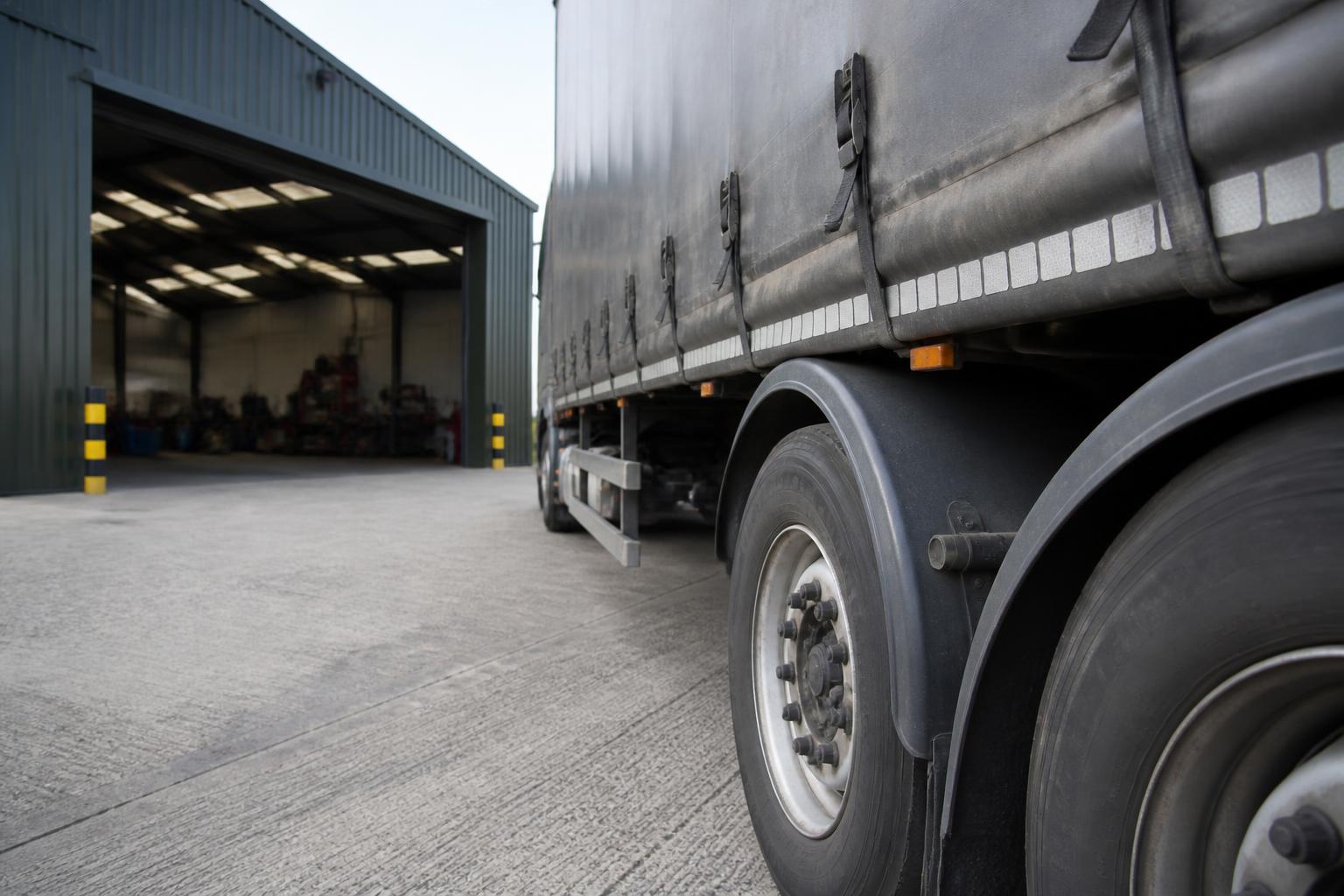
If you are trying to choose a trailer workshop near the A14, the best option is usually the one that shortens the decision chain, not just the driving distance. For most operators, that means a workshop that can inspect the trailer properly, explain the defect clearly, confirm whether it is safe to move, and if needed go straight from diagnosis to repair without sending you elsewhere for the next step.
That matters when you are searching for commercial trailer repair near me because the real problem is rarely just geography. It is downtime, missed slots, MOT pressure, brake warnings, tyre issues, and whether the trailer can be turned round safely. At Woolpit Truck Repairs, we work with fleets, owner-drivers and route-based HGV operators who need practical answers near the A14, especially when they are running through Suffolk and cannot afford wasted hours.
What operators usually mean when they search locally
When an operator searches for a nearby trailer repairer, they are usually not browsing casually. They have a live problem. It might be a brake warning on a tri-axle curtainsider, an ABS lamp that has come on mid-route, a damaged airline, an MOT deadline, uneven tyre wear, or a trailer that has been parked up because nobody is confident it should go back out.
For fleets, a local search normally means, “Who can take this trailer in quickly, inspect it properly, and tell us whether it is a same-day fix, an overnight job, or something that needs parts and planning?” The workshop has to fit into the operator’s traffic plan. If the trailer is empty and can be moved, booking speed matters. If it is loaded, safety and recovery advice matter more.
For owner-drivers, the local search often means, “Who is close enough to stop this becoming a full day lost?” If you are working the A14 corridor, the difference between a workshop just off-route and one that needs a long diversion can be the difference between salvaging the day and losing the next booking as well.
For route-based HGV operators in Suffolk, local usually means somewhere that makes sense from the road network. A workshop near A14 J47 can be more useful than one that is technically in the same county but awkward to reach with a trailer. That is one reason operators running between Ipswich, Felixstowe, Stowmarket, Bury St Edmunds, Newmarket and Elmswell often want a workshop that is easy to get into, easy to brief, and set up specifically for HGV and trailer work.
The strongest local option is not the one that says yes to everything. It is the one that can triage the defect honestly. If the trailer should not be towed in, you need that said clearly. If it can come in for inspection first, you need to know what will be checked and what decisions can be made on arrival. Our approach is built around that practical first step, whether the job ends up being an inspection, a repair, MOT preparation, tyre support, or a recovery enquiry.
Workshop comparison points that affect downtime
When you compare workshops, start with access. A trailer workshop near the A14 should be near the route in a way that works for commercial vehicles, not just for cars on a map. We are at Bridge Farm in Woolpit, close to A14 J47, which makes us a practical stop for operators moving across Suffolk rather than a detour that eats into drivers’ hours and delivery windows.
Next, look at booking speed. A workshop does not need to promise miracles, but it should be able to tell you what happens next. Can they fit in an inspection slot? Do they need photos first? Will they ask for registration, trailer type, axle configuration, warning lights, brake symptoms, tyre sizes, and whether the trailer is loaded? A good booking conversation saves time because the workshop is preparing for the likely fault before the unit arrives.
The inspection process matters just as much as the slot itself. A proper intake for a trailer defect should identify the complaint, confirm whether the issue is road safety related, and separate obvious defects from faults that need testing. For example, “brakes binding” is not a diagnosis. It could be a chamber issue, adjustment problem, foundation brake wear, a seized component, contamination, or an EBS-related behaviour that needs proper testing.
Defect reporting is another point operators should compare closely. You need a workshop that tells you what was found in plain terms. Not just “fault present”, but what component or system appears affected, what has been ruled out, whether the trailer is safe to move, and what repair route is recommended. Clear reporting helps fleet managers authorise work quickly and helps owner-drivers decide whether to proceed immediately or replan.
The biggest downtime saver is whether the workshop can move from triage to repair without wasted handoffs. If a trailer comes in for a brake concern, and the workshop can inspect, test, identify the failed part, fit replacement components if authorised, and retest, that is far better than a process where the trailer is inspected in one place, referred elsewhere for repair, then booked again for confirmation.
That is the reason operators often ask us about inspections and repairs together. If you need a closer look at what to compare before booking, our guide on choosing trailer repair near the A14 without losing a day sets out the practical checks that reduce wasted time.
How brake, ABS and EBS faults should be handled
Brake, ABS and EBS faults should never be treated as guesswork. A warning light, poor braking feel, an imbalance, or repeated fault recurrence needs a proper sequence, not parts fitted in hope.
Good diagnosis starts with the symptom history. When did the fault appear? Is it constant or intermittent? Does it happen with a particular tractor unit? Has the trailer been standing? Has any recent repair work been done on brakes, wheel ends, sensors, or electrics? Intermittent ABS and EBS faults are often easier to trace when the workshop gets a clear account at the start.
After that, the workshop should carry out a visual and physical inspection of the relevant systems. That may include checking wiring, sensor condition and gaps, connectors, air lines, chambers, discs or drums depending on trailer type, wear condition, obvious damage, and signs of contamination or heat. If the complaint is braking performance, the workshop should not stop at the warning lamp. Mechanical condition still matters.
For braking faults, roller brake testing is an important comparison point. It gives a measured view of brake performance and imbalance, and it helps separate a dashboard warning issue from an actual braking deficiency. It is also useful after repair, because a trailer should be retested where appropriate so the operator knows whether the issue has genuinely been resolved.
For ABS and EBS faults, a workshop should be able to diagnose the system rather than just clear codes and hope they stay away. Fault codes need to be read in context. A code may point to a sensor circuit, modulator issue, supply problem, or communication fault, but the code itself is only the start. The real value is in explaining what the code means, what checks support that diagnosis, and what repair is actually justified.
Operators should compare how workshops explain next steps. If the fault is safety critical, the advice should be direct. If the trailer can be moved carefully for a booked repair, that should be said clearly too. If the issue points to a recurring pattern, such as repeated sensor damage or wiring strain, you should be told that as part of the repair advice, not after the same fault returns a week later.
We cover this in more detail in our article on trailer brake faults near the A14 and the safest next step. If you need workshop support now, you can also see how we handle trailer inspections and fault finding.
Comparing roadside help with workshop repair
Not every trailer defect should lead to a roadside callout, and not every fault should be driven to a workshop. The right choice depends on safety, location, load status, and how likely the issue is to be resolved outside a workshop environment.
Roadside help is usually worth considering when the defect is minor, clearly identifiable, and likely to be dealt with safely on site. That might include some air line issues, certain lighting faults, or a basic problem that can be confirmed and made safe without extensive testing. Even then, access and working conditions matter. A hard shoulder, live site, or poor roadside position can turn a simple defect into an unsafe job.
Workshop repair is often the better option when the fault needs proper testing, lifting equipment, brake assessment, diagnostic equipment, tyre support, or a controlled inspection area. Brake complaints, ABS and EBS warnings, repeat defects, suspected wheel end issues, and MOT-related concerns usually fall into this category. The workshop environment allows the trailer to be checked methodically instead of under pressure at the roadside.
Recovery enquiries come into play when the trailer may not be safe to tow in normally, or when the defect prevents lawful or safe movement. That decision should be based on the actual fault, not optimism. If there is uncertainty, it is better to ask the question early than to move a trailer and create a larger problem.
From a cost point of view, the cheapest first action is not always the cheapest outcome. A roadside attendance that cannot complete the job may still leave you needing workshop time afterwards. Equally, sending a trailer straight to a workshop for a simple issue can be unnecessary if the defect can be made safe quickly on site. The key is honest triage at the start.
That is why we handle callout or recovery support enquiries as a practical assessment, not a script. We want to know what the trailer is doing, where it is, whether it is loaded, what warnings are showing, and whether there is any sign of braking, tyre, or structural risk before advising the next move.
What to ask before booking MOT preparation or repair
Before you commit a trailer for MOT preparation or repair, ask what the workshop will actually do. “MOT prep” can mean anything from a basic once-over to a full pre-test inspection with brake testing and defect rectification planning. You need to know which one you are buying.
Start with the inspection scope. Will the trailer have a full safety inspection? Will brakes be checked and tested? Will tyres, lights, suspension components, air system condition, wear points, and obvious structural concerns be included? In the UK, MOT preparation should be aligned with the standards the vehicle will actually be examined against, not just a cosmetic check.
Ask how defects are reported. Will you get a clear list of advisory items versus test-fail items? Will the workshop call before carrying out repair work beyond the agreed inspection? Fleet operators usually need that reporting chain for authorisation, and owner-drivers need it for cost control and planning.
Ask about parts. Does the workshop stock common trailer service and repair items, or will everything need ordering? If parts are required, can they give a realistic lead time rather than an optimistic one? This affects off-road time more than most operators expect.
Tyre support is another practical question. If the trailer needs tyre work as part of preparation or repair, can that be coordinated through the same workshop visit? Splitting tyre support away from the main booking can add another day if it is not planned properly.
Brake testing should be asked about directly. If there is any concern around braking performance, imbalance, or warning systems, ask whether roller brake testing is available and whether the trailer can be retested after repair. That gives you a stronger basis for putting the trailer back into service with confidence.
Finally, ask for a realistic estimate of off-road time. Not a guarantee, but a sensible view based on the reported defect, likely testing needed, and parts risk. A workshop that is honest about uncertainty is usually easier to work with than one that promises a fast turnaround before it has seen the trailer.
If you want a fuller checklist before committing a unit, our article on choosing a trailer inspection stop near the A14 is a useful place to start.
When a Suffolk-based workshop is the better fit
A Suffolk-based workshop is often the better fit when your operation already runs through the county and the trailer issue does not justify taking the vehicle further off route. For operators moving freight to and from Ipswich and Felixstowe, or across Stowmarket, Bury St Edmunds, Newmarket and Elmswell, a workshop in Woolpit can be a practical midpoint rather than a diversion.
That is especially true for route-based operators using the A14 as a working corridor. If the trailer can be brought in safely, access near A14 J47 reduces dead mileage and makes scheduling easier. For fleets, that can mean less disruption to the next load plan. For owner-drivers, it can mean keeping the repair inside the same operating day, or at least avoiding an unnecessary cross-county trip.
There is also a difference between a general commercial garage and a workshop that is focused on HGV and trailers. Trailer faults are not an add-on for us. At Woolpit Truck Repairs, trailer inspections, diagnostics, repairs, MOT preparation, tyre support and brake testing are part of the day-to-day workload at Bridge Farm. That matters because trailer downtime is often decided by the quality of the first inspection and the realism of the advice given straight after it.
Operators also benefit from local knowledge. A workshop based in Suffolk understands the traffic patterns, port-related timing pressures, and route realities affecting operators around Felixstowe, Ipswich and the wider A14 corridor. That helps when planning whether a trailer should come in now, later the same day, or after a load change.
Woolpit Truck Repairs is operated by FLEETA LIMITED, and our role is straightforward. We help operators make the next safe, commercially sensible decision when a trailer fault risks downtime. If that means inspection first, we say so. If it means brake testing, repair, tyre support, MOT preparation, or a recovery enquiry, we set that out clearly. For fleets and drivers working through Woolpit and the wider Suffolk road network, that practical approach is usually what makes a local workshop the better fit.
Is the nearest workshop always the best option?
Not always. The best option is the one that can assess the defect properly, explain the risk clearly and get the trailer safely back into service with the least avoidable downtime.
What should I tell a workshop before bringing in a trailer?
Give the registration or fleet ID, fault symptoms, warning lights, brake concerns, tyre issues, whether it is loaded, and any deadline such as a booked MOT or route commitment.
Can a workshop help if I am not based in Suffolk?
Yes. Many operators need support while running through the area. Access near A14 J47 can make sense for route-based vehicles even if the fleet is based elsewhere.
What is the difference between inspection and diagnosis?
An inspection identifies visible or testable defects. Diagnosis goes further by tracing the cause, such as why an ABS or EBS warning is present, before repair decisions are made.
Should I book MOT preparation before the test date?
Yes. Booking early gives time to find defects, complete repairs and retest items if needed, which reduces the risk of a failed MOT causing avoidable vehicle downtime.