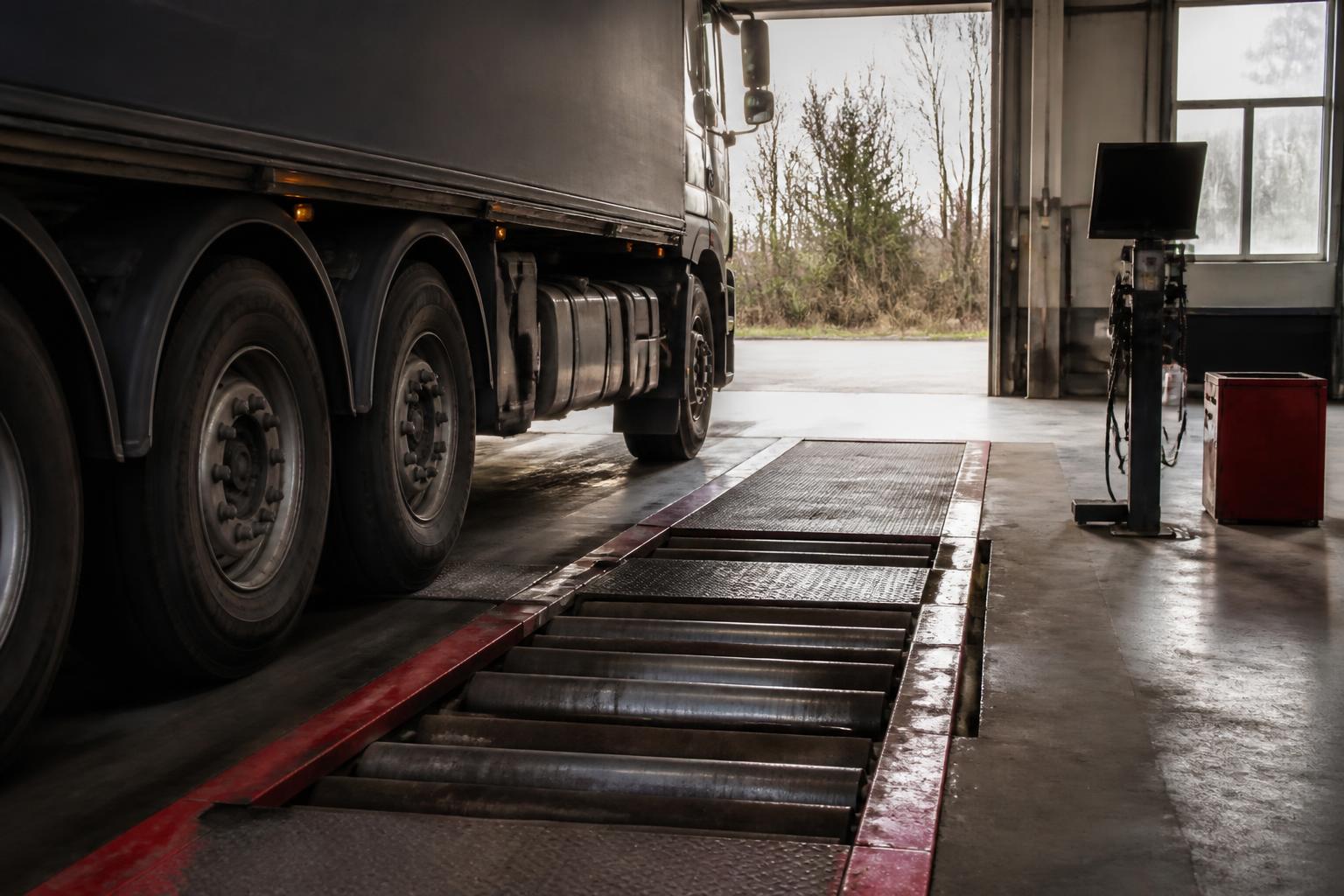
If you are trying to find an HGV brake test nearby, the real question is usually not just distance. It is how quickly you can get a useful answer, whether the site can handle your vehicle or trailer properly, and what happens next if the test shows an issue. A brake test that confirms a problem but leaves you hunting for another workshop, another booking, or another day off the road is not saving time.
At Woolpit Truck Repairs, we see this most often from operators moving through Suffolk on the A14, or running locally between Ipswich, Felixstowe, Stowmarket, Bury St Edmunds, Newmarket and Elmswell. They need a brake performance check, a trailer assessed, MOT preparation, or a fault investigated properly. Being close matters, but being set up for HGV and trailer work matters more.
What operators usually mean when they search for a nearby HGV brake test
When someone searches for an HGV brake test near me, they are usually looking for one of four things.
First, they may need a routine brake performance check. This is common where a fleet wants a recorded result as part of maintenance planning, where a driver has reported reduced braking performance, or where there is a general concern about balance, efficiency or response. In practice, the vehicle may not yet be showing a warning lamp or an obvious defect, but the operator wants the braking system checked before the issue becomes downtime.
Second, they may need fault diagnosis. This is a different job from a straightforward performance check. If you have an ABS or EBS warning, poor brake feel, pulling under braking, suspected imbalance, binding, overheating, or repeated defects after previous repairs, the useful part is not only the test result. It is understanding why the result looks the way it does. That can mean checking wheel ends, slack adjusters where fitted, air supply, valves, sensors, modulator behaviour, brake chambers, foundation brake condition, or trailer lines and couplings.
Third, they may need a trailer brake assessment. This often comes in after a driver reports poor trailer response, a trailer locking too sharply, dragging brakes, uneven temperatures across axles, or a warning linked to trailer braking performance. Trailer work is where many “nearby” options become less useful. Not every garage has the space, access, or workshop routine to deal with a loaded or awkward trailer movement, and not every site is set up to test and then repair trailer brake faults in one place. We cover more on that in our guide to trailer brake testing in Suffolk before downtime spreads.
Fourth, they may be looking for MOT-related testing. In the UK, brake performance is a central part of annual test preparation. Operators often want a roller brake test before presenting the vehicle, so defects can be found and corrected before a test failure creates more delay. That matters particularly with booked test slots, traffic office planning and vehicle utilisation. The UK position here is practical and specific to our testing regime. General EU guidance on roadworthiness exists, but the booking process, preparation habits and workshop handling around annual test work are shaped by the UK MOT system.
So before booking, it is worth being clear about the real need. Do you want a result for your records, a diagnosis of a fault, a trailer checked safely, or a brake test as part of MOT preparation? The right answer changes the best place to book.
Comparing your main brake test options
Most operators choosing a brake test have four broad routes.
The first is a specialist HGV workshop. This is usually the strongest option when the vehicle is a rigid, artic unit or trailer and you need more than a tick-box result. A specialist workshop is more likely to have the right roller brake testing setup, enough yard space, technicians used to commercial braking systems, and the parts and repair process needed if the test identifies a defect. That matters if the issue turns out to be more than adjustment or wear, especially with ABS or EBS related faults.
The second is a general commercial garage. This can work for some operators, especially where the job is simple and the garage has proper heavy vehicle capability. But “commercial” covers a wide range. Some sites are stronger on vans and light commercials than full HGV and trailer work. Others may be able to perform a test but have limited trailer handling, limited follow-on diagnosis, or longer delays if a repair is needed. It is worth checking exactly what they test every day, not only what they can book in.
The third is an MOT-focused booking route. This suits operators who are specifically working towards annual test presentation and want a brake test tied closely to that process. It can be efficient if the workshop understands MOT preparation properly and can deal with likely fail points before the booked date. It is less useful if the vehicle already has a live fault and the booking is treated as a simple pre-test formality. In that case, you can lose time because the brake test identifies the issue but nobody has allowed enough workshop time to diagnose and repair it. If your priority is annual test readiness, our article on where to get an HGV brake test near the A14 before MOT goes into that in more detail.
The fourth is a mobile-first or callout route. This is sometimes the right first step when the vehicle is off-road, has a serious brake concern, or cannot be moved safely. But a mobile attendance is not the same thing as a full brake test environment. It can be ideal for initial triage, making the vehicle safe, checking obvious defects, or deciding whether recovery or workshop attendance is the better route. It is less likely to replace a proper roller brake test where measured brake performance is needed.
For most fleets and owner-drivers, the quickest route overall is the one that reduces handoffs. If the same workshop can test, explain the result, repair what is found, and help with MOT preparation if needed, you avoid the stop-start delays that come from moving between separate providers.
That is why our work at Woolpit Truck Repairs is built around HGV and trailer jobs rather than mixed passenger and light vehicle traffic. From Bridge Farm at A14 J47, we are set up for roller brake testing for HGVs and trailers and the practical workshop follow-on that often comes with it.
What actually makes one brake test more useful than another
A brake test is only as useful as the decisions it helps you make afterwards.
At the basic end, you can get a pass-fail style result. That may tell you whether performance is currently within an acceptable range, or whether there is clear imbalance, low efficiency or another obvious issue. For some routine checks, that is enough. If the vehicle brakes evenly, no warning systems are active, and there are no driver reports of concern, a clean result can be all you need.
But many operators come to us because the basic answer is not enough. They need to know what is causing the result and how urgent it is.
Take an imbalance reading. On paper, that tells you something is wrong. In practice, the next question is whether the likely cause is wear, contamination, seizure, poor adjustment, chamber or valve issues, air supply problems, a trailer control issue, or an electronic braking fault. Those are not the same job, and they do not carry the same urgency, parts requirement or downtime risk.
The same applies to ABS and EBS warnings. A warning lamp does not automatically mean the foundation brakes are poor, and a mechanical brake issue does not always trigger an electronic fault. A useful workshop will look at the brake performance result in context, with fault codes, vehicle symptoms and physical checks. That is where operators save time, because the next step is based on diagnosis rather than guesswork.
Another difference is how defects are explained. We find operators want clear priorities. What is unsafe or likely to lead to prohibition risk. What will affect MOT presentation. What can be repaired now. What can be monitored and scheduled. That is more useful than being handed a list without context.
Trailer work especially benefits from this approach. A trailer with brake drag, inconsistent output or line-related issues can create repeat downtime if only the symptom is addressed. If the workshop can test the trailer, inspect the likely causes and explain whether the problem sits in the trailer itself, the supply and control lines, or the interaction with the unit, you can make a proper decision. We cover common examples in trailer brake faults near the A14 and the safest next step.
The most useful brake test, then, is not always the nearest one on a map. It is the one that gives you a reliable result, a sensible diagnosis, and a realistic repair path.
How location affects downtime, especially around the A14
For HGV operators, location is not just postcode distance. It is route access, turning in and out, trailer handling, and how much working day you lose getting the vehicle there and back.
This is particularly true around the A14. A workshop may look close in miles, but if reaching it means leaving the main route, negotiating tighter local roads, separating unit and trailer unnecessarily, or sitting in traffic away from your normal run, the “nearby” option becomes the slower one.
Being at Bridge Farm near A14 J47 matters for that reason. For operators moving between Felixstowe and the Midlands, or working across Suffolk, access from the A14 is straightforward. That helps if you are coming from Ipswich or Felixstowe with a loaded schedule, from Stowmarket or Bury St Edmunds on local fleet work, or from the Newmarket side needing a brake issue checked without spending half the day off route.
Woolpit is also a practical point for operators based around Elmswell and surrounding areas who want a workshop that can deal with HGV and trailer work without the detour of heading into a busier town location. Easy access is not just a convenience. It reduces the chance of turning a one-hour workshop visit into a half-day disruption.
Trailer handling is another part of location that gets missed. Some sites may be technically close but awkward for trailers, especially if yard space is limited or reversing access is tight. If the job involves a trailer brake concern, that matters immediately. A location that can take the combination in, test it, and keep the process moving is usually the better commercial choice.
The same goes for follow-on repairs. If the brake test identifies a defect and the workshop can deal with it there and then, or at least keep the vehicle on site and progress it quickly, you avoid another road movement and another booking delay. That is often more important than shaving a few miles off the first trip.
For route-based operators, the best booking is often the workshop that sits naturally on the day’s movement. If you are searching for an HGV brake test near me while running the A14 corridor, the right answer is usually the site that is genuinely accessible to your route, not simply the one with the nearest town-centre pin.
Questions to ask before you book
A short phone call before booking can save a lot of wasted time. These are the questions worth asking.
Can you test my vehicle type and configuration? Ask this plainly. Rigid, unit, trailer, loaded or unladen, axle setup, and any access concerns. Do not assume every site that says HGV can handle every combination in practice.
Do you have proper roller brake testing equipment for HGV and trailers? This matters if you need measured brake performance, not just a visual inspection or road feel assessment.
If the test shows a fault, can you diagnose and repair it on site? This is one of the biggest time savers. If the answer is no, you may be booking only the first step.
Can you deal with ABS and EBS related faults as well as mechanical brake issues? A lot of brake complaints are not purely one or the other. You want a workshop that can look at the full picture.
What information should I bring? Useful details include driver reports, warning lamp history, recent repairs, whether the issue is on the unit or trailer, and whether the concern is poor braking, pulling, binding, overheating or an MOT deadline.
Is this booking for fault finding, routine checking, or MOT preparation? Say which one it is. The workshop may book the job differently depending on what you actually need.
If this is for MOT, how close to the test date should I come in? Too early and another fault can arise before presentation. Too late and there is no room to repair anything found. The right timing depends on use and current condition.
How quickly can you turn around likely brake defects? Not every issue has the same answer, but a practical workshop should be able to talk through likely next steps and timescales.
Can you help if the vehicle is not safe to drive in? If there is a serious concern, ask about callout or recovery support enquiries rather than trying to nurse the vehicle in.
At Woolpit Truck Repairs, we keep these conversations practical. We would rather know the real symptoms, the route you are on, and the pressure on the vehicle than force the job into the wrong booking slot. That is usually how operators avoid losing road time.
If you are weighing up sites locally, our guide to choosing a brake test site near Woolpit without losing time is a useful next read.
For operators who manage maintenance through a trading entity, including FLEETA LIMITED or any other fleet structure, the principle is the same. The best nearby brake test is the one that fits the vehicle, the route, and the likely repair path. Close to the road you already use is better than close on paper. A workshop that understands HGV and trailer braking, explains defects clearly, and can act on the result is what actually protects uptime.
That is the standard we work to at Woolpit Truck Repairs in Woolpit, Suffolk, from Bridge Farm near A14 J47.
Do I need a brake test or a full brake inspection?
If you have a warning light, pulling, imbalance, poor feel or trailer concern, a brake test alone may not be enough. You may need inspection and diagnosis as well.
Can an HGV brake test include the trailer?
It should if the issue may be on the trailer side. Ask the workshop to confirm it can assess both unit and trailer and explain where the defect appears.
Is a brake test the same as MOT preparation?
No. A brake test can form part of MOT preparation, but proper prep also checks likely failure points, defects, repairs and whether retesting is needed.
What should I ask when booking near Woolpit?
Ask about roller brake testing, HGV and trailer capability, likely wait time, repair availability, access from A14 J47 and whether they can explain defects clearly.
Why choose a specialist HGV workshop over a general garage?
A specialist HGV workshop is more likely to understand commercial brake systems, trailer issues, operator downtime and the practical next step after the test.