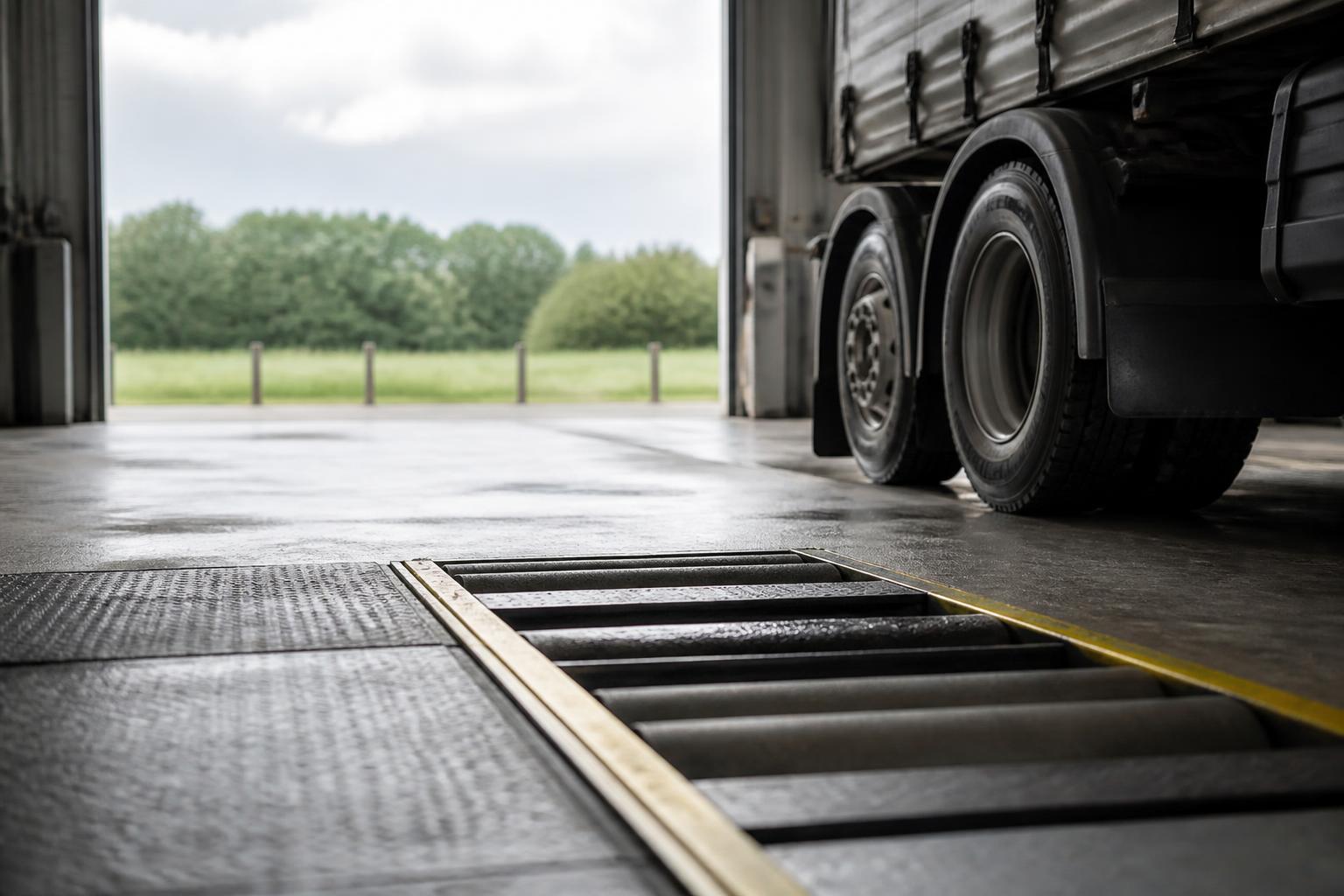
If you need a truck roller brake test near Woolpit, the quickest decision is not always the nearest diary slot. What matters is whether the site fits your route, whether it can take your vehicle and trailer combination properly, and what happens if the brake readings show a defect instead of a clean pass. For most operators, the real cost is not the test itself. It is the time lost getting to the site, waiting for an answer, then moving the vehicle again if repairs are needed.
At Woolpit Truck Repairs, we see that choice made most often by fleets, owner-drivers and route-based operators working around Woolpit, the A14 and wider Suffolk. If you are comparing options, the useful question is simple. Can this site get the vehicle tested, explain the result clearly, and help you act on it without turning one booking into half a day of avoidable downtime?
What operators are really comparing when they book a brake test
When operators look for a brake test near Woolpit, they are usually comparing five practical points.
First, access. A site can look close on a map and still be awkward for an HGV, artic or trailer to reach. Tight village turns, restricted entrances, parked cars, soft standing and poor yard layout all add time and risk. A brake test booking should reduce disruption, not create it.
Second, vehicle fit. Not every site handles the same mix of rigids, units and trailers in the same way. If you run a mixed fleet, or if the immediate problem is on a trailer rather than the unit, you need to know that the site deals with commercial vehicles all day, not as an occasional extra around car work or light van work.
Third, what the test is for. Some bookings are routine, some are part of planned maintenance, and some are because the driver has reported poor braking, pulling, imbalance, warning lights, or a trailer issue. If the reason for the booking is a fault, you need more than a printout. You need someone to interpret the readings against the complaint and check the likely causes.
Fourth, what happens next. A brake test can show imbalance, low efficiency, sticking brakes, poor application, air issues, or an electronic fault linked to ABS or EBS. If the answer is simply “it failed”, you still have the same operational problem. The useful site is the one that can move straight from test to inspection, diagnosis and repair planning.
Fifth, timing around MOT and fleet use. A pre-MOT brake test is not just a box to tick. It is a chance to find issues while you still control the timetable. If you want a workshop-led approach to roller brake testing for HGVs and trailers, it should fit into the wider maintenance decision, not sit separately from it.
That is why operators comparing a truck roller brake test near Woolpit are usually not comparing test rollers alone. They are comparing how much certainty they get from the booking, and how much downtime they avoid if the result is not straightforward.
Local access and route fit around Woolpit
For operators working in Suffolk, route fit matters more than postcode distance. A workshop just off the A14 can save far more time than one that is theoretically nearby but awkward to reach with a loaded or empty commercial vehicle.
Our workshop is at Bridge Farm, near A14 J47 in Woolpit. For vehicles moving between Ipswich, Stowmarket, Bury St Edmunds, Newmarket and wider Suffolk routes, that matters in day-to-day planning. It also matters for traffic coming inland from Felixstowe, where a brake concern picked up on route can quickly become a scheduling problem if the test site requires a long detour or difficult local roads.
Around Woolpit, operators should check the actual approach, not just the town name. Ask yourself:
- Is the site easy to reach from the A14 without unnecessary local mileage?
- Is the entrance suitable for artics and trailers?
- Can a driver get in, get tested and get out without complicated reversing or waiting for space?
- If there is road disruption near Elmswell, Stowmarket or Bury St Edmunds, does the route still make sense?
- If the issue is safety-related, can the vehicle get there directly, or are you adding risk and delay?
That is especially relevant when the complaint is already brake-related. If a driver has reported reduced braking performance, a dragging wheel end, a warning light, or an issue that worsens under load, the “best priced” site is often not the best operational choice if it means extra miles on unsuitable roads.
The local picture around Woolpit also changes by time of day. Operators running timed deliveries, trunk work, construction movements or port-linked traffic do not need a brake test provider that only works in theory. They need one that sits sensibly within real route patterns. Near A14 J47, that often means being able to divert in, get a clear answer, and return to the route with minimal wasted movement.
If you are comparing sites from a planning point of view, look beyond the booking slot. Consider whether the location works for your drivers, your trailers and your actual operating area across Suffolk. That is often where time is won or lost.
Brake test only or brake test with workshop backup
This is where many operators feel the difference immediately.
A standalone brake test gives you a result. That can be enough if the vehicle is in known good order and you only need a measured brake performance check. But if the vehicle does not test cleanly, or if the fault is intermittent, a standalone site often leaves you with the next problem still unsolved. You then have to arrange workshop time elsewhere, move the vehicle again, explain the defect again, and possibly repeat parts of the process.
A workshop-backed test is different. If the rollers show imbalance, low readings, delayed response, or axle-specific issues, the vehicle can be inspected in context. We can look at service brake performance, parking brake concerns, air leaks, slack adjuster issues where relevant, foundation brake wear, wheel-end condition, actuator problems, or electronic faults involving ABS and EBS. If the driver’s complaint was “the trailer feels wrong under braking” or “the unit is pulling under load”, the next step is not guesswork.
That matters even more with trailers. Trailer faults are often reported as symptoms rather than diagnoses. The driver may notice poor response, uneven braking, a warning indication, or a problem after standing. The roller test helps identify where the issue is presenting, but the value comes from being able to inspect, confirm and advise on what should happen next. Our article on trailer brake faults near the A14 and the safest next step goes into that in more detail.
The same applies before MOT. In the UK, brake performance is a core part of HGV and trailer test readiness, and a pre-test issue found late can disrupt booked test dates, workshop planning and vehicle allocation. A pre-MOT brake check is most useful when the same workshop can move from test result to rectification work and retest planning without handing the vehicle around between different providers. If that is your situation, our guidance on truck MOT preparation that cuts test-day risk sets out the practical benefit.
There is also a communication point here. Operators do not need vague language. They need to know whether the vehicle is safe to continue, whether the defect appears mechanical, pneumatic or electronic, whether a trailer can be separated and dealt with on its own, and whether the repair is likely to be a quick rectification or a larger workshop job. Clear defect explanation is part of the service, not an extra.
How to compare sites for HGV, rigids, artics and trailers
Different operators should compare brake test sites against the vehicles they actually run.
If you operate rigids, check whether the site deals with your type of work regularly. A rigid on urban or regional work may present different wear patterns and complaints from a long-distance unit. If the concern is brake balance, load-related performance, or repeated defects on one axle, you want a provider that understands the maintenance pattern behind the readings.
If you run artics, think about the unit and trailer as an operating combination, even if the immediate booking is for one part only. A unit-only test can confirm a lot, but many reported brake concerns on the road are felt through the combination. If the trailer is part of the complaint, choose a site that is set up for trailer assessment too.
If you run trailers heavily, this becomes even more important. Trailer-only bookings should not feel like an exception. Ask whether the workshop regularly handles trailer brake testing, inspections and follow-up repairs. Trailer issues can involve foundation brakes, air supply and control, load sensing where applicable, wheel-end defects, and electronic brake control faults. The more often a site sees trailer work, the faster it usually gets from symptom to answer.
Fleet operators should also look at consistency. Can the same site support planned brake tests, defect investigation, MOT preparation and follow-up repairs across multiple vehicles? If you are managing several HGV assets, you want records, communication and next-step advice that are consistent from one booking to the next. One-off convenience matters less than repeatable support.
Owner-drivers often have a slightly different priority. Downtime hits immediately, and the vehicle usually needs to go back to work as soon as possible. In that case, the right comparison is not just “who can test it?” but “who can test it and help me decide what to do today?” That is where a commercial-vehicle-only workshop tends to make the process simpler.
It is also worth checking whether the provider’s work is genuinely HGV-focused. At Woolpit Truck Repairs, our day-to-day work is commercial vehicles, not general motor trade work with trucks fitted in around the edges. That matters because the language, the defect patterns and the urgency are different. A fleet operator from Ipswich does not need a consumer-style explanation. They need to know what has failed, how serious it is, and what the realistic path back to service looks like.
If you are comparing broader support as well as the brake test itself, our guide on how to compare HGV workshop support near A14 J47 is a useful next read.
When the cheapest booking costs more in downtime
The lowest headline price can be the most expensive option once downtime is counted properly.
A cheap brake test costs more if the site is awkward to reach from the A14, if the booking leaves you waiting in a queue, or if the result sends you elsewhere for diagnosis and repair. It costs more again if the vehicle then misses planned work, loses a test slot, or needs a second visit because no one dealt with the underlying defect first time.
This is common around MOT preparation. Operators sometimes separate the brake test from the workshop support to save money on paper. Then the test shows a defect, workshop time is not available at the same place, the vehicle has to move again, and the original MOT plan slips. The direct invoice may still look lower, but the operational cost is higher. That is why we often tell operators to judge the booking against total downtime, not just the printed test price.
The same applies to fault-finding. If the issue is intermittent, a basic pass or fail result may not be enough to protect uptime. For example, a trailer may show a complaint only under certain conditions, or a unit may have an ABS or EBS warning that needs proper diagnosis alongside the brake readings. A provider that can triage the problem properly usually saves more time than a provider that only completes the initial test.
There is also the cost of moving an unready vehicle between sites. If the brake concern is serious enough that the vehicle should not continue working normally, every extra move has to be justified. Shifting it from one location to another because the first site could not do the inspection or repair is rarely the efficient route.
For fleets, repeated fragmentation is where the hidden cost builds up. One site for testing, another for repairs, another for MOT preparation, and different explanations from each. That arrangement can work if it is tightly managed, but many operators would rather keep the chain shorter and clearer.
So when you compare a truck roller brake test near Woolpit, compare the whole job. Can the site be reached easily from Woolpit, Stowmarket, Elmswell, Bury St Edmunds, Newmarket, Ipswich or the Felixstowe corridor? Can it test the actual vehicle or trailer you run? Can it explain the result properly? Can it inspect and repair if needed? And can it help you protect the MOT timetable and the working day, rather than just sell you a slot on the rollers?
That is the standard we work to at Woolpit Truck Repairs, from Bridge Farm near A14 J47. We keep the process practical. Test the vehicle properly, explain the defect clearly, and give you the most realistic next step for the job in front of you.
What is a roller brake test used for?
It measures braking performance on a roller brake tester and helps identify imbalance, weak braking effort or other issues that may affect roadworthiness, safety or MOT preparation.
Do I need a brake test before MOT?
Not in every case, but many operators use one before MOT to spot brake defects early and avoid a failed test, extra downtime or a rushed repair decision.
Can a trailer have a roller brake test on its own?
Yes, many trailer operators book testing separately, especially where a trailer has a brake concern, a defect report or needs checking before MOT preparation.
What should I ask before booking near Woolpit?
Ask about HGV and trailer suitability, access from A14 J47, booking lead time, whether defects can be investigated on site, and what support is available if the vehicle fails.
Why does workshop backup matter after a brake test?
If the test shows a problem, workshop backup can save time. The same site may be able to inspect the fault, explain the likely cause and advise the next practical step.