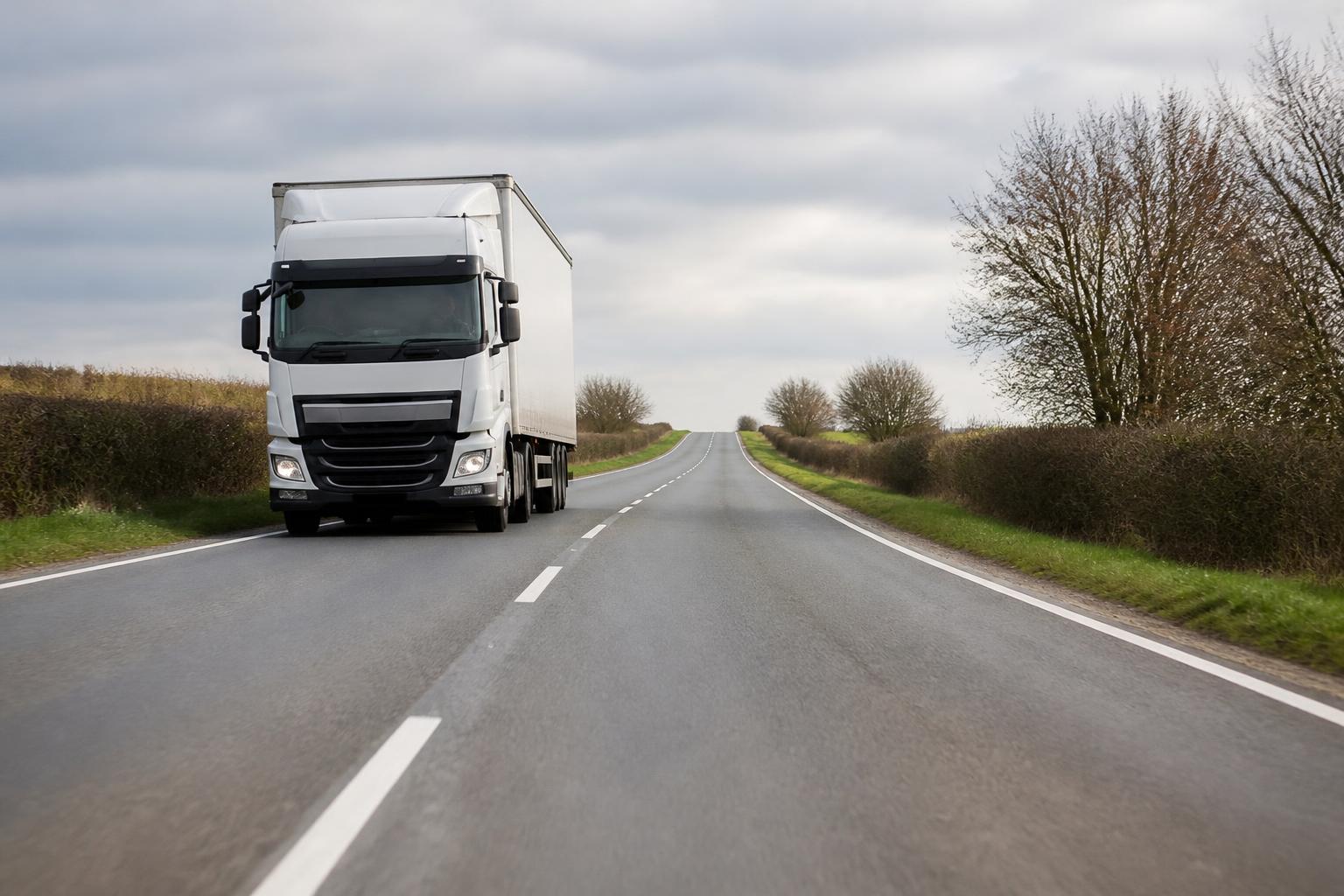
A truck that pulls left is not a symptom to guess at. On an HGV, the cause can sit in the tyres, a brake, steering joints, ride height, axle alignment, suspension wear or even a fault that only shows under load or only after a few miles. If it is left to run, the usual result is faster tyre wear, higher fuel use, driver fatigue and, in some cases, a vehicle that becomes unsafe or uneconomic before the next planned inspection.
The practical answer is to narrow the fault down by how the pull behaves. Does it pull all the time, only under braking, only on a camber, only when laden, or only after the brakes have warmed up? Those details matter more than most operators realise. When we handle HGV steering pulling left repair work in Suffolk, that road test description is often what separates a quick fix from replacing parts that were never the problem.
What a left pull usually points to
A left pull usually falls into one of a few fault groups.
First, tyre and wheel related causes. A damaged tyre carcass, uneven pressures, irregular shoulder wear, a mismatched tyre on one side of the steer axle, or a wheel issue can all create a drift or pull. These faults often come on gradually, although a pothole strike or kerb impact can make the change obvious straight away.
Second, steering and suspension wear. Wear in track rod ends, drag link ends, kingpins, spring eye bushes, shackle pins, torque rod bushes, anti-roll bar links or dampers can let the axle move or steer inconsistently. Some of these faults show up as wander rather than a firm pull, but many drivers describe both simply as "pulling left".
Third, brake drag. A binding caliper, seized slider, sticking foundation brake component or an issue in the air brake control side can make the vehicle pull, especially once the brake on one side starts to run hot. On a commercial vehicle with ABS or EBS, you may also see warning lamps or stored faults, but not always.
Fourth, alignment and axle position. Incorrect toe settings on the steer axle, a thrust angle problem from a drive axle sitting out of line, ride height faults on air suspension, or accident damage can make the truck track off line. On an artic or rigid with trailer concerns, what the driver feels through the cab is not always generated at the front axle. A trailer axle issue can steer the whole combination.
That is why we do not advise guessing from one symptom alone. A truck can have left shoulder wear on the nearside front tyre because of pressure loss, because of geometry, because a brake has been dragging, or because worn suspension is letting the axle move under load. The wear pattern is evidence, but not the diagnosis by itself.
Road conditions also need separating from actual defects. Most UK roads have camber that naturally encourages a slight drift left. A healthy HGV should not need constant correction on a normal road, but it also should not be judged on one short stretch of heavily cambered carriageway. We look for repeatable behaviour on suitable roads, not one driver impression taken in isolation.
Tyres and wheel issues compared with steering faults
Tyres and wheel issues usually leave clues you can see before any dismantling starts.
If the pull has appeared after a tyre change, puncture repair, wheel swap or pressure loss, start there. Differences in rolling radius across the steer axle can be enough to create a pull. So can a tyre with internal belt damage, a sidewall injury or uneven wear across the tread. Feathering, shoulder scrub and cupping each point in slightly different directions, and they matter when deciding whether to look first at inflation, shocks, balance, alignment or looseness in the steering.
Pressure is the obvious check, but it is still missed. A steer tyre that is down on pressure can alter handling before it looks visibly low, especially on a busy day when the vehicle is loaded and the defect is only picked up once the truck starts working hard. If one front tyre has been running low for any distance, the wear may continue to affect the way the truck tracks even after it has been reinflated.
Wheel related faults can be more subtle. A distorted wheel, poor seating, incorrect wheel fitting, or bearing play can all change the way the vehicle feels. If there is also rumbling, heat or movement, the safest next step is not to keep running and hope it settles down. We covered that in more detail in our guide to wheel bearing noise on an HGV and the safest next step.
Steering faults tend to show a different pattern. Instead of a simple steady drift, you may get vague response around centre, delayed reaction after steering input, a need for constant correction, or a pull that comes and goes with road surface changes. Excess play in joints or bushes often makes the truck feel less settled generally, not just biased left.
A useful distinction is whether the steering wheel self-centres normally after a turn. If it feels reluctant to return, or it returns unevenly, that can point more towards geometry, binding in steering components, or suspension issues than a basic tyre pressure problem. Likewise, a steering wheel that sits off centre while the truck still tracks straight can indicate alignment or axle position issues rather than a tyre defect alone.
In workshop terms, this is why a proper check includes tyre condition, pressures, wheel security, visible runout concerns, bearing play, steering joint inspection and a geometry assessment where needed. Replacing a pair of front tyres without checking why one shoulder has scrubbed out is how operators end up buying the same tyres twice.
Brake drag compared with alignment and axle problems
A binding brake behaves differently from an alignment or axle fault, and the difference often shows up in when the pull gets worse.
Brake drag often becomes more noticeable after the vehicle has been moving for a while. The truck may set off feeling acceptable, then start pulling left once heat builds in one brake assembly. The driver may notice a hot smell, reduced roll, poorer fuel economy or one wheel running much hotter than the others. In more serious cases, the pull is strongest when the brakes are applied, then eases slightly when the pedal is released, although a badly binding brake can affect the vehicle all the time.
You may also see signs in brake performance. A wheel end with drag can produce abnormal lining or pad wear, discolouration from heat, or poor brake balance on a roller brake test. On modern systems, ABS or EBS warnings can help, but a mechanical seizure or partial bind does not always trigger a dash lamp. That is one reason a proper roller brake test still matters.
Alignment and axle faults are usually more consistent. The vehicle tends to pull or drift in a repeatable way at cruising speed, regardless of whether the brakes have recently been used. The steering wheel may sit off centre. Tyre wear may develop over time without any obvious brake smell or heat. If the issue is linked to ride height, suspension geometry or axle position, the behaviour may change when laden compared with empty.
On air suspended vehicles, incorrect ride height can alter axle geometry enough to affect handling and tyre wear. On multi-axle setups, worn bushes or shifted axle location can create a thrust angle problem where the vehicle effectively travels slightly sideways down the road. Drivers often report this as the truck feeling like it is "crabbing" or needing the wheel held against the natural line of travel.
Trailer influence should not be ignored either. If the complaint only appears with one trailer, or disappears when the unit runs solo, that points the diagnosis away from the tractor's front axle alone. We regularly see combinations where a trailer axle alignment issue is transmitted forward as a steering complaint.
From a workshop point of view, separating brake drag from geometry is one of the main reasons to inspect, test and road assess in a structured order. If needed, we combine practical checks with roller brake testing and defect triage, rather than assuming every left pull is a tracking job. Our article on truck and trailer faults in Suffolk, who should diagnose what explains that logic in more detail.
What drivers and fleet operators should check first?
Before booking the vehicle in, there are sensible checks and observations that help us get to the fault faster. The key word is safe. We are not asking drivers to dismantle anything at the roadside.
Start with when the pull happens. Note whether it is:
- constant at all speeds
- worse under braking
- worse after several miles
- present only when laden
- present only with a particular trailer
- stronger on certain road surfaces or cambers
- accompanied by vibration, noise or heat
Then check the obvious visual points. Look at both steer tyres for pressure difference, shoulder wear, feathering, flat spots, cuts, bulges or signs of one tyre being newer or a different pattern from the other. If there has been a recent puncture, tyre replacement or wheel swap, note that too.
Check for warning lights. ABS and EBS lamps matter, even if the braking feels normal. So do suspension or steering related warnings where fitted. If the truck has had any recent air system issue, that can also be relevant, especially where brake release or ride height control is involved. If air faults are part of the picture, our guide on when an HGV will not build air in Suffolk may help you separate that issue from a pure steering complaint.
Feel for heat only if it is safe to do so and without touching components directly after a run. A noticeably hotter wheel end on one side can support a brake or bearing suspicion, but nobody should be putting hands near hot brake parts at the roadside.
Also note any recent event that might have triggered the problem:
- kerb strike
- pothole impact
- emergency braking
- wheel change
- brake work
- suspension repair
- loading pattern change
- trailer swap
- recovery following a breakdown
For fleet operators, it helps if the defect report includes the route and operating conditions. A unit running between Felixstowe and the A14 corridor may show different symptoms from one doing local stop start work around Ipswich, Stowmarket, Bury St Edmunds, Newmarket, Elmswell or Woolpit. Heat related brake drag often shows differently on trunk work than on repeated urban braking.
This is also the point to decide whether the issue is one for planned workshop time or immediate removal from service. If the truck is only showing a mild drift with no abnormal wear, heat, noise or warnings, you may be able to book it in promptly and manage the risk. If the steering feels loose, the tyre is scrubbing rapidly, or the brake is clearly binding, it should not stay out earning.
When to stop driving and book workshop diagnosis
Stop driving and book diagnosis straight away if the pull is severe, sudden or getting worse quickly. The same applies if it is combined with steering play, knocking, vibration through the wheel, smoke, burning smell, heat from one wheel end, repeated ABS or EBS warnings, or visible tyre damage. Those are not "watch it and see" defects on an HGV.
You should also stop if the truck needs constant correction to stay in lane, if the steering wheel position changes suddenly, or if a front tyre is wearing fast enough that cords or casing risk becomes a concern before the next shift. Running on in those conditions turns a repair into tyre loss, roadside downtime or a prohibition risk.
From an operating cost angle, there is a point where continuing to run is simply uneconomic. A minor geometry or brake issue can destroy a steer tyre long before its normal replacement point. It can also increase fuel use and create follow-on wear in other components. That matters whether you run one vehicle or a fleet.
A practical workshop inspection should include, as relevant to the symptom:
- tyre condition and pressure checks
- wheel and wheel fixing checks
- wheel bearing assessment
- steering linkage and joint inspection
- suspension and bush inspection
- ride height check on air suspension
- brake drag assessment
- roller brake testing
- axle and geometry checks
- road test to confirm the complaint and the repair
If the issue involves a trailer or only appears with one trailer attached, the trailer needs to be part of the diagnosis. If the truck is nearing test date and the defect overlaps with brake balance, tyre wear or steering free play concerns, it also makes sense to consider the MOT implications at the same time. For operators planning downtime carefully, our piece on choosing truck repairs in Suffolk with less downtime sets out how to approach that sensibly.
At Woolpit Truck Repairs, we keep this straightforward. We are at Bridge Farm, near A14 J47 in Woolpit, with practical access for operators moving along the A14 through Suffolk, including traffic between Ipswich, Felixstowe, Stowmarket, Bury St Edmunds, Newmarket and Elmswell. We deal with HGV and trailer faults only, so the starting point is always defect triage, not guesswork. If your truck is pulling left, tell us when it happens, what the tyres look like, whether any ABS or EBS warnings are present, and whether the issue changes with load or trailer. That is the fastest route to deciding whether you need tyre support, brake investigation, steering repair, alignment checks, MOT preparation, or a wider workshop diagnosis.
Woolpit Truck Repairs is a trading style of FLEETA LIMITED, and when a vehicle starts pulling left, our advice is simple. Catch it before the tyre wear gets worse, before the brake gets hotter, and before a manageable defect becomes roadside downtime.
Can low tyre pressure make an HGV pull left?
Yes. A pressure difference across the steer axle can cause drift or a steering pull, and it can also increase tyre wear. Pressure should be checked alongside tyre condition, not on its own.
Is a left pull always a tracking problem?
No. Tracking or alignment is one possibility, but brake drag, tyre damage, uneven wear, steering joints, suspension wear or axle issues can produce a similar complaint.
Can a sticking brake cause the vehicle to pull left?
Yes. If a brake on one side is binding or applying unevenly, the vehicle may pull during braking or even while driving. Heat, smell and wheel-end temperature can be useful clues.
Should I keep driving if the truck only pulls slightly?
A slight pull can still point to a developing defect. If the symptom is new, getting worse, or linked to tyre wear, braking or warning lights, it should be inspected before it becomes a bigger repair.
What will a workshop usually inspect for this fault?
A workshop will normally compare tyres, pressures and wear, check steering and suspension play, inspect brakes, and assess whether further diagnostics, brake testing or alignment-related checks are needed.