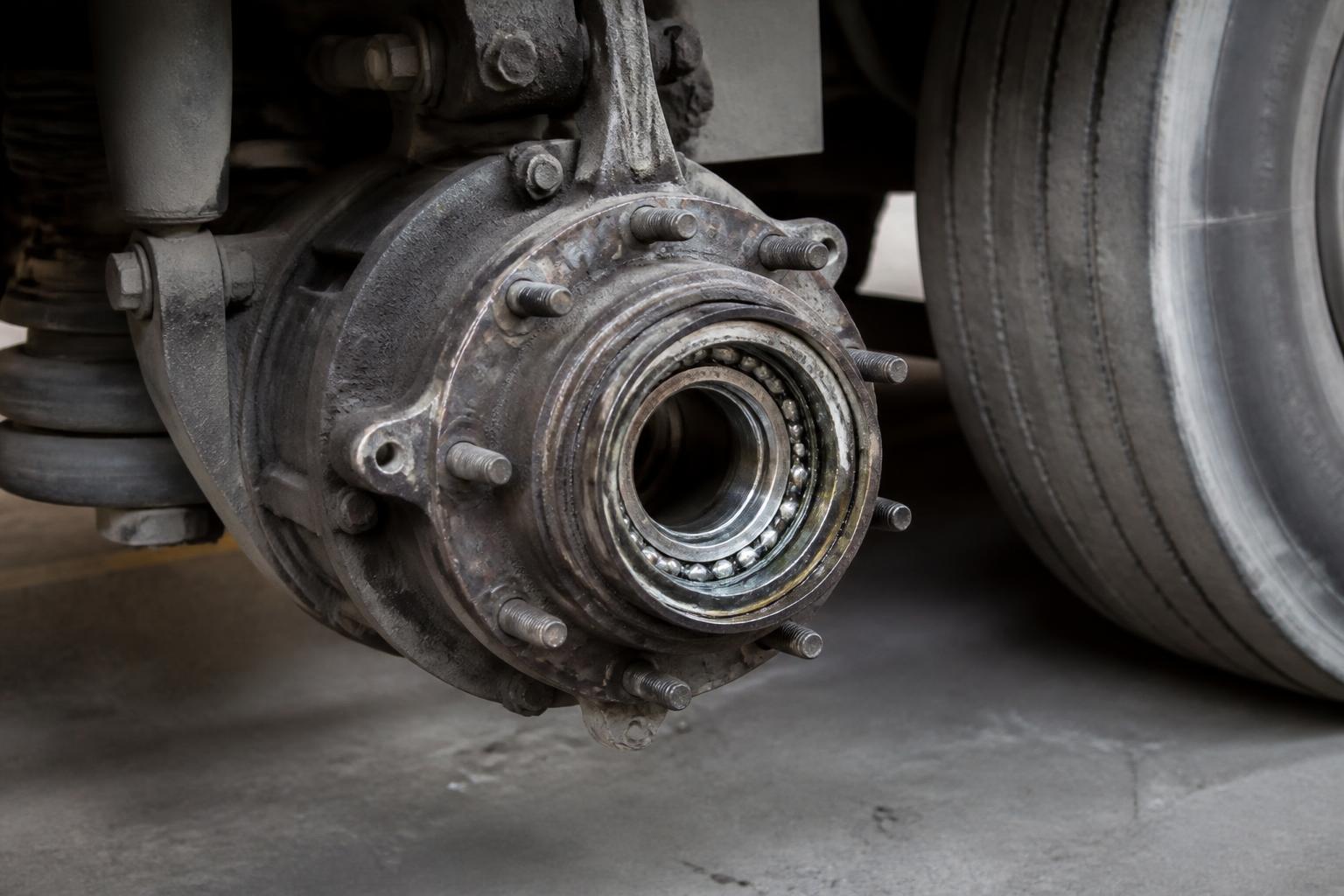
A wheel bearing noise on an HGV is not something to ignore and “see how it goes”. Sometimes the first sign is only a low hum at road speed, but a bearing that is starting to fail can quickly move on to excess heat, hub damage, brake contamination, wheel end play and an unsafe vehicle. The safest next step depends on what the noise is doing, whether it changes with speed or load, and whether there are any other signs at the wheel end.
At Woolpit Truck Repairs, we deal with this sort of fault as a practical triage job first. Before anyone orders parts, we want to know whether the vehicle can be used carefully to get in for inspection, whether it needs booking urgently with reduced use, or whether it should come off the road. If you are looking for HGV wheel bearing noise repair in Suffolk, that decision is the part that matters most first.
What wheel bearing noise usually sounds like on an HGV
Most operators notice wheel bearing noise as a steady droning, humming, rumbling or growling sound that rises with road speed. It is often more obvious from around urban speeds upwards and becomes clearer on smoother sections of road where other noise drops away. On a rigid, the sound may seem to come from one corner. On an artic, it can be harder to place because noise travels through the chassis and body.
A bearing noise usually changes with speed more than engine revs. If the sound is there in gear, then remains much the same when you lift off and coast, that points more towards a wheel end or driveline issue than an engine-related fault. Operators often describe it as a “road speed hum” rather than a knock or a squeal.
Load can alter how obvious it is. A lightly loaded vehicle may only show a mild drone, while the same axle under load can make the fault far more noticeable. Cornering can also change the sound. When weight transfers across the axle, a worn bearing may become louder or quieter depending on which side is loaded. That can be a useful clue, but it is not enough on its own to identify the exact wheel.
Road surface matters too. Coarse surfaces can mask a failing bearing because tyre noise is already high. On smoother tarmac, especially on the A14, many drivers first realise something is wrong because the background roar drops and a single droning note remains. Some hear it most clearly between Woolpit and Ipswich, others on longer runs towards Felixstowe where steady-speed running makes a pattern easier to spot.
In later stages, the noise can move on from a hum to a harsher grind or rumble. By then, you may also get heat at the hub, grease leakage, discolouration around the wheel end, or detectable play. If the bearing is bad enough to affect the sensor ring or wheel speed reading, you can also see ABS or EBS warnings, especially on trailers.
Wheel bearing or something else?
Not every road speed noise is a bearing. We regularly see operators replace the wrong parts because the first assumption sounded plausible. A proper comparison matters.
Tyre wear is one of the commonest lookalikes. Feathered edges, heel-and-toe wear, irregular wear across a steer tyre, or a damaged casing can all create a humming or droning noise that rises with speed. Unlike a bearing, tyre noise often changes more with road surface and can sound broader across the axle rather than concentrated at one hub. Cupped or stepped wear can be especially misleading. If the sound appeared after tyre changes or after a period of poor alignment, tyres must be checked first. Our article on truck tyre failures and the safest next step covers some of the warning signs operators should not dismiss.
Brake drag is another possibility. A sticking caliper, seized slider, binding foundation brake or parking brake issue can cause heat and a low rubbing or grinding noise. The difference is that brake drag often brings a hot smell, one wheel hotter than the rest, poorer rolling, and sometimes a pull or reduced fuel economy. On trailers, a brake issue can also trigger EBS fault activity if the system sees abnormal wheel behaviour.
Hub issues can overlap with bearing faults because they are closely linked. A damaged seal, grease loss, contaminated lubricant, worn stub axle surfaces or hub damage can all lead to or result from bearing failure. Sometimes the bearing is not the only failed component and replacing the bearing alone does not address the cause.
Differential noise usually behaves differently. Crown wheel, pinion or carrier bearing noise tends to come from the centre of the drive axle and may alter more clearly on drive, overrun or load change. Operators often describe it as a whine rather than a single-corner rumble, though there is overlap. If the sound changes sharply between power on and power off, the differential belongs in the checks.
Trailer-related faults can confuse the picture on an artic. A trailer wheel bearing, tyre issue, brake drag, suspension component or even body-related resonance can sound like it is coming from the unit. The quickest way to waste time is to assume the tractor is at fault without isolating whether the noise remains with another trailer or changes when the trailer axle group changes load.
This is why we treat diagnosis as a wheel end and route-use problem, not just a parts problem. If you want a wider view of who should be checking what, our guide on truck and trailer faults in Suffolk and who should diagnose what sets that out clearly.
When is it safe to continue and when should you stop?
There is no responsible blanket rule that every bearing noise means immediate recovery, and there is no responsible rule that every humming wheel can carry on to the end of the week. The safest decision depends on the signs present.
Reduce use and book inspection urgently if the noise is new, clearly linked to road speed, and getting worse, but there is no heat, no warning light, no vibration through the steering, and no sign of wheel end looseness or fluid leakage. In that case, we would normally advise limiting mileage, avoiding unnecessary runs, and getting the vehicle checked as soon as possible.
Take the vehicle off the road if any of the following are present:
- The hub is noticeably hotter than the opposite side after a comparable run
- There is visible grease leakage, oil contamination or metallic debris at the wheel end
- The noise has progressed to grinding, knocking or harsh rumbling
- There is steering vibration, wheel wobble or an unstable feel
- ABS or EBS warnings appear alongside wheel end symptoms
- There is suspected play in the wheel or hub
- The brake performance at that wheel appears affected
- The noise deteriorates rapidly over a short distance
For UK operators, the practical standard is simple. The vehicle must remain roadworthy at all times, and wheel bearings, hubs, brakes and tyres are all squarely within that duty. A defect that affects safe condition is not something to push through until the next planned slot. If the fault is found during a safety inspection or MOT preparation, the right next step is repair before further use unless a competent inspection confirms otherwise.
Where rules differ between Great Britain and the EU generally, the paperwork and enforcement framework can vary, but the underlying safety point does not. Excessive wheel bearing play, insecure wheel end components, brake contamination and related defects are taken seriously because of the direct risk at the axle.
If the vehicle is already stopped on route and you are unsure whether to move it, the safer call is to stop guessing and get a workshop view. We set out the immediate actions in our guide on what to do when an HGV fault stops you in Suffolk.
How a workshop confirms the fault
A proper HGV or trailer wheel bearing inspection should do more than listen to the driver’s description and fit a bearing kit.
First, we want the symptom history. Which axle, which side if known, what speed the noise starts at, whether it changes on left or right bends, whether the vehicle is loaded or empty, whether another trailer changes the symptom, and whether any ABS or EBS faults have appeared. Good triage saves time in the bay.
Then comes the physical inspection. Depending on the vehicle and fault state, that may include:
- Checking hub temperature against the opposite side after controlled running
- Inspecting for grease or oil leakage around the hub and seal area
- Looking for signs of overheating, discolouration or contamination
- Checking wheel end play correctly with the axle safely lifted
- Rotating the wheel and feeling or listening for roughness
- Inspecting brake condition for drag, heat spotting or contamination
- Checking tyre wear patterns that could mimic a bearing noise
- Assessing hub, stub axle and seal condition
- Checking wheel speed sensor, tone ring and related ABS or EBS components where relevant
On drive axles and trailers, we also need to make sure the noise is genuinely local to that wheel end. It is not unusual to inspect one suspect corner and find the actual source is another axle position.
If the symptom points towards a braking contribution, roller brake testing can help show imbalance, drag or related issues that should be dealt with at the same time. If there is any concern that the noise is being misread and the fault may be elsewhere in the driveline or trailer, the inspection should widen before parts are committed.
The key point is that bearing replacement on a commercial vehicle is not just a swap-and-go job. Fit, preload or end float setting where applicable, seal condition, lubrication, hub integrity and adjacent brake components all matter. A rushed diagnosis can leave the real fault in place and send the vehicle back out with the same noise.
Repair choices, downtime and what can be damaged if it is left
Early repair is nearly always the cheaper operational choice, even when the first symptom seems minor. If we catch a bearing fault before heat and movement damage the surrounding parts, the job is usually more contained and the downtime easier to plan.
Delayed repair can turn a bearing issue into a wider wheel end job. Depending on the axle and failure mode, leaving it can lead to:
- Hub damage
- Seal failure and lubricant loss
- Stub axle wear or damage
- Brake contamination
- ABS sensor or tone ring damage
- Brake disc or drum damage from heat or movement
- Wheel end overheating
- More difficult parts removal and longer workshop time
- Unplanned roadside stoppage or recovery
For fleets, the hidden cost is not just the repair invoice. It is missed delivery windows, trailer swaps, driver time, route disruption and the risk of a defect escalating away from base. For owner-drivers, it can turn a manageable workshop booking into a lost day or more, plus recovery and secondary damage.
There is also a compliance angle. If a wheel end defect is left until it affects braking, steering stability or general roadworthiness, the consequences go beyond downtime. That is why we favour clear defect explanation and realistic next-step advice over vague reassurance.
At Woolpit Truck Repairs, that often means telling an operator one of three things plainly. It can wait for a booked slot with restricted use. It needs urgent inspection today. Or it should not continue in service. That is the practical value in getting an HGV wheel bearing noise checked properly in Suffolk rather than trying to diagnose it by ear in a lay-by.
What Suffolk operators should do if the noise starts on route
If the noise starts while you are running through Woolpit, along the A14, or moving between Ipswich, Felixstowe, Stowmarket, Bury St Edmunds, Newmarket or Elmswell, do not jump straight to “it will be a tyre” or “it will get us home”. Start with a controlled assessment.
If safe to do so, note:
- When the noise starts and whether it rises with road speed
- Whether it changes on gentle left or right curves
- Whether it changes under load, overrun or braking
- Whether any ABS or EBS warning appears
- Whether the vehicle feels different through the steering or seat
- Whether you can identify if it is tractor or trailer related
At the next safe stop, carry out a cautious visual check. Look for obvious tyre damage, signs of brake overheating, leaks or anything visibly loose at the wheel end. Do not put yourself in danger at the roadside and do not touch a suspect hub or brake assembly if overheating is possible.
If there is heat, a strong smell, visible leakage, harsh grinding, warning lights linked to the wheel end, or any sign the wheel is not running true, stop using the vehicle and arrange support. If the sound is mild but clearly new and speed-related, reduce use and get it booked in before the next long run.
Our workshop is at Bridge Farm, near A14 J47 in Woolpit, which gives straightforward access for operators moving across Suffolk. We work with fleets, owner-drivers and route-based operators who need a sensible decision first, not guesswork. If the vehicle can come in safely, we can inspect the wheel end, compare likely causes and explain whether you are looking at a bearing issue, a brake problem, tyre-related noise or something else. If it cannot, ask us about callout or recovery support enquiries for commercial vehicles.
For operators running under FLEETA LIMITED or any other fleet structure, the same rule applies. Record the symptom properly, avoid unnecessary mileage, and do not let a doubtful wheel end become an avoidable roadside failure. If you are trying to decide whether to move or recover, our page on HGV recovery support in Suffolk when downtime starts is the right next read.
A wheel bearing noise rarely fixes itself. The safest next step is an inspection that rules in the bearing, rules out the lookalikes, and tells you honestly whether the vehicle is fit to continue. That is how we handle it at Woolpit Truck Repairs, from Bridge Farm in Woolpit, for operators across Suffolk and the nearby routes that depend on the A14.
Can an HGV wheel bearing noise come and go?
Yes. It may be more noticeable at certain speeds, under load, on bends or after the hub has warmed up. Intermittent noise still needs checking.
Does a wheel bearing always cause play in the wheel?
No. Some bearings make noise before obvious play is found. That is why noise reports, heat checks and strip inspection all matter.
Can tyre noise be mistaken for a wheel bearing?
Yes. Uneven wear, feathering and certain tread patterns can create a hum or drone that sounds similar, especially on different road surfaces.
Is it safe to drive with a suspected wheel bearing fault?
It depends on the symptoms. If there is heat, grinding, vibration, pulling, ABS warnings or worsening noise, treat it as urgent and get it inspected.
Can trailer bearings make the same sort of noise as a unit or rigid?
Yes. Trailer hub and bearing faults can sound very similar, so the inspection needs to confirm which axle and which wheel end is involved.