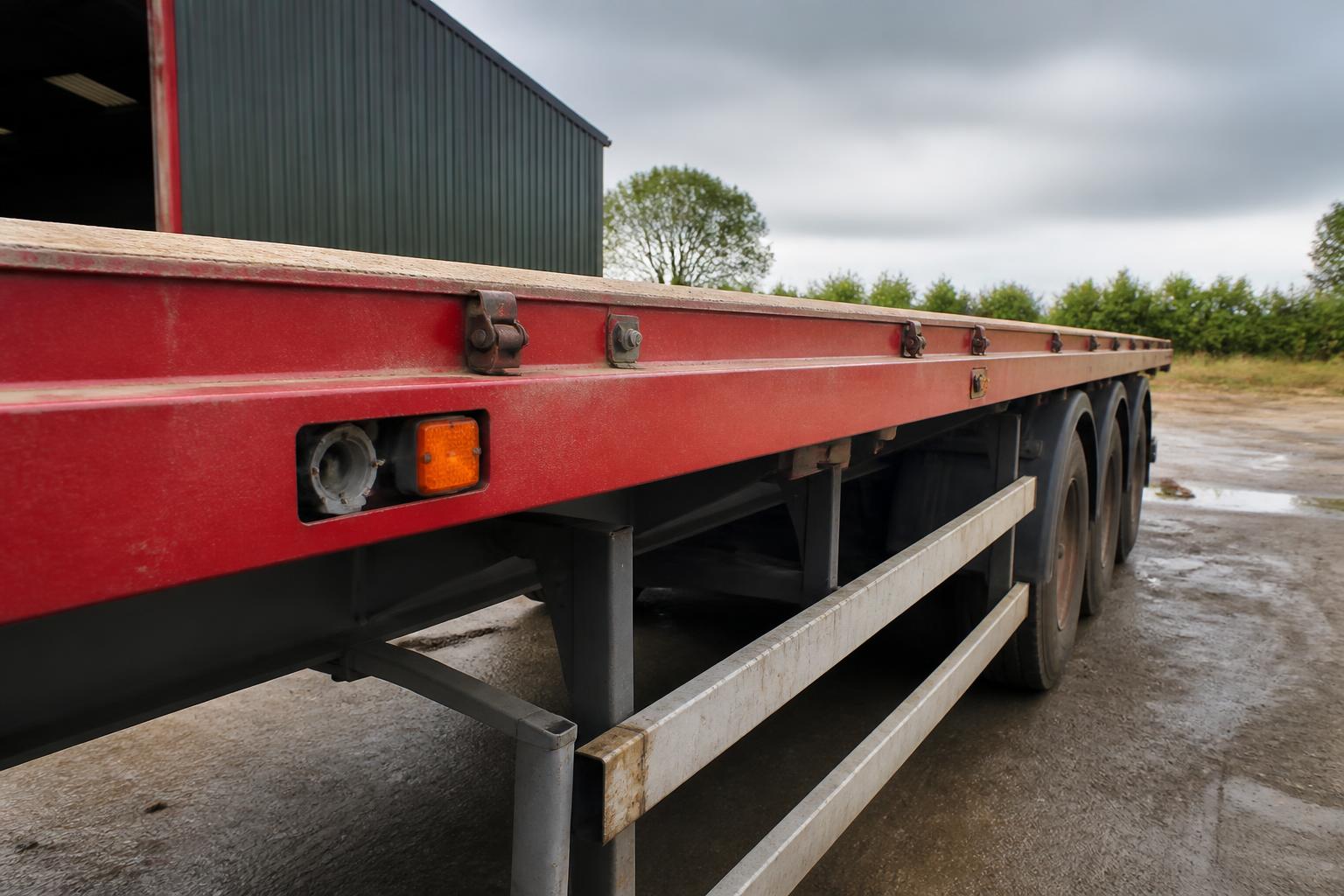
If trailer marker lights are out on an HGV, the likely fault is usually one of three things. A failed lamp unit, a bad connection at the trailer plug and socket, or damage in the trailer wiring and side marker circuit. The right next step depends on whether the fault is isolated to one lamp, one side of the trailer, or the full marker light circuit.
For operators searching for help with HGV trailer marker lights not working in Suffolk, the practical question is not just what has failed, but whether the trailer is still safe and legal to move, and how quickly the defect can be traced without wasting driver hours. At Woolpit Truck Repairs, near A14 J47 at Bridge Farm, Woolpit, we see the same pattern regularly on trailers running between Ipswich, Felixstowe, Stowmarket, Bury St Edmunds, Newmarket and Elmswell.
What a marker light failure can mean in practice
What drivers usually notice first is simple. A side marker is dark on a walk-round check, several lamps on one side have gone out, or another road user has pointed out that the trailer side lights are not showing properly at night or in poor weather. Sometimes the defect appears after loading, after reversing onto a bay, or after uncoupling and recoupling.
A marker light fault can mean one failed side marker lamp, a front or rear position lamp issue that makes the trailer lighting look incomplete, or a wider loss of the trailer side light feed. On many trailers, operators use "marker light" loosely to describe the side marker lamps, outline marker lamps and related position lights that help define the trailer length and width.
Why it matters is straightforward. These lamps are part of the trailer’s visibility and roadworthiness. If the trailer cannot be seen clearly from the side or its outline is not shown properly in low light, rain, fog or darkness, the risk to other road users increases. It also matters for daily defect reporting, roadside enforcement and MOT preparation. A small lighting defect can become a bigger downtime issue if the underlying cause is loom damage or water ingress that starts affecting more than one circuit.
In UK operation, the practical standard is whether the vehicle and trailer are in a safe and roadworthy condition when used on the road. A marker lamp that is out may look minor, but if the defect reduces required visibility or points to wider electrical damage, it needs attention quickly. For fleets, it also raises the usual questions about inspection quality, repeat defects and whether a trailer should stay in service that shift.
Simple lamp faults versus wiring faults
The quickest comparison is this. If one lamp is out and the rest of the trailer lights are normal, the fault is often local to that lamp. If several lamps are out together, especially on one side, wiring and connection faults move much higher up the list.
A simple lamp fault might be a failed bulb on an older unit. On more modern trailers, it is often an LED unit failure rather than a replaceable bulb. LED marker lamps are generally reliable, but when they fail they usually fail as a complete sealed unit. Cracked lenses, impact damage, internal moisture and failed electronics are all common causes.
Poor earths are also common and can look like lamp failure. A bad earth can cause dim lamps, intermittent operation, lamps that work only when the cable is moved, or odd behaviour when other lights are switched on. On trailers that have seen winter road spray, washdowns and repeated connector use, corrosion at earth points is routine workshop work.
Damaged side marker cables are another regular fault. The cable run along the trailer chassis is exposed to road debris, tyre spray, rubbing, previous repairs and snagging. We often find crushed cable, insulation rubbed through on bodywork or clips, and repairs that have been joined badly and then left open to moisture.
Water ingress is where simple faults become recurring faults. If water gets into a lamp body, connector, junction box or cable join, the problem rarely stays neat. Corrosion creeps through terminals, resistance rises, and what starts as one intermittent side marker can turn into a section fault. If one side marker has obvious impact damage or condensation inside, replacing only the lamp may not be enough. The connector and adjacent cable need checking too.
As a rule of thumb, one dead lamp with no other symptoms points first to the lamp unit or its immediate connection. Multiple dead markers, repeated fuse issues, intermittent operation, or defects returning after a recent repair point more strongly to wiring, earth or water ingress.
Trailer plug and socket faults compared with trailer loom faults
The first split in diagnosis is whether the problem is at the tractor and trailer interface, or further back on the trailer itself.
A plug and socket fault is common when the issue appears suddenly after coupling, after swapping trailers, or when the same trailer works behind one unit but not another. Dirt, corrosion, bent pins, poor pin contact, moisture and cable strain at the suzie connection can all interrupt the side light circuit. The fault may be in the trailer plug, the tractor socket, or the cable entry where conductors have broken internally from repeated flexing.
This type of fault often affects more than one lamp because the feed is being lost before it reaches the trailer lighting circuits. If all trailer marker lights are out, or side lights and marker lights disappear together, the interface is one of the first places to check. Wiggle-related intermittency is another clue. If the lights come on and off as the plug is moved, the issue may be at the connection rather than deep in the trailer loom.
A trailer loom fault is different. Here, the tractor is supplying the circuit correctly, but the fault lies in the trailer’s internal wiring route, junction boxes, lamp tails or branch circuits. Typical signs are one side of the trailer being out while the other side still works, a rear lamp cluster working but side markers dead, or one group of lights failing repeatedly despite plug cleaning and recoupling.
Loom faults are more likely where there has been previous accident damage, body repairs, axle or suspension work, or repeated rubbing points under the trailer. Junction boxes are a regular source of trouble. Once seals fail or lids are not refitted properly, moisture and corrosion can affect several branch connections at once.
This is where proper fault-finding saves time. Replacing lamps at random does not fix a broken feed halfway down the chassis. Equally, replacing trailer plugs does not solve a corroded junction box over the axle line. If you want a broader view of who should handle which kind of defect, our guide to truck and trailer faults that need the right diagnosis path sets that out clearly.
When lighting faults sit alongside ABS or EBS defects
Marker light faults are often separate from ABS or EBS warnings, but not always.
If the only symptom is trailer marker lights not working and there are no ABS or EBS warning lamps, no brake performance concerns and no communication faults, the issue is usually confined to the lighting circuit. In that case, think first about lamp units, side light feed, earths, plug pins and trailer loom damage.
Where it gets more complicated is when the trailer has suffered shared connector damage, corrosion, impact or water ingress around multi-circuit areas. The electrical systems may be separate in function, but they can be affected by the same physical problem. A damaged cable set at the front of the trailer, a corroded connector housing, or severe water ingress into a front junction area can create both lighting issues and ABS or EBS faults.
For example, if a trailer comes in with marker lights out and an ABS or EBS warning active, we do not assume one causes the other. We look for common points of damage. Has the front electrical area taken water? Are connector pins green with corrosion? Is there loom damage where cables run together? Has there been recent work and disturbed wiring? On some trailers, poor repair work in the front service area can leave both lighting and braking system wiring vulnerable.
That matters because brake system warnings change the urgency. A lighting defect may allow careful movement for repair depending on the exact condition and route. An ABS or EBS defect needs its own assessment. In UK operation, ABS and EBS faults can affect braking performance, compliance and whether the trailer should continue in service. If lighting and braking defects appear together, treat it as more than a lamp problem.
If brake concerns are part of the picture, it is often worth combining electrical fault-finding with trailer brake testing before downtime spreads so you are not solving one defect while another takes the trailer back off the road.
Roadside checks compared with workshop diagnostics
There are sensible roadside checks, and there is the point where further guessing costs more than proper testing.
At the roadside, a driver or operator can check the obvious safely. Confirm whether one lamp, one side, or all trailer marker lights are affected. Check whether rear lamps and number plate lamps are also out. Inspect the trailer plug and socket for poor seating, visible corrosion, water or damage. Recouple if appropriate. Look for a trapped or stretched cable at the front. Check for obvious lamp damage, smashed units or hanging cables down the trailer side.
A daily defect report should record exactly what is not working, not just "lights faulty". That helps decide whether the trailer can be moved to repair and speeds diagnosis once it arrives.
What should not happen at the roadside is random cutting, joining or bypassing without proper test equipment and proper repair materials. Temporary electrical repairs on trailers often become the reason the same unit is back again with repeat faults.
In the workshop, we can test the supply, confirm whether the fault is on the tractor side or trailer side, trace voltage loss, load-test suspect circuits, inspect earth integrity, open junction boxes, and isolate failed lamp units from failed feeds. We can also check whether the visible lighting fault is part of wider trailer electrical deterioration. That is the difference between replacing one part and actually curing the defect.
Where the trailer has multiple age-related electrical issues, it often makes sense to combine the repair with one of our HGV and trailer inspections so the operator gets a clear list of what needs doing now and what is likely to become downtime next.
If the trailer is stopped with a defect and the next move is unclear, our advice on what to do when a trailer fault stops you in Suffolk covers the practical triage points.
Choosing the next step for operators in Suffolk
The decision comes down to extent, conditions and risk.
If one marker lamp has failed in daylight, the rest of the trailer lighting is working, there are no other electrical or brake warnings, and the trailer can be moved directly for repair without creating a safety issue, the next step is usually controlled movement to workshop attention as soon as practical. The defect still needs recording and fixing, but it is not the same as a trailer that has lost its full side light circuit.
If several marker lights are out, one whole side is dark, the fault is intermittent, or the trailer will be running in darkness, poor weather or on routes where visibility matters immediately, stop and assess before moving. If there is any doubt about roadworthiness, do not rely on guesswork. If the plug, socket or front cable area is visibly damaged, or if the fault sits alongside ABS or EBS warnings, the case for proper inspection becomes stronger.
For fleets, the commercial question is usually whether to swap the trailer, send support, or route the unit to workshop. For owner-drivers, it is often whether careful movement is realistic or whether downtime now is better than enforcement, a roadside prohibition, or a repeat failure later that day.
This is where location matters. We are at Bridge Farm in Woolpit, close to A14 J47, which makes us a practical option for operators moving through Suffolk or running between Ipswich, Felixstowe, Stowmarket, Bury St Edmunds, Newmarket and Elmswell. We focus on HGV and trailer work only, so the triage is based on what the defect actually means on a working commercial vehicle, not on generic car-style electrical advice.
At Woolpit Truck Repairs, we keep the next step simple. We identify whether the fault is likely to be a lamp unit, a plug and socket issue, or a loom and connection problem further back in the trailer. We explain what can be repaired directly, what needs tracing, and whether there is any sign the defect overlaps with wider trailer electrical or brake system issues. If repair is needed, our truck and trailer repair support for working operators is set up for practical workshop action rather than vague diagnosis.
Woolpit Truck Repairs is operated by FLEETA LIMITED, and our approach is the same whether you run a fleet trailer or a single unit. If your HGV trailer marker lights are not working in Suffolk, the fastest route to a sensible decision is to pin down the pattern of failure first, then get the trailer into the right level of inspection before a small visibility defect turns into avoidable downtime.
Can one failed marker light be just a bulb?
Yes. A single failed lamp can be a bulb or LED unit fault. But if the same position keeps failing, the cause is often wiring damage, water ingress or a poor earth.
Why do several trailer marker lights fail at once?
Multiple failures usually point to a shared supply fault, earth problem, damaged loom, connector issue or water ingress rather than several lamps failing together by chance.
Can an ABS or EBS fault cause marker lights to stop working?
Not always directly. They are separate systems, but damage around connectors, cables or trailer electrical feeds can affect lighting and ABS or EBS at the same time.
Is it safe to keep running with trailer marker lights not working?
That depends on which lights are out, visibility conditions and the overall defect. If roadworthiness is in doubt, the safest next step is inspection before further use.
What can be checked before booking the trailer in?
A driver can check visible lamp damage, obvious cable strain, plug condition and whether the fault changes with another trailer or unit. Proper circuit testing still needs workshop equipment.
Where can operators near Ipswich or Felixstowe get trailer fault checks?
Woolpit Truck Repairs at Bridge Farm in Woolpit is placed for operators using the A14, including routes from Ipswich, Felixstowe, Stowmarket, Bury St Edmunds, Newmarket and Elmswell.