If you are choosing truck repairs in Suffolk as an owner-driver, the right workshop is the one that helps you make a safe decision quickly, then carries out the work that actually gets the vehicle back to work with the least avoidable downtime. That usually means proper HGV diagnostics, clear defect reporting, realistic booking advice, and access that makes sense for your route rather than the nearest generic garage.
At Woolpit Truck Repairs, we work with owner-drivers, fleets and route-based operators who need practical answers, not vague promises. From Bridge Farm in Woolpit, close to A14 J47, we focus on HGV and trailer work only. That matters when the issue is a brake imbalance, an ABS or EBS warning, a trailer defect, an MOT deadline, or an off-road fault where the next step needs to be sensible from both a safety and commercial point of view.
What owner-drivers in Suffolk actually need from a repair workshop
An owner-driver usually starts looking for help when one of four things happens. A warning light comes on, a safety defect is found on a walkaround check, the vehicle develops a fault that affects drivability, or the MOT date is getting close and there are known issues to sort first.
In that situation, the buying criteria are straightforward.
First, you need a workshop that can tell the difference between a defect that stops the vehicle moving, one that allows a controlled trip to the workshop, and one that should be booked in before it becomes a bigger problem. That is not just about mechanics. It is about triage. If a truck has an ABS warning, poor braking feel, an air leak, uneven tyre wear, or a trailer lighting fault, the priority is to understand the risk, the likely cause, and the most practical next step.
Second, you need clear explanations. Owner-drivers do not need pages of jargon, but you do need more than “it needs looking at”. If a brake test shows imbalance, if diagnostics point to an EBS issue, or if a trailer has wear in running gear components, you need the defect explained in a way that lets you authorise work with confidence.
Third, you need a workshop that understands downtime as a cost, not an inconvenience. That means realistic booking slots, sensible parts decisions, and no padding out of jobs that do not need doing today. Sometimes the best answer is to complete the urgent safety work now and plan the secondary items into the next inspection window.
Fourth, you need support that matches the vehicle you run. A rigid doing local work has different pressures from an artic pulling trailers in and out of Felixstowe. A workshop handling HGV and trailer systems every day is more likely to spot linked issues early, such as how a brake complaint, warning light and trailer defect may all be part of the same root cause.
For owner-drivers looking for truck repairs in Suffolk, this is where specialist workshop support usually saves time. The job is not only to repair the defect. It is to help you avoid the wrong repair path in the first place.
General vehicle garage or HGV-and-trailer workshop?
A general commercial garage can be the right place for some basic work, especially if the issue is straightforward and the vehicle type falls within what that garage sees regularly. But once the fault involves HGV brake systems, trailer defects, warning light diagnostics, or MOT preparation, the difference between a general garage and an HGV-and-trailer workshop becomes more obvious.
The first difference is diagnostics. On a modern HGV, fault tracing often means more than reading a code and fitting a part. ABS and EBS systems need interpreting properly. The same goes for air system faults, brake wear patterns, suspension concerns, and trailer electrical issues. A code readout is only the start. The workshop still has to decide whether the fault is wiring, a sensor, a modulator, a mechanical brake issue, poor adjustment, or a related trailer problem.
The second difference is inspection quality. A specialist HGV and trailer workshop is more likely to inspect in a way that reflects how the vehicle is actually used. That matters when the complaint is “pulling under braking”, “warning light comes and goes”, “trailer doesn’t feel right loaded”, or “MOT is due and I want the defects found before test day”.
The third difference is repair judgement. A specialist workshop is usually better placed to separate urgent defects from secondary ones. If a vehicle comes in with multiple issues, we need to know what must be repaired before it is safe and compliant, what should be done while the vehicle is already in the workshop, and what can be scheduled next. That is a practical skill, not a sales exercise.
Trailer work is where this gap often shows most clearly. A general garage may be comfortable with a truck unit but less set up for trailer brake faults, lighting defects, running gear checks, or trailer inspection routines. If your operation depends on both unit and trailer being right, splitting that diagnosis between different providers can add time and confusion.
If you want a more detailed comparison of what should be diagnosed where, our guide on truck and trailer faults and who should diagnose what sets that out in practical terms.
At Woolpit Truck Repairs, we stay in our lane on purpose. We are an HGV and trailer workshop, not a general car-and-van garage that also takes trucks when space allows. For owner-drivers, that usually means more realistic decisions on inspections, brake faults, trailer defects and MOT preparation.
Planned workshop booking or urgent callout support?
Not every fault should be treated as an emergency, and not every breakdown should be pushed into a later booking. Getting that decision right is one of the easiest ways to reduce downtime.
A planned workshop booking is usually the better option when the vehicle is still operable, the fault can be controlled safely, and the issue needs proper inspection conditions. Typical examples include intermittent warning lights, suspected brake imbalance, air conditioning not cooling properly, tyre wear that needs assessment, trailer defects found during checks, and pre-MOT work.
Booked workshop time is also often the best route when the likely repair will involve diagnostics, brake testing, or a more structured inspection before parts are ordered. If the truck can come in under its own power and the symptoms are not making it unsafe to move, a workshop booking can be quicker overall than waiting for an emergency response and then repeating the same checks later under workshop conditions.
Urgent callout or recovery support enquiries make more sense when the vehicle is off-road, the fault affects safety directly, or there is no sensible way to move it without further risk. That includes serious air loss, braking concerns that make the vehicle unsafe to drive, wheel-end issues, major tyre failures, electrical faults that stop operation, or damage that leaves the truck or trailer unroadworthy.
The key point is that “urgent” should describe the risk and the operational impact, not just the inconvenience. Sometimes a vehicle feels urgent because the load is time-sensitive, but the safest and quickest overall decision is still controlled recovery to a workshop. In other cases, a roadside assessment may confirm that the issue is less severe than first thought and can be booked in properly.
Where operators get caught out is waiting too long with a developing fault. A wheel bearing noise, a recurring ABS light, or a tyre issue that is getting worse can move from workshop job to roadside problem faster than most schedules allow. If that sounds familiar, our article on what to do when an HGV fault stops you in Suffolk covers the safest first steps.
How location affects downtime on Suffolk routes
Workshop quality matters, but so does geography. In practical terms, a good workshop in the wrong place can still cost you half a day more than a good workshop on your route.
For operators running through Suffolk, access near the A14 is often the deciding factor. The A14 links major freight movement across the county, including traffic to and from Ipswich and Felixstowe, and onward routes serving Stowmarket, Bury St Edmunds, Newmarket and surrounding areas. If your truck or trailer needs inspection, diagnostics or repair, getting off the route and back onto it quickly matters.
That is why our location at Bridge Farm in Woolpit, near A14 J47, is useful in a very practical sense. We are not tucked away down a route that only works for local traffic. For owner-drivers and route-based operators, Woolpit is accessible without turning a workshop visit into a separate day’s job.
This matters in several common situations.
If you are carrying a warning light but the vehicle is still safe to present for inspection, a workshop close to the A14 can reduce the time lost in detours.
If a trailer defect is found between jobs, easy access can make the difference between handling it the same day or missing the next load.
If you are managing MOT preparation, being close to your normal route makes it easier to get pre-test issues checked and repaired before the booked date.
If you run regular traffic between Felixstowe and inland destinations, workshop access near Woolpit can also help when faults show up mid-route rather than at your own yard.
For local operators around Elmswell, Stowmarket or Bury St Edmunds, the same point applies. The best workshop is not simply the closest by postcode. It is the one that fits how your vehicle actually moves through the day.
If you are comparing workshop access near the route, our guide on how to choose an HGV trailer workshop near the A14 looks at that in more detail.
What to compare before you authorise the work
Before you approve repairs, compare the workshop on the things that directly affect safety, cost control and downtime.
Start with defect reporting. You should be told what has been found, how serious it is, and what needs doing now versus later. That sounds basic, but it is where many delays begin. If the workshop cannot explain the defect clearly, it is harder to authorise the right work first time.
Next, compare diagnostics capability. On HGV and trailer faults, guessing is expensive. If the issue involves ABS, EBS, warning lights, brake performance, electrical faults or intermittent symptoms, ask whether the workshop is set up to diagnose properly before replacing parts. A sensible diagnostic process often saves both labour time and unnecessary components.
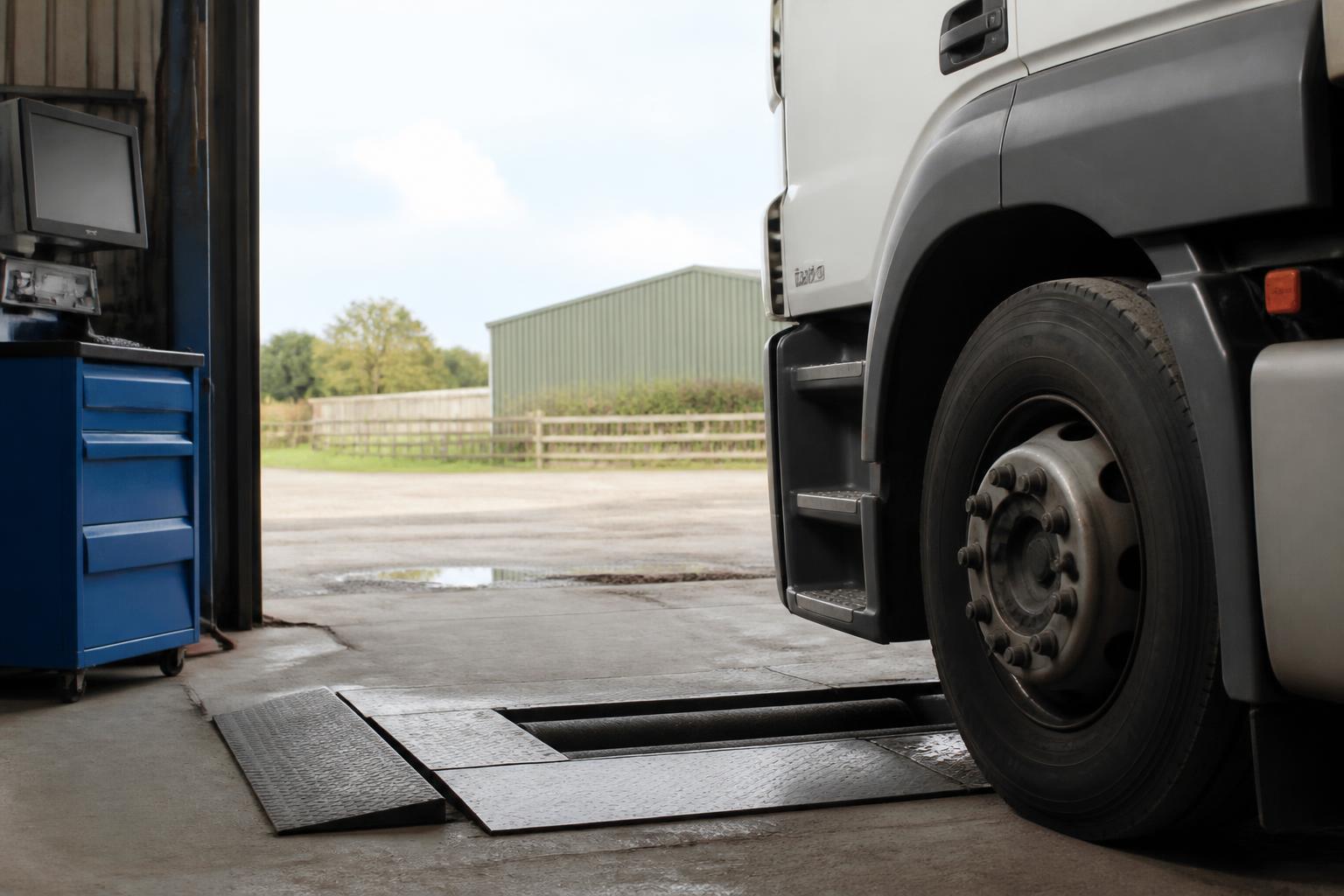
Brake testing is another key point. If the concern is braking performance, imbalance, pulling, poor feel, or MOT readiness, a workshop with roller brake testing can give you a firmer basis for repair decisions. It is one thing to suspect a brake issue. It is another to test, identify the fault path, and confirm the result after repair.
MOT preparation should also be judged on process, not just whether the workshop says it can do it. Proper preparation means inspecting for likely failure points, dealing with defects before test day, and being realistic about what may still need attention. In the UK, MOT requirements are specific, and HGV and trailer presentation standards matter. If a workshop treats MOT prep as a quick once-over, you are more likely to lose time later.
Tyre support is worth comparing too. Not every tyre issue is just a replacement decision. Uneven wear, shoulder damage, cuts, pressure-related wear patterns, or repeat failures can point to other faults that should be checked at the same time. If tyres are part of the problem, the workshop should be able to explain whether the next step is immediate replacement, further inspection, or both. We cover this in more detail in our article on truck tyre failures and the safest next step.
Air conditioning re-gas may sound less urgent than brakes or warning lights, but for drivers spending long hours in the cab, it still affects working conditions and concentration. If the system is blowing warm, compare whether the workshop only offers a basic re-gas or whether it also checks for obvious faults that may make a re-gas pointless. In some cases, poor cooling is not simply low refrigerant. Our article on why HGV air con blows warm in Suffolk explains the usual next checks.
Finally, compare the quality of next-step advice. This is where specialist workshops tend to stand out. You should come away knowing one of three things. The vehicle is safe to return to work after repair. It needs additional work before it should be used. Or the current issue is controlled for now but should be booked back in at a defined point. That kind of practical advice is what helps owner-drivers manage uptime properly.
At Woolpit Truck Repairs, we keep that process simple. We inspect, diagnose, test where needed, explain the defects clearly, and set out the most realistic next step. That is how we help owner-drivers, fleets and other operators keep HGVs and trailers moving across Suffolk with less avoidable downtime.
Woolpit Truck Repairs is operated by FLEETA LIMITED from Bridge Farm, Woolpit, close to A14 J47, supporting operators across Suffolk, including routes through Ipswich, Felixstowe, Stowmarket, Bury St Edmunds, Newmarket and Elmswell.
Is the cheapest truck repair quote usually the best option?
Not always. For an owner-driver, the real cost includes downtime, repeat visits, missed loads and whether the fault is diagnosed properly first time.
When should I choose a specialist HGV workshop?
Choose a specialist when the issue involves HGV braking, trailer defects, warning lights, inspections, MOT preparation or faults that need clear commercial next-step advice.
Can a workshop help if the problem is on the trailer rather than the unit?
Yes, if it handles trailer work as well as HGV repairs. That matters for brake defects, lighting issues, ABS or EBS faults and inspection items.
Why does location near the A14 matter so much?
Because travel time, recovery distance and workshop access all affect downtime. A site near A14 J47 can be more practical for Suffolk route-based operators.
What should I ask before approving repairs?
Ask what the confirmed defect is, what testing has been done, whether the vehicle is safe to move, what must be fixed now and what can be scheduled next.