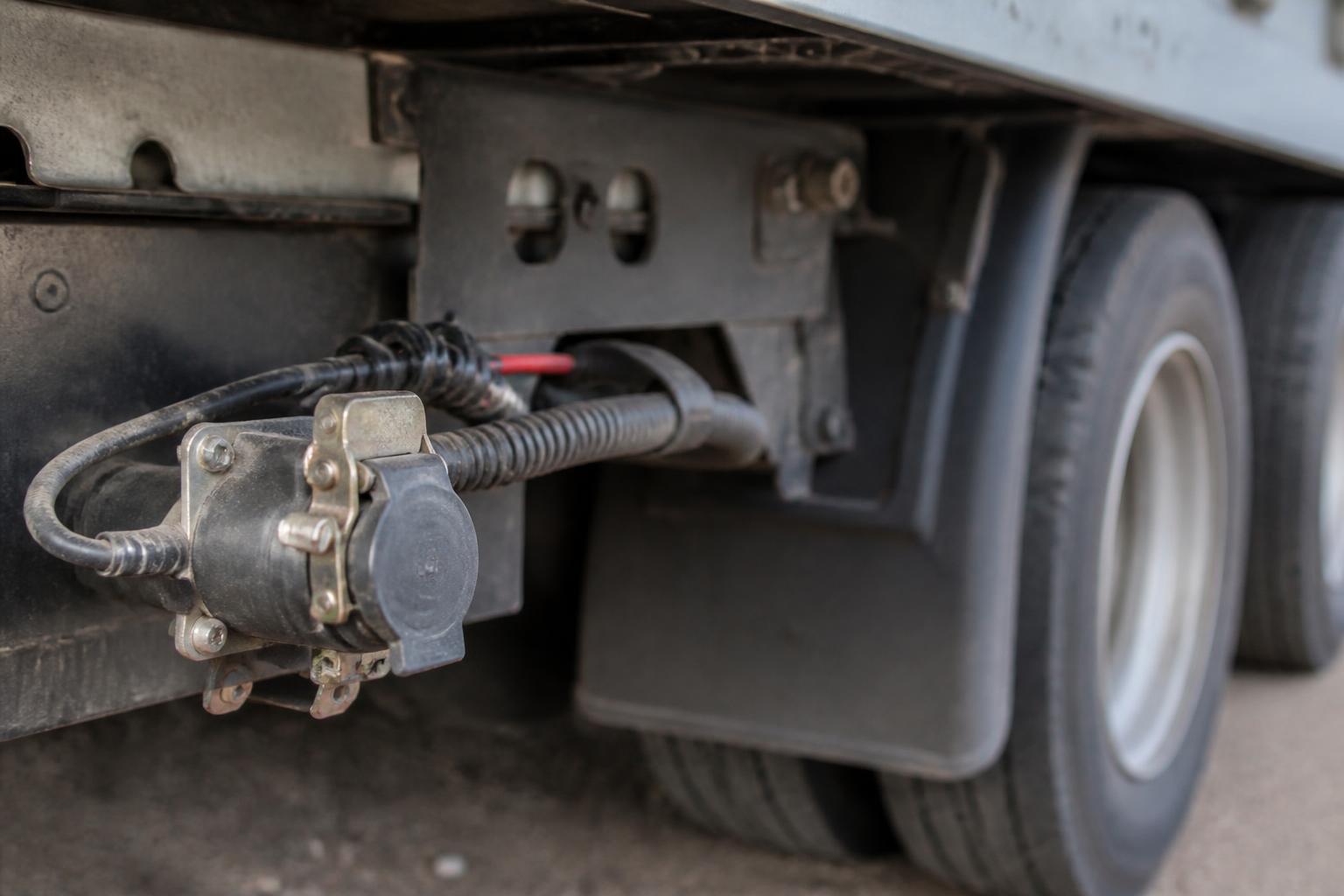
If the ABS warning light comes on a trailer, the first thing to check is not the brake shoes or pads. In many cases the issue sits in the trailer’s ABS or EBS control system, its power supply, or the electrical connection between unit and trailer. Start with safe basics, confirm the red and yellow air lines are correctly connected, inspect the ISO 7638 ABS/EBS lead and sockets for damage or corrosion, and look for obvious wiring or sensor damage around the axles. If the light stays on, or the trailer shows other brake-related symptoms, treat it as a braking system defect and get it diagnosed properly.
For operators searching for what to check when a truck trailer ABS warning light is on, the practical answer is to separate simple connection faults from defects that can affect braking performance, compliance, and uptime. At Woolpit Truck Repairs, near A14 J47 at Bridge Farm in Woolpit, we see plenty of trailer warning light faults from operators running through Suffolk, Ipswich, Felixstowe, Stowmarket, Bury St Edmunds, Newmarket, and Elmswell. The right first checks can save wasted time, but they also help you decide when not to keep moving.
What the trailer ABS warning light usually means
On a trailer, the ABS warning light is telling you that the anti-lock braking function has detected a fault. That does not automatically mean the trailer has no brakes. In many cases, the foundation brakes still apply pneumatically, but the electronic anti-lock control is reduced, disabled, or operating in a fallback mode.
That distinction matters. A trailer can still seem to brake normally in a basic sense while carrying an ABS defect that affects wheel slip control, stability under braking, or legal roadworthiness. If the trailer is EBS-equipped, the warning may also point to a wider electronic braking issue rather than ABS alone.
On many combinations, the fault first shows on the dash of the tractor unit, through the trailer warning lamp or message display. On some trailers, you may also see an external warning lamp sequence during connection or ignition on. A lamp that comes on briefly at self-check and then goes out is normal. A lamp that stays on, comes back on while moving, or appears with other braking warnings is not.
The key point is that the warning often sits in the trailer control side of the braking system. Common examples include no power supply to the trailer ABS/EBS ECU, poor earth, damaged wheel speed sensor wiring, excessive sensor air gap, modulator faults, or communication issues between tractor and trailer. That is why an ABS light should not be treated as a simple “brakes feel fine” issue.
The first checks to do at the roadside or in the yard
Before anything else, park safely on level ground where possible, apply the parking brake, chock wheels if needed, and avoid crawling under a trailer unless it is properly secured and safe to inspect.
The first roadside or yard checks are straightforward:
- Confirm the trailer is correctly coupled.
Check the fifth wheel coupling is secure, landing legs are raised, and there is no strain on air or electrical lines.
- Check the service and emergency air lines.
Make sure the red and yellow suzies are connected correctly, not crossed, kinked, crushed, or leaking. Listen for air leaks around the couplings and gladhands.
- Check the ISO 7638 electrical lead.
This is the dedicated ABS/EBS power and communication lead on most modern trailers. Make sure it is connected fully at both ends, the plug is locked in place, and the cable is not stretched, trapped, or damaged.
- Inspect the sockets and pins.
If safe to do so, unplug and inspect for bent pins, corrosion, water ingress, green build-up, dirt, or signs of overheating. A poor pin fit or corroded socket is one of the most common reasons for an intermittent trailer ABS warning.
- Cycle the ignition and recheck.
After reconnecting the lead properly, switch ignition off and on again and allow the system to run its self-check. Some faults clear if the issue was only a poor connection.
- Walk around the trailer.
Look for obvious axle-area damage, hanging cables, broken sensor leads, damaged modulators, impact damage from debris, or recent repair work that may have disturbed wiring.
- Check for other symptoms.
If there are additional EBS or brake warnings, unusual brake feel, dragging brakes, uneven brake response, or repeated air loss, treat the issue more seriously.
If the warning clears after reseating the electrical connection, that does not mean the defect never existed. It may still indicate a loose plug, worn socket, or water ingress that will return in wet weather or vibration. It is worth booking a proper inspection before it becomes a roadside stop.
If the trailer is loaded, time-sensitive, or heading onto a long route from Felixstowe or across Suffolk, a quick reset is not the same as a diagnosis. We cover more practical triage in warning light checks that cut HGV downtime.
Common causes on trailers and combinations
Most trailer ABS warning faults come back to a short list of repeat offenders.
Electrical supply faults are high on that list. Trailer ABS and EBS systems rely on a stable power feed and a good earth through the ISO 7638 connection. If the tractor socket is weak, the trailer plug is corroded, or the cable has internal breaks, the ECU may log undervoltage, power interruption, or communication faults. These can appear intermittently, especially over rough roads.
Suzies and lead damage are also common. We often find cables rubbing on catwalks, trapped during tight turns, stretched by poor routing, or damaged near the plug moulding where conductors break internally. From the outside, the lead may look serviceable, but movement can make the fault appear and disappear.
Wheel speed sensor issues are another regular cause. ABS depends on accurate wheel speed signals from each monitored wheel end. If a sensor is damaged, contaminated with metal debris, or sitting with too large a gap to the exciter ring, the ECU may lose signal from that wheel. On some trailers the sensor can be knocked back during hub or brake work, or the tone ring can be damaged or heavily corroded.
Axle wiring damage is very common on older trailers and on equipment that works in poor conditions. The wiring runs in exposed areas and can suffer from stone damage, chafing, poor previous repairs, cable tie cuts, and water ingress into joints. A trailer that operates around ports, construction sites, farms, or winter roads in Suffolk can see this sort of deterioration quickly.
Corrosion is a major factor generally. Connectors at the modulator, axle harness junctions, lamp units, and chassis earth points can all degrade. Green corrosion in copper wiring can travel under insulation and create resistance or intermittent open circuits that are not obvious until tested.
Then there are modulator and ECU faults. The trailer ABS or EBS modulator assembly can fail internally, stick, lose valve performance, or store persistent faults that do not clear with a reconnect. These faults need proper diagnostics, not guesswork.
Combination issues also matter. Sometimes the trailer is blamed when the tractor unit socket, electrical supply, or communication side is at fault. If several trailers show the same warning with one unit, suspect the unit. If one trailer shows the issue behind multiple units, suspect the trailer. That simple swap test can save time, although it does not replace workshop checks.
If you are trying to decide whether the fault belongs with the unit or trailer, our guide on truck and trailer faults in Suffolk, who should diagnose what is a useful starting point.
When the fault points to EBS rather than ABS alone
A lot of operators still say “ABS light” as a catch-all, but on an EBS-equipped trailer the warning may be only part of the picture. EBS controls braking electronically and uses ABS as one part of the wider system. So an ABS-related warning on an EBS trailer can sit alongside load sensing issues, pressure control faults, modulator defects, or communication problems between tractor and trailer.
Signs that the issue may be EBS rather than ABS alone include:
- Additional warning messages relating to trailer EBS
- Brake response that feels abnormal or inconsistent
- Uneven braking across axles
- Repeated fault return after power reset
- Poor communication with the trailer from the tractor display
- Stored faults for pressure sensors, modulators, or valve circuits
- Abnormal behaviour during self-check
With EBS, you are no longer looking only at wheel lock prevention. You may be dealing with the system that manages brake demand electronically before pneumatic application is delivered at the wheel ends. That raises the stakes, particularly for loaded trailers, high-mileage fleet work, and time-critical motorway running on the A14.
There is also a compliance angle. In the UK, the exact legal position depends on the nature of the defect and whether braking performance is impaired, but operators should not treat an active EBS warning as a minor nuisance. Where UK rules differ in application from wider EU practice, the practical point remains the same, if the braking control system is reporting a live fault, it needs a proper assessment before the trailer is relied on for normal service.
When to stop using the trailer and book diagnostics
Some ABS warning faults turn out to be a dirty plug or a poor connection. Others are the first visible sign of a trailer that should not stay in service until checked.
Take the trailer off the road and book diagnostics if:
- The warning stays on after basic connection checks
- The fault returns repeatedly after reconnecting the ISO 7638 lead
- There are any other brake or EBS warnings
- You have uneven braking, dragging, wheel lock, or poor brake response
- There is visible axle wiring or sensor damage
- The modulator area shows impact damage, corrosion, or loose connectors
- The trailer has just failed inspection, PMI, or MOT prep on braking defects
- The same trailer shows the warning behind different tractor units
- The unit shows trailer braking warnings with a loaded or high-risk movement planned
For fleets, this is not just about whether the trailer moves. It is about whether it should move, whether it will pass inspection, and whether you are setting yourself up for roadside enforcement action, a missed slot, or a second breakdown later in the day.
A trailer with an unresolved ABS or EBS defect may still complete a short movement, but that does not make it a sensible operating decision. If there is any doubt about braking function, especially on a loaded trailer or one due for MOT preparation, workshop assessment is the safer commercial choice.
If the fault has already stopped the job, our article on what to do when a trailer fault stops you in Suffolk sets out the next steps clearly.
What a workshop will normally test next
Once the trailer is in the workshop, the process should be methodical. Swapping parts without proving the fault wastes time and money.
We normally start by confirming the complaint and checking whether the fault is current, intermittent, or historical. That includes observing warning lamp behaviour and checking the condition of the electrical and air connections.
Next comes electronic diagnostics. On an ABS or EBS trailer, that means connecting the correct diagnostic equipment to read stored and active fault codes from the ECU. The code description helps narrow the fault area, but it is only the start. A code for a sensor fault, for example, does not automatically mean the sensor itself has failed. It could still be wiring, connector resistance, supply voltage, or exciter ring condition.
After fault code reading, power and earth checks are essential. We verify supply voltage at the trailer ECU or modulator, check earth integrity, and inspect the ISO 7638 circuit. Voltage drop testing can be more useful than a simple continuity check where corrosion or resistance is involved.
Sensor testing comes next where indicated. That may include checking wheel speed sensor output, sensor resistance where applicable, physical condition, mounting depth, and the condition of the exciter ring or tone wheel. If the sensor has backed away from the ring, it may need correct refitting rather than replacement.
Wiring inspection is often more involved than operators expect. Harnesses may need to be opened up, connectors unplugged, and suspect sections load-tested. Previous repairs with poor joints or unsuitable connectors are common causes of repeat faults.
If the warning suggests a modulator or valve issue, we will check the unit itself, its connectors, and related pressure circuits. On EBS trailers, pressure sensor values and valve actuation data can help identify whether the problem is electrical, pneumatic, or both.
Brake performance checks matter too. Electronics do not replace mechanical brake condition. If there is any question over actual braking balance or output, roller brake testing is the right next step. A trailer can have an electronic fault and a foundation brake issue at the same time, so it is important not to assume the warning light explains everything. That is why our HGV and trailer inspections and workshop process look at the whole braking picture, not just the lamp on the dash.
Where repairs are needed, the right fix may be as simple as replacing a lead, cleaning up a connection, or resetting a sensor correctly. In other cases it may mean axle wiring repair, ECU or modulator replacement, or further brake work before the trailer is ready to return to service.
At Woolpit Truck Repairs, we keep that process practical. We are set up for HGV and trailer work at Bridge Farm in Woolpit, close to A14 J47, which makes us a workable stop for operators moving between Ipswich, Felixstowe, Stowmarket, Bury St Edmunds, Newmarket, and the wider Suffolk area. Whether the trailer belongs to a fleet, an owner-driver, or a customer managed through FLEETA LIMITED, the aim is the same, identify whether the warning is a quick defect, a repeat electrical problem, or a genuine braking risk that needs proper repair before the trailer goes back out.
Can a trailer ABS light be caused by the tractor unit?
Yes. A poor electrical connection, damaged suzie, low supply voltage or socket fault on the tractor unit can trigger a trailer ABS warning even when the trailer itself is not the only problem.
Is it safe to keep using a trailer with the ABS warning light on?
It depends on the fault and how the brakes are behaving. If braking feels abnormal, other warning lights appear or the fault is intermittent, treat it as a workshop job rather than carrying on as normal.
What is the most common trailer ABS fault?
Wheel speed sensor and wiring faults are common, along with damaged plugs, poor pin contact, corrosion and power supply issues between tractor and trailer.
Will an ABS fault fail MOT?
A warning light, stored fault or braking defect can create MOT problems, especially if the system is not operating correctly or the fault affects brake performance or warning lamp function.
Can low voltage bring on an ABS or EBS warning?
Yes. Low voltage, weak connections, poor earths and intermittent supply can all trigger ABS or EBS faults, particularly on trailers that have stood unused or have connector damage.