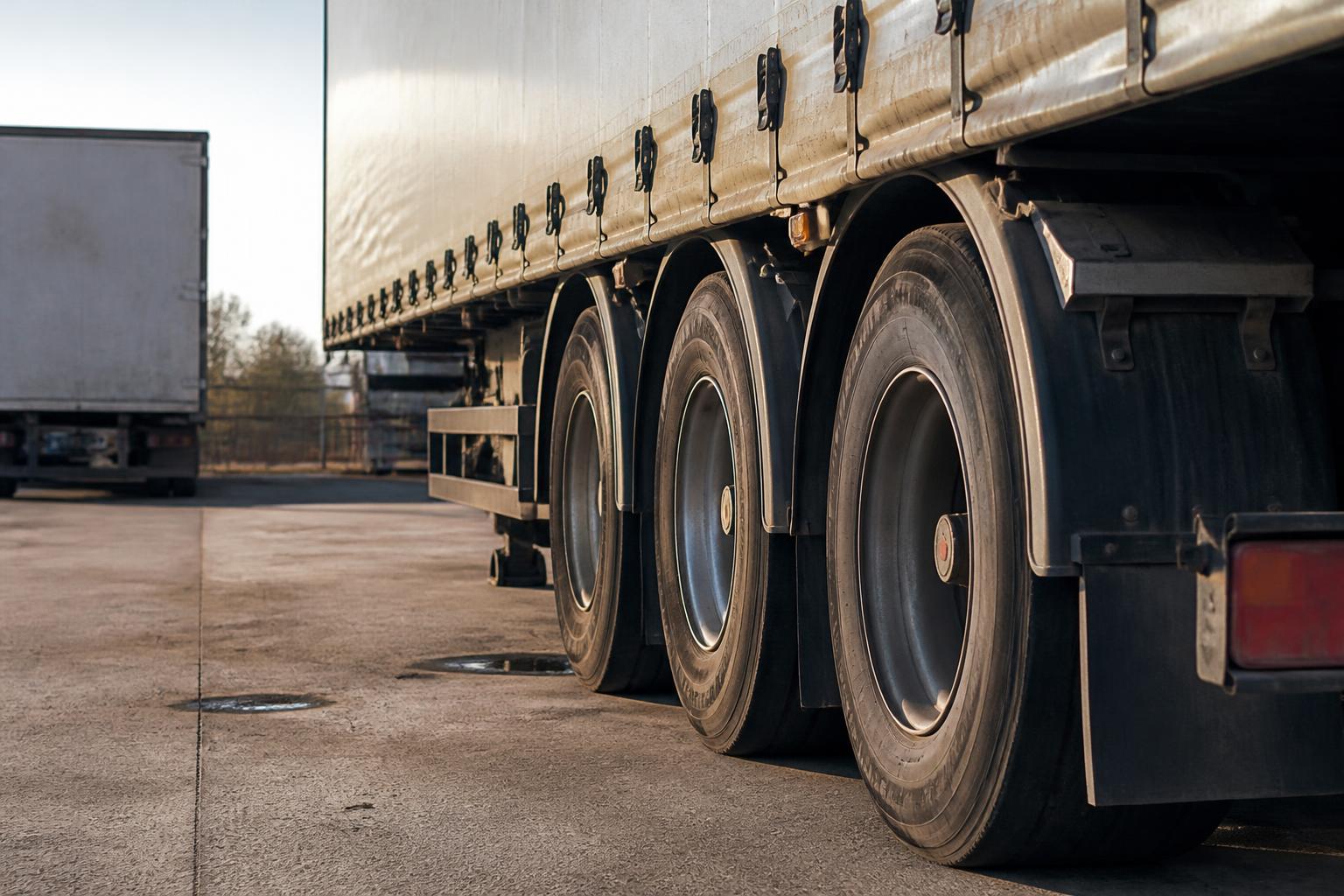
If you need a trailer inspection near Woolpit, the main question is not who can glance over it quickest. It is who can tell you, clearly and early, whether the trailer is safe to move, what is likely to fail an MOT, what can wait, and what needs workshop time now. For most operators, roadside risk comes from defects that were either missed, badly explained, or left with no realistic repair plan.
At Woolpit Truck Repairs, we handle trailer inspections with that next-step mindset. We are at Bridge Farm in Woolpit, close to A14 J47, and we work only on commercial vehicles. That matters when an operator needs an HGV trailer inspection near Woolpit that leads to a decision, not just a sheet of notes. Fleets, owner-drivers and route-based operators usually want the same thing, a practical assessment, a straight explanation of severity, and the quickest sensible path back to safe use.
What operators are really comparing
When operators compare trailer inspection providers around Woolpit, they are usually weighing four things.
First, speed of access. That does not only mean how soon the trailer can be seen. It also means how quickly the workshop can decide whether the issue is brake-related, tyre-related, electrical, air system, running gear, or a combination. A fast booking is not much use if the result is still uncertainty.
Second, defect reporting. A useful inspection outcome should separate defects into immediate safety issues, MOT-related defects, and items to monitor or schedule. If every fault is written up in the same tone, the operator still has to guess what can move, what should not, and what will create downtime later in the week. We keep that distinction clear because it affects transport planning, driver instructions, and whether the trailer needs to come straight off the road.
Third, workshop capability. Some places inspect. Some inspect and test. Some can then diagnose properly, source parts, repair, and prepare for MOT without sending the trailer elsewhere. That gap matters. If a trailer has poor brake performance, an ABS warning, repeated bulb failures, an air leak, or uneven tyre wear, the inspection only becomes useful when someone can trace the cause. Our inspection work sits alongside diagnostics, repairs, tyre support, roller brake testing and MOT preparation, so the findings can move straight into action where needed.
Fourth, route convenience. Operators running through Suffolk do not choose workshop support in the abstract. They choose based on where the unit or trailer already is, where the next load is, and how much dead mileage the defect will create. For traffic moving between Ipswich, Felixstowe, Stowmarket, Bury St Edmunds, Newmarket and Elmswell, access near the A14 often matters more than being close to a town centre.
That is why many operators comparing providers also look at whether the workshop understands route pressure, loading deadlines and trailer utilisation. If the trailer is part of a working fleet, the inspection needs to fit around operations. If it is an owner-driver’s only trailer, the decision may be even more time-critical. Our job is to triage that properly and explain the options in plain terms.
If you want a clearer picture of what good workshop support should look like in this area, our guide on how to compare HGV workshop support near A14 J47 sets out the practical differences.
What a useful trailer inspection should actually check
A proper trailer inspection should focus on the defects that create roadside risk, MOT failure risk, and avoidable downtime. That means looking beyond a quick visual pass.
Brakes come first. Brake issues are one of the most important reasons to stop and assess a trailer properly. We check for obvious wear, damage, imbalance indicators, poor adjustment signs, air system issues, and defects that point to weak performance under test. Where needed, roller brake testing gives a much better view than a visual inspection alone. A trailer can look acceptable parked up and still perform badly under load or under test conditions.
Tyres are another core area. We look at tread condition, sidewall damage, cuts, exposed cords, abnormal wear patterns, flat spots, and signs of inflation or alignment-related problems. Uneven wear can point to wider running gear issues, not just a tyre replacement need. On a commercial trailer, tyre defects quickly become a roadside problem if they are left until the next planned stop.
Lights and electrics should be checked as a system, not just as a bulb round. We look at operation of lamps, repeat faults, damage to wiring and connectors, and whether the issue is likely to be a simple lamp problem or part of a wider electrical fault. Recurrent lighting defects often waste operator time because they appear minor, then come back repeatedly.
Air leaks need careful attention. Small leaks can become larger ones, and air system faults can affect braking response and reliability. We check for audible leaks, damaged lines, coupling issues, and signs that the trailer is not holding or delivering air as it should. If the fault is in the trailer rather than the unit, that distinction needs to be identified early.
ABS and EBS faults also matter because warning lights are often treated as something to deal with later. Sometimes the fault is straightforward. Sometimes it points to sensor problems, wiring faults, modulator issues, or a deeper braking system concern. A trailer with an ABS or EBS problem may still move, but that does not mean it should stay in normal service without diagnosis. The right decision depends on the exact fault and how the system is behaving.
Running gear checks should cover suspension components, axle-related defects, wear points, hub concerns, landing legs, wheel fixings, and signs of structural or mechanical damage. We also look for defects that may not stop a trailer immediately but will affect its next MOT or create a bigger repair if ignored.
MOT-related defects need to be identified in the same visit wherever possible. Operators do not benefit from finding out twice, once in a routine inspection and again at test time. A good trailer inspection should flag the kind of issues that are likely to lead to refusal at MOT, whether that is braking performance, tyre condition, lighting faults, wear, leaks, or visible damage.
This is where a workshop that deals with HGV and trailer work every day has an advantage. We know which findings are genuinely urgent, which are likely to worsen quickly, and which can be planned into the next maintenance window. That is the difference between a list and a usable inspection result. You can see more about our trailer inspection support for HGV operators if you need an inspection booked in.
Inspection only or inspection with repair follow-up
There is a real difference between an inspection-only service and an inspection backed by repair capability.
An inspection-only pass can be enough if you already have a workshop lined up, the trailer is in otherwise good condition, and you simply need an informed check before a planned date. That can work well for a fleet with its own maintenance structure.
But many operators looking for trailer inspections near Woolpit are not in that position. They have a warning sign, a defect report, a poor brake feel, an ABS light, a suspected air leak, an MOT approaching, or a trailer already parked up because nobody wants to risk sending it further. In those cases, inspection without repair follow-up often adds a second delay. First you identify the problem. Then you start again somewhere else to diagnose and fix it.
A workshop-led inspection should go further. Once the fault is found, the operator needs to know three things. Is it safe to move? Is it likely to worsen immediately? What is the next practical step? We structure our inspection findings around that decision. If the defect needs repair now, we can move into diagnosis and workshop work. If it can be scheduled, we say so. If the trailer should stay off the road, we make that clear.
This matters particularly with brake defects. A note saying "brakes require attention" is not enough for a transport decision. The operator needs to know whether the issue appears isolated, whether testing is needed to confirm severity, and whether the trailer can realistically make a booked slot or needs to remain parked. Our article on trailer brake faults near the A14 and the safest next step covers that decision process in more detail.
The same applies to recurring electrical faults, EBS issues, air system problems, and wear-related defects around axles and suspension. Inspection is only the first stage if the trailer still needs to be made roadworthy. Because we carry out truck and trailer repairs with workshop follow-up, we can take the inspection result straight into the next job rather than leaving the operator with a defect sheet and another round of calls.
When location near A14 J47 makes a real difference
Location matters most when the trailer is still in traffic, still loaded into the week’s plan, or already causing disruption.
Being at Bridge Farm in Woolpit, close to A14 J47, is practical for operators running east-west through Suffolk and for those feeding in from local routes. If the trailer is moving between Felixstowe and inland depots, or between Ipswich and Bury St Edmunds, or serving runs around Stowmarket, Newmarket or Elmswell, a stop near the A14 is often simpler than diverting into a larger town or losing time to a workshop that is awkward for articulated access.
That convenience is not just about mileage. It affects whether a suspect trailer gets checked before the next leg, whether the driver can reach us without a complicated diversion, and whether a fleet planner can fit the visit into the day without losing the whole shift. For operators working timed deliveries, that can be the difference between controlled downtime and a roadside escalation later.
A site near A14 J47 is also useful when the fault is uncertain. If the report is "possible brake issue", "air loss", "warning light", "tyre concern", or "something not right on the trailer", you want a workshop that is easy to reach and set up to triage commercial vehicles properly. The same applies when a trailer is empty and can be brought in quickly before reloading, or when a unit is already passing nearby and can swap onto another trailer after assessment.
For local operators in Woolpit and the surrounding part of Suffolk, the advantage is straightforward. For route-based operators who are not local but regularly pass through, the value is often even greater. The workshop is where the route already is. That is often more useful than support that looks close on a map but sits well away from the actual traffic flow.
How to choose the right inspection for your trailer and deadline
The right inspection depends on what has triggered it.
If the trailer has an MOT coming up, the best approach is not a last-minute look-over. You need enough time to identify defects, source parts if required, complete repairs, and retest where necessary. In the UK, MOT standards and test procedures apply under the domestic testing system, so operators should plan around the actual test booking and workshop lead time rather than a general EU assumption about periodic roadworthiness. If the trailer is close to test date, say that at booking stage so the inspection can be framed around MOT risk as well as general condition.
If there is a warning sign already, such as an ABS or EBS fault, poor braking, an air leak, uneven tyre wear, repeated lighting faults, or a driver report that the trailer is not behaving normally, the priority is defect severity. In that case, choose an inspection with diagnostic follow-up, not a simple visual pass. You need to know whether the trailer can stay in service, come in at the end of shift, or stop now.
If downtime risk is the main concern, ask for triage that separates immediate defects from planned work. A fleet does not always need everything done at once, but it does need to know what cannot be deferred. That is especially important where the trailer is one of several in rotation and the operator needs to decide whether to substitute another asset.
If you are an owner-driver, the decision is often sharper because one trailer off the road can affect the whole week. In that situation, choose a workshop that will explain the fault in plain language and tell you what happens next, not just record the defect.
If the trailer is already off the road, the inspection should be tied directly to a return-to-service plan. That means identifying the actual cause, not just listing visible symptoms. A tyre worn out on one side, for example, may not be only a tyre issue. A brake imbalance may not be only a lining issue. A warning light may not be only an electrical nuisance. The inspection needs to move quickly into cause and remedy.
For fleet planning, it also helps to think in terms of windows. Some trailers need a same-day decision. Some need an MOT preparation slot. Some need workshop time after the current load cycle. We work best when operators tell us which of those applies, because the inspection can then be set up around the real deadline.
At Woolpit Truck Repairs, that is how we approach every trailer that comes in. We inspect with the next decision in mind. We explain what matters now, what is likely to fail at MOT, and what route gets the trailer safely back to work with the least avoidable delay. For operators running through Woolpit, Suffolk and the A14 corridor, that is usually what cuts roadside risk most effectively.
What is included in an HGV trailer inspection?
It typically covers brakes, tyres, lights, air system condition, couplings, running gear, body condition and visible safety defects. The useful difference is whether findings are clearly explained with realistic next steps.
Can an inspection help before MOT?
Yes. A pre-MOT inspection can identify defects likely to cause failure, giving time to plan repairs and reduce the risk of avoidable test disruption.
Do ABS and EBS faults need more than a visual check?
Usually, yes. Warning lights and braking faults often need diagnostics and brake testing, not just a walk-round, to confirm the cause and the repair needed.
Why does workshop location matter for trailer inspections?
For route-based operators, easier access can mean less dead mileage, faster triage and a better chance of getting inspection and repair handled without losing another day.
Is an inspection enough if the trailer already has a brake concern?
Not always. If there is a brake concern, the safer option is a workshop that can inspect, test and advise on repair urgency rather than stopping at a checklist.