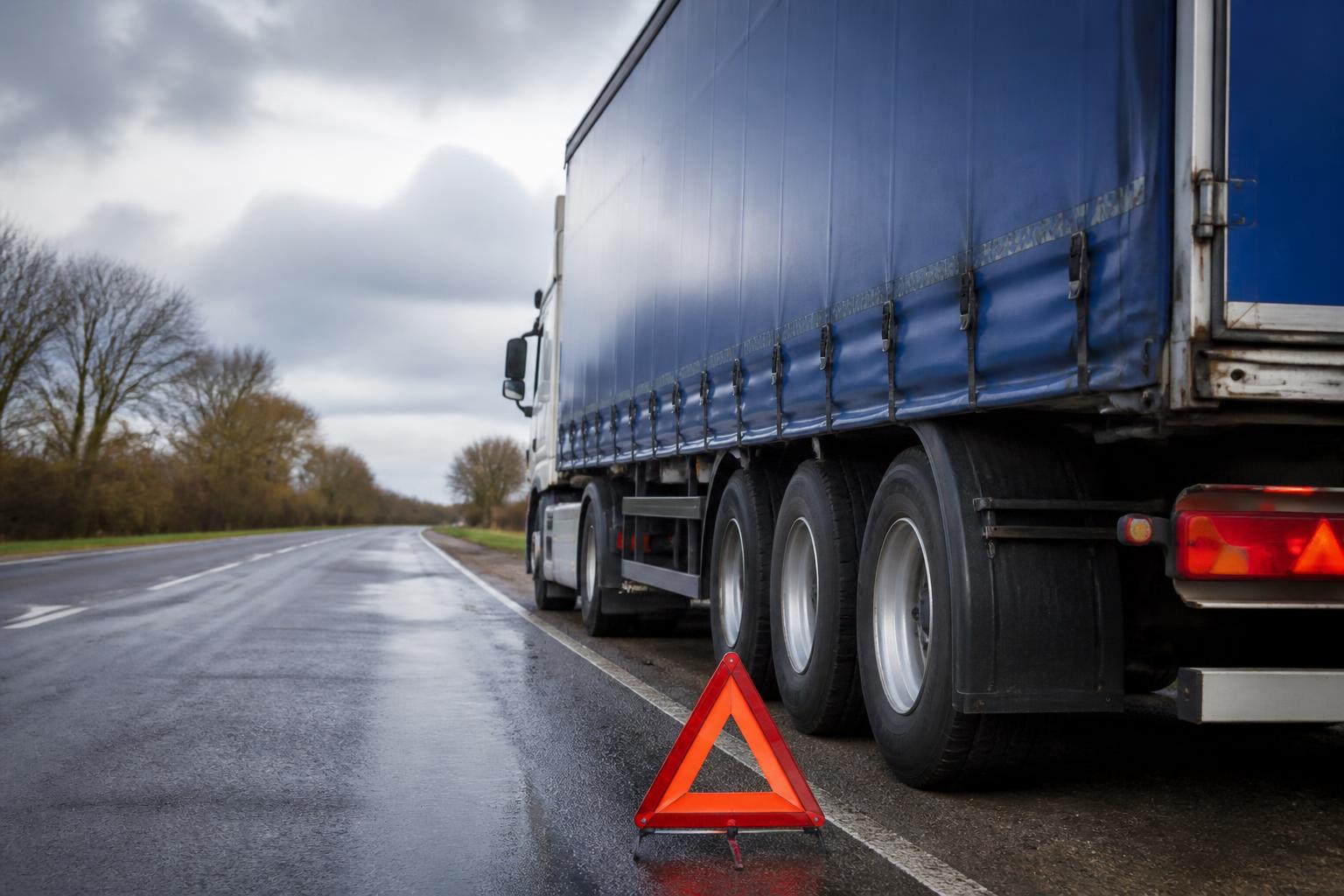
If a trailer fault stops you in Suffolk, the first job is not booking the nearest van and hoping for the best. You need to decide whether the trailer can be examined safely at the roadside, whether it can be made safe enough to move under controlled conditions, or whether it should not move at all until recovery and workshop inspection are arranged.
That decision matters commercially as much as mechanically. A rushed move with a brake defect, wheel-end issue or structural concern can turn a manageable delay into a prohibition, a second breakdown, tyre damage, or worse. For operators around Woolpit, Ipswich, Felixstowe, Stowmarket, Bury St Edmunds and along the A14, the value in a trailer repair callout in Suffolk is proper triage first, then the right next step.
When a trailer problem needs a callout and when it should not move
Not every trailer defect is a roadside job. Operators usually make the first decision on three points, whether the trailer is in a safe place, whether the defect is isolated and understood, and whether moving it could worsen the fault or create a road safety risk.
A callout is often suitable where the trailer is otherwise stable and the issue appears limited to one practical defect. Typical examples include lighting faults, a damaged suzie line, an air leak from a visible hose or coupling, a landing leg issue, a mudwing or bracket problem, or a puncture where the wheel position and surrounding damage can be assessed properly. Some faults can be attended to on site, then either repaired there and then or made safe enough for a controlled move to a workshop.
By contrast, some trailers should not be moved until they have had recovery and a controlled inspection. That normally includes suspected brake binding with heat at the wheel end, hub or bearing concerns, significant tyre damage with evidence of contact or debris damage, axle or suspension damage, cracked chassis or body mounting points, kingpin or coupling concerns, severe ABS or EBS issues affecting braking behaviour, and any defect where the trailer has become unstable, leaning, or unsafe to access.
Operators should also think about load condition. A curtain-sided trailer with a secure brake light fault is one thing. A loaded trailer with a shifted load, damaged side rave, compromised rear frame or door gear is another. If there is any doubt about load security, a roadside repair may be only one part of the problem.
This is where workshop-led judgement matters. A provider such as Woolpit Truck Repairs, based at Bridge Farm near A14 J47 in Woolpit, is not looking to force every job into a mobile repair. The sensible question is whether roadside attention is the correct first step. If it is not, recovery and workshop inspection may save time overall.
What to report before help is dispatched
The quality of the first phone call often decides whether the right help arrives. A workshop triaging a trailer repair callout in Suffolk needs exact fault detail, not just “trailer broken down”.
Start with location. Give the road number, direction of travel, nearest junction, layby, service area, yard address or port location. On the A14, say whether you are eastbound or westbound and the nearest marker or junction. If you are near Ipswich, Felixstowe, Stowmarket, Bury St Edmunds, Newmarket or Elmswell, say so plainly. If the trailer is inside a customer site, say whether there are booking restrictions, gatehouse procedures, height limits or escort requirements.
Then identify the unit and trailer properly. Registration, fleet number, trailer type, axle configuration and whether it is loaded all help. If it is a fridge, skeletal, curtainsider, tipper or box, say that at the start. If the trailer is carrying a time-critical load, port movement, temperature-sensitive goods or a collection with a fixed slot, mention it early so the workshop can advise realistically.
After that, describe the fault in practical terms:
- What did the driver notice first?
- Did a warning light come on in the tractor unit?
- Is the fault constant or intermittent?
- Is there air loss, noise, smoke, heat or vibration?
- Is one wheel position affected?
- Has anything dragged, struck the road or contacted a tyre?
- Can the trailer roll freely?
- Are the brakes releasing?
Photos and short videos are often the quickest way to improve triage. A clear image of a damaged airline, a warning display in the cab, a tyre sidewall failure, a broken lamp cluster or a hanging mudguard bracket can save a wasted visit or ensure the right parts and tools are brought.
Safety information matters just as much. Tell the workshop if the trailer is live lane side, partly obstructing a carriageway, on a soft verge, in a port queue, under a loading bay, or in a location where mobile working is restricted. If the driver has already placed warning devices and moved to a safe position, say so. If police, National Highways traffic officers, site management or port operations are involved, that also changes the response.
For operators needing roadside trailer and HGV callout support, good triage information helps the workshop decide whether to send a technician, recommend recovery, or direct the trailer straight into a workshop slot.
What can often be checked or repaired at the roadside
Roadside trailer work has practical limits, but there is still a lot that can be checked or rectified without bringing the trailer in immediately.
Common roadside checks include visual brake and wheel-end inspection, air system leak tracing, line and coupling checks, electrical plug and socket inspection, lamp and marker light faults, mudwing and spray suppression damage, landing leg operation, and basic checks around suspension, chassis attachments and body hardware. Tyre issues can also be assessed, and in some cases supported, depending on the wheel position, tyre condition and whether there is wider damage.
Some defects can often be repaired on site or made safe enough for a controlled move to a workshop. Examples include replacing damaged suzies, rectifying some lighting faults, securing loose components, dealing with certain air leaks, changing or isolating damaged ancillary fittings, and carrying out minor electrical repairs where the root cause is accessible.
But operators should be careful with the phrase “made safe”. It does not mean “back to normal”. It means the trailer may be brought under controlled conditions for further inspection and proper repair. If a mudwing stay is secured, that does not mean the rest of the bracketry is sound. If an air leak is reduced, the whole brake system still needs checking. If a tyre issue is addressed at the roadside, wheel-end condition may still need workshop follow-up.
There are also defects that usually exceed sensible roadside limits. Brake strip and rebuild work, internal hub issues, bearing failure, axle alignment problems, structural cracking, major wiring faults, repeated ABS or EBS communication faults, and anything requiring full diagnostic tracing or brake performance confirmation are generally workshop jobs.
That is why many operators use a callout as the first step, not the whole solution. A technician attends, assesses the defect, carries out what is safe and practical, and then gives a clear recommendation. If the trailer needs trailer repair work with workshop follow-up, that can be planned without guesswork.
Why brake, ABS and EBS faults need careful next-step advice
Brake defects are where poor assumptions cause the most trouble. A driver may report a warning lamp, a dragging sensation, a sharp pull, poor release, or heat from one wheel end. Those symptoms can come from several causes, and some are not suitable for a quick roadside judgement without proper follow-up.
On trailers, ABS and EBS warnings are often treated too casually because the trailer may still appear to brake. That is not enough. The issue is not only whether the brakes operate, but whether they operate evenly, release properly, and respond as intended under varying load and road conditions.
In the UK, trailer roadworthiness expectations are shaped by DVSA enforcement and annual test standards. The broad principles are familiar across Europe, but operators here deal with UK testing, prohibition risk and MOT preparation requirements in practice. That means a warning lamp, stored fault or uneven braking concern should not be treated as a cosmetic issue simply because the trailer can still be moved.
ABS faults may point to sensor issues, exciter ring damage, wiring faults, power supply problems or ECU-related concerns. EBS faults can involve modulator issues, pressure control irregularities, communication problems between unit and trailer, or faults that only show under dynamic conditions. A driver’s description of when the fault appeared, whether it cleared after reconnecting lines, and whether braking feel changed is useful information for the workshop.
Heat is an especially important warning sign. If a driver reports a hot wheel, brake smell, smoke, or a wheel position that has been binding, the safest next step may be recovery or a very controlled move only after inspection. Heat can indicate more than a simple adjustment issue. It may involve a seized caliper, chamber problem, contaminated friction surfaces, collapsed hose, or wheel-end damage.
This is where trailer diagnostics and electronic fault investigation become more than a convenience. Electronic faults need reading, interpreting and then tying back to the physical trailer condition. Clearing a code without understanding why it was logged does not put the trailer back into dependable service.
Clear defect explanation matters here. Operators need to know whether the trailer is safe to move, safe only to workshop, or not safe to return to service until braking performance and associated defects are confirmed properly.
How workshop follow-up reduces repeat downtime
A roadside repair can get a vehicle out of an immediate problem, but repeat downtime often comes from stopping there. The better approach is to treat the callout as triage, then complete the underlying inspection and repair path.
For trailers, workshop follow-up commonly includes a more detailed inspection of brake condition, wear, air system integrity, wheel-end condition, suspension components, electrical systems and chassis fittings. If the roadside issue involved a tyre, brake warning, vibration or heat, the trailer may need a broader check to rule out secondary damage.
Roller brake testing is a good example. A trailer may appear to brake normally after a roadside intervention, but that does not confirm balanced performance across axles or prove the original complaint has been resolved. A roller brake test gives a more reliable basis for returning the trailer to normal work, particularly after brake defects, ABS or EBS faults, or pre-MOT concerns.
The same applies to inspections. A damaged airline may be the visible fault, but repeated line damage could be caused by routing, ride height, coupling practice or other underlying issues. A lamp fault may turn out to be harness damage, water ingress or a recurring connection problem. A tyre failure may need more than replacement if the cause was brake drag, alignment or suspension wear.
For fleets, this follow-up matters because one breakdown often signals a maintenance gap. For owner-drivers, it matters because the most expensive trailer fault is the one that returns on the next loaded run. Proper post-callout inspection, diagnostics, tyre support and MOT preparation reduce the chance of the same trailer coming off the road again for a related issue.
Operators running regular Suffolk routes can also use planned inspections to prevent avoidable roadside stops. Booking regular HGV and trailer inspections after a defect, or before a busy period, is often cheaper in operational terms than waiting for the next failure.
Choosing support that works for Suffolk routes and trailer operators
When you are choosing support after a breakdown, the key question is not who says yes first. It is who can make a sound decision on a trailer fault and back it up with workshop capability afterwards.
For Suffolk operators, route knowledge matters. Traffic around the A14, access to Felixstowe-related movements, and practical reach into Ipswich, Stowmarket, Bury St Edmunds, Newmarket and surrounding areas all affect response planning. A provider based near A14 J47 has a different starting point from one coming across county lines without local routing in mind.
Trailer focus matters too. There is a difference between general vehicle assistance and support from a workshop that deals day to day with HGV and trailer defects, inspections, repairs, diagnostics and MOT preparation. Buyers should look for a provider that asks the right questions at the start, explains what can and cannot be done roadside, and is willing to say when recovery or workshop inspection is the better option.
That practical approach is what many operators want from Woolpit Truck Repairs. From Bridge Farm in Woolpit, the emphasis is on HGV and trailer work, realistic triage and clear next-step advice, not vague promises that every fault can be solved where it stands. That suits fleets and owner-drivers who need decisions they can act on.
It is also worth checking whether the provider can support the whole chain after the callout. If a trailer is made safe to move, can they inspect it properly? Can they handle diagnostics, brake testing, repairs, tyre support and MOT preparation? Can they explain whether the defect was an isolated failure or part of a wider maintenance issue? Those questions matter more than a broad claim about coverage.
If you operate under a company structure, internal maintenance records and authorisations may also sit with another business entity. Where relevant, make sure the workshop has the right job authority and invoicing details from the outset, whether that sits with the operator directly or with a group company such as FLEETA LIMITED.
In practice, the best support for a trailer breakdown in Suffolk is support that treats the roadside stop as the first decision point. If the trailer can be repaired there, do it properly. If it can only be made safe to move, say so clearly. If it should not move, recover it and inspect it under controlled conditions. That is usually the fastest route back to reliable service, especially on busy Suffolk and A14 work where one poor decision can cost more than the original fault.
What counts as a trailer repair callout?
It is off-site support when a trailer fault leaves the unit needing inspection, fault finding, a repair attempt or advice on whether it can move safely to a workshop.
What information should I have ready when I call?
Give the exact location, trailer type, registration or fleet ID, loaded or empty status, visible damage, warning lights, brake symptoms and whether the trailer is in a safe place.
Can all trailer faults be fixed at the roadside?
No. Some issues can be checked or made safe enough to move, but structural damage, serious brake defects and some ABS or EBS faults may need workshop repair or recovery.
Why does trailer-only experience matter?
Trailer faults are not just general vehicle faults. Brake balance, air issues, axle defects and electronic systems need practical trailer-led diagnosis and realistic next-step advice.
Is a roadside repair enough before MOT?
Not always. A callout may get the trailer moving again, but a proper workshop inspection, brake test and defect check may still be needed before MOT presentation.
Where is Woolpit Truck Repairs based?
Woolpit Truck Repairs operates from Bridge Farm in Woolpit, Suffolk, with access near A14 J47 for operators running local routes and traffic between Ipswich, Felixstowe and beyond.