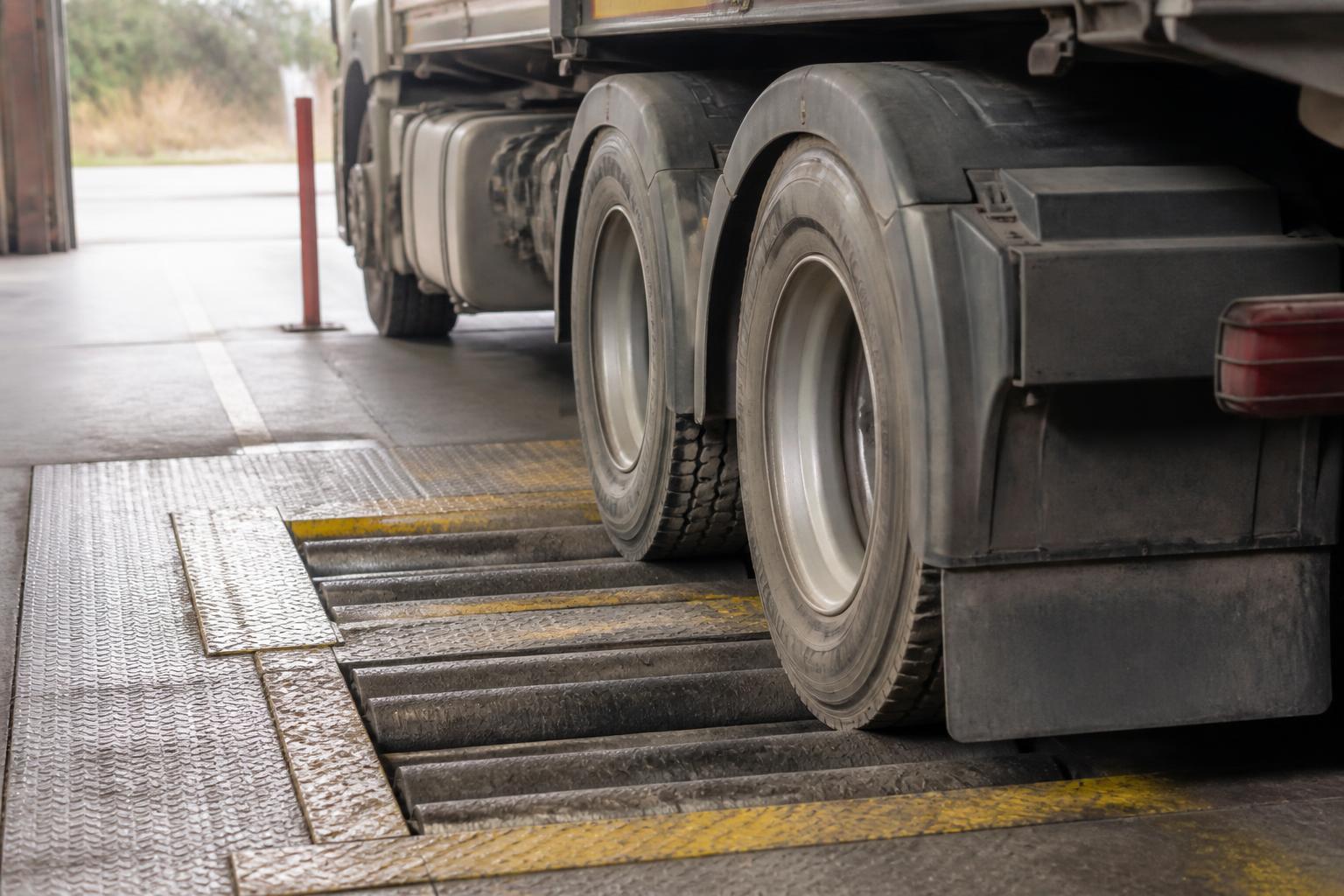
If an HGV is close to test date, showing a brake imbalance, pulling under braking, logging an ABS or EBS fault, or coming back from brake work, waiting for the MOT to tell you what you already suspect is usually the expensive option. A roller brake test gives you measured braking performance axle by axle, side to side, so you can see whether the issue is service brake effort, parking brake performance, imbalance, delay, or something more specific in the control system.
For operators in Suffolk, that matters because downtime rarely arrives on its own. A failed MOT can mean missed work, trailer swaps, rescheduling drivers, and a repair window you did not choose. We use roller brake testing at Woolpit Truck Repairs to turn a brake concern into a clear next step, whether that is a quick adjustment, a repair plan, or proper MOT preparation before the vehicle reaches test day.
What an HGV roller brake test actually tells you
A roller brake test measures the braking force each wheel or axle can produce while the vehicle is driven onto rollers in a controlled workshop setting. In practice, we are looking at how effectively the service brake and parking brake are working, how evenly they apply across an axle, and whether the braking effort is consistent enough for the vehicle or trailer to be presented confidently for MOT.
For an HGV, the useful part is not just the final pass or fail picture. It is the pattern in the readings.
A proper roller brake test can show us:
- braking effort at each wheel position
- imbalance across the same axle
- whether one side comes in later than the other
- whether a wheel locks too early
- whether effort builds properly or fades
- whether the parking brake is holding as it should
- whether a trailer axle is contributing properly
- whether a load sensing or control issue is affecting performance
That matters because not every brake defect feels dramatic from the cab. A vehicle can still stop, but stop poorly, unevenly, or inconsistently. Drivers often describe this as a slight pull, a longer pedal than usual, a trailer that feels as if it is pushing on, or a unit that feels different loaded and unladen. The roller test puts figures against that feeling.
Operators use brake testing before MOT because MOT failure is often the first time a developing imbalance is measured formally. If we test earlier, we can identify whether the problem is adjustment, wear, contamination, seized components, an air issue, or an electronic fault before the booking is at risk. That is particularly useful where the vehicle is working a regular route around Suffolk, Ipswich, Felixstowe, Stowmarket, Bury St Edmunds, Newmarket or Elmswell and cannot easily be spared for repeated workshop visits.
We also use roller brake testing after a reported fault or after repair. If a driver has reported poor braking, if warning lights have appeared, or if brake chambers, valves, calipers, discs, drums, slack adjusters, sensors or EBS components have been replaced, the test confirms whether the repair has actually restored balanced performance. Without that confirmation, you are still making decisions partly on assumption.
As part of routine maintenance, brake testing is one of the most useful ways to catch issues before they become roadside defects or MOT failures. It gives a factual baseline for the vehicle or trailer, and that helps with planning. If you want a closer look at how we handle HGV and trailer roller brake testing, that is exactly the role it plays in our workshop.
When to book a brake test instead of waiting for a failure
The simplest trigger is this, if you already suspect a brake problem, book the test before the MOT does it for you.
In day to day operation, the practical triggers are usually obvious once you list them out.
One is driver feedback. If a driver reports pulling to one side, grabbing, a delayed response, a soft or unusual pedal feel, trailer overrun sensation, poor handbrake hold, or different braking behaviour when loaded, that is enough reason to test. Even if the issue seems intermittent, it still needs measuring. Brake faults often show up under controlled testing before they become severe enough to be obvious on every stop.
Another is warning lights or logged faults. ABS and EBS warnings do not always mean the vehicle has no usable brakes, but they do mean the system needs checking properly. On modern HGV and trailer braking systems, electronic control faults can affect brake timing, modulation and balance. A diagnostic check and a roller test together will usually tell us much more than either one on its own.
MOT preparation is another clear reason. If the test date is close, pre-MOT brake testing is often the difference between one planned workshop visit and a failed presentation followed by repairs under time pressure. This is especially true for trailers, where defects can go unnoticed if they are swapped between units and only lightly reported. We have covered that in more detail in our article on trailer brake testing in Suffolk before downtime spreads.
Post-repair checks are equally important. If brake components have been replaced, adjusted or freed off, the job is not complete just because the parts are fitted. A measured brake test shows whether the axle is now working evenly and whether the parking brake performance is where it should be. That applies to both unit and trailer work.
Then there is routine fleet maintenance. Operators who manage their vehicles tightly do not wait for symptoms on every brake issue. They build brake testing into inspection cycles, especially for vehicles on demanding work, stop-start duty, heavy trailer work, port traffic, or routes where delays are costly. There is no one universal interval that suits every fleet, because usage pattern matters. A vehicle doing local multi-drop and a vehicle running longer trunk work to Felixstowe will not necessarily wear brakes in the same way. What matters is having a maintenance rhythm that picks up decline before it becomes a prohibition risk or MOT problem.
For owner-drivers, the same principle applies. If the truck is your earning asset, a brake test before a deadline is often cheaper than a failure at the wrong moment.
What poor brake test results usually point to
Poor results tend to fall into three broad groups, weak braking effort, uneven braking, and inconsistent or unstable readings.
Weak braking effort usually means the brake is not generating enough force at the wheel. Common causes include worn friction material, overheated or glazed linings, contaminated pads or shoes, out of adjustment drum brakes, seized calipers, restricted chamber stroke, air leaks, poor actuator performance, or internal issues in valves and control components. On trailers, lack of use can be just as much of a problem as hard use. Components corrode, linkages stiffen, and brakes that looked acceptable on paper stop working properly in service.
Uneven braking, where one side of an axle is significantly different from the other, often points to seized or partially seized components, contamination on one side, uneven wear, damaged discs or drums, poor adjustment, or differences in actuator performance. A wheel end problem can also contribute. If a bearing issue, heat damage, or mechanical drag has affected one side, the brake readings may reflect that.
Inconsistent readings are where diagnosis becomes more important than part swapping. If brake effort is fluctuating, delayed, or not building in a repeatable way, we start looking carefully at air supply, valves, control signals, sensor inputs, ABS and EBS faults, and whether the issue is vehicle side, trailer side, or at the interface between the two. A trailer can appear to have a brake problem when the root cause is in the supply or control from the unit. Equally, a unit can feel poor under braking because a trailer axle is not contributing properly.
Common fault areas include:
- seized calipers or sliders
- worn discs, pads, drums or shoes
- slack adjuster problems
- weak or leaking brake chambers
- sticking valves
- air leaks or pressure delivery problems
- contaminated friction surfaces
- wheel speed sensor faults
- ABS ring damage or sensor gap issues
- EBS modulator or control faults
- poor trailer brake response
- load sensing or axle related control issues
Not every poor result means a major rebuild. Sometimes the test shows a straightforward adjustment or a single defective component. Sometimes it shows a wider pattern of wear that means doing one side only would be false economy. The value is that the readings help separate those two situations.
How brake testing fits into MOT preparation and defect triage
Good MOT preparation is not just a list of checks. It is a way of deciding what needs doing now, what can wait, and what would put the presentation at risk if ignored.
That is where brake testing is especially useful. Instead of telling an operator that the brakes feel weak or that a trailer seems uneven, we can point to measured results and explain the defect in plain terms. If the offside is underperforming, if the parking brake is low, or if the trailer axle response is delayed, we can show that clearly and then work backwards to the likely causes.
In workshop triage, that helps in three ways.
First, it helps prioritise. A serious imbalance, poor parking brake, or low overall braking effort moves to the front of the queue because it affects safety, testability and roadworthiness. Minor associated defects can be planned around that.
Second, it helps scope the repair. If the readings suggest a single axle issue, we can focus there first. If the pattern suggests a system problem, we know to include diagnostics, air checks, or trailer control investigation rather than simply replacing visible wear parts and hoping the numbers improve.
Third, it helps with realistic advice before deadlines. If your MOT booking is close, you need to know whether the vehicle is likely to need a same-day repair, a larger parts job, trailer work, or a return visit after components arrive. That is more useful than vague reassurance. At Woolpit Truck Repairs, we aim to explain defects in a way that lets operators make commercial decisions quickly, especially when the vehicle is due back on the road.
This practical approach matters for fleets and owner-drivers alike. A fleet may need to decide whether to rotate another vehicle in and hold one back for repair. An owner-driver may need to know whether to keep the booking, move the booking, or deal with the defect immediately to avoid a failed presentation. Brake test results make that conversation much clearer.
It also helps avoid the common problem of chasing symptoms in the wrong order. If a truck comes in with a braking complaint and an ABS light, for example, the right next step may be a combination of diagnostics and brake testing, not just clearing a code and sending it out. If a trailer has poor readings after standing, the answer may be mechanical brake work rather than an electronic fault. Triage is about choosing the right path early.
Choosing a Suffolk workshop that understands HGV and trailer braking
If you are booking a brake test in Suffolk, the workshop itself matters as much as the equipment. HGV and trailer braking faults are not car faults on a bigger vehicle. The workshop needs to understand unit and trailer systems, commercial usage patterns, and the difference between a defect that is inconvenient and one that is about to cost you a test slot or roadside downtime.
Start with focus. A workshop that deals specifically with HGVs and trailers is more likely to recognise the usual fault patterns, understand brake behaviour under commercial use, and spot where a symptom on the unit is actually being caused by the trailer, or the other way round. That sounds basic, but it saves time.
Route access matters too. If the vehicle is already carrying a defect risk, you do not want an awkward detour through places that make access harder. We are based at Bridge Farm in Woolpit, near A14 J47, which makes us practical for operators moving along the A14 corridor and working around Suffolk, Ipswich, Felixstowe, Stowmarket, Bury St Edmunds, Newmarket and Elmswell.
Then look at how the workshop explains defects. You need more than a pass or fail statement. You need to know what the readings suggest, what has to be done before MOT, what should be checked next, and whether the defect points to a localised repair or a wider system issue. Clear explanation is especially important for fleet managers authorising work remotely and for owner-drivers trying to protect booked jobs.
Support around the brake issue also matters. If testing leads to repairs, diagnostics, tyre work, MOT preparation or a callout question, it helps when the same workshop can deal with the next step without turning the job into a chain of separate bookings. If you are comparing options, our guide on choosing a Suffolk workshop for rigid truck faults sets out the kind of practical considerations that matter beyond the headline service list.
For fleets, ask whether the workshop understands defect triage and scheduling pressure. For owner-drivers, ask whether they will explain the issue plainly and tell you honestly what needs doing first. Those are often the details that matter most when an MOT deadline is close.
Woolpit Truck Repairs works with operators who need a practical answer, not a vague one. If you are looking for a roller brake test for an HGV in Suffolk, or you have a trailer or truck braking concern that needs measuring before it becomes a failed MOT, we can test it, explain what the results are showing, and help you decide the right next step. We operate from Bridge Farm, Woolpit, near A14 J47, with access that works for route-based traffic as well as local operators across Suffolk. FLEETA LIMITED is the registered company behind our operation, but in the workshop and on the phone you will know us as Woolpit Truck Repairs.
What is a roller brake test on an HGV?
It is a workshop test that measures braking force at each wheel or axle using rollers. It helps show brake efficiency, imbalance and defects before they become MOT failures or roadside problems.
Do trailers need roller brake testing as well?
Yes. Trailer braking performance matters just as much as the unit. Testing can help identify imbalance, poor response, adjustment issues or faults linked to air, ABS or EBS systems.
Should I book a brake test before MOT?
In most cases, yes. A pre-MOT brake test gives time to find and fix defects before the test date, which can reduce the risk of failure, delay and unplanned vehicle downtime.
Can a brake test help if the vehicle feels wrong but no warning light is on?
Yes. If braking feels weak, pulls to one side or seems inconsistent, a roller brake test can give measured results even when there is no obvious dashboard warning.
What areas does Woolpit Truck Repairs suit best for access?
Its location at Bridge Farm in Woolpit near A14 J47 can be practical for operators running through Suffolk, including routes linked to Ipswich, Felixstowe, Stowmarket, Bury St Edmunds, Newmarket and Elmswell.