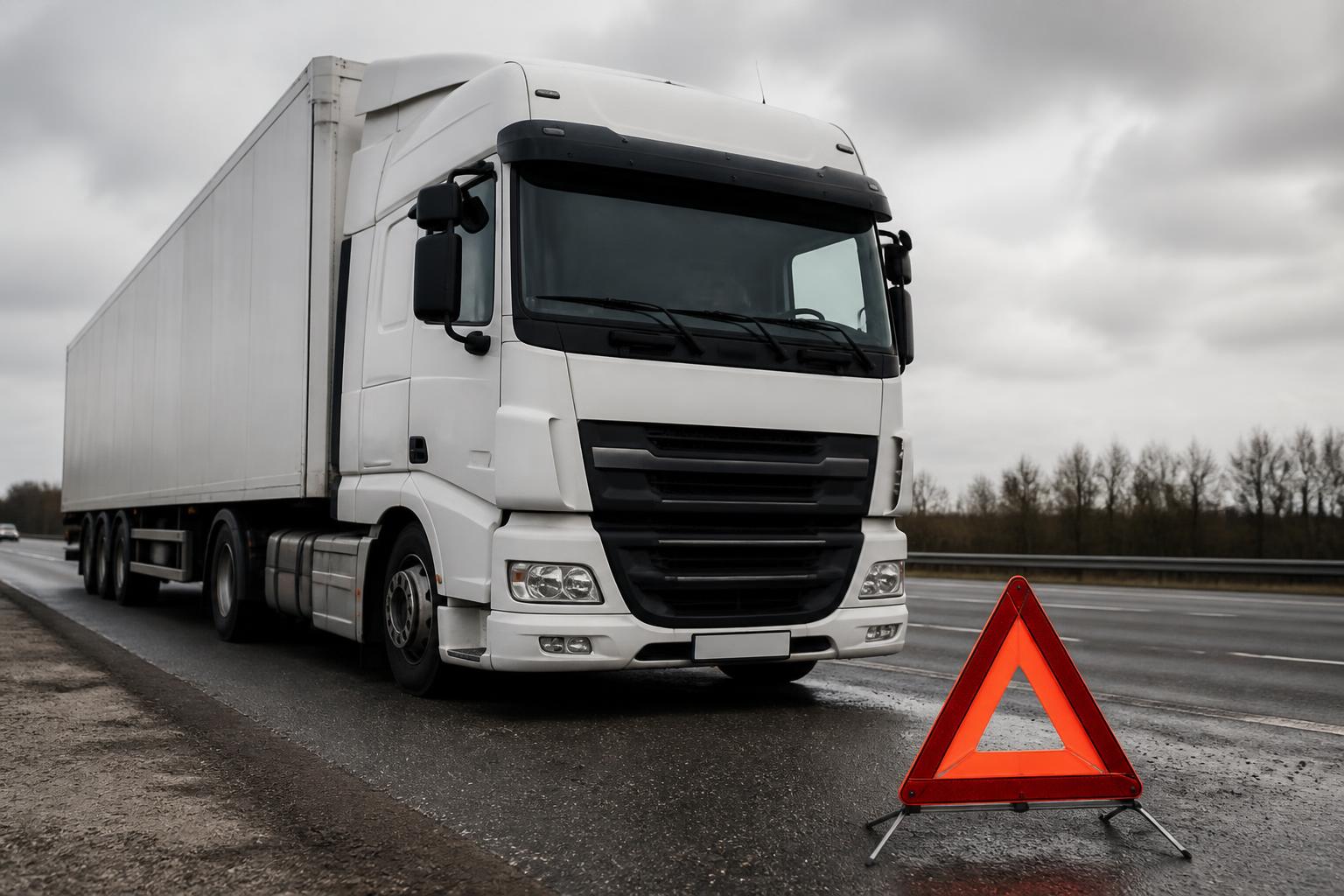
When an HGV or trailer goes down in Suffolk, the first job is not to guess. It is to work out whether the vehicle can be made safe where it is, whether it needs a roadside visit, whether it should come into the workshop under its own steam, or whether it needs full recovery. That is what HGV recovery support in Suffolk usually comes down to, practical triage and a clear next step that protects the driver, the load and the rest of the day’s work.
At Woolpit Truck Repairs, we deal with fleets, owner-drivers and route-based operators who need an answer quickly, especially when a warning light, brake defect, tyre problem or trailer issue threatens downtime. From Bridge Farm in Woolpit, near A14 J47, we support operators moving through Suffolk, Ipswich, Felixstowe, Stowmarket, Bury St Edmunds, Newmarket and Elmswell, with advice, callout support, workshop booking and recovery enquiries depending on what the defect actually is.
What HGV recovery support usually means in Suffolk
Recovery support for an HGV or trailer is often used as a catch-all term, but in practice it can mean several different things.
Sometimes it means advice only. A driver reports a warning light, an air loss issue, a trailer electrical fault or an EBS message, and the safest next step is to stop, secure the vehicle, carry out a basic check, and confirm whether the vehicle is roadworthy enough to move to a workshop. Not every fault needs a recovery truck, but not every vehicle should be driven either. The point of support is to make that call properly.
Sometimes it means a roadside callout. If the issue appears to be something that can be diagnosed or rectified safely at the roadside, such as a minor electrical connection problem, an airline issue, certain trailer faults or a tyre support requirement, a callout may be the sensible first move. That can save the delay and cost of unnecessary vehicle movement.
Sometimes it means booking the vehicle straight into the workshop. If the defect is serious enough that it needs proper inspection equipment, brake testing, diagnostics or workshop access, we may direct the operator to bring the unit or trailer to us if it is safe and lawful to do so. That is often the right route for brake imbalance concerns, ABS and EBS faults that need tracing, repeat warning lights, air leaks, trailer charging problems, and defects that need more than a roadside check.
Sometimes it means vehicle movement or full recovery. If the HGV is immobilised, unsafe, obstructing the road network, or carrying a defect that makes further road use inappropriate, the vehicle may need to be moved under recovery arrangements rather than driven. The same applies where a trailer defect makes the combination unsafe, or where the vehicle’s location creates an immediate risk.
That is why we treat support as a decision process, not a one-size-fits-all service. If you need commercial vehicle recovery support and next-step advice, the useful part is not the label. It is knowing what should happen next.
What to report before help is arranged
The more accurate the first report is, the faster we can sort the right response. When an operator or driver calls, there are a few details we need straight away.
First, exact location. “Near Ipswich” is not enough if the vehicle is on a live carriageway, in a lay-by, at a customer site or on an industrial estate with access limits. We need the road name or number, direction of travel, nearest junction or landmark, and whether the vehicle is on the A14, a slip road, a service area, a depot, a farm track or a delivery point. In Suffolk, that matters because access can change quickly between trunk road routes and more restricted local roads.
Second, vehicle and trailer type. Tell us whether it is a rigid, artic, tractor unit, drawbar or trailer-only issue. We also need make and model if known, axle configuration where relevant, and whether the problem is on the unit, the trailer or the connection between them. A trailer ABS fault and a unit air system issue are not the same job.
Third, fault symptoms. We need the plain version first. What happened, when did it start, and what changed? For example, loss of air pressure, poor braking feel, wheel lock concern, warning buzzer, no trailer lights, suspension issue, tyre damage, dragging brake smell, or inability to build air. If the defect appeared after coupling, after loading, after braking, or after a tyre strike, say so.
Fourth, warning lights and dash messages. ABS and EBS faults are common examples where the exact light or message helps us separate a sensor or communication issue from a more serious braking control problem. If there is a warning lamp on the unit, the trailer, or both, report that exactly. If the driver can safely send a photo, that often helps.
Fifth, load details. We need to know whether the vehicle is loaded or empty, the general type of load, and whether there is anything about it that affects safe movement or recovery. That does not mean sharing commercial detail that is not relevant. It means telling us whether the vehicle is carrying something that affects weight, balance, temperature control, access, tipping risk or handling.
Sixth, immediate road safety. Is the vehicle fully off the carriageway, partly obstructing a lane, on a blind bend, on a narrow verge, or parked safely at a customer site? Are warning devices deployed where appropriate? Is the trailer stable? Is there visible damage, smoke, overheating, or a wheel-end concern? Before any support is arranged, the driver’s safety and the safety of other road users come first.
If a driver is unsure what details matter, we will ask. The aim is not paperwork for its own sake. It is to stop a vague report turning into the wrong response.
How triage decides the safest next step
Practical triage is what separates a manageable delay from downtime that spreads into missed bookings, delivery disruption and avoidable workshop time.
The first question is whether the vehicle is safe where it is. If it is in a dangerous position, that overrides everything else. A vehicle partly blocking a live route near Felixstowe traffic, for example, is a different situation from a unit parked securely at a depot near Stowmarket.
The second question is whether the reported fault suggests a roadside fix, a controlled drive to workshop, or no further driving. Brake-related defects are the clearest example. A simple warning light does not automatically mean recovery, but reduced braking performance, severe air loss, brake binding, overheating, or uncertainty about trailer braking usually pushes the job away from “drive it in and see” and towards a safer controlled response.
The third question is whether proper workshop equipment is needed to confirm the defect. Some faults can only be dealt with properly once the vehicle is on site. Roller brake testing, electrical tracing, air system checks and diagnostic work often need workshop conditions, especially where the issue is intermittent or has already been looked at elsewhere without a clear answer.
The fourth question is whether the combination can move legally and safely in its current form. If the trailer is the issue, can the unit be separated safely? If the unit has the issue, is the trailer stranded in a place that needs its own plan? If the problem involves lights, brakes, tyres, steering, suspension or air, we do not treat movement as a default.
This is also where clear defect explanation matters. Operators do not just need “yes” or “no”. They need to know why the next step is a callout, a workshop booking or recovery, and what that means for the rest of the vehicle’s day. That is how we approach roadside callout support for commercial vehicles, and it is also why some jobs are better redirected straight into workshop time.
Common faults that lead to support requests
A large share of support requests come back to a familiar set of defects.
Brake issues are high on the list. That includes poor brake feel, imbalance concerns, brake drag, overheating, wheel-end heat, parking brake release problems, and trailer braking concerns after coupling. These faults need care because the difference between a warning and an unsafe vehicle can be narrow without proper checking.
Tyre problems are another common trigger. A puncture, sidewall damage, rapid pressure loss, impact damage or a tyre that has run underinflated can take a vehicle off the road quickly. With HGV and trailer tyres, the question is not just whether air can be added. It is whether the tyre is fit to continue, whether there may be wheel damage, and whether the location allows safe support.
ABS and EBS faults appear regularly on both units and trailers. Sometimes the issue is a sensor or connection fault. Sometimes it is linked to a deeper braking or communication problem. A trailer with an ABS warning lamp may still move in some circumstances, but that does not mean it should simply carry on to Felixstowe or back across Suffolk without a proper assessment. EBS faults especially need sensible handling because the underlying cause can range from electrical supply issues to brake control defects.
Trailer defects more broadly account for a lot of downtime. Electrical plug and socket problems, lamp failures, suzie line issues, coupling concerns, trailer air leaks, landing leg damage, and brake performance complaints all come up regularly. If the trailer has been swapped recently, that can be relevant. So can a defect that appears only under load.
Air system faults are another major cause of vehicles stopping. Slow air build, inability to hold pressure, audible leaks, warning buzzers, suspension drop, and brake release issues can all point to a problem that should not be ignored. An air leak that seems minor in the yard can become a road safety issue once the vehicle is moving and stopping repeatedly.
Electrical faults can be straightforward or time-consuming. Battery and charging issues, lighting defects, poor earths, intermittent warnings, trailer communication loss and damaged connectors all fall into this group. These are exactly the faults where good triage saves time, because some can be resolved quickly and some need structured diagnosis rather than guesswork.
For trailer-specific issues, our guide on what to do when a trailer fault stops you in Suffolk sets out the immediate priorities before the defect turns into a longer outage.
Why route access matters for Suffolk operators
In recovery and breakdown support, geography affects the outcome. A workshop may be technically in Suffolk but still awkward for vehicles trying to get in and out efficiently. That is why our location at Bridge Farm in Woolpit matters.
We are close to A14 J47, which gives practical access for operators running east-west through Suffolk and for traffic moving between Ipswich, Felixstowe, Stowmarket, Bury St Edmunds and Newmarket. For fleets and owner-drivers, that can make the difference between a workable diversion and a half-day disappearing into local road mileage.
That route access matters in several ways. If a vehicle is safe to travel in for inspection, being near the A14 simplifies the move. If a trailer issue appears mid-route, there is a realistic workshop destination rather than a long detour. If an operator has units working ports, trunking or regional delivery patterns around Felixstowe and Ipswich, the location fits the route rather than pulling the vehicle well away from it.
It also matters for local support around Woolpit and Elmswell, where operators may be based on industrial estates, farms, yards or customer premises rather than on obvious trunk road locations. Real-world access includes turning room, trailer movement, and the time it takes to get a disabled commercial vehicle from where it stopped to where it can actually be inspected.
For operators comparing options, this is one reason many choose a specialist workshop rather than a general garage. Our work is focused on HGV and trailers, and our position near A14 J47 is part of the practical value. If you are weighing up where a rigid or unit should go after a fault develops, our article on choosing a Suffolk workshop for rigid truck faults covers what to look for.
How recovery support links to repair and MOT planning
The incident itself is only the first stage. Once the immediate risk is under control, the next job is to stop the same downtime from repeating.
That usually starts with inspection and diagnosis. We check the reported defect, confirm whether there is any related damage or wear, and identify whether the fault was isolated or part of a wider maintenance issue. A brake complaint may lead to brake testing. An ABS or EBS warning may need electronic diagnostics and wiring checks. A trailer air issue may expose a leak, valve fault or coupling problem that would not be fixed properly by a temporary measure.
Where braking performance is involved, roller brake testing is often the right next step. That gives a proper view of brake balance and effectiveness, and it is especially useful where a vehicle has shown symptoms without an obvious visual cause. It is also a sensible step before MOT if there has been any recent brake concern.
Repairs then need to be planned around use, parts, access and compliance. Some vehicles can be turned round quickly. Others need workshop time that has to be coordinated with load commitments and test dates. The important part is that the operator gets a realistic view of what can be done now, what should be done next, and what should not be left until the next failure.
MOT preparation often follows naturally from a recovery or breakdown event. If a defect has already taken the vehicle off the road once, it makes little sense to patch the immediate problem and ignore the items that could fail at test or cause another stoppage a week later. That is why we link support work back into inspections, repairs and planned maintenance rather than treating each incident in isolation.
For fleets, this also feeds into maintenance scheduling. Repeat tyre damage, recurring trailer electrical faults, persistent air leaks or brake issues across more than one asset usually point to a pattern that needs managing at fleet level, not just vehicle by vehicle. For owner-drivers, the same principle applies in a simpler form. The cheapest next step is not always the one that gets the vehicle moving fastest if it creates another day off the road shortly afterwards.
Woolpit Truck Repairs handles that process as one chain, from first report through triage, workshop assessment, repairs, roller brake testing, MOT preparation and ongoing fleet maintenance. We operate through FLEETA LIMITED, with a workshop set up around commercial vehicles rather than mixed retail traffic. When downtime starts, the useful answer is a practical one, make the vehicle safe, identify the defect properly, and choose the next step that keeps the problem from spreading.
When should an HGV be recovered instead of driven to a workshop?
If brakes, steering, tyres, air systems, trailer security or warning signs make the vehicle unsafe or non-compliant, it should not continue in service. Triage should decide the safest option.
What information helps speed up HGV recovery support?
Give the exact location, direction of travel, vehicle and trailer type, registration, fault symptoms, dashboard warnings, load status and whether the vehicle is blocking traffic or parked safely.
Can trailer faults need recovery support even if the unit still runs?
Yes. Brake defects, lighting faults, EBS issues, tyre damage, air leaks or coupling concerns on a trailer can still make the combination unsafe or unfit to continue.
Is recovery support only for major breakdowns?
No. Operators often ask for support when they are unsure whether a fault can be managed roadside, needs workshop repair, or risks a prohibition if the vehicle keeps moving.
Why does workshop-led triage matter?
It helps avoid wasted movement, unclear instructions and repeat downtime. A practical workshop can explain the likely defect and the most realistic next step before more time is lost.