A curtain-sider leaves Felixstowe for the Midlands, reaches the A14 near Woolpit and logs an EBS warning after a cold start. The driver can either continue and hope the message clears, or call the workshop before a warning becomes a brake fault, a delayed load or a recovery job. For a fleet running tight port and trunking schedules, that decision is operational, not administrative.
Suffolk gives that decision real weight. The Department for Transport identified Suffolk as the UK's largest source of road freight tonnage in 2016, with 45.4 million tonnes originating there, largely because the county contains Felixstowe, the UK's biggest container port. That freight base creates sustained demand for dependable HGV, trailer and fleet maintenance support, as shown in the Department for Transport domestic road freight statistics.
Table of Contents
- Why Truck Diagnostics Matter on Suffolk's Freight Corridors
- What Truck Diagnostics Actually Cover
- How the Diagnostic Process and Tools Work in Practice
- Warning Signs and Common Fault Codes Suffolk Operators See
- How Brake Diagnostics Tie into DVSA Thresholds and Repair Decisions
- Preparing Your Vehicle Before a Diagnostic Visit
- Turnaround, Cost Factors and Callout or Recovery Options
- Booking Diagnostics and Keeping Suffolk Fleets Moving
Why Truck Diagnostics Matter on Suffolk's Freight Corridors
A warning light is a route decision
A warning recorded at Woolpit might relate to a wheel-speed sensor, trailer EBS communication, low air pressure or an aftertreatment system. Those faults don't carry the same risk, and a code reader alone can't decide whether the vehicle is safe to continue. The useful question is whether the fault can be contained, verified and repaired before the truck reaches a high-consequence point on the route.
The A14 makes that judgement more urgent. One Suffolk count point recorded an annual average daily flow of 60,983 vehicles in 2024, including 7,521 heavy goods vehicles and 11,159 light goods vehicles, according to the Department for Transport traffic count data. The BBC, citing Department for Transport data, reported that HGVs account for 13% of about 60,000 vehicles travelling near Ipswich each day. A truck that loses braking performance, develops an air leak or enters a derate on that corridor can disrupt a delivery schedule quickly.
PMI turns data into prevention
Diagnostics work best when tied to planned maintenance inspections, defect reports and physical checks. A stored fault can establish when a problem occurred. Live readings can show whether it remains active. Inspection and testing then determine whether the vehicle needs adjustment, component replacement, repair or controlled monitoring.
The A14 operates above its notional capacity of 3,600 vehicles per direction on two-lane sections and 5,400 vehicles per direction on three-lane sections, as set out in the UK Government A14 study. That doesn't mean every defect creates a stoppage, but it does increase the value of preventing avoidable roadside failures, missed Felixstowe slots and unscheduled diversions.
A workshop near A14 Junction 47, serving Woolpit and Elmswell, gives operators a practical alternative to sending a faulty vehicle towards Norwich or Colchester. The right response may be a workshop inspection, a mobile callout or recovery, depending on the fault and the vehicle's condition. This guide treats truck diagnostics Suffolk operators need as part of that decision, including fault triage, brake evidence, preparation, turnaround and route-specific support.
What Truck Diagnostics Actually Cover
Fault codes are the starting point
A commercial diagnostic scan reads information stored in vehicle control modules. The engine ECU, gearbox, ABS or EBS, SCR and AdBlue system, DPF controls, immobiliser and other modules can record faults that aren't obvious from the driver's first report. A code narrows the search, but it doesn't automatically identify the failed component.
An OBD-style scan is best understood as a symptom log. Live data provides the vehicle's vitals, showing values such as temperatures, pressures, sensor signals and system status while conditions change. A brake or air-system test is the physical examination, because it checks what the vehicle does rather than what a module believes it should do.
The system matters more than the light
On a tractor working Felixstowe to Ipswich and beyond, an aftertreatment warning may need a different investigation from the same general dashboard message on a vehicle running longer, steadier routes. Stop-start port work can place particular demands on DPF regeneration and SCR performance. A technician may need to examine pressure and temperature data, dosing behaviour, sensor plausibility and the history of previous repairs before recommending parts.
Trailer diagnostics add another layer. Trailer EBS faults can arise from the trailer system, the tractor connection, wiring, air supply or communication between the two. A warning that appears only when a particular trailer is coupled needs a different approach from a tractor fault that remains present with every unit.
What a scan can't prove
Diagnostics don't replace a physical examination. Structural damage, worn bushes, cracked mounts, hydraulic leaks, seized brake components, tyre condition and many noise-related faults require inspection, measurement or testing at the vehicle. A clean scan also doesn't prove that a mechanical component is sound.
Practical rule: A diagnostic result is an input to a workshop decision, not a verdict. The repair recommendation should connect the stored code to measured data and visible condition.
For Suffolk fleets, that connection is what turns a warning-light visit into useful maintenance information. It helps the operator decide whether to release the vehicle, schedule a repair, present it for testing or keep it out of service until the risk is understood.
How the Diagnostic Process and Tools Work in Practice
A useful diagnostic visit starts before a lead is connected. The technician records the driver's description, checks the vehicle's exterior and running gear, looks for obvious air or fluid leaks and confirms whether the warning is active. A dashboard photograph, the time of occurrence and the road conditions can be more valuable than a vague instruction to “check the light”.
Each test answers a different question
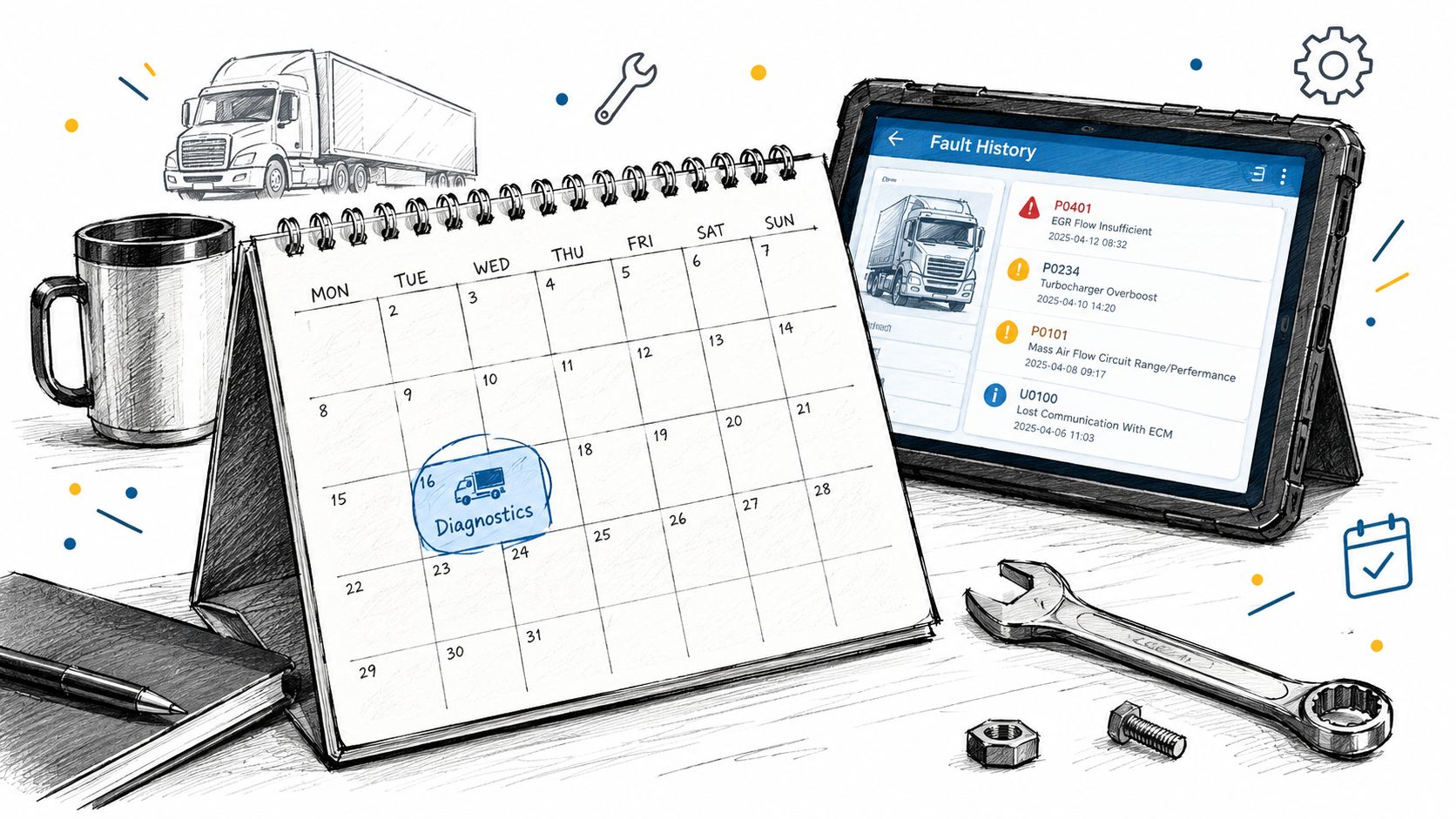
A multi-brand diagnostic tablet can read manufacturer fault codes, pending faults, live data and freeze-frame information. An SPN/FMI code, for example, can narrow the investigation from a system to a circuit, sensor or plausibility issue. It still needs voltage, continuity, connector and component checks before a part is condemned.
EBS-specific equipment is used when the issue sits inside a braking or stability system. Systems supplied by major commercial-vehicle component manufacturers may need dedicated access to read configuration, sensor status and event information. The technician then compares electronic findings with physical checks, including actuator movement, air delivery and wheel-end condition.
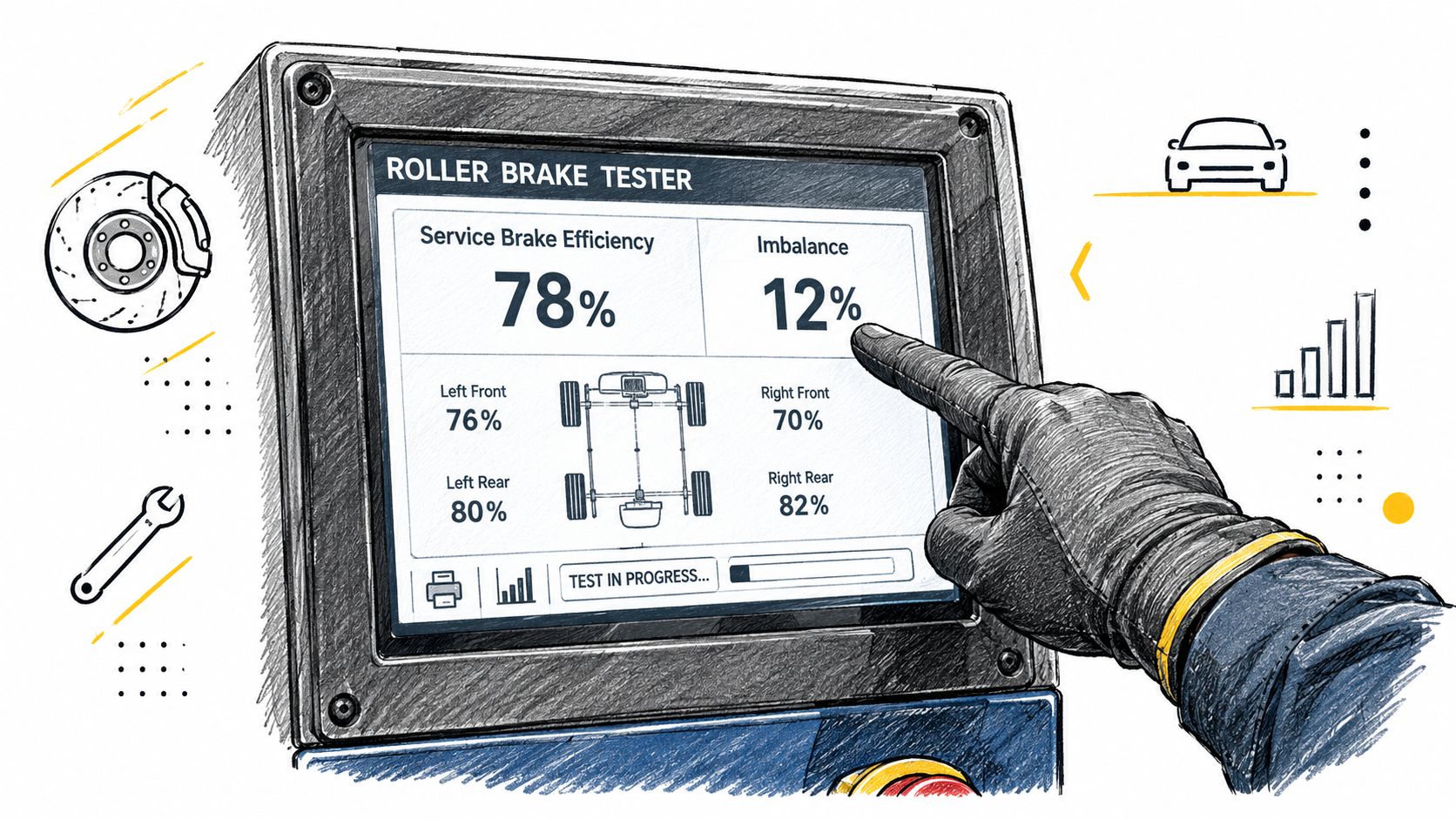
A roller brake tester provides a different type of evidence. It shows axle-by-axle force, imbalance, bind and other brake-test outputs. An air-pressure decay test can expose a leak that isn't obvious during a short visual inspection. Aftertreatment investigation may require pressure and temperature logging across the DPF and SCR system rather than clearing a stored code.
The heavy-duty truck diagnostics guide explains why this layered approach matters. The workshop's role is to interpret the information and connect it to a repair route.
From measurement to a job card
A measured imbalance percentage can support a decision to adjust, strip and inspect, or replace a component. A pressure reading that falls away under application points towards a different line of enquiry from a wheel-speed signal that drops out intermittently. A repeated derate with plausible sensor values may require an inspection of the underlying system rather than another reset.
The final report should give the fleet manager an action, not a pile of codes. It should distinguish active faults, historical faults, confirmed defects and items needing observation, then state whether the vehicle is suitable for continued use, requires a planned repair or needs immediate attention. That written record supports PMI decisions and helps prevent the same symptom returning without a proper cause being found.
Warning Signs and Common Fault Codes Suffolk Operators See
A dashboard warning doesn't tell the full story, but the combination of warning, symptom and operating pattern gives the workshop a useful first direction. The following families are common starting points for tractors and trailers working A14 trunking, Ipswich distribution and Felixstowe port shuttles.
Warning Sign / Symptom Typical Code Family What It Means Likely First Workshop Action ABS or EBS warning, wheel-speed fault or stability intervention C0035, C0040 and C0500 series A wheel-speed, circuit, communication or control issue may be affecting braking or stability functions Check wheel-speed sensors, wiring, tone rings, connectors, air supply and stored EBS events AdBlue or aftertreatment warning, derate or reduced performance P204F, P20E8 and NOx sensor code families The SCR system may have a dosing, pressure, sensor or plausibility fault Read live data, inspect dosing and pressure circuits, check sensor values and assess derate status Slow air build-up, repeated compressor operation or pressure warning Air-system fault records and pressure-related warnings A leak, valve issue, compressor problem or trailer connection fault may be reducing available air Carry out a visual leak check, pressure test and inspection of airlines, valves and reservoirs Engine warning with reduced power Engine derate and emissions-related code families The control system has limited output to protect the engine or emissions system Record active and historical codes, capture live values and check whether the restriction is safety-critical Harsh shifts, clutch slip or transmission warning Gearbox, clutch and actuator code families The control system may be detecting a position, pressure, actuator or adaptation problem Check clutch and actuator data, inspect mechanical operation and verify air or electrical supplyThe code isn't the fault
A C-series ABS code may identify a circuit or wheel position, not a failed sensor. A P20E8-type pressure code may involve the pump, wiring, fluid supply or a leak. Replacing the first named component without checking the circuit can leave the original fault in place and cost the operator another workshop visit.
Intermittent faults need special care. A warning that clears after a restart can still leave a stored event and may return when the vehicle experiences vibration, moisture, temperature change or a particular trailer connection. The workshop should capture freeze-frame information and reproduce the condition where possible.
Amber doesn't always mean harmless
The colour of a warning isn't a complete roadworthiness assessment. A driver may see an amber light while the affected system has reduced capability, and a brake or safety-system defect can create a serious inspection issue even if the vehicle is still moving normally. The DVSA HGV inspection manual sets out the examination requirements and acceptable reasons for failure, while published DVSA defect categorisation identifies brake defects involving excessive wear, insecure or damaged components, and brakes that don't operate when fully applied.
Driver defect reports should be passed to the technician alongside code information. A warning combined with pulling, delayed braking, air loss, poor gear selection or a repeat occurrence deserves a more urgent response than an isolated historical code with no supporting symptom.
How Brake Diagnostics Tie into DVSA Thresholds and Repair Decisions
Brake diagnostics show why electronic scanning alone isn't enough. A roller brake test measures the braking performance produced at each wheel or axle, while EBS data, actuator pressures and mechanical measurements help explain why the result looks the way it does.
The test needs realistic loading
DVSA guidance states that safety inspections should include brake performance assessment using a roller brake tester, electronic brake performance monitoring system or decelerometer with temperatures. It describes a laden roller brake test as the most effective way to measure individual and overall brake performance, and says the vehicle should ideally be loaded to at least 65% of its total maximum weight for the test, as set out in the DVSA guide to maintaining roadworthiness.
That matters because an unladen vehicle can hide a problem that appears under operating load. The test report should be attached to the inspection record, creating an auditable result for PMI and roadworthiness decisions. The HGV roller brake testing guidance gives operators a practical explanation of how that evidence supports workshop action.
Thresholds help separate symptoms from causes
The DVSA brake report checks bind, time lag, ovality, imbalance and maximum force. Published fail triggers include more than 4% bind, 70% or higher ovality, more than 30% imbalance and less than 5% maximum force, according to DVSA guidance on understanding HGV and trailer brake-test reports.
Those figures don't identify the failed part by themselves. Excessive bind may lead to an inspection of calipers, adjusters or friction surfaces. High ovality can point towards an out-of-round brake assembly. Side-to-side imbalance may reflect adjustment, contaminated linings, uneven wear, actuator travel or an air-system response problem.
The UK Heavy Vehicle Brake Code database supports the test by allowing the tester to apply the vehicle-specific DTP or brake code. The result is more useful than a simple pass or fail because it provides axle-by-axle output that can be compared with physical findings and previous inspection records. Brake systems and components accounted for 4.22% of HGV trailer failures in 2024 to 2025 quarter two, according to the commercial vehicle testing data for Great Britain. That makes brake condition a sensible priority for preventative inspection before annual test presentation.
Preparing Your Vehicle Before a Diagnostic Visit
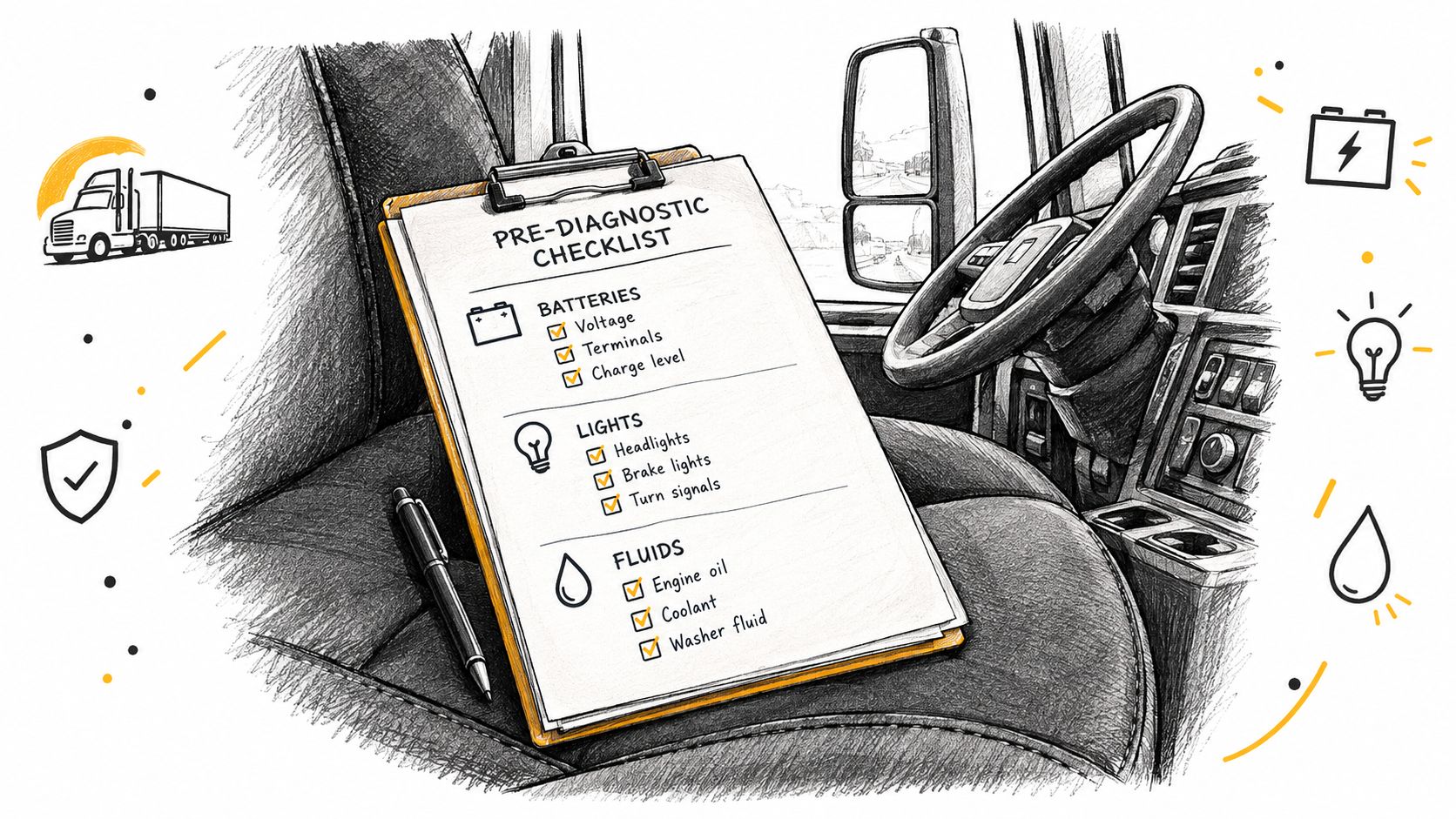
Good preparation reduces wasted diagnostic time. It also gives the technician a better chance of reproducing an intermittent fault instead of receiving a truck with its batteries low, warning history cleared and symptoms described only as “it does it sometimes”.
Before the vehicle arrives
- Charge the batteries: Control modules need stable voltage to communicate correctly. Low battery voltage can create additional communication faults that obscure the original problem.
- Keep the cab accessible: Remove loose items around the dashboard, diagnostic socket and seats. The technician needs safe access to controls and stored paperwork.
- Check tyres and pressures: Tyres should be serviceable for inspection and any planned roller brake test. Existing damage or pressure problems should be declared before testing.
- Maintain usable fuel: A vehicle needing a live road check may require enough fuel for the planned assessment. The operator should confirm the level with the workshop before arrival.
- Bring the history: Include recent fault reports, previous repairs, component replacements and the point at which the warning first appeared.
Details that change the diagnosis
A photograph of the dashboard message can preserve information that disappears after a restart. The driver should record whether the issue appeared after a cold start, during braking, under load, after coupling a trailer, in heavy rain or on a particular route around Ipswich and Felixstowe.
Active driver defect reports need to be flagged at booking. A report of slow air build-up should be prioritised differently from a historical emissions code with no current symptom. The technician can then begin with the safety-critical complaint and avoid spending the first part of the visit chasing an unrelated stored event.
For trailers, the booking information should identify the tractor used when the warning appeared. If the fault follows the trailer, the investigation can focus on trailer EBS, wiring, sensors and air connections. If it follows the tractor, the workshop can look more closely at the tractor's control systems and supply circuits.
A clear history won't remove every diagnostic delay, especially when wiring or air leaks are intermittent. It does give the workshop a sound starting point and helps the fleet manager understand why further testing may be needed before authorising repair.
Turnaround, Cost Factors and Callout or Recovery Options
Diagnostic time depends on the evidence, not the wording of the dashboard message. A straightforward code read may lead to a focused inspection, while an intermittent wiring fault, air leak or communication problem can require repeated checks under different conditions. A responsible workshop should explain that distinction before treating a scan as a complete diagnosis.
Route exposure changes the decision
A truck stopped on the A14, the Felixstowe corridor or around Bury St Edmunds presents a different problem from a unit that has returned to the yard. Mobile triage may establish whether the vehicle can move under controlled conditions, whether a basic repair is possible at the roadside or whether recovery is safer. Callouts and recovery remain subject to availability, and a mobile visit can't replace workshop-only testing when the fault needs a roller brake test, extensive strip-down or secure inspection conditions.
The truck recovery services information helps operators assess that choice. A callout can reduce unnecessary towing when the fault is diagnosable and manageable at the vehicle, but a recovery decision should prioritise safety and roadworthiness over the pressure to save a single movement.
Scenario Typical Turnaround Main Cost Drivers Warning light with a stable vehicle and clear fault history Focused assessment, subject to workshop workload and confirmation of the fault Diagnostic access, inspection time and any required reset or repair Intermittent wiring, communication or sensor problem Longer fault-finding period may be required Circuit testing, fault reproduction, access to relevant modules and labour time Air-system or brake complaint Workshop testing may be needed before a repair decision Pressure testing, roller brake testing, inspection access and replacement components Vehicle immobilised on a route Mobile triage or recovery decision first Callout availability, travel, roadside diagnosis and any separate recovery charge Aftertreatment derate or repeat emissions fault Assessment depends on live pressure, temperature and sensor data System testing, cleaning or replacement work, access to vehicle-specific information and parts availabilityParts availability can affect the final repair more than the initial scan. OEM-level access, EBS-specific tooling and the condition of connectors or air lines also influence the time required. Fleet managers should ask what has been confirmed, what remains suspected and whether the vehicle is safe to operate while parts or a further inspection are arranged.
Booking Diagnostics and Keeping Suffolk Fleets Moving
Diagnostics should sit inside a PMI and inspection rhythm, not appear only after a vehicle loses power on the A14. A booked visit gives the workshop time to review the reported fault, prepare the bay and identify the likely testing route before the truck or trailer arrives. That preparation can reduce unnecessary waiting, although the final turnaround still depends on what the tests reveal.
Pair electronic checks with inspection discipline
A useful PMI review can include fault-history assessment, EBS status, air-system condition, brake performance and aftertreatment health where the vehicle's symptoms or operating pattern justify it. The aim isn't to collect readings for their own sake. It's to identify defects early enough for the operator to choose a controlled repair window instead of reacting to a roadside failure.
The wider testing picture supports that discipline. Logistics UK reported HGV initial failure rates falling from 32.4% in 2008/09 to 10.3% in 2024/25, with final failure rates falling from 17.7% to 6.9% over the same period, in its vehicle inspection report. Those figures indicate improving maintenance standards, but they don't remove the need for consistent inspection and repair decisions.
A vehicle that passes one test can still return with the same unresolved intermittent fault. The useful record is the one that shows what was measured, what was repaired and what needs monitoring.
Make the booking specific
Operators around Woolpit, Elmswell, Bury St Edmunds, Stowmarket, Ipswich and Felixstowe should provide the unit number, trailer details, warning code, driver report and route position when contacting the workshop. Fleets working into Essex or Norfolk can also explain whether the vehicle is local, returning through Suffolk or already committed to another movement.
Woolpit Truck Repairs provides commercial vehicle diagnostics alongside HGV and trailer inspections, PMI support, roller brake testing, truck and trailer repairs, MOT preparation and presentation support, tyre support, air-conditioning re-gas, planned maintenance, callouts and recovery subject to availability. The practical choice is to share the symptom early, then decide whether the vehicle needs a workshop slot, mobile assessment or controlled recovery near A14 Junction 47.
Call Woolpit Truck Repairs with the HGV or trailer fault code, driver report and current location to discuss the appropriate diagnostic route. The team can help arrange commercial diagnostics, PMI support, brake testing, repairs, MOT preparation or a callout or recovery option subject to availability.