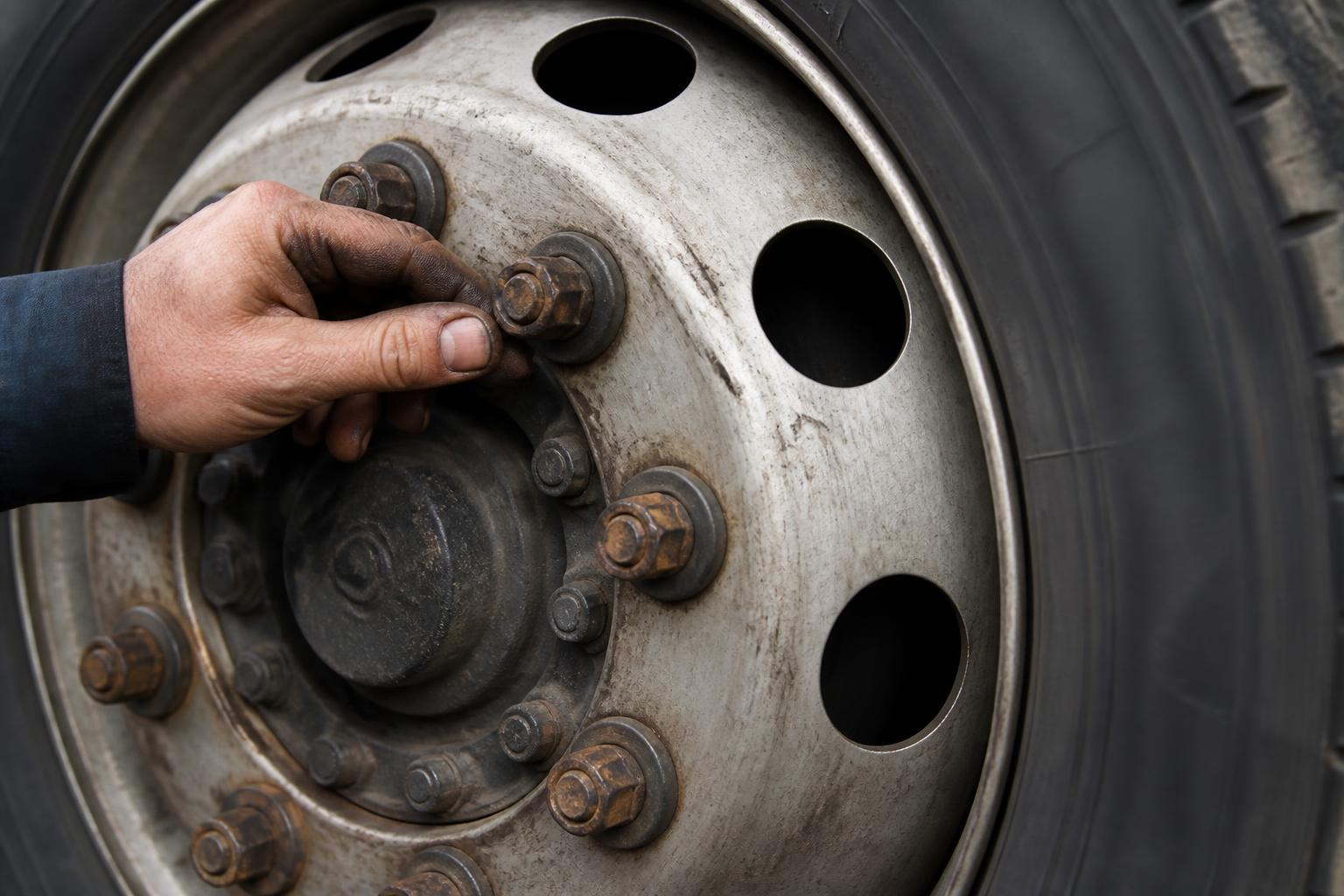
A passed MOT starts well before the vehicle reaches the test lane. Good preparation is not a last-minute check with a lamp and a tyre gauge. It is a structured look at the HGV or trailer as it is actually working, what defects are already known, what the driver has reported, what the diagnostics are showing, and what is likely to fail if nothing is done before test day.
For operators looking for HGV MOT prep in Suffolk, the aim is simple. Find defects early enough to make sensible repair decisions, avoid presenting a vehicle that is not ready, and keep planned test work from turning into unplanned downtime. At Woolpit Truck Repairs, at Bridge Farm in Woolpit, close to A14 J47, that is how we approach MOT preparation for fleets, owner-drivers, rigids, artics and trailers moving through Suffolk, Ipswich, Felixstowe, Stowmarket, Bury St Edmunds, Newmarket and Elmswell.
What good HGV MOT preparation actually covers
Proper MOT preparation covers much more than a quick visual once-over. A workshop should be looking at the same areas that are likely to attract attention at test, but also at the practical causes behind defects. A warning lamp, for example, is not just a lamp issue. It may point to an ABS or EBS fault, wiring damage, a sensor problem, a modulator issue or a trailer connection defect.
For an HGV unit, prep work usually starts with a full inspection of roadworthiness items. That means brakes, steering, suspension, tyres, wheels, lights, reflectors, glass, wipers, body security, under-run protection, emissions-related warning indications where relevant, and obvious air leaks or fluid leaks. On trailers, the same principle applies, but the focus often shifts to brake balance, axle and suspension condition, lighting circuits, park brake operation, load securing points, landing legs, body condition and wear in working components.
A worthwhile prep also includes checks that reveal defects you cannot confirm by sight alone. Roller brake testing is the obvious example. A vehicle can feel acceptable on the road and still show imbalance, weak performance, delayed response or a trailer issue that will put it at risk at MOT. That is why we build brake testing into decisions where braking performance is in doubt. If trailer braking is part of the concern, trailer brake testing before downtime spreads is often the step that gives operators a clearer answer than a road feel report alone.
Documentation and defect history matter too. If a vehicle has had repeat brake imbalance, repeated lamp faults, a known ABS issue or a pattern of tyre wear, the prep should take that into account. Good MOT preparation is not a disconnected event. It should reflect how the vehicle has been operating in the weeks leading up to test.
In the UK, annual testing for HGVs and trailers follows the DVSA system and expectations, so prep needs to be aligned to UK test standards and presentation requirements, not a generic EU-wide checklist. Where rules differ, the practical point is straightforward. We prepare for the UK test the vehicle is actually going to face.
If you want a workshop to handle the process properly, our MOT preparation and presentation support is built around inspection, defect identification, practical triage and realistic next steps, rather than just sending a vehicle in and hoping for the best.
The defects that most often put a vehicle at risk
Some failures are unusual. Most are not. The defects that most often put an HGV or trailer at risk are the same issues workshops and operators see every week.
Brakes are near the top of the list. That includes low brake performance, imbalance across an axle, poor trailer brake response, contaminated linings, worn pads or shoes, damaged discs or drums, seized components, air leaks and faults in brake control systems. ABS and EBS defects matter here because a warning lamp is not just an electrical nuisance. At MOT, an illuminated warning lamp can be enough to create a problem, and the underlying fault may also affect actual braking performance.
Tyres are another regular cause. Low tread depth is only part of it. Cuts, sidewall damage, exposed cords, mismatched fitment where not permitted, flat spotting, uneven wear and issues linked to alignment or suspension wear can all put a vehicle at risk. On trailers especially, tyre condition is sometimes allowed to drift until test time because the trailer is still moving and loading. That is often where avoidable failures happen.
Lights remain one of the most common avoidable defects because they are easy to miss in day-to-day running. Marker lamps, number plate lamps, indicators, brake lamps, fog lamps and damaged lenses all matter. On trailers, intermittent electrical faults through suzies, plugs, sockets or wiring runs are a regular issue. A trailer can leave the yard with working lamps and arrive with a fault after movement or coupling.
Suspension defects are also common. Broken leaves, worn bushes, damaged air bags, ride height issues, loose components and shock absorber problems can all show up at test. Some of these faults also feed into tyre wear and brake performance, so they rarely sit in isolation.
Warning lamps deserve separate mention because operators sometimes hope a lamp issue can wait if the vehicle still drives normally. That is risky. Engine management, ABS, EBS and other system warnings need proper diagnosis before test. If a lamp is on, the question is not whether tape over it or a reset will get through. The question is what fault is present and whether the vehicle is fit to present at all.
Trailer defects are a category in their own right. We regularly see problems with trailer brakes, lights, worn bushes, axle issues, air leaks, damaged couplings, body security concerns, landing leg defects and faults that only become obvious under test conditions. For many operators, trailers are where MOT risk builds quietly because they are swapped between units and not always given the same defect feedback loop as the tractor.
When a trailer problem becomes more than a test concern and starts affecting operations, our guide on what to do when a trailer fault stops you in Suffolk sets out the practical next step.
How to spot issues early in a working fleet
The easiest MOT failure to deal with is the one you catch weeks before the booking date. In a working fleet, that comes down to routine, reporting and acting on what the vehicle is already telling you.
Daily walkaround checks still matter. They are basic, but they catch a large share of defects early if they are done properly. Tyres, lamps, obvious air leaks, body damage, loose components, broken lenses, damaged mudwings and visible suspension issues are often first seen by the driver. The problem is not usually that the defect was invisible. It is that the report was vague, delayed or not followed up.
Driver defect reporting needs to be specific. “Brake issue” is less useful than “trailer pulling on service brake”, “ABS lamp on after coupling”, or “near side rear marker intermittent”. The more precise the report, the faster a workshop can triage whether the issue is minor, test-critical or something that should keep the vehicle off the road until checked.
Diagnostics are essential once warning lamps appear or where a fault is intermittent. Modern HGV and trailer systems do not reward guesswork. If ABS or EBS faults are stored, if a sensor is dropping out, or if a communication issue is affecting the trailer system, reading codes is part of finding the real defect. Clearing codes without fixing the cause is not preparation. It is delay.
Brake testing before MOT is one of the clearest ways to catch risk early. If a fleet waits until the annual test to discover poor brake performance or imbalance, it has left itself no room for planned repairs. A pre-test roller brake check gives you time to decide whether the vehicle needs adjustment, parts, further diagnosis or a wider look at the trailer as well as the unit.
Regular inspections between annual tests are what tie this together. A vehicle that is seen only when something breaks is much more likely to reach MOT with a stack of defects. A vehicle that is inspected on a sensible maintenance schedule gives operators a better chance of dealing with wear before it becomes a failure.
This is where practical triage matters. Not every fault needs the same response. Some can be booked in around work. Some need immediate repair. Some mean the vehicle should not go to test yet because presenting it would waste time and create avoidable downtime. Our workshop services for HGVs and trailers are structured around that kind of decision making, because operators usually need the next sensible step, not just a list of faults.
When to book prep work so the test does not become downtime
The right time to book prep work is earlier than many operators would like, especially if the vehicle has known issues, warning lamps or a trailer with a patchy defect history.
As a rule, do not leave MOT preparation to the final few days unless the vehicle is already in very strong order and has no known faults. If a workshop finds brake imbalance, tyre damage, an ABS defect, worn suspension parts or trailer electrical faults close to the test date, you may then be relying on parts availability, workshop capacity and recheck timing. That is where planned work turns into off-road time.
For vehicles with no current concerns and a solid maintenance record, a pre-test inspection with enough time to complete minor repairs is usually sensible. For vehicles with active warning lamps, brake concerns, trailer defects or recurring issues, book earlier so there is time for diagnosis, parts decisions and retesting if needed.
Parts are a real factor. Some items are straightforward. Others are not. If a trailer needs brake components, electrical parts, suspension items or more involved repair work, waiting too long can mean either missing the MOT slot or presenting a vehicle that is not genuinely ready.
Fleets should also think in terms of workshop loading, not just their own calendar. If several vehicles are due around the same period, spacing inspections and prep work reduces pressure. It also gives more options if one vehicle needs extra time. Owner-drivers benefit from the same approach because a missed MOT date can remove the vehicle from earning work at exactly the wrong time.
This matters especially for operators running busy routes in and out of Ipswich and Felixstowe, or working regularly across Stowmarket, Bury St Edmunds, Newmarket and the wider Suffolk area. If the vehicle is already committed to work, the cost of poor timing is not just the test itself. It is the knock-on effect on loads, route cover and driver time.
Our location at Bridge Farm in Woolpit, near A14 J47, helps operators using the A14 plan prep work without sending the vehicle far off route. That does not remove the need to book sensibly, but it does make it easier to get an HGV or trailer checked before a test date becomes a deadline problem.
What a workshop should tell you before sending a vehicle to test
Before any HGV or trailer goes to MOT, the workshop should be clear about one thing above all. Is it ready, does it need repair first, or should it not go yet? Anything vaguer than that is not much use to an operator trying to manage downtime.
A good workshop should explain defects in plain terms. Not just “brakes below standard”, but which axle, what the concern is, and why it matters. Not just “warning lamp on”, but whether it is linked to ABS, EBS or another system, whether codes have been read, and what further work is needed. Operators do not need pages of jargon. They need enough clarity to make a commercial decision.
The advice should also be realistic. If a vehicle is likely to fail as presented, we say so. Sending it anyway to see what happens is rarely a cost-saving move. It usually means lost time, another booking problem, and a repair schedule that is now being driven by a failure rather than planned maintenance.
Triage is the difference between a useful workshop conversation and a frustrating one. In practice, there are three outcomes.
First, the vehicle is ready for test. That means defects have been addressed, no obvious test-critical issues remain, and presenting it is a sensible next step.
Second, the vehicle needs repair before test, but the issues are manageable within the available time. In that case, the operator needs a clear list of what should be done now, what parts are needed, and how that affects the booking.
Third, the vehicle should not go yet. That may be because braking performance is not there, a warning lamp fault is unresolved, tyres are not legal, the trailer has serious defects, or the repair scope is larger than first thought. This is not bad news disguised as caution. It is often the decision that prevents a test failure from becoming longer downtime.
That practical approach is how we work at Woolpit Truck Repairs. We focus on HGV and trailer work only, and we keep the conversation tied to the real condition of the vehicle, the likely MOT outcome, and the next step that makes sense for the operator. That applies whether you run a fleet, operate a single unit, or manage mixed HGV and trailer assets across Suffolk and the surrounding routes.
If you are planning HGV MOT prep in Suffolk, the best result is not simply a vehicle that reaches the test lane. It is a vehicle that arrives there with the avoidable failures already dealt with, the known risks understood, and the downtime risk kept under control.
How early should I arrange HGV MOT prep?
Early enough to inspect, diagnose and repair defects before the MOT booking becomes urgent. If brakes, tyres, warning lamps or trailer faults need parts, leaving it late can turn a routine test into downtime.
Does MOT prep include trailers as well as the unit?
It should. Trailer brakes, lights, tyres, ABS or EBS faults, wear and structural issues can all affect roadworthiness and test readiness, so trailer checks need to be part of the plan.
Can a roller brake test help before MOT?
Yes. A roller brake test can highlight imbalance, weak performance or other brake concerns before the MOT, giving time to investigate and repair faults rather than finding them on test day.
What if an ABS warning light is on before test?
It needs proper diagnosis, not guesswork. An ABS or EBS warning lamp can point to sensor, wiring or other system faults, and sending the vehicle to MOT without resolving it risks failure.
Why use a local HGV workshop in Suffolk for prep?
For operators around Woolpit, Ipswich, Felixstowe, Stowmarket, Bury St Edmunds, Newmarket and Elmswell, local access near A14 J47 can make inspections, repairs and retests easier to manage.