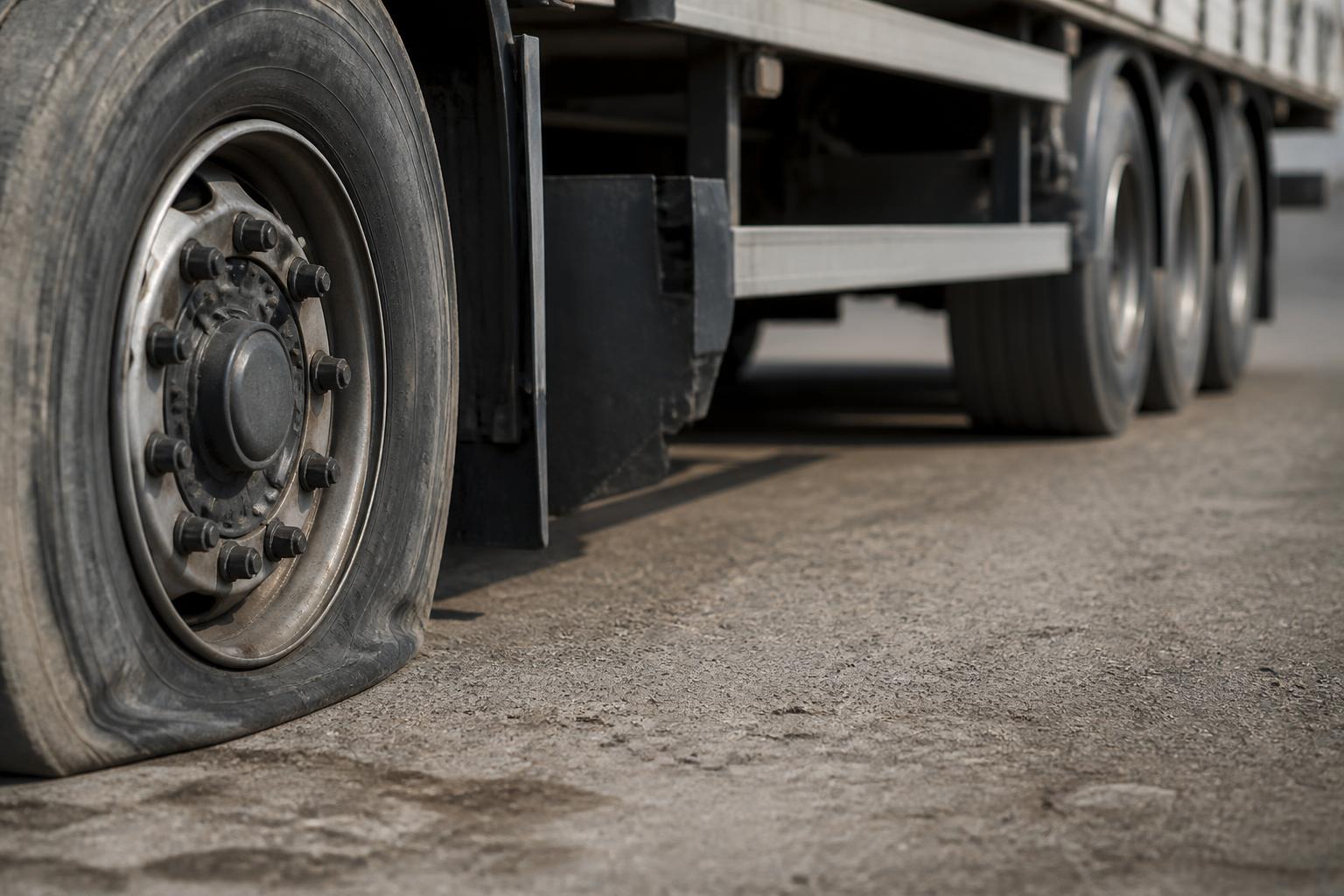
A tyre failure on an HGV rarely arrives at a convenient time. On the A14, it usually means a loaded vehicle, a delivery window already under pressure, and a decision that has to be made quickly and safely. When the issue has gone beyond pressure loss you can monitor or damage you can inspect later in the yard, fast tyre help matters because it cuts downtime, reduces the risk of secondary damage, and gives the driver a clear next step.
From our workshop at Bridge Farm, close to A14 J47 in Woolpit, we deal with tyre problems on HGVs and trailers for fleets, owner-drivers and route-based operators moving through Suffolk, Ipswich, Felixstowe, Stowmarket, Bury St Edmunds, Newmarket and Elmswell. What operators usually need in that moment is not vague reassurance. They need practical triage, the right questions, and a realistic answer on whether the vehicle can continue, needs a tyre changed where it stands, or should not move until the defect is dealt with.
When 24/7 tyre support becomes the safest option
There is a point where watching a tyre and planning to deal with it later stops being sensible. On commercial vehicles, that point often comes earlier than operators would like, because the loads, axle weights and road speeds involved leave very little margin.
If a driver reports a rapid loss of pressure, a blowout, exposed cords, a sidewall bulge, a tread separation, or impact damage after striking debris or a kerb, that is no longer a defect to monitor. It needs immediate assessment. The same applies where a trailer tyre has failed and debris may have damaged brake lines, mudguards, ABS or EBS wiring, lift axle components, or the wheel arch itself.
Heat is another warning sign that should not be ignored. If one tyre is running noticeably hotter than its pair on the same axle, or there is a smell of overheated rubber after stopping, the safest option is usually to keep the vehicle parked until the cause is checked. An underinflated tyre on an HGV can fail quickly once heat builds up, particularly on motorway and trunk road work.
There are also cases where the tyre is only part of the problem. A shredded tyre can be the visible result of a brake binding issue, a seized caliper, a hub problem, poor alignment, damaged suspension, or a trailer running out of track. If the driver has had warning lights, pulling, vibration, or repeated wear on one position, a roadside replacement may get the vehicle mobile again, but it should still be treated as a fault that needs proper follow-up.
For operators on the A14, especially between Felixstowe and the inland routes through Suffolk, timing matters. A vehicle stopped in a live lane or on the hard shoulder is a safety issue first. A vehicle stopped off-road at a customer site, in a yard, or at a loading point may be in less immediate danger, but it can still be immobilised by axle loading, limited access, or a defect that makes onward movement unsafe. That is where round-the-clock tyre replacement support becomes the practical choice, not because every puncture is an emergency, but because some tyre defects cannot wait for workshop hours without increasing risk and downtime.
If you are unsure whether a tubeless commercial tyre has crossed that line, our guide on when a tubeless truck tyre needs replacing fast covers the warning signs that matter most.
What operators should check before making the call
The quickest way to lose time is to make a tyre call without the details needed to triage it properly. Before calling, the first priority is always safety. The driver should stop in the safest available place, follow site or roadside procedures, use hazard warning lights where appropriate, and avoid standing in danger areas next to live traffic.
Once the vehicle is safe, the useful information is straightforward.
Start with the exact location. "Near Ipswich" is not enough if the vehicle is on the A14. We need the carriageway direction, nearest junction, marker post if visible, and whether the vehicle is on-road, in a layby, at a depot, at a farm, or on a customer site. Around Woolpit and A14 J47, access can be simple or awkward depending on approach, gates, surface conditions and whether another vehicle is blocking the unit or trailer.
Then identify the vehicle and tyre position. We need to know whether it is a rigid, unit and trailer, or artic, and which axle and side is affected. "Nearside trailer middle axle outer" is useful. "One of the back tyres" is not. If the driver can provide the tyre size from the sidewall, that helps, but if not, the axle position and vehicle type are still enough to begin.
The defect description matters just as much. Is it flat, losing air slowly, blown out, cut, bulging, worn through on one shoulder, or damaged after striking something? Has the tyre come apart and damaged surrounding parts? Has the driver seen smoke, heard a bang, or felt vibration through the steering or trailer? Is there any warning light on the dash, especially ABS or EBS on the trailer, or signs of brake drag?
Photos are often the fastest way to avoid the wrong first step. A clear image of the damaged tyre, the wheel position, and any surrounding damage can show whether we are likely dealing with a straightforward replacement, a wheel issue, or a larger defect that affects roadworthiness.
Operators should also check loading and movement constraints. Is the vehicle fully freighted, part loaded, or empty? Has it sunk into soft ground? Is there enough room to work safely? Can the vehicle roll if needed, or is a brake or hub issue preventing movement? A loaded trailer on uneven ground with a failed inner tyre is very different from a lightly loaded rigid in a yard.
Finally, confirm whether there are any site rules, booking restrictions or out-of-hours access limits. A tyre technician can lose valuable time if security does not know the vehicle is there or if a customer site will not permit work in a certain area.
When we take a call, this is the information that lets us decide whether a tyre replacement is the likely answer, whether another mechanical fault may be involved, and whether the vehicle should remain parked until we inspect it.
How tyre replacement works on HGVs and trailers
The process usually starts with triage, not with a promise that every vehicle can simply be fitted and sent back out. That is important, because on HGVs and trailers the tyre may be the immediate failure, but not always the root cause.
Once we have the location, axle position and defect details, we assess what is most likely needed and whether the vehicle appears safe to approach and work on where it stands. If the report suggests wider damage, such as burst tyre debris affecting mudwings, brake chambers, air lines, ABS leads or bodywork, we factor that into the next step rather than treating it as a simple puncture job.
At the vehicle, the first stage is inspection. We check the failed tyre and the paired tyre where relevant, because one side often tells you something about what the other has been through. We look at tread condition, shoulder wear, sidewall damage, signs of underinflation, impact marks, evidence of running flat, and any indication that the tyre has been fouling another component.
We also inspect the wheel and surrounding area. On commercial vehicles that means checking for damage to the rim, wheel nuts, studs where visible, valve condition, hub area heat, brake condition if accessible, and any obvious suspension or alignment issue. On trailers, it also means checking whether a tyre failure has pulled or broken ABS or EBS cables, damaged air pipes, or affected mudguards and lighting brackets.
If replacement is appropriate, the damaged tyre is removed and the replacement fitted with the correct checks for that wheel position. Inflation, valve condition and seating all matter. So does making sure the replacement is suitable for the application and axle position. A steer axle requirement is not the same as a trailer position. The aim is not only to get the vehicle moving, but to do it in a way that is roadworthy and commercially sensible.
After fitment, the decision is whether the vehicle can continue, and on what basis. Sometimes the answer is yes, continue and monitor. Sometimes it is yes, but only to return to base or proceed directly to a workshop for further checks. Sometimes the answer is no, because the tyre failure has exposed another issue, such as brake drag, severe irregular wear, or damage that makes the vehicle unroadworthy.
That advice needs to be clear. Operators do not benefit from being told everything is fine if the failed tyre was actually the result of a deeper defect that will stop the vehicle again. Our approach is to explain what we can see, what has been rectified, and what still needs attention. If the tyre issue points to a likely alignment or steering problem, our article on what to check before tyre wear gets worse is a useful follow-on.
Common tyre faults that lead to downtime
Most tyre-related stoppages on commercial vehicles fall into a handful of patterns, and each can point to a different underlying issue.
Punctures and penetration damage are common, especially on trailers working in yards, construction access roads, farms and distribution sites. Screws, metal fragments and other debris can cause a slow leak that becomes a flat by the time the vehicle reaches the next stop. In some cases the tyre itself is the whole issue. In others, repeated punctures suggest the route or site conditions are the real problem.
Sidewall damage is a different category. Cuts, bulges and impact breaks often come from kerbing, potholes, debris strikes or manoeuvring in tight yards. On an HGV, sidewall damage is not something to take chances with. If the structure is compromised, replacement is usually the safe answer.
Irregular wear is one of the biggest downtime warnings because it tends to build over time and then appears as a sudden failure. Feathering, one-sided shoulder wear, scrub wear on trailer axles, and rapid wear on a single wheel position can indicate poor alignment, worn suspension parts, incorrect tyre pressures, axle tracking problems or steering faults. If a vehicle keeps eating tyres in one position, the tyre is reporting a mechanical issue.
Heat-related failures matter too. A tyre that has been run underinflated can fail after the casing has been weakened by excess flex and temperature. Likewise, a binding brake or hub issue can overheat the wheel end and contribute to tyre damage. If the driver reports a smell, smoke, or one wheel end running hotter than the rest, it should not be treated as a routine flat.
Tread separation and delamination can lead to major roadside stoppages and collateral damage. Once tread starts to lift or the casing breaks up, the tyre can take mudwings, lights, pipework and wiring with it. On trailers, this is where a tyre failure often becomes a broader repair problem rather than a single replacement.
Valve and inflation issues are another cause of avoidable downtime. A damaged valve, slow leak, or missed pressure loss can leave a tyre running below its proper operating pressure for long enough to destroy it. On busy fleet work, these are often the defects that look sudden but have actually been developing for days.
For operators dealing with a failure already on the vehicle, our page on fast HGV and trailer tyre replacement support sets out the kind of practical help that keeps the next step clear.
Choosing practical tyre support near Woolpit and the A14
When a vehicle is down, the nearest option is not always the most useful one. What matters is whether the provider understands HGVs and trailers, can reach the route sensibly, and can tell you what happens next without guesswork.
For operators around Woolpit, Stowmarket, Bury St Edmunds, Newmarket and the wider Suffolk route network, access to the A14 is a major factor. A workshop based close to A14 J47 can often make triage and onward planning simpler because the route, laybys, local industrial sites and common access problems are already familiar. The same applies to traffic patterns coming inland from Felixstowe or westbound through Suffolk.
It also helps to use a provider that deals specifically with commercial vehicles. HGV and trailer tyre faults are not the same as car or van breakdowns. Axle loads, wheel positions, paired tyre effects, trailer brake and wiring damage, and roadworthiness decisions all need commercial vehicle judgement. That is why our work at Woolpit Truck Repairs stays focused on HGVs and trailers.
Operators should also look for clear defect reporting. If a tyre has failed because of shoulder wear from alignment problems, or because a trailer axle is scrubbing, you need that said plainly. If a roadside replacement will get the vehicle moving but not cure the cause, that should be part of the advice. Good tyre support saves time not only by attending quickly, but by preventing the same stoppage from happening again on the next run.
Practicality matters as much as speed. Can the provider work with restricted access? Can they deal with trailers as well as units? Can they explain whether the vehicle is fit to continue, fit only to return for repair, or should stay parked? Those answers are what fleet managers and owner-drivers actually buy when downtime is costing them.
We work with fleets and independent operators who need straightforward help near Bridge Farm, Woolpit and the A14 corridor, including traffic moving between Ipswich, Felixstowe and the inland network. Where another issue is likely sitting behind the failed tyre, we say so. Where a replacement is the right immediate fix, we get on with it. That practical approach is also reflected in our article on the safest next step after truck tyre failures in Suffolk.
Woolpit Truck Repairs operates as FLEETA LIMITED, and the job for us is simple. Keep the advice clear, deal with the defect properly, and help operators make a safe decision that protects uptime instead of just postponing the next stop.
What counts as an emergency tyre problem on an HGV?
A blowout, rapid pressure loss, exposed cords, sidewall damage, severe tread damage or a tyre defect that makes the vehicle unsafe to move should be treated as urgent.
Can a trailer tyre fault be more than just a tyre issue?
Yes. Uneven wear or repeated failure can point to brake drag, axle, suspension, alignment or loading issues. Replacing the tyre may only solve part of the problem.
What information helps when requesting tyre support?
Give the exact location, vehicle type, whether it is a tractor, rigid or trailer, the tyre position, the visible damage, and whether the vehicle is loaded or in a safe place.
Is it safe to keep driving on a damaged commercial tyre?
Not if there is visible damage, pressure loss, vibration, handling change or debris impact. Continuing can increase the risk of casing failure, wheel damage and roadside downtime.
Why does location matter for tyre callouts?
Access affects response planning, safety and what equipment is practical. A vehicle near A14 J47, Bridge Farm or local routes around Suffolk may need different arrangements from a depot job.