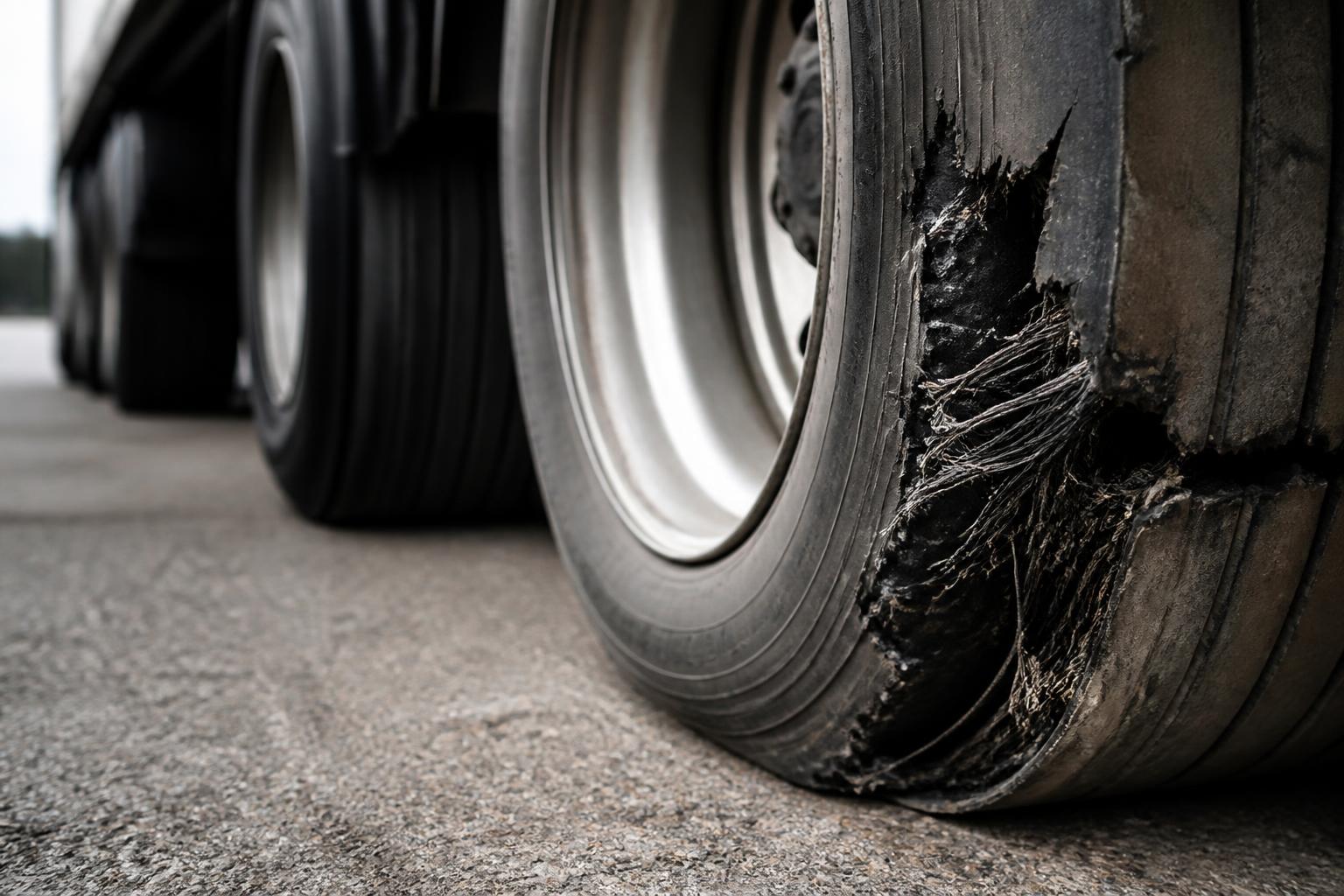
A truck or trailer tyre problem is not something to “keep an eye on” until the next break. On a working vehicle, the safe next step depends on the defect, where it sits on the vehicle, and whether the fault points to something bigger such as brake drag, axle misalignment or pressure loss. If the casing is exposed, the sidewall is cut, the tyre is running flat, or there is a bulge, separation or serious impact damage, the right decision is usually to stop, assess and avoid further road use until the cause is understood.
At Woolpit Truck Repairs, we deal with HGV and trailer tyre faults for operators moving through Woolpit, Ipswich, Felixstowe, Stowmarket, Bury St Edmunds, Newmarket and Elmswell, with practical route access from A14 J47 at Bridge Farm. If you are weighing up workshop attendance, roadside help, or whether recovery support enquiries are the safer option, the first job is to recognise which faults make continued driving unsafe.
When a truck tyre problem means stop now
Some tyre defects leave no sensible margin for “just getting it back”. On an HGV or trailer, stop and assess immediately if you find:
- exposed cords or ply
- a cut deep enough to reach the casing
- a bulge in the sidewall or tread area
- tread or belt separation
- a rapid loss of pressure
- a tyre that has run flat or partly flat
- a chunk missing from the sidewall
- signs of fire, severe overheating or melted rubber
- impact damage after striking a kerb, pothole or debris
- twin tyres touching, or one tyre in a twin set carrying the load after the other has deflated
Why these matter is straightforward. Once the casing is damaged, the tyre is no longer just worn, it is structurally compromised. Heat builds quickly under load, especially on trunk routes and on vehicles working in and out of Felixstowe. A tyre that is already weakened can fail fully, damage mudguards, airlines, ABS or EBS wiring, and in some cases affect nearby brake components or suspension parts.
Sidewall damage deserves particular caution. Tread area wear can sometimes be measured and monitored, but the sidewall flexes continuously. A bulge usually means internal cord damage. That is not a defect to nurse back to base.
Pressure loss also needs treating as a fault, not just a low reading. If a tyre has gone down, ask why. It may be a puncture, a valve issue, a bead seating problem, a cracked wheel, or damage caused by an impact. Re-inflating without checking the cause can send the vehicle straight back onto the road with the same failure still present.
UK roadworthiness expectations are clear on condition and inflation. A tyre must be suitable, free from certain cuts and defects, and not so under-inflated that it is likely to fail. For commercial operators in Suffolk, the practical point is simple. If the tyre’s integrity is in doubt, stop before the tyre decides for you.
What actually causes tyre replacement on working vehicles
Most truck tyre replacement in Suffolk is not caused by simple age alone. On working vehicles, tyres usually come off because another operating condition has pushed them there.
The common causes include the following.
Tread wear
This is the obvious one, but even here the pattern matters. A tyre worn evenly to replacement point is one thing. A tyre scrubbed off on one shoulder, feathered across the tread, or worn in patches tells us more than “the tyre is finished”. It tells us what to inspect next.
For HGV use in the UK, the legal tread depth rules differ by vehicle type and position. Heavy goods vehicles generally require at least 1mm tread depth across the central three quarters of the breadth of tread, around the entire circumference. That is different from the 1.6mm rule operators may know from cars and light vans. Legal minimums are not the same as sensible fleet policy, though. Many operators replace earlier to avoid roadside risk, poor wet grip and MOT trouble.
Impact damage
Suffolk operators see this after potholes, broken edges on yards, kerbing, debris strikes and trailer manoeuvring. The visible mark may look minor, but the internal damage can be worse than the external cut suggests. A hard impact can also distort the wheel rim, upset alignment, or start a slow air leak that only becomes obvious later.
Pressure loss and under-inflation
Under-inflation is one of the most expensive tyre killers on commercial vehicles. It creates heat, increases shoulder wear and weakens the casing. It also affects fuel use and stability. On trailers, a low tyre can go unnoticed until the wear is advanced or the driver spots smoke, smell or handling change.
Pressure loss may come from punctures, valve leaks, bead leaks, porous corrosion around the rim seat, or wheel damage. If a tyre has been run low, replacement may be needed even if the original puncture looks repairable, because the sidewall may already be fatigued.
Alignment and geometry problems
If a steer axle tyre is wearing one-sided, or a trailer axle is scrubbing tyres off faster than expected, alignment needs attention. Toe settings, axle alignment, worn suspension components, bent parts and previous strike damage can all cause abnormal wear. Replacing the tyre without correcting the geometry usually means the next tyre follows it.
Brake-related issues
Brake drag and brake imbalance are major tyre contributors. A binding brake creates heat. Heat affects tyre life, wheel-end components and bearing condition. Flat spots can also occur where a wheel has locked under braking, or where an issue in the braking system has caused uneven braking effort. On modern vehicles, ABS and EBS faults can sit in the background while the tyre shows the result first.
This is one reason we often combine tyre work with broader checks and, where needed, roller brake testing and workshop fault checks. The tyre is often the symptom, not the whole fault.
How tyre faults affect downtime, safety and MOT risk
A tyre defect rarely stays as “just a tyre”. The first cost is often downtime. The second cost is what happened because the tyre was left too long.
A slow puncture can become a roadside stop. A worn shoulder can turn into a failed inspection. A delaminating trailer tyre can damage mudwings, spray suppression, lights and wiring. A flat in a twin fitment can overload the mate tyre and leave you with two replacements instead of one.
For operators on timed work around Ipswich, Felixstowe and the A14 corridor, the real issue is not just the tyre bill. It is missed slots, rebooked collections, vehicle swaps, trailer changes and driver hours being used up by something that could have been triaged earlier.
There is also the risk of secondary damage. We regularly see tyre faults linked with:
- worn or damaged wheel studs and fixings
- brake overheating
- damaged mudguards and brackets
- broken ABS or EBS sensor wiring
- airline damage on trailers
- wheel rim damage
- suspension wear made worse by running with incorrect inflation
- uneven loading effects across an axle set
From an MOT and inspection point of view, tyres are basic roadworthiness items, but they also trigger attention to related defects. If the tyre wear pattern suggests alignment trouble, or if a brake issue has caused a flat spot or heat damage, you are not looking at a one-line defect. You may be looking at several items that need sorting before test.
For UK operators, MOT standards and annual test expectations are applied to the vehicle as presented, not to the intention behind it. “We were going to change that next week” does not help on test day. If a tyre is below standard, cut beyond limits, fouling, damaged, or obviously affected by another defect, it can put the whole vehicle off the road until rectified.
That is why early assessment matters. If you need practical HGV tyre help by the A14, the aim is not just to get rubber fitted. It is to shorten the chain reaction that starts with the tyre and ends with a missed job and a failed inspection.
What a workshop should check before fitting a replacement
A proper tyre replacement on a commercial vehicle should start before the new tyre is anywhere near the wheel. We first want to know why this one failed, whether the wheel position is suitable for the replacement being fitted, and whether any related defect will damage the next tyre.
The practical checks should include the following.
Wheel position and application
Steer, drive and trailer positions have different demands. Tyre type, load rating, speed rating and axle use need to match the job. A replacement suitable for one position may not be right for another. Twin fitments also need checking for matched size and adequate dual spacing.
Tread wear pattern
The old tyre tells a story. Centre wear can suggest over-inflation. Both shoulders can point to under-inflation. One-sided wear may indicate alignment or suspension issues. Feathering often suggests geometry trouble. Localised flat spots can indicate braking issues or wheel lock events.
Inflation condition and leak source
If the failed tyre was low, the workshop should check valve condition, extensions if fitted, bead sealing faces and the wheel itself. Corrosion on the rim seat is common on working vehicles and can be missed if the job is rushed.
Wheel and rim condition
We check for cracks, distortion, damage around stud holes, corrosion and evidence of movement. A new tyre fitted to a damaged wheel is not a finished job.
Axle, suspension and hub condition
Worn bushes, shocks where fitted, hub play, bearing issues and bent components all affect tyre life. On trailers, axle alignment and suspension condition are common contributors to repeated tyre replacement.
Brake condition
A tyre with heat damage or a flat spot should prompt brake checks. We look for signs of drag, imbalance, seized components, or problems likely to affect brake performance. If required, roller brake testing gives a clearer picture before the vehicle goes back to work.
Related electrical and control faults
On modern trailers and trucks, ABS and EBS issues can sit alongside tyre wear and braking complaints. A warning lamp, intermittent fault or damaged sensor lead should not be ignored just because the visible problem is the tyre.
Load and operating pattern
A vehicle doing local kerb work around Stowmarket or Bury St Edmunds can damage tyres differently from one running trunk work between Newmarket, Ipswich and Felixstowe. Repeated failures on the same axle position often make sense once the route and work type are considered.
This is the difference between changing a tyre and solving the problem that consumed it. If you need commercial vehicle tyre replacement support in Suffolk, the useful part is the diagnosis around the replacement, not just the fitting itself.
Choosing the right next step near the A14
The safest next step depends on what has happened to the tyre and where the vehicle is now.
If the tyre is worn to replacement point but otherwise stable, and there is no sign of casing damage, wheel damage or brake trouble, workshop attendance is often the best route. That gives space for proper inspection and any related work that may be needed.
If the vehicle is mobile but the tyre is losing pressure, has visible damage, or the wear pattern points to a likely brake or alignment issue, stop and reassess before deciding to continue. The question is not only “can it move”, but “what damage will that movement add”.
If the tyre has failed, the sidewall is compromised, the vehicle is unsafe to drive, or the wheel end may also be damaged, roadside attendance may not be enough. In those cases, recovery support enquiries are often the safer starting point, especially if the vehicle is loaded or sitting in a poor location.
Route access matters here. Being close to A14 J47 at Bridge Farm in Woolpit means we are well placed for operators moving across Suffolk, including traffic between Felixstowe, Ipswich, Stowmarket, Bury St Edmunds and Newmarket. For many breakdown and defect situations, that access can make the difference between a long diversion in decision-making and a quicker, clearer plan.
We also know that operators do not always need the same answer. A fleet manager may need triage for whether to send the unit in, swap trailers, or stand the vehicle down. An owner-driver may need a straight answer on whether the tyre fault points to a bigger axle or brake issue. Another workshop or transport office may simply need realistic support options near Elmswell or on the A14 corridor.
That is how we approach it at Woolpit Truck Repairs. We explain the defect plainly, identify whether the tyre is the fault or the result of one, and help decide whether the next step is workshop attention, roadside support, or recovery support enquiries. If you are deciding what to do after a truck or trailer tyre failure in Suffolk, that practical triage is usually what saves the most time.
Woolpit Truck Repairs is operated by FLEETA LIMITED from Bridge Farm, Woolpit, with direct route access near A14 J47 for HGV and trailer operators across Suffolk.
When does a truck tyre need replacing rather than monitoring?
If there is exposed cord, a bulge, serious sidewall damage, rapid pressure loss, illegal tread or impact damage, replacement is usually the safe next step rather than continued use.
Can uneven tyre wear point to another fault?
Yes. Uneven wear can indicate inflation issues, axle or suspension problems, brake drag, wheel alignment concerns or loading issues. Replacing the tyre alone may not solve the cause.
Should trailer tyres be treated differently from unit tyres?
They still need the same safety-first approach, but the checks may differ by axle position, load effect, wear pattern and whether the defect is isolated or part of a wider trailer issue.
Why does tyre damage matter for MOT preparation?
Tyres are a basic roadworthiness item. Damage, tread issues or related defects can lead to failure points, and they may also highlight wider problems that should be dealt with before MOT.
What information helps a workshop triage a tyre problem quickly?
Vehicle type, axle position, whether it is a unit or trailer, the visible defect, any warning signs, whether the tyre is losing pressure, and whether the vehicle is loaded all help.