A driver has pulled into a lay-by near Thetford with an ABS warning on the unit, a trailer brake concern, and a delivery slot that won't wait. The traffic office needs an answer quickly. Can the vehicle be made safe at roadside, should it go straight into a workshop, or is recovery the only sensible route? That's what most searches for HGV repairs Thetford are really about. Not finding a generic mechanic, but protecting uptime without creating a roadworthiness problem later in the day.
That pressure is real in this part of the network. Norfolk is a major HGV operating area, with 5.54 billion vehicle miles travelled on roads in the county in 2024, and Department for Transport manual counts showing more than 300 HGVs per day at individual count points on routes such as the A11 in 2024. Nationally, GB-registered HGVs lifted 1.59 billion tonnes of goods in 2024 and travelled 19.4 billion kilometres, both up 2% year on year, according to the UK road freight statistics collection. For fleets working between Thetford, the A11 and the A14, repair demand is driven by steady commercial use, not occasional breakdowns.
A sensible repair decision near Thetford usually sits on three questions. Is the fault affecting immediate safety? What evidence will the operator need after the repair? And will the chosen route get the vehicle earning again without storing up an annual test or DVSA problem later?
Table of Contents
- Introduction When an HGV Needs Help Near Thetford
- What HGV and Trailer Repair Services Cover
- Signs Your HGV or Trailer Needs Workshop Attention
- How to Prepare for a Workshop Visit or Callout
- How to Choose the Right HGV Repair Provider Near Thetford
- Emergency Procedures Recovery and MOT Preparation Support
- Planning Costs Downtime and Booking Your HGV Repair
Introduction When an HGV Needs Help Near Thetford
A common Thetford job starts long before a workshop sees the vehicle. The driver reports dragging brakes after short stop-start running, or a trailer arrives at a bay with an uneven wear pattern that wasn't there the previous week. Sometimes the issue looks minor. It rarely stays that way if the unit is kept moving without proper checks.
The local geography matters. Thetford sits between trunk work and distribution work, so vehicles can move from a fast A11 leg into depot shunting, short drops, and loaded restarts in the same shift. That mix is hard on brakes, tyres, suspension components and electrical connections. It also creates the sort of intermittent faults that a quick visual check won't always settle.
Operators looking wider across East Anglia often face the same pressures seen in HGV repairs in Norfolk. The issue isn't just getting a fault cleared. It's making sure the repair route fits the vehicle's duty cycle, the trailer's condition, the next inspection date and the evidence needed if the defect is questioned later.
What usually goes wrong in practice
Some fleets lose time because they send too little information with the driver. Others lose more because they choose the cheapest-looking option first, then end up with a second visit, a workshop transfer, or a failed brake performance check after the original defect was “dealt with”.
Practical rule: A repair isn't finished when the warning light goes out. It's finished when the vehicle is safe, the fault path is understood, and the paperwork supports the decision to return it to service.
A specialist commercial workshop approach matters. For operators in Suffolk, Norfolk and Essex, the useful services aren't vague “repairs”. They're targeted support such as PMI inspection work, roller brake testing, diagnostics, truck and trailer repairs, tyre support, air-conditioning re-gas, planned maintenance, callouts and recovery where available, plus MOT preparation and presentation support.
What HGV and Trailer Repair Services Cover
Commercial repair work is a layered system. Inspection finds the defect. Testing measures it. Diagnostics trace the cause. Repair deals with the failure. Then the vehicle needs the right records to show why it's fit to go back into service.
The core workshop functions
A proper HGV and trailer workshop near Thetford will usually cover several connected jobs:
- Safety inspections and PMI support. These checks pick up defects before they turn into roadside failures or annual test issues.
- Roller brake testing. This gives measurable brake performance rather than relying on visual judgment alone.
- Diagnostics. Essential when a fault code, EBS issue, sensor problem or intermittent warning sits behind the obvious symptom.
- Mechanical truck and trailer repairs. That includes running gear, braking components, suspension, electrical faults, air leaks and general commercial vehicle defect work.
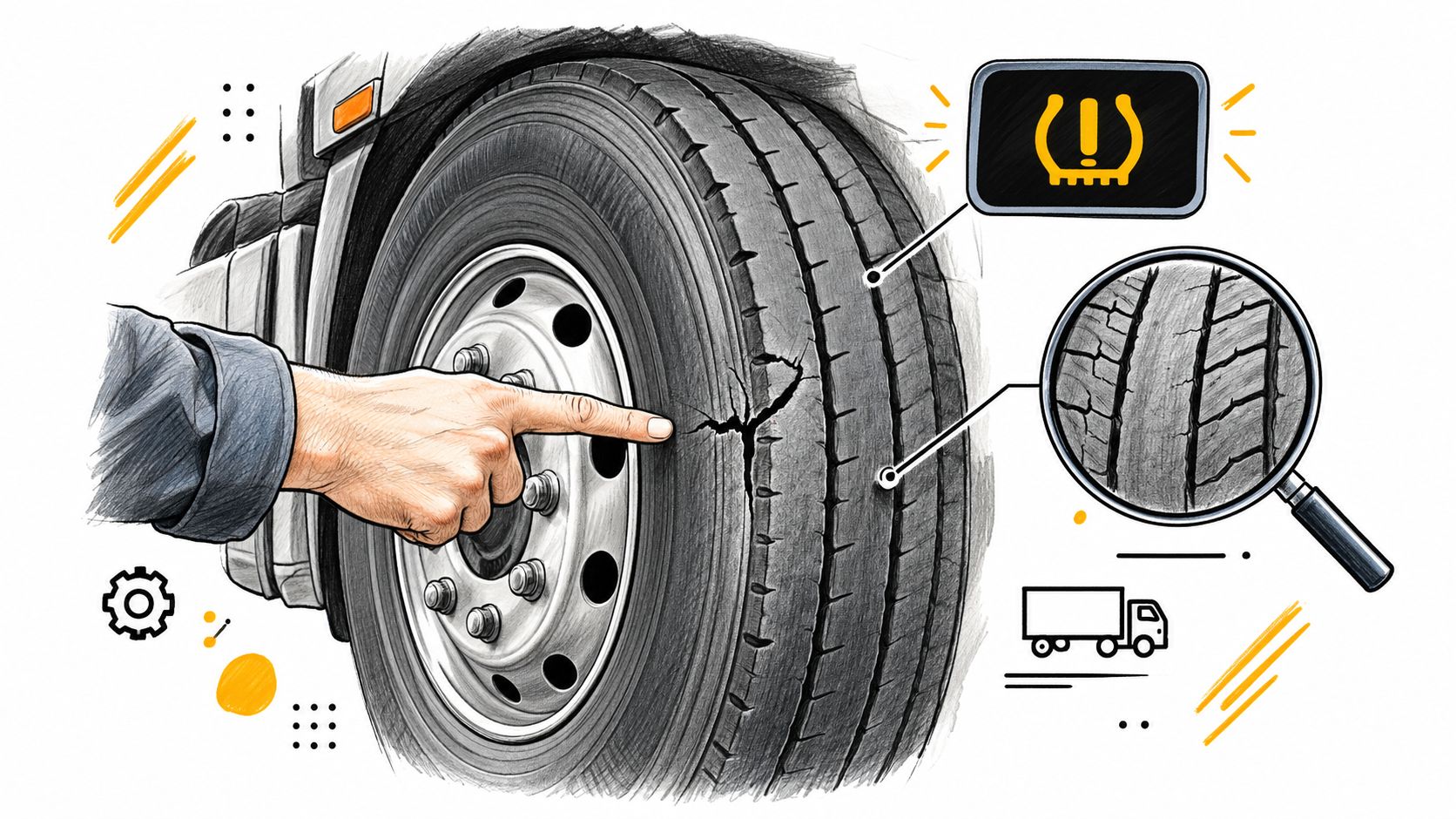
- Tyre support. Not just replacing a failed tyre, but spotting wear patterns that point to a wider issue.
- Air-conditioning re-gas. Relevant for cab comfort and demisting, especially on working vehicles that spend long days on the road.
- Planned fleet maintenance. Downtime is controlled instead of reacted to.
- MOT preparation and presentation support. Preparation matters, but that doesn't make a workshop an MOT test station.
Why these services have to work together
A workshop visit often starts with one complaint and ends with a different root cause. A trailer with poor brake feel may also have adjustment issues, wear, or a loading-related imbalance that only appears under test. A tyre issue may be the visible sign of a suspension or brake problem. A warning lamp may be electrical, but the risk attached to it is operational.
DVSA guidance says brake performance should be assessed at every safety inspection, and the most effective method is a calibrated roller brake test carried out laden. The vehicle should ideally be loaded to at least 65% of its total maximum weight, and operators should plan for at least four brake tests per year, including the MOT, according to the DVSA brake test report guidance. For fleets mixing trunking with depot shunting and short urban work, that matters because loaded testing will expose imbalance, reduced efficiency and binding that a walk-round won't.
A visual brake check can confirm condition. It can't prove performance.
What isn't covered is just as important. A specialist commercial workshop for HGVs, trucks and trailers only isn't the place for private car servicing, cosmetic retail work, or unrelated light vehicle jobs. The reason is practical. HGV and trailer repairs need the right equipment, the right inspection mindset and the right reporting standards.
Signs Your HGV or Trailer Needs Workshop Attention
Many failures give warning before they stop the vehicle. The problem is that the warning often looks manageable from the cab. By the time the unit reaches the yard again, the defect has spread into downtime, parts, brake test work and missed planning.
Driver reports that should never be parked for later
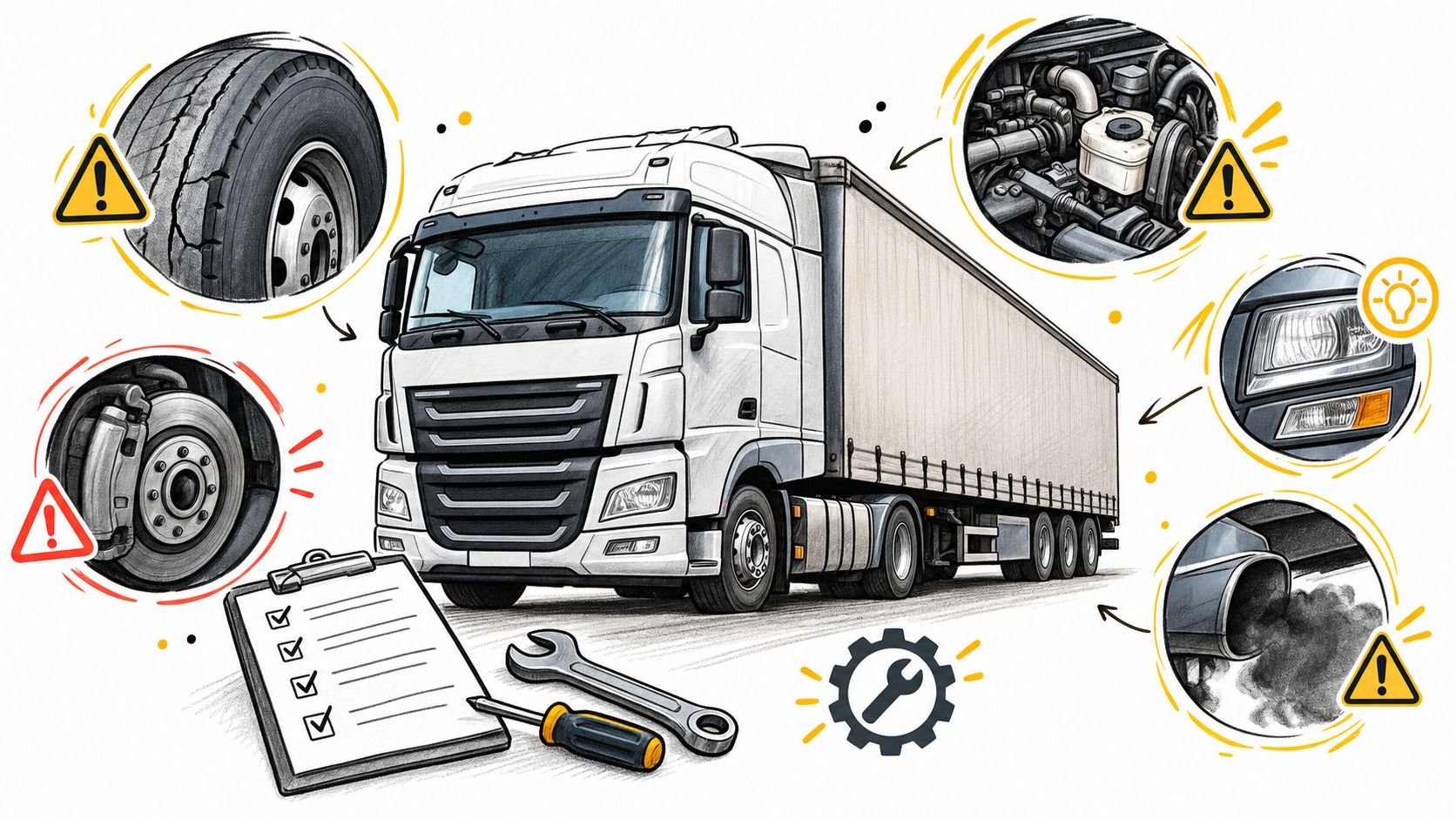
The quickest way to avoid avoidable downtime is to treat the first symptom properly. Watch for:
- Changes in braking feel. Pulling, grabbing, longer stopping effort, or a trailer that doesn't seem to settle properly under load.
- Warning lights that return after reset. A cleared code isn't the same as a solved defect.
- Tyre wear that appears on one axle position or one side. That often points to a defect elsewhere.
- Air loss, repeated pressure build concerns, or audible leaks. These faults can shift from nuisance to roadworthiness issue quickly.
- Trailer electrical irregularities. Lighting faults, ABS warnings, poor connections and intermittent issues are worth chasing before the next loaded departure.
- Unusual heat around a wheel end or brake area. Drivers and workshop staff both know this often leads to a larger job if ignored.
Why duty cycle matters around Thetford
The A11 and A14 corridor doesn't just create mileage. It creates a specific pattern of wear. Vehicles may spend one day on long runs and the next on stop-start work, bay movements, local drops or loaded waiting time. That's where brake drag, wear imbalance, air-system faults and trailer defects become easy to miss until the vehicle is under proper inspection.
For trailers in particular, a disciplined defect reporting routine matters more than any single repair. A practical trailer inspection checklist for fleets and drivers helps transport teams separate defects that can be booked into planned maintenance from defects that need the vehicle or trailer stood down.
If a defect changes braking, steering, tyre condition, visibility, coupling security, or air integrity, the transport office shouldn't be trying to “get one more run” out of it.
A useful way to prioritise defects
Use three levels:
Stand down now Brake performance concerns, wheel-end heat, coupling issues, major air loss, structural trailer defects, or anything that creates immediate roadworthiness doubt.
Inspect before next loaded movement Recurring warnings, uneven tyre wear, intermittent electrical faults, minor air leaks, or suspicious noises that aren't yet catastrophic but could become so under load.
Schedule into planned maintenance Early wear findings, comfort defects such as air-conditioning concerns, and non-urgent faults that don't affect safety but still need managing before they trigger downtime.
The key is speed of decision, not speed of guesswork.
How to Prepare for a Workshop Visit or Callout
Good triage starts before the phone call. When the information is thin, the repair route usually gets slower and more expensive. The vehicle may arrive with the wrong expectation attached to it, or a mobile technician may be sent to a job that needs workshop testing from the outset.
What to capture before making contact
The first report should cover the points that change the repair path:
- Exact location. Not “near Thetford”. The road, junction, lay-by, depot, or customer site.
- Unit, trailer, or both. A tractor issue and a trailer issue need different preparation.
- Load status. Loaded, part loaded, empty, hazardous, temperature controlled, or time-sensitive.
- Warning lights and symptoms. What the driver sees, hears or feels.
- Can it move safely or not. That answer shapes everything.
- Recent inspection history. Any PMI findings, brake concerns or repeat defects already on file.
- What changed today. New trailer? Different route? Loaded leg after yard work? Fault after coupling?
That information matters because UK roadside support for HGVs can follow four distinct routes, and the wrong choice can add cost and delay. Typical independent commercial vehicle labour outside London is about £50 to £85 per hour plus call-out fees, while complex recovery can run into the hundreds or much more, as outlined in the commercial vehicle roadside assistance guidance.
Mobile fix or workshop repair
A roadside fix can work for some electrical, air, tyre or minor mechanical problems. It's less suitable where the vehicle needs proper brake testing, detailed diagnostics, deeper strip-down work, or documented confirmation before return to service.
Callouts and recovery are also subject to availability. Operators around Woolpit, Elmswell, A14 Junction 47, Bury St Edmunds, Stowmarket, Ipswich and Felixstowe need to plan on that basis, especially when a defect occurs late in a shift or in a live operational window.
The cheapest first move often isn't the lowest-cost outcome if it leads to recovery later, a second repair event, or a load transfer that could have been avoided.
A short prep routine for drivers and traffic offices
Before dispatching a vehicle to a workshop or requesting support, transport teams should:
- Photograph the defect area where safe to do so.
- Send the registration and trailer number clearly, not buried in a text chain.
- Confirm whether the fault is repeat or first occurrence.
- State whether the vehicle has to protect a delivery slot or can be stood down.
- Pass on recent brake test or inspection notes if those records exist.
That level of detail reduces wasted movement and helps the workshop decide whether to book inspection, diagnostics, repair time, tyre support, or brake testing from the start.
How to Choose the Right HGV Repair Provider Near Thetford
A unit comes off the A11 with a brake complaint, the trailer has a live load, and the driver needs an answer that protects the delivery slot and the OCRS position. In that situation, the right repair provider is the one that can inspect properly, test properly, and give you a return-to-service record you would stand behind if DVSA asked for it later.
For Thetford fleets, distance matters less than decision quality. The workshop needs to understand HGV and trailer work as routine, not as oversize garage work, and it needs to link the repair to brake evidence, PMI history and a clear audit trail.
What to compare before booking
Transport managers usually get a better result by checking three points early. Can the provider handle tractor units and trailers as day-to-day work. Can it test and record safety-critical items properly. Can it feed the repair back into planned maintenance so the same defect does not keep returning.
Brake work is the clearest example. DVSA roadworthiness guidance ties brake performance evidence directly to PMI quality. Safety inspections should include brake performance assessment using a roller brake test, EBPMS, or a decelerometer with temperature readings, and where braking issues are reported at annual test or during inspection, a laden roller brake test must be used before return to service, as set out in the commercial vehicle roadworthiness guide.
A workshop that writes “checked and OK” without measured results leaves the operator exposed.
Choosing an HGV Repair Provider Near Thetford
Capability What to Ask Why It Matters for Thetford Fleets Commercial vehicle focus Is HGV and trailer work the main workshop activity? The job needs the right pits, tooling, inspection routine and defect write-up standard. Brake testing capability Can they carry out calibrated roller brake testing and issue recorded results? A11 and A14 fleet work needs evidence that supports the return-to-service decision. PMI linkage Can they tie the repair back to inspection intervals, previous defects and brake history? That helps prevent repeat failures and strengthens maintenance control. Fault diagnosis Can they trace intermittent electrical, EBS, ABS and air faults to root cause? Clearing a warning lamp without fixing the cause often leads to second downtime. MOT preparation support Do they separate preparation and presentation work from the annual test itself? Clear wording avoids confusion over who is responsible for each stage. Documentation standard What paperwork comes with the completed repair? A proper pack should support audit, warranty claims and roadworthiness checks. Coverage and movement planning Can they support vehicles working around Thetford, Woolpit, Bury St Edmunds, Stowmarket, Ipswich, Felixstowe, Suffolk and Norfolk? Geography affects whether workshop booking, controlled movement or recovery makes operational sense.What often gets missed
The cheapest quote can become the most expensive outcome if the vehicle comes back with no brake printout, no clear defect cause, and no record that matches the PMI file. That is how one repair event turns into a repeat stop, another workshop visit, or awkward questions after an encounter at the roadside.
Good providers also close the loop after the spanners are down. For safety-related repairs, ask what you will receive with the handover. Brake test results, job card detail, parts used, technician findings, deferred items if any, and a record that can be filed against the vehicle or trailer history all matter. For fleets running regular A11 and A14 work, that post-repair audit pack is often the difference between a repair that only gets the truck moving and one that supports uptime and compliance properly.
Woolpit Truck Repairs is one example of a commercial workshop serving this part of Suffolk with HGV and trailer inspections, roller brake testing, diagnostics, repairs, MOT preparation and presentation support, planned maintenance, tyre support and roadside assistance subject to availability. The point is not the name. The point is the service mix and the standard of evidence behind it.
Choose the provider that can show why the vehicle is fit to return to work, not just that someone has worked on it.
Emergency Procedures Recovery and MOT Preparation Support
When an HGV or trailer stops in service, the first job is safety. The second is choosing the right route to get the vehicle moving again or removed without making the situation worse. Those decisions also shape the repair record that follows.

Immediate actions at the roadside
The driver and traffic office should focus on a short sequence:
Make the scene safe Protect the driver, vehicle and other road users first.
Confirm whether the vehicle is in a live lane, refuge, hardstanding or customer site That single detail changes whether roadside work is realistic.
Report the load and trailer situation clearly A loaded trailer with brake concerns needs a different response from an empty unit with an electrical fault.
Decide between mobile repair, workshop movement, manufacturer assistance where relevant, or statutory recovery The wrong route wastes time and can increase exposure.
Operators who need a practical local process for first response can use this emergency breakdown and recovery guide as a starting point for what to capture and pass on.
Why documentation now matters later
Roadside repair decisions no longer stop at “it was fixed”. Operator guidance increasingly expects the business to show what was found, what was done, and why the vehicle was considered fit to move afterwards, including whether a trailer defect led to checks on the tractor unit as well.
That's especially relevant as repair costs rise. Recent UK claims data shows the average HGV repair claim rose to about £1,765, with average repair costs up by nearly 12% in the past year, according to the nationwide breakdowns and repair cost overview. The practical lesson isn't just about money. It's that poor triage and weak records make repeat downtime more likely.
MOT preparation and annual test readiness
The annual test should never be the first place a braking issue is measured properly. The latest DVSA annual test data for Great Britain shows that in April to June 2025, HGVs presented at non-DVSA sites had an initial fail rate of 10.40% across 113,444 tests, improving to a final fail rate of 7.14% after rectification. Trailers in the same quarter had a 7.56% initial fail rate and a 5.82% final fail rate across 74,722 tests, based on the DVSA annual testing dataset.
A good MOT preparation routine usually includes:
- Brake performance checks before presentation. Particularly if the vehicle has shown any recent concern.
- Repairing defects with a clear inspection record behind them. That helps avoid repeat rectification.
- Checking the trailer as seriously as the unit. Trailer-first faults often trigger wider questions.
- Building an evidence pack. Inspection sheets, brake results, defect reports and rectification notes all matter.
A passed annual test is useful. A vehicle with weak records and recurring faults is still a management problem.
Planning Costs Downtime and Booking Your HGV Repair
A unit comes off the A11 with a brake imbalance, the trailer still has a timed delivery on it, and the office wants a quick answer on cost and return-to-service. That is where poor booking decisions create extra downtime. The first estimate is rarely the full cost if the vehicle is booked without the defect history, PMI context, or a plan for compliance evidence after repair.
Repair spend matters because lost utilisation usually hurts more than the parts bill. The RHA's 2024 haulage cost movement survey shows repairs and maintenance accounted for 8.10% of operating costs in one tracked cost series, while tyres added another 7.00%. The freight task itself remains heavy. The Department for Transport reported that GB-registered HGVs lifted 1.53 billion tonnes of goods in 2025 and moved 162 billion tonne-kilometres, according to the 2025 road freight statistics release.
For Thetford fleets running the A11 and A14 corridor, the practical question is not just what the repair costs today. It is whether the vehicle goes back out with clear brake results, rectification records, and paperwork that stands up at the next PMI, annual test, or DVSA check.
What better booking looks like
Good booking starts with triage. Separate a safety-critical defect from a routine repair, decide whether the job needs a workshop slot or roadside attendance, and book the trailer with the unit where the fault history overlaps. A loaded vehicle with a braking complaint often needs roller brake testing under workshop control, not a guess at the roadside.
The booking information should be usable by the workshop, not just the traffic desk. Include:
- Registration and fleet number
- Unit and trailer details
- Exact defect symptoms and when they appeared
- Load status and delivery constraints
- Recent PMI findings, driver defect reports, or repeat issues
- Whether brake testing, diagnostics, tyre work, or inspection records are needed for the audit file
That last point saves time later.
If a repair is linked to a PMI fail item, brake efficiency concern, or repeat defect, ask for the post-repair evidence at the time of booking. For many operators, that means brake test printouts, inspection sheets, rectification notes, and any parts fitted. That audit pack is what turns a repair into a defensible maintenance event rather than a line on an invoice.
Location still matters. For fleets working between Thetford, Bury St Edmunds, Stowmarket, Ipswich and Felixstowe, access to a workshop near the A14 shortens dead mileage and makes follow-up testing easier to control.
Woolpit Truck Repairs supports HGV and trailer operators with inspections and PMI support, roller brake testing, diagnostics, truck and trailer repairs, tyre support, planned maintenance, callouts and recovery subject to availability, plus MOT preparation and presentation support for fleets running through Thetford and the A11/A14 corridor. For a booking or to discuss the right repair route for a current defect, contact the workshop directly.