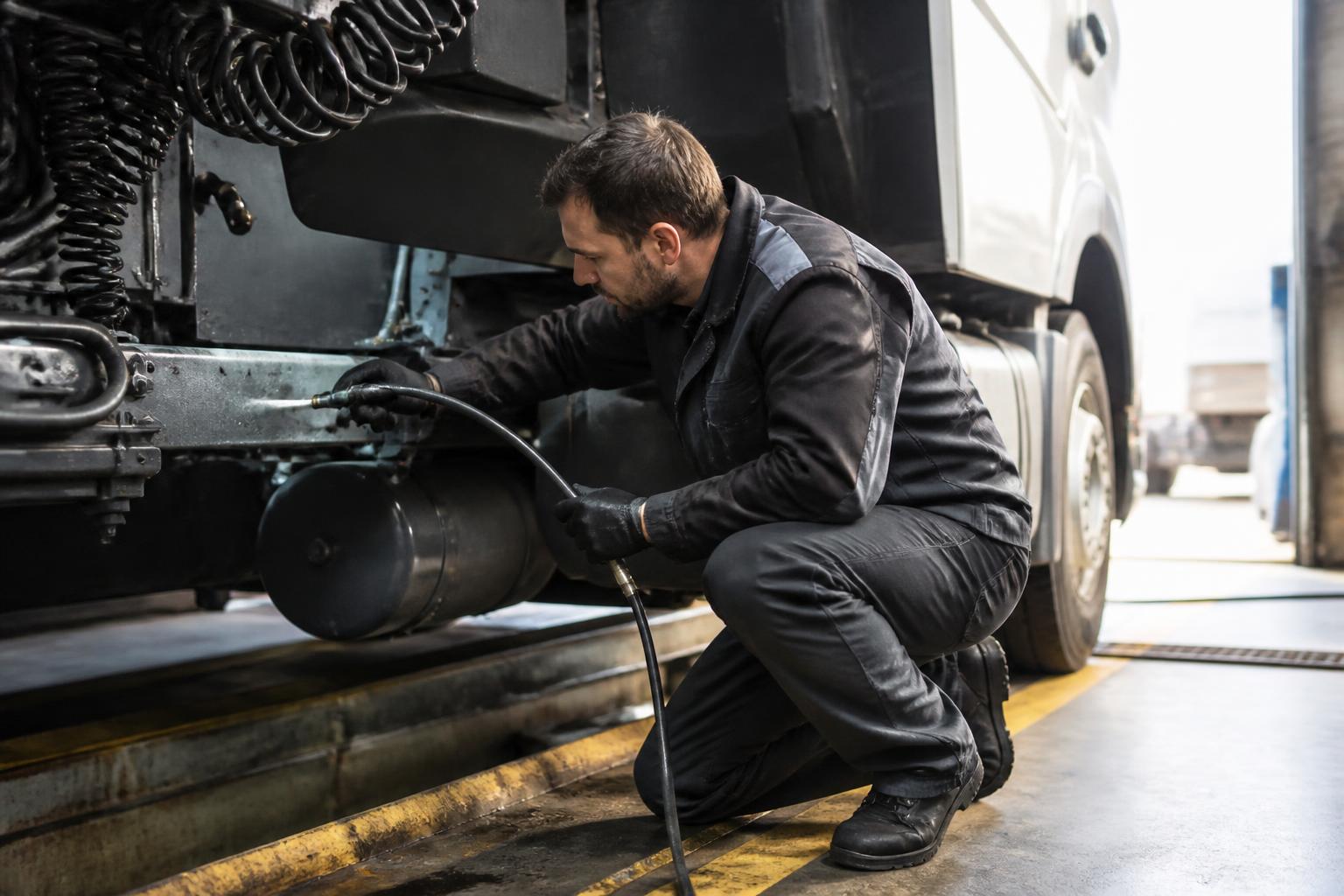
An air leak on an HGV rarely starts as a dramatic failure. More often, it begins as a hiss on walk-round check, a vehicle that takes too long to build pressure, a trailer that settles when parked, or a brake warning that appears intermittently and then becomes routine. If it is left alone, what was a manageable defect can turn into a roadside stop, a missed slot, or a vehicle that should not move again until the fault is found.
For operators around Woolpit, Suffolk and the A14 corridor, the priority is not just finding someone for an online search for HGV air leak repair near me. It is knowing whether the defect is safe to move with, what system is affected, and what the quickest sensible next step is. That is the point at which practical workshop triage matters.
What an air leak on an HGV usually means
When operators say an HGV has an air leak, they usually mean compressed air is escaping from a system that depends on holding pressure. On most commercial vehicles, that will involve one or more of the service brake system, parking brake system, trailer air supply, air suspension, or auxiliary air circuits.
That matters because air is not a convenience system on an HGV. It is central to braking performance, trailer control and, on many vehicles, suspension height and stability. A small leak may only show up as slow pressure loss at first. A larger leak, or one in the wrong place, can affect brake release, brake application, ride height, warning systems and whether the vehicle can be operated legally.
From a compliance point of view, an air defect can quickly become an MOT issue or a roadside prohibition risk. If the leak affects braking efficiency, warning systems, brake imbalance, or the security of associated pipework and components, it is not something to leave until the next service window. If the fault is on a trailer, it can also create confusion because the unit may appear serviceable until the trailer is connected and the system is charged.
From a downtime point of view, air leaks waste time in ways operators know well. Drivers sit waiting for pressure to build. Vehicles drop on suspension while parked on site. A trailer becomes the reason a loaded unit cannot leave. A warning lamp that was ignored on Monday becomes the breakdown on Wednesday. The earlier the leak is narrowed down, the better the chance of fixing it in a planned slot rather than during recovery or roadside disruption.
The signs to look for before the vehicle is off the road
The most obvious sign is audible air loss. A steady hiss after shutdown, around the catwalk, behind a wheel, near the trailer suzies, or from under the chassis is often the first clue. Not every leak is easy to hear in a yard or at the roadside, so it helps to listen with the engine off and the system fully charged.
Slow air build is another common warning sign. If the vehicle takes longer than normal to reach operating pressure, or the gauges recover slowly after repeated brake applications, there may be a leak, compressor issue, governor issue, dryer issue, or a combination of faults. Operators often describe this simply as “it’s lazy on air”.
Brake concerns should never be dismissed. That includes a parking brake that behaves differently, service brakes that feel inconsistent, a trailer brake response that seems delayed, or a vehicle that does not release cleanly. If the leak is affecting a brake chamber, valve, line, or coupling, the symptoms may not stay mild for long.
Suspension drop is another regular sign, especially on parked trailers and units with air suspension. If one corner sits down, one axle drops, or the whole trailer settles faster than expected, the leak may be in an air bag, ride height valve, line, fitting, or suspension-related valve block. Operators sometimes first notice this when a trailer is awkward to move under or when loading height is wrong.
Dashboard warnings also matter. An ABS or EBS warning does not always mean the leak is directly in the electronic system, but it can be related. Low air pressure, wiring disturbed during another defect, damaged wheel-end components, or trailer supply issues can all trigger warnings that need proper diagnosis rather than guesswork.
Trailer-related symptoms are especially common on route work between Ipswich, Felixstowe, Stowmarket, Bury St Edmunds and Newmarket. A unit may seem fine on its own, then start leaking as soon as a trailer is connected. Or one trailer may repeatedly present the same issue behind different units. That points attention toward trailer lines, couplings, emergency and service circuits, trailer tanks, relay valves, load sensing arrangements on older setups, or suspension components on the trailer itself.
Where the leak may actually be
The leak is not always where the sound seems to be. Air can travel, and noise can reflect around chassis rails, bodywork and axle assemblies. A workshop approach is to think in circuits and components, not just in sounds.
Common fault points include flexible hoses and rigid air lines. These can chafe through, crack with age, rub on brackets, or fail at fittings. Nylon pipe can become brittle. Flexible sections can split where they bend repeatedly. On trailers, exposed routing under the chassis is a regular source of damage.
Suzies and couplings are another frequent cause. Worn seals in the red or yellow line connections, damaged palms, poor connections between unit and trailer, or damaged trailer coupling points can all leak under charge. If the leak only appears when connected, this area is high on the list.
Air tanks and drain points can also be at fault. Corrosion, damaged drain valves, or poor sealing around fittings can create pressure loss. If there has been contamination in the air system, valves and seals elsewhere may also have suffered.
Valves are common culprits, especially relay valves, protection valves, hand control valves, foot valves and suspension control valves. These may leak externally, pass internally, or behave intermittently. A valve that appears to be leaking may also be reacting to a fault further upstream or downstream, so diagnosis matters.
Brake chambers need careful attention. A split diaphragm, damaged chamber body, corroded clamp band, or failing spring brake chamber can all cause air loss and serious safety concerns. If the leak is at a wheel end, this is one of the first areas we inspect because of the direct braking implications.
Air suspension components are another major source. Air bags can crack, perish or puncture. Height control valves and their linkages can wear or stick. Pipework to lift axle systems can leak. On trailers, a bag or valve fault may first show up as uneven ride height or a trailer leaning when parked.
On newer vehicles, ABS and EBS related hardware should not be overlooked. Modulators, associated air circuits and wheel-end issues can create symptoms that look like a simple leak but are tied to a wider brake control fault. That is one reason why a proper inspection is better than replacing parts on assumption.
Can the vehicle still be moved safely?
This depends entirely on what is leaking, how severe the leak is, and what effect it is having on brakes, suspension and control systems. There is no sensible blanket rule that every air leak means stop immediately, and there is no safe rule that says every leaking vehicle can limp to the workshop.
The first question is whether the system builds and holds pressure properly enough to operate as designed. If pressure is dropping rapidly, warning buzzers or lamps are active, brakes are not releasing or applying normally, or the vehicle cannot maintain normal operating pressure, that points away from movement and toward immediate attention.
The second question is what circuit is affected. A minor auxiliary leak is very different from a leak at a brake chamber, trailer emergency line, spring brake circuit, or a failed suspension component affecting stability. If the trailer has dropped significantly, if a wheel-end leak is suspected, or if brake behaviour has changed, caution needs to increase.
Before any movement, basic checks matter. Confirm air build. Listen for the leak with the system charged. Check brake response. Check trailer connections. Look at ride height. Check whether the fault appears only with a trailer attached. Note any ABS or EBS warnings. If the vehicle has already shown a brake-related defect on the road, treat it as a brake defect first and an inconvenience second.
In practice, the safest next step is often one of three options. Move it only a short distance on site for inspection. Bring it carefully to a workshop if the system is stable and the defect appears limited. Or stop and seek support if the leak is active enough to affect braking or safe road use. If you are unsure, uncertainty itself is a reason not to guess.
How a workshop diagnoses and repairs the fault
A good repair starts with triage. We want to know what the driver or operator has noticed, when it happens, whether it changes with a trailer attached, whether the vehicle drops when parked, and whether any warning lights or brake concerns are involved. That initial picture often narrows the search quickly.
From there, the vehicle is inspected with the air system charged. We listen, isolate circuits where possible, inspect known leak points, and check for obvious damage to hoses, lines, tanks, couplings, chambers and suspension parts. Soap solution, pressure loss observation and practical circuit testing are often more useful than guesswork.
If the fault involves braking performance or an MOT-related concern, further checks may be needed, including brake assessment and, where appropriate, roller brake testing. If you are dealing with a suspected brake imbalance or want the braking side confirmed before test, our guide to where to get an HGV brake test near the A14 before MOT sets out what to look for.
Where ABS or EBS warnings are present, diagnostics may need to go beyond the obvious air leak. Fault codes, modulator behaviour, wheel-end condition and trailer communication can all matter. On combinations where the issue appears only with one trailer, we treat the trailer as part of the fault finding process, not as an afterthought.
Once the defect is identified, the repair may be straightforward or more involved. A damaged airline or fitting can often be replaced quickly if access is reasonable and the fault has not caused secondary damage. Coupling seals, suzies and some external valves are also often direct repairs. Brake chambers, height valves, air bags or more buried components can take longer, especially if corrosion, seized fixings or awkward access are involved.
Repair time is affected by several practical factors. Whether the fault is on the unit or trailer. Whether the leak is constant or intermittent. Whether more than one defect is present. Whether parts are common stock items or model-specific. Whether the first visible leak is the main fault or just one symptom of a wider issue. That is why realistic next-step advice matters more than promising a fixed timescale before inspection.
After repair, the system needs to be rechecked properly. Pressure build, leak elimination, brake response, suspension operation and any related warning systems should be confirmed before the vehicle goes back into work. If the defect has exposed wider condition issues, we explain that plainly so you can decide whether to address them now or schedule them sensibly.
Choosing local HGV air leak help around Woolpit and the A14
If you are running along the A14, access matters almost as much as capability. A workshop that understands HGVs and trailers, can deal with route-based downtime, and is easy to reach without losing half a day is usually the better option than simply choosing the nearest pin on a map.
That is why operators around Woolpit, Elmswell, Stowmarket, Bury St Edmunds, Newmarket, Ipswich and Felixstowe often look for a workshop with a clear commercial vehicle focus. Air leaks are not generic car workshop jobs. They need people used to units, trailers, brake systems, suspension systems, suzies, couplings and the way faults present in working fleets.
At Woolpit Truck Repairs, we are based at Bridge Farm, close to A14 J47 in Woolpit, Suffolk. Our work is HGV and trailer focused, which matters when the leak could be on the unit, the trailer, or in the interaction between the two. We handle inspections, diagnostics, repairs, roller brake testing, MOT preparation, tyre support, fleet maintenance and support enquiries for callout or recovery where that is the safest route.
If you are deciding where to send a vehicle, it helps to compare access, vehicle type focus and how clearly the workshop talks about next steps. Our article on how to compare HGV workshop support near A14 J47 covers the practical points operators usually weigh up. If the problem appears trailer-led, our guide to choosing trailer repair near the A14 without losing a day is also relevant.
For trailer-heavy operations, regular inspection reduces the chance that a small air leak becomes a loaded-road problem. Our piece on trailer inspections near Woolpit that cut roadside risk explains where planned checks save time later.
We keep the advice practical because that is what operators need. Sometimes the next step is to bring the vehicle in. Sometimes it is to stop using a specific trailer. Sometimes it is to confirm whether the defect is brake-related before making a movement decision. What matters is not broad claims, it is identifying the fault, explaining it clearly, and helping you make the safest commercially sensible decision.
Woolpit Truck Repairs is operated by FLEETA LIMITED. If your vehicle or trailer is losing air around Woolpit or on the A14 corridor, the right response is to treat it early, before it turns into a brake defect, an MOT failure, or unplanned downtime.
Is an air leak always a brake problem?
No. It can involve the brake system, but also suspension, trailer supply, couplings or control valves. The risk depends on where the leak is and how quickly pressure is being lost.
What are the first signs of an HGV air leak?
Common signs include a constant hiss, slow pressure build, repeated compressor cycling, warning lights, poor brake feel, a trailer issue or suspension dropping when parked.
Can a trailer air leak come from the unit?
Yes. The fault may be on the unit, at the suzies or couplings, or on the trailer itself. A proper check needs both sides considered before parts are changed.
Will an air leak affect MOT preparation?
It can. If the leak affects brake performance, warning systems or general roadworthiness, it may need repair before MOT preparation can be completed properly.
Why search for help near Woolpit or the A14?
For many operators, location matters because downtime starts immediately. A workshop near A14 J47 at Bridge Farm in Woolpit can be practical for Suffolk and route-based vehicles.