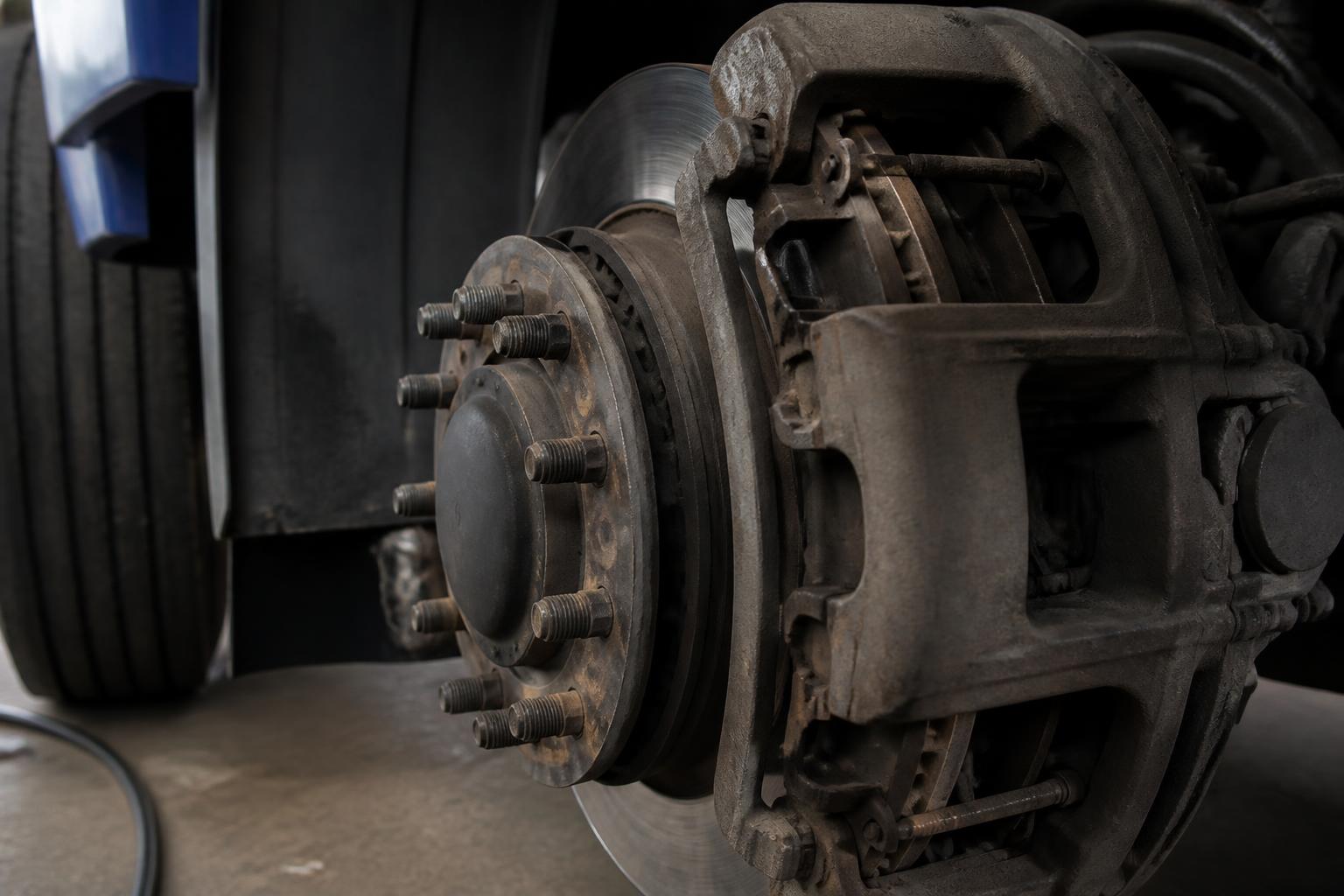
If you are comparing providers for 6 weekly HGV inspections in Suffolk, the real question is not who can tick the box cheapest. It is who will find the defects that matter, explain them clearly, and help you make the next decision before a minor issue becomes lost time, a roadside prohibition, or an MOT failure.
For most operators, a good 6 weekly inspection should do three jobs at once. It should meet your planned maintenance routine, give you a usable picture of vehicle and trailer condition, and reduce avoidable downtime by catching defects while they are still straightforward to repair. That is the standard we work to at Woolpit Truck Repairs from Bridge Farm, Woolpit, close to A14 J47, supporting fleets, owner-drivers and route-based operators across Suffolk.
What operators are really comparing in a 6-weekly inspection
When operators compare inspection providers, the headline price is often the first thing discussed. In practice, it is rarely the most important difference.
What matters more is the quality of defect identification. Two workshops can inspect the same HGV or trailer and produce very different outcomes. One may record only obvious failures. Another will spot the early brake imbalance, the tyre wear pattern that points to a geometry or suspension issue, the air leak that is not yet immobilising the unit but is heading that way, or the trailer ABS warning that needs proper diagnosis rather than guesswork.
That difference affects uptime directly. If defects are recorded too lightly, the vehicle returns to work with problems that come back as breakdowns, delayed deliveries, or MOT issues. If defects are recorded with no explanation, the operator is left with a list but no sensible order for action.
A useful inspection report should tell you three things clearly:
- what has been found
- how serious it is
- what the realistic next step is
That next-step advice is where many operators see the real value. If a brake issue needs roller brake testing to confirm imbalance, say so. If an EBS fault on a trailer needs workshop diagnosis rather than a roadside reset, say so. If a tyre can safely remain in service until a planned replacement slot, that should be clear too. Commercial vehicles do not benefit from vague wording.
This is especially important for mixed fleets and subcontracted trailers, where responsibility can become blurred. A rigid working locally around Stowmarket is managed differently from an artic running between Felixstowe, Ipswich and the A14 corridor. The inspection itself must be thorough in both cases, but the advice that follows has to fit the job the vehicle is actually doing.
Operators are also comparing whether the provider really understands HGV and trailer work. A workshop that mainly sees vans and cars will not always approach trailer brake performance, load-related wear, fifth wheel concerns, air system faults, or EBS communication issues with the same depth as a workshop focused on commercial vehicles. That focus matters when the inspection is supposed to protect earning time, not just produce paperwork.
What should be included in a proper HGV and trailer inspection?
A proper inspection should cover the vehicle or trailer systematically, with enough detail to identify wear, damage, leakage, performance issues and safety defects before they become urgent.
On the HGV side, operators generally expect checks across:
- braking system condition and operation
- steering components
- suspension
- wheels and tyres
- axles and hubs
- chassis and body condition
- lights and reflectors
- mirrors, glass and visibility items
- wipers and washers
- horn
- coupling equipment
- exhaust and emissions-related condition where relevant
- fluid leaks
- air system performance
- warning lights and dash indications
- underbody security and general roadworthiness items
For trailers, the inspection should include:
- service and parking brake condition and operation
- air lines and suzies
- EBS and ABS function and warning status
- tyres, wheels and wheel security
- hubs and bearings
- suspension and axle condition
- chassis integrity
- landing legs
- kingpin and coupling area
- lights, markers and number plate condition
- body, curtains, doors or tail-lift related condition where fitted
- mudwings, spray suppression and sideguards
- general structural damage and security of fittings
The point is not just to create a long checklist. Each area matters because it links directly to safety, uptime and test readiness.
Take brakes. A vehicle can feel acceptable to a driver and still have developing imbalance, binding, poor adjustment or component wear that will show up on a roller brake test or at MOT. Catching that during a 6 weekly inspection gives you options. Leaving it until the defect becomes obvious often means more parts, more labour and more downtime.
The same applies to tyres. A proper inspection does not stop at tread depth. Uneven shoulder wear, cuts, sidewall damage, exposed cords, regrooving condition, or signs of underinflation can tell you something about alignment, loading, suspension wear or general maintenance standards. For route-based operators running in and out of Felixstowe or covering Bury St Edmunds, Ipswich and Newmarket, tyre condition is not just a compliance issue, it is a reliability issue.
Air system checks are another example. If a unit is slow to build air, has a persistent leak, or is showing abnormal behaviour on gauges or warnings, that is exactly the sort of issue a 6 weekly inspection should pick up before it strands the vehicle. We cover this kind of fault in more detail in our guide to when an HGV will not build air in Suffolk.
For trailers, electronic braking faults deserve special attention. ABS and EBS issues are often mishandled because the warning appears intermittent or the trailer still seems to brake normally in day-to-day use. A proper inspection should not treat those warnings as background noise. If there is a fault present, the next step needs to be clear. We have set out the difference between quick checks and proper testing in our article on trailer ABS faults in Suffolk.
Good inspections also support MOT preparation. They are not the same as an MOT, and should not be treated as one, but they should reduce the number of surprises when test time comes round. If your inspection routine is finding brake concerns, wear items, lighting issues and structural defects early, MOT preparation becomes more controlled and less disruptive.
Workshop inspection or mobile support?
Both workshop-based inspections and mobile arrangements can work well. The better choice depends on your fleet, your routes, your yard setup and how quickly defects can be turned into repairs.
A workshop inspection usually gives the strongest control over inspection quality. You have proper access, lifting and testing equipment, better lighting, and a more reliable environment for identifying defects accurately. If roller brake testing, diagnostics or follow-on repairs are likely, being in a workshop saves time. The vehicle is already in the right place to move from inspection to confirmation test, parts ordering or repair booking.
That matters when defects are not straightforward. A trailer with an EBS issue, a unit with a brake pull, a warning light, an air leak, or a suspected wheel bearing issue often needs more than a visual once-over. In those cases, workshop access is usually the practical route because the inspection can become diagnosis quickly.
Mobile support suits different circumstances. If you operate from a yard with several vehicles due together, or you need inspections arranged around loading and dispatch, mobile inspections can reduce vehicle movement and help with planning. For some fleets, especially where units return to the same base daily, that convenience is worth a lot.
Owner-drivers often weigh this differently. If you are running one vehicle and every hour off the road matters, a workshop near your route can be easier than arranging a mobile visit and then moving the vehicle again if repairs are needed. For operators travelling the A14 between Newmarket, Bury St Edmunds, Stowmarket and Ipswich, access matters just as much as the inspection itself.
That is one reason our location at Bridge Farm, near A14 J47 in Woolpit, works well for many Suffolk operators. If the vehicle is already passing on route, it makes sense to combine inspection with any needed testing, tyre support, diagnostics or repair planning. You can see how we approach HGV and trailer inspections for planned maintenance and defect identification.
The key question is not whether workshop or mobile is better in theory. It is whether the arrangement helps you act on the findings without adding another layer of delay. An inspection only saves downtime if the process around it is practical.
How reporting quality affects downtime and repair cost
A weak inspection report creates two problems. First, it slows decision-making. Second, it often increases the eventual repair bill.
Operators need reports that can be used commercially, not just filed. If the wording is too vague, the transport office, fleet manager or owner-driver still has to ring up and ask what the defect actually means. If everything is marked as equally urgent, there is no basis for deciding what must be repaired now, what can be scheduled, and what should be monitored.
Clear reporting should separate defects into sensible categories. An immediate safety issue is not the same as an advisory wear item. A brake defect that risks test failure or prohibition is not the same as a minor body issue. A tyre close to limit but still legal today is not the same as a tyre with sidewall damage.
That prioritisation helps in three ways.
First, it protects roadworthiness. Serious defects are identified and dealt with before the vehicle goes back into service.
Second, it protects workshop time. If the report points directly to likely repair work, parts can be planned properly and the vehicle can be booked for the right amount of time.
Third, it protects cash flow. Not every defect needs the most expensive response immediately. Sometimes the right advice is to repair now. Sometimes it is to test further. Sometimes it is to monitor until the next planned slot, provided the vehicle remains safe and compliant.
This is where practical triage matters. We do not believe in handing over a sheet full of unexplained defects and leaving the operator to work it out. If a repair is needed now, we say so. If a fault needs confirmation by diagnostics or brake test, we say so. If there is a realistic way to stage the work without compromising safety, we explain that too.
For fleets, that makes planning easier. For owner-drivers, it often makes the difference between losing a full day and making a controlled repair decision. If a vehicle is due for MOT, reporting quality matters even more, because unclear or incomplete advice can leave too much to the last minute. We cover the practical next steps after a failed test in our guide to what to do after an HGV MOT fail in Suffolk.
Good reporting also reduces repeat visits. If a driver arrives saying the brakes were looked at recently but the issue has returned, or the trailer warning has come back, that often points to a process problem. Either the underlying fault was not identified, or the advice given did not match the defect properly. Better reporting improves first-time decisions.
How to choose a Suffolk provider for 6-weekly inspections
If you are choosing a provider for 6 weekly HGV inspections in Suffolk, start with fit, not promises.
Look first at location and route access. A provider may be excellent on paper, but if getting there pulls the vehicle too far off route or creates awkward dead mileage, that cost shows up elsewhere. For operators running around Woolpit, Elmswell, Stowmarket, Bury St Edmunds, Ipswich, Newmarket or to and from Felixstowe, easy access from the A14 is a practical advantage, not a marketing line.
Next, check whether the workshop genuinely works on HGVs and trailers day in, day out. That matters because your inspections are only as useful as the person interpreting what they see. Trailer brake defects, ABS and EBS faults, air system issues, tyre wear patterns and coupling concerns all need commercial vehicle experience.
Then look at booking practicality. Can inspections be arranged in a way that suits your operation? Can follow-on repairs, diagnostics or tyre work be handled without starting again somewhere else? If a defect is found, is there a realistic path from inspection to repair, brake test, MOT preparation or further fault-finding?
You should also ask what the reports are actually like. Do they explain defects in plain English? Do they distinguish urgent items from planned work? Do they help a transport manager or owner-driver decide what to do next without a chain of guesswork?
Finally, consider whether the provider understands downtime as a commercial problem, not just a workshop issue. That means sensible triage, honest defect explanations, and support that fits real operating patterns in Suffolk.
At Woolpit Truck Repairs, that is the standard we work to from Bridge Farm near A14 J47. We focus on HGV and trailer work, we understand the route pressures around the A14 corridor, and we keep the process practical. If an inspection finds nothing serious, we will say so. If it finds a defect that needs action, we will explain what matters now and what comes next.
Woolpit Truck Repairs is a trading name of FLEETA LIMITED, and our job is straightforward. We help operators keep HGVs and trailers safe, usable and better prepared for the next week’s work, not just the next line on the maintenance sheet.
What is a 6-weekly HGV inspection?
It is a planned safety inspection carried out at roughly six-week intervals to identify wear, defects and compliance issues on an HGV or trailer before they become bigger problems.
Are trailer inspections included with HGV inspections?
Not always. Some providers focus mainly on the unit, while others inspect both HGVs and trailers. Operators should check exactly what is covered before booking.
What defects are most commonly found during these inspections?
Common findings include brake wear, tyre damage, lighting faults, suspension issues, air leaks and warning system faults involving ABS or EBS.
Is the cheapest inspection usually the best value?
Not necessarily. A low price can cost more later if defects are missed, reports are vague or repairs are delayed. Value usually comes from accurate checks and practical follow-up.
Why does workshop location matter for Suffolk operators?
Location affects travel time, scheduling and how quickly defects can be inspected and repaired. Access near the A14 can be useful for operators moving between Ipswich, Felixstowe, Stowmarket and Bury St Edmunds.