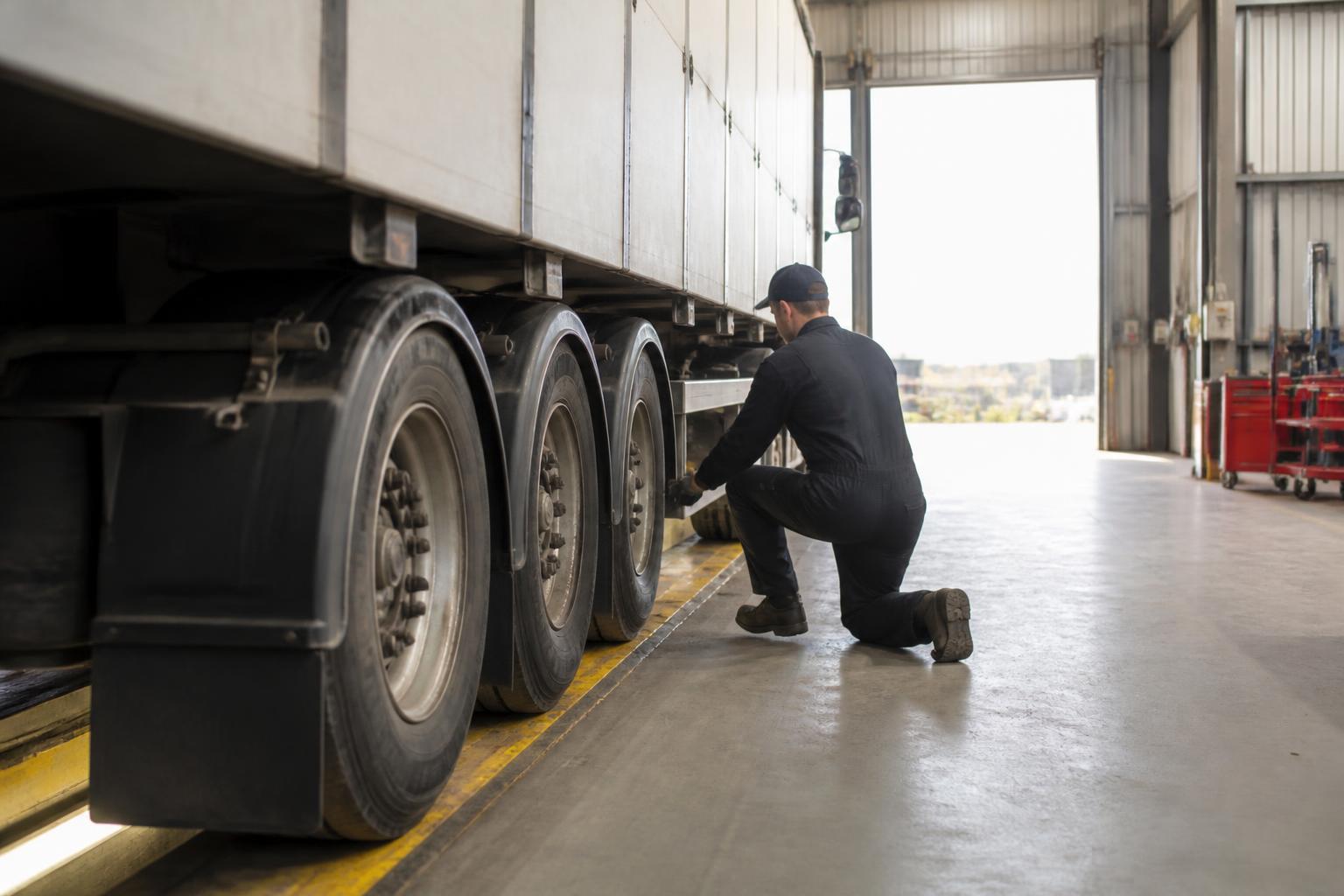
If you are comparing HGV and trailer support near A14 J47, the quickest way to narrow it down is to look past general claims and focus on what actually affects downtime. For most operators, that means access from the A14, whether the workshop deals with trailers as routinely as it deals with trucks, whether brake faults can be properly tested rather than guessed at, and whether the next step is explained clearly enough to make a commercial decision.
At Woolpit Truck Repairs, we work from Bridge Farm in Woolpit, just off A14 J47, and that location matters because it changes recovery choices, workshop timing and how long a unit or trailer stays off the road. For fleets running through Suffolk, or between Ipswich, Felixstowe, Stowmarket, Bury St Edmunds and Newmarket, practical access often matters as much as the repair itself.
What operators are really comparing near A14 J47
When operators start looking for truck and trailer repairs near A14 J47, they are usually not comparing websites. They are comparing risk, delay and the chance of getting a clear answer first time.
The first comparison is whether a provider is set up around commercial vehicles full time, or whether HGV work sits alongside general vehicle repairs. That matters because fault triage on an artic, rigid or trailer is different from passenger vehicle work. A brake imbalance, an ABS warning, a trailer lighting fault or an EBS communication issue needs a workshop that sees those problems routinely and knows what to check first.
The second comparison is whether the workshop can handle both sides of the combination. Operators often lose time when the truck and trailer are treated as separate jobs by separate providers. If the issue sits in the suzie connections, trailer supply, brake demand, wheel-end components, lamp circuits or the trailer braking system itself, it helps to have one workshop looking at the whole picture rather than stopping at the first obvious symptom.
The third comparison is how the workshop communicates. In practice, operators want to know three things. Is the vehicle safe to move. What is the likely defect. What is the most sensible next step. We keep our advice practical because not every problem needs the same response. Some defects justify immediate recovery support enquiries. Others are better booked straight into the workshop. Others still can be planned around loading, route timing or an MOT date.
The fourth comparison is whether the workshop can support planned work as well as reactive repairs. If a vehicle comes in with a tyre issue, poor brake performance or repeated warning lights, the real cost is often not the first repair but the repeat visit that follows if the wider condition of the unit or trailer has not been checked. That is why many operators compare inspection standards, brake testing, MOT preparation and fleet maintenance support, not just repair availability on the day.
For a broader checklist on what to compare, our guide on how to choose an HGV trailer workshop near the A14 sets out the points that usually matter most in day to day operation.
Workshop access versus downtime on the A14 route
Near A14 J47, location is not just a convenience point. It affects whether a fault becomes a short workshop stop or a longer off-road event.
A workshop close to the route can shorten several stages at once. The distance from breakdown point to workshop is shorter. Recovery decisions are simpler. Drivers spend less time diverted onto minor roads. Planned bookings are easier to fit around trunk route schedules. If the vehicle is moving but carrying a defect that should be inspected promptly, access near the A14 can make the difference between same-day assessment and losing the next shift.
That is particularly relevant on routes linking Felixstowe and Ipswich with Stowmarket, Bury St Edmunds and Newmarket. Vehicles working in and out of Suffolk often do not have much spare time in the schedule. If a unit develops a brake concern, warning light, trailer electrical fault or tyre problem, operators need to judge whether to continue cautiously to a suitable workshop, arrange roadside assistance, or request recovery support. The right answer depends on the defect, but location always affects the cost of that decision.
Being at Bridge Farm in Woolpit means we are well placed for operators running along the A14 corridor and for local work around Elmswell and surrounding areas. That helps with both urgent and planned jobs. A fleet can book inspections or MOT preparation without sending vehicles far off route. An owner-driver with a fault can often get to us without adding a long diversion to an already difficult day.
There is also a scheduling point here. A workshop may be able to do the repair, but if reaching it takes too long, the practical result is still lost operating time. That is why many operators comparing truck and trailer repairs near A14 J47 are really comparing route fit. The question is not only who can repair it. The question is who can inspect it, explain it and get it turned around with the least disruption to the work already booked.
If your priority is avoiding a full day disappearing into a trailer issue, our article on choosing trailer repair near the A14 without losing a day looks at that decision in more detail.
Diagnostics, inspections and brake testing compared
One of the biggest differences between workshops is the gap between basic fault finding and proper diagnosis.
A basic approach often starts and ends with symptom spotting. A warning lamp is on. A brake feels weak. A trailer pulls badly under braking. A light is out. That may identify the complaint, but it does not always identify the cause. On commercial vehicles, especially where braking is involved, that is not enough.
A better approach combines inspection, system checks and testing. If we are dealing with ABS or EBS concerns, we need to understand whether the fault sits with the sensor, wiring, modulator, wheel-end condition, power supply, communication issue or a related mechanical defect. If braking performance is the concern, we need to assess more than the driver report. We need to inspect components, look for wear or imbalance, and where appropriate use roller brake testing to see what the brakes are actually doing under test.
That matters for both safety and decision-making. A vehicle may present with what sounds like a simple brake fault, but the real issue may be trailer-side. Equally, a reported trailer brake problem may turn out to be linked to supply, control or connection issues from the unit. Without proper testing, operators can end up authorising parts that do not solve the defect.
Roller brake testing is particularly useful when the concern is performance rather than an obvious broken component. It helps confirm whether braking effort is balanced, whether one side is underperforming, and whether the issue is severe enough to take the vehicle out of service immediately. It also helps during MOT preparation, because poor brake performance is exactly the sort of issue that can move from minor concern to test failure if it is not checked in advance.
Inspections matter just as much as diagnostics. A structured HGV or trailer inspection often picks up defects that are related to, but not identical with, the original complaint. A tyre edge wearing because of another issue, a damaged chamber, a loose connection, a contaminated component or wiring wear around a known stress point can all change the repair plan.
If you want to understand why workshop testing is often the safest next step on brake complaints, our article on trailer brake faults near the A14 and the safest next step explains where roadside checks stop being enough.
How trailer repairs differ from general truck work
Trailer repairs are often treated as an extension of general truck work, but in practice they bring their own pattern of faults, inspections and operating pressures.
First, trailers spend much of their life being connected, disconnected, loaded, unloaded and left in varied yard conditions. That creates a different wear pattern from a unit. Electrical connection issues, lamp faults, damaged airlines, braking defects, ABS and EBS faults, body and running gear defects, and problems linked to long standing periods are all common. A workshop that handles trailers regularly tends to recognise those patterns quickly.
Second, trailer defects are often found at awkward moments. A unit can be serviceable, but the trailer defect still stops the load moving. That makes triage important. Operators need to know whether the fault is prohibitive, whether the trailer can be moved safely under controlled conditions, and what should happen next. That is not the same as simply booking a repair slot.
Third, trailer work often needs a more joined-up view of compliance and operation. A marker light fault may look minor until it sits alongside wiring damage or a wider electrical issue. A braking complaint may involve wheel-end condition, brake actuation or system communication. A tyre issue may be the visible symptom of a suspension or alignment-related problem. The workshop needs to look beyond the first failed part.
This is one reason we keep our focus on HGV and trailer work rather than spreading into general vehicle repairs. Fleets and owner-drivers do not need broad promises. They need a workshop that understands the difference between a unit defect and a trailer defect, and that can explain the likely cause in plain terms.
Routine trailer inspections are one of the most effective ways to reduce disruptive defects before they become roadside problems. Our page on HGV and trailer inspections for commercial vehicles covers how we approach that work.
Comparing MOT preparation, tyres and fleet support
Reactive repairs matter, but many of the best workshop decisions are made before the vehicle actually breaks down or fails a test.
MOT preparation is a good example. In the UK, HGV and trailer MOT requirements follow the domestic testing regime, not a general EU system, and operators need to prepare vehicles against the standards that apply here. Waiting for the test to reveal brake imbalance, worn components, tyre defects, lighting faults or other inspection failures is expensive because the vehicle is already committed to test timing and likely off-road longer than planned.
Proper MOT preparation means more than a quick once-over. It means checking the defects that commonly cause failures, reviewing braking performance, inspecting tyres, lighting, suspension-related items, visible wear points and trailer-specific issues, then dealing with them before test day. That is especially important for operators with tighter schedules, where a failed MOT can disrupt more than one vehicle movement.
Tyres deserve separate attention because they often sit between planned maintenance and emergency downtime. A tyre issue may start as a slow loss, uneven wear or damage picked up in inspection. If it is caught early, it can often be managed as planned work. If it is missed, the same issue becomes a roadside stop, an aborted delivery or a failed inspection item. Comparing tyre support is not just about whether a workshop can replace a tyre. It is about whether tyre condition is being looked at as part of wider vehicle condition.
Fleet support also varies more than many operators expect. Some providers mainly react to faults as they arise. Others help fleets reduce repeat downtime by spotting patterns across units and trailers. If the same warning type, brake issue or trailer defect keeps appearing, the value is in identifying that pattern early and adjusting inspection or maintenance timing accordingly.
That is why many fleets use us for inspections, repairs, MOT preparation and ongoing maintenance support together. It creates continuity. The workshop already knows the vehicle type, the trailer type and the recent defect history, which usually leads to faster triage and fewer avoidable repeat visits.
When callout or recovery support enquiries make sense
Not every defect should be handled the same way, and one of the most useful things a workshop can do is help you choose between roadside help and workshop attendance.
Callout support enquiries make sense when the likely fault may be resolved safely without the delay and cost of full recovery, or when a roadside assessment is needed to decide whether onward movement is possible. Typical examples include some electrical faults, certain connection issues, some tyre-related problems, or defects where the immediate question is whether the vehicle can be made safe enough to move to the workshop.
Recovery support enquiries make more sense when the defect affects braking safety, steering, wheel-end condition, major air loss, severe tyre failure, or any issue where continued movement could increase risk or cause further damage. The same applies where the vehicle or trailer is already immobilised in a way that makes roadside repair unrealistic.
Then there is the third category, vehicles that are mobile but should be seen in a workshop as the next step. That often applies to intermittent ABS or EBS faults, brake performance concerns, recurring warning lights, trailer lighting defects that need proper tracing, air conditioning re-gas requirements, and defects identified during walkaround checks that do not justify stopping in place but do need prompt inspection.
The key point is that the best option is not always the fastest-looking one. A roadside visit can be useful, but if the fault really needs inspection equipment, workshop access and brake testing, the quicker commercial answer is often to get the vehicle into the workshop without losing time on half-measures. Equally, recovering a vehicle that could have been assessed and moved safely may add unnecessary cost and delay.
At Woolpit Truck Repairs, we keep that conversation straightforward. We ask what the vehicle is doing, what warning signs are present, whether the defect affects safe movement, and whether the issue appears to be truck-side, trailer-side or connection-related. From there, we give realistic next-step advice based on the fault, the route and the likely workshop requirement.
For operators moving through Woolpit, Elmswell and the wider Suffolk area, or running regular traffic between Felixstowe, Ipswich, Stowmarket, Bury St Edmunds and Newmarket, that practical triage is often what matters most. If you are comparing truck and trailer repairs near A14 J47, compare the workshop’s ability to help you make the right decision first time, not just its ability to say yes to a booking.
Woolpit Truck Repairs, part of FLEETA LIMITED, is built around that approach. HGV and trailer work only, clear defect explanations, proper inspection and testing, and direct access from A14 J47 at Bridge Farm in Woolpit.
What should I check before booking truck and trailer repairs near A14 J47?
Check whether the workshop handles both HGV and trailers, can carry out diagnostics, understands brake defects, and is practical to reach from the A14 without adding unnecessary downtime.
Is a nearby workshop always the best option?
Not always. The best option is the one that can assess the defect properly, explain the risk clearly and move the vehicle towards a safe repair without wasted trips or guesswork.
Why does trailer experience matter?
Trailer faults are often missed or delayed by providers focused mainly on general vehicle work. Regular trailer experience helps with brake, ABS, EBS, running gear and inspection issues.
Can one booking cover diagnostics and MOT preparation?
Often, yes. If a vehicle has warning lights, brake concerns or visible defects, combining diagnosis with inspection and MOT preparation can save time and reduce repeat workshop visits.
When should I ask about callout or recovery support enquiries?
Ask when the vehicle is off-road, unsafe to move, or the fault is likely to worsen in transit. If it can travel safely, workshop assessment may still be the faster route to repair.