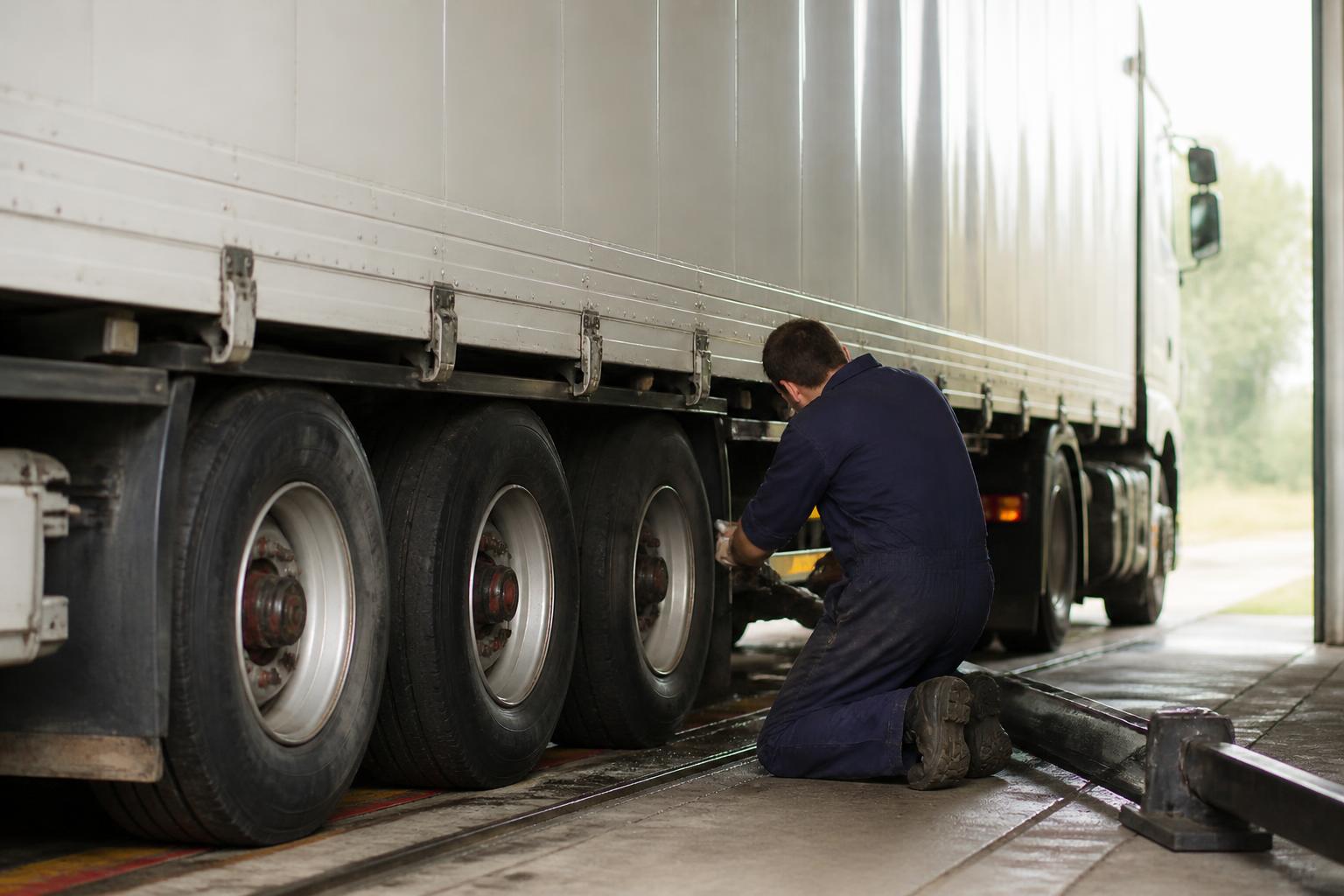
If you are looking for truck trailer repair near Stowmarket, the right workshop is the one that helps you make a safe decision quickly, explains the defect clearly, and can deal with HGV and trailer work properly rather than treating it like a van or car job. For most operators, the real question is not “who is closest on a map?” It is “who can inspect it properly, tell us whether it is safe to move, and get us to the next sensible step without wasting a day?”
That matters even more around Stowmarket because access to the A14, onward runs to Ipswich and Felixstowe, and time-sensitive fleet planning all affect what “convenient” really means. At Woolpit Truck Repairs, we work with fleets, owner-drivers and route-based operators who need practical answers, whether the issue is brakes, ABS or EBS faults, tyre damage, MOT preparation, a trailer defect found on inspection, or an off-road vehicle that now needs callout or recovery support enquiries.
What operators near Stowmarket are really comparing
When operators search for trailer repair near Stowmarket, they are usually comparing four things, even if they do not phrase it that way.
First, downtime. A workshop is not just selling labour. It is helping you protect a delivery slot, a booked collection, a driver’s hours plan, and the next job after that. If a trailer is off the road, the cost is often not the repair itself, but the lost movement and the disruption across the rest of the day. That is why the first useful question is not “can you fit me in?” but “what is the defect, is it safe to move, and what needs to happen next?”
Second, safety and roadworthiness. Trailer faults can look minor and still create a real compliance problem. Brake imbalance, poor brake response, an ABS warning, an EBS communication issue, air leaks, worn tyres, damaged lines, lighting faults, or suspension defects all need proper inspection. If a trailer is due for MOT, or has already shown up defects on a PMI or driver walkaround, the workshop needs to understand what will actually matter at test and what needs rectifying before the vehicle goes any further.
Third, access. Around Stowmarket, workshop choice is often shaped by the route rather than the postcode. A site close to the A14 can be more practical than one that is nominally nearer but awkward to reach with a trailer, especially if you are running between Felixstowe, Ipswich, Bury St Edmunds and Newmarket, or crossing Suffolk east to west. For many operators, easy in and out access reduces delay before the repair has even started.
Fourth, workshop fit. HGV and trailer work is its own category. The operator who needs truck trailer repair near Stowmarket is not usually looking for a general garage that “also does commercials”. They need people who inspect trailers every day, understand brake performance, can interpret defects in workshop terms, and can explain whether the right next step is workshop repair, further diagnosis, tyre support, or recovery.
That is why we put emphasis on practical triage and clear defect explanations. If a trailer comes in with a brake concern, for example, the decision may depend on what the inspection and roller brake testing show, whether the fault is mechanical or electronic, and whether there are related issues that would make a simple parts swap the wrong answer. If the problem is found roadside, the first question is often whether the unit and trailer can be moved safely at all.
Workshop repair or roadside support?
Not every trailer fault should be handled the same way. Sometimes the safest option is to bring the trailer into a workshop. Sometimes the right response is to start with roadside attendance, or if the vehicle is not safe to move, recovery support enquiries.
A workshop repair is usually the better route when the trailer can be moved safely and the issue needs proper inspection equipment, time, and controlled working conditions. Typical examples include brake defects, ABS or EBS faults, recurring warning lights, MOT preparation, suspected air system faults, inspection-led repairs, and defects that need confirmation on roller brake testing. Workshop conditions also matter where the repair may uncover more than one issue, such as worn components alongside an electronic fault code or a tyre issue combined with alignment or brake performance concerns.
Roadside support is different. It is there for situations where a vehicle has stopped on route, a tyre issue has immobilised the trailer, a warning light has appeared and the driver needs a safe next-step decision, or a defect has made the onward journey uncertain. In those cases, the key is not to guess from the cab or from a photo. It is to assess whether the trailer can continue, whether it can be moved to a workshop, or whether recovery is the safer answer.
The wrong decision here causes avoidable risk. A trailer with a serious brake issue, damaged wheel end, major air leak, or fault affecting stability or braking control should not simply be “nursed back” because the workshop is nearby. Equally, not every warning light means a roadside standstill and a full recovery. The point is to make a proper judgement.
This is where HGV and trailer experience matters. We regularly speak to operators who need a straight answer, not a script. If the safest next step is workshop inspection, we say so. If the issue sounds like it needs roadside attendance first, we say that. If recovery support enquiries are the right move because the vehicle should not travel under its own steam, that needs saying early. For brake-specific concerns, our guide on the safest next step for trailer brake faults near the A14 sets out the thinking in more detail.
How specialist trailer workshops differ from general vehicle garages
A specialist HGV and trailer workshop does not just have bigger tools. The difference is in inspection quality, fault finding, and the way defects are interpreted.
General vehicle garages, or mixed garages that mostly see cars and light commercials, may be able to replace a visible part. That is not the same as understanding trailer systems properly. On a trailer, the defect may sit in the interaction between mechanical wear, air system behaviour, and electronic control. A warning light alone does not tell you enough. Nor does a visual check without testing.
A specialist workshop starts with the right inspection process. That includes looking at the reported fault, checking associated systems, and deciding what testing is needed to confirm the defect. If brakes are involved, roller brake testing is often central because it shows actual performance rather than assumptions. If the trailer is heading for MOT, the workshop also needs to understand test relevance, likely fail points, and what should be resolved before presentation.
That matters for defects involving ABS and EBS. Operators do not need jargon for its own sake, but they do need a workshop that can explain what the warning means in practical terms. Is it a sensor issue, a wiring problem, a modulator concern, a supply fault, or a symptom of something else? Is the fault current or intermittent? Does it affect roadworthiness now, or does it point to a condition that still needs rectifying before further work or test? A specialist workshop should be able to tell you.
The same applies to defect explanation more generally. We do not believe in handing over a vague list and leaving you to guess. If a trailer comes in for truck trailer repair near Stowmarket, we explain what we have found, what is safety-critical, what is required before MOT, what can sensibly be done now, and where parts choice or timing affects the plan.
That specialist approach is also why regular inspections matter. If you are trying to reduce roadside risk rather than reacting to it, planned checks are usually cheaper in time than dealing with preventable defects on route. Our page on HGV and trailer inspections and our article on trailer inspections near Woolpit that cut roadside risk cover that side of the decision.
What to check before booking trailer repair near Stowmarket
Before you book any trailer repair, it is worth running through a simple checklist. It saves time and usually leads to a better outcome.
Check the location in route terms, not just map distance. For operators around Stowmarket, access to the A14 is often more important than being a few miles closer by local roads. If the trailer is running between Felixstowe, Ipswich, Bury St Edmunds or Newmarket, or if you are managing multiple vehicle movements in Suffolk, choose a workshop that fits the route you are actually driving.
Check whether the workshop handles HGV and trailer work as its main job. If trailers are only an occasional job for them, ask how they inspect brake faults, ABS and EBS issues, and MOT-related defects. You need more than a willingness to “have a look”.
Ask what the inspection process will be. A useful repair starts with proper triage. What has the driver reported? What defect has already been seen? Is the issue visual, mechanical, electrical, pneumatic, or still unknown? Good workshops do not jump straight to replacing parts without first confirming the fault.
Ask whether roller brake testing is available where brake performance is in question. This is one of the clearest differences between a workshop that can properly assess trailer braking and one that is guessing from symptoms. If the trailer is due MOT, brake performance evidence matters even more.
Check tyre support. A trailer may come in for one issue and also need tyre attention, or the immobilising fault may be tyre-related in the first place. It helps if the workshop can deal with that as part of the same next-step plan rather than sending you elsewhere mid-job.
Ask how parts decisions are handled. There is a difference between fitting what is immediately available and fitting what is actually right for the defect and operating need. The best route depends on the failure, lead time, and whether the trailer needs a durable repair now or a broader follow-up plan across the fleet.
Check timescales honestly. “We’ll try to get to it today” is not the same as a realistic workshop plan. Ask what can be inspected immediately, what depends on parts, and whether the trailer should stay on site pending repair or further testing. Clear timescales help you decide whether to reshuffle work, swap equipment, or hold the vehicle.
Check communication. Fleet operators and owner-drivers need updates they can act on. That means clear defect explanations, not just a job card note. It also means being told when the workshop needs a decision from you, whether on parts, additional work, or whether to proceed to MOT preparation after repair.
Finally, if you are choosing between workshops around the A14 corridor, it is worth reading our guide on choosing trailer repair near the A14 without losing a day. The same practical points apply to operators searching around Stowmarket.
When Woolpit is the practical option for Suffolk operators
For many operators in and around Stowmarket, Woolpit is the practical answer because it sits where the route makes sense. Woolpit Truck Repairs operates from Bridge Farm, near A14 J47, which gives straightforward access for traffic moving along the A14 through Suffolk. If you are based in Elmswell, Stowmarket, Bury St Edmunds, Ipswich, Felixstowe or travelling across toward Newmarket, that location often works better than a workshop that is technically nearby but awkward for an artic or trailer movement.
Our role is not to claim every job should come straight to the workshop. It is to help operators make the right next decision. Sometimes that means booking in for inspections, diagnostics, roller brake testing, repairs, MOT preparation, tyre support, air conditioning re-gas, or fleet maintenance on the vehicle side. Sometimes it means talking through whether the trailer should move at all and whether callout or recovery support enquiries are the safer starting point.
That practical approach matters for both fleets and owner-drivers. A fleet may need quick, clear information so transport can replan and keep the rest of the day moving. An owner-driver may need to know whether the trailer can safely make it to Woolpit, whether the defect is likely to affect MOT, and whether the repair is likely to stay contained or widen once inspected properly. In both cases, the value is in getting a realistic answer early.
We also understand that operators are often balancing workshop choice against route pressure. A trailer fault found near Stowmarket does not happen in isolation. The load may still need to move. The unit may be needed elsewhere. Another trailer may have to be substituted. A workshop that understands HGV and trailer operations will talk in those terms, not just in workshop terms.
That is how we work at Woolpit Truck Repairs. We focus on HGV and trailer support, we are placed for the A14 corridor at A14 J47, and we keep the conversation practical. If you are comparing options for truck trailer repair near Stowmarket, the sensible test is simple. Can the workshop inspect the trailer properly, explain the defect clearly, and help you take the safest, least disruptive next step? If the answer is yes, you are choosing on the right basis.
Woolpit Truck Repairs is operated by FLEETA LIMITED, serving operators across Suffolk from Bridge Farm in Woolpit.
How close does a trailer repair workshop need to be?
Closest is not always quickest. For operators near Stowmarket, route access, booking speed and whether the workshop can inspect, diagnose and repair in one visit often matter more than postcode distance alone.
Can one workshop handle both truck and trailer defects?
Yes, if it is set up for HGV and trailer work. That matters when a unit and trailer issue overlap, such as brake warnings, ABS or EBS faults, tyre damage or MOT preparation.
Is roadside repair enough for a trailer fault?
Sometimes, but not always. A roadside fix may get movement back, while brake concerns, repeated warning lights, structural defects or deeper electrical faults usually need workshop inspection and testing.
Why does roller brake testing matter before MOT?
It helps show braking performance before test day, so defects can be found and repaired earlier. That reduces the risk of turning up for MOT with a problem that could have been identified in advance.
What should a workshop tell me after inspection?
You should get a clear explanation of the defect, the safety impact, what can be repaired now, what may need parts, and the realistic next step to get the vehicle or trailer back into service.