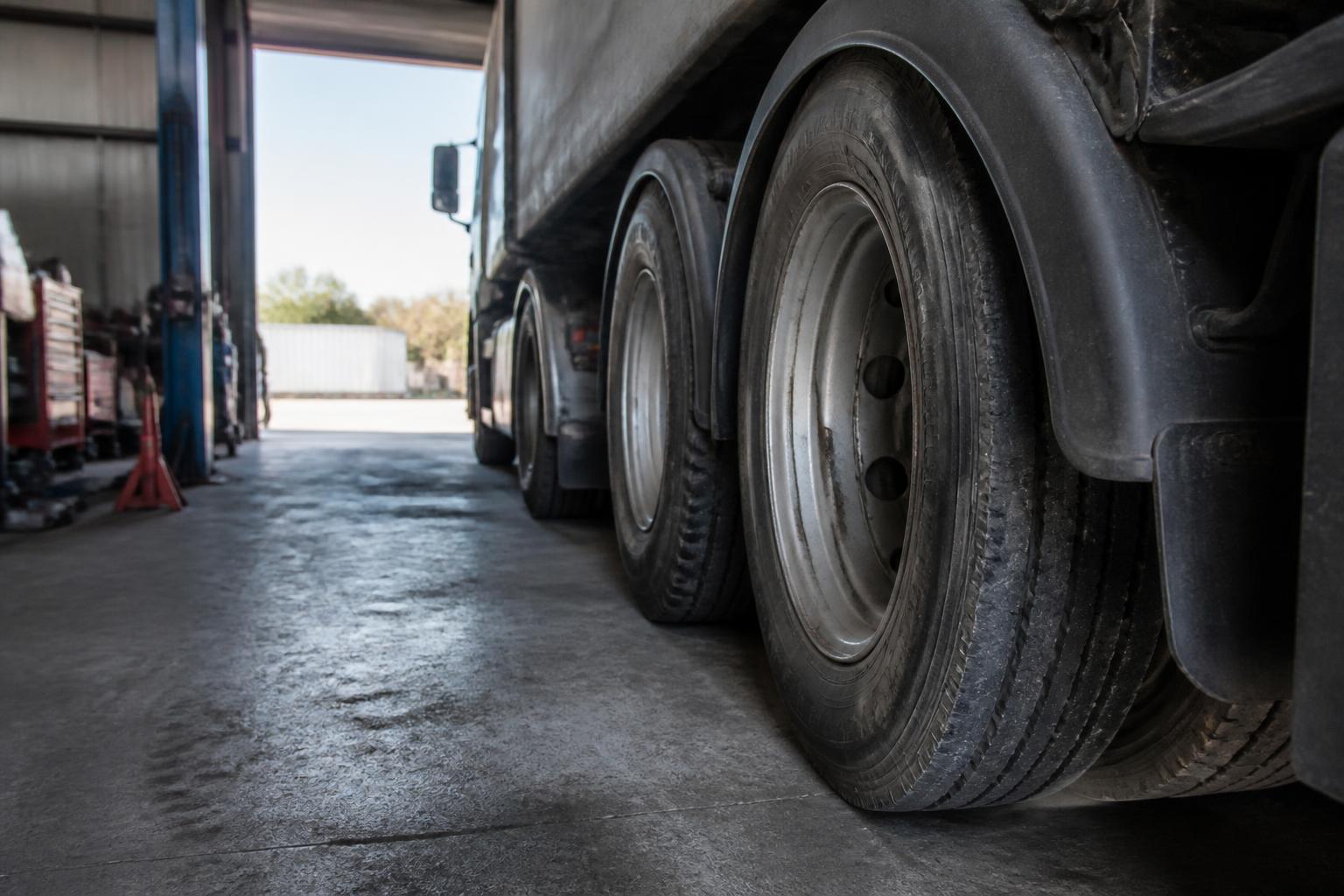
Tyre wear on an HGV rarely starts as a tyre problem on its own. Very often, it starts with alignment, axle position, steering geometry, or a worn component that changes how the tyre meets the road. When truck wheel alignment is right, the vehicle runs straighter, the steering settles properly, and the tyres roll instead of scrubbing. When it is wrong, the cost shows up quickly in steer axle wear, trailer scrub, driver complaints, and avoidable downtime.
For operators, the practical question is not whether alignment matters. It does. The useful question is when poor alignment is the real fault, when something else is causing the same symptoms, and when it is time to stop monitoring and get the vehicle checked properly. That is where workshop-led diagnosis saves money, because adjusting settings on a vehicle with worn or damaged parts usually does not solve the real problem.
What truck wheel alignment actually affects on an HGV
On an HGV, wheel alignment affects far more than whether the steering wheel sits straight. It changes how each tyre tracks under load, how the vehicle behaves in a straight line, and how much rolling resistance the driveline is fighting all day.
On the steer axle, incorrect toe is one of the most common causes of rapid tyre wear. If the wheels are not running in the intended relationship to each other, the tyres scrub slightly with every rotation. That scrub may not look dramatic on day one, but over road mileage it creates feathering across the tread blocks, heats the tyre, and shortens casing life. On a vehicle that spends its time on trunk roads and distribution work around Suffolk, that can become an expensive pattern before the next planned inspection.
Camber and caster matter as well, although on many HGV axles the available adjustment is more limited than on a car. If the axle or suspension geometry is no longer where it should be, the tyre can load one shoulder more heavily than the other. That is when you start seeing one-sided wear that operators often first put down to road camber or roundabout work.
Alignment also affects steering feel. A vehicle with geometry out of specification may feel vague, reluctant to self-centre, or unsettled on uneven surfaces. Drivers describe it in practical terms. It wanders, it needs constant correction, it pulls under light steering input, or it never feels relaxed in lane. Those complaints matter, because they often appear before the tyre damage is obvious from a quick yard walk-round.
Straight-line stability is another part of the picture. On an artic, a misaligned steer axle, a shifted trailer axle, or incorrect thrust angle can all contribute to a vehicle that does not sit right on the road. The driver ends up steering against the vehicle instead of guiding it. That increases fatigue and can mask other faults.
Running costs rise in several ways at once. Tyres wear faster. Fuel use can creep up because the vehicle is scrubbing rather than rolling cleanly. Steering and suspension components can see extra load. On trailers, axle misalignment can create persistent scrub that reduces tyre life across more than one position. That is why truck wheel alignment is not a cosmetic setting. It is part of how the vehicle earns properly.
The signs your alignment is out before a tyre is ruined
Most operators get a warning before a tyre is completely finished, but the warning is easy to miss if inspections are rushed or the wear pattern is blamed on mileage alone.
Feathered wear across the tread is one of the clearest signs. If you run your hand across the tread blocks and the edges feel sharp one way and smoother the other, that points strongly towards a toe-related issue on the steer axle. The tyre may still have tread depth left, but the wear pattern is already telling you the tyre is being dragged slightly across the road surface.
One-sided shoulder wear is another common sign. If the inner or outer shoulder is carrying the damage while the rest of the tread looks comparatively healthy, alignment should be considered early. It can also indicate camber-related geometry issues, axle distortion, ride height problems, or worn components, which is why it should not be judged in isolation.
An off-centre steering wheel is often the symptom drivers mention first. If the vehicle travels straight but the steering wheel sits noticeably to one side, that suggests the steering geometry or axle alignment needs checking. Some operators live with that for too long because the vehicle still feels drivable. The problem is that a steering wheel position complaint can be the first visible sign of a bigger geometry issue.
Drift is another practical clue. If the vehicle consistently pulls left or right on a level road with no obvious wind effect or road camber explanation, something needs attention. Drift can be caused by alignment, but it can also come from tyre pressures, tyre construction differences, brake drag, or a developing bearing or suspension fault. If you are also hearing rumble or noticing heat in a hub, it is worth reading our guide on what wheel bearing noise can mean on an HGV.
Trailer scrub is often seen before it is properly investigated. Drivers may notice the trailer seems to resist turning cleanly, or tyres on one axle position start wearing in a way that does not match the rest. On multi-axle trailers, scrub marks and irregular wear can point to axle alignment issues, worn suspension components, or impact damage from kerbing and yard manoeuvres.
The key point is this. Once unusual wear is visible, the clock is already running. The decision is whether to catch the cause while the tyre is still serviceable, or wait until the casing, handling, and MOT risk all get worse.
Why alignment is not always the root cause
It is easy to look at uneven tyre wear and jump straight to truck wheel alignment. Sometimes that is correct. Sometimes it is not, and that is where unnecessary adjustment wastes time and money.
Tyre condition itself can be the issue. A damaged casing, irregular previous wear, poor regrooving history, mismatched tyres across an axle, or a tyre that has spent time underinflated can all create patterns that look like alignment trouble. If the tyre is already compromised, changing the settings will not reverse the wear that is built into it.
Tyre pressures are a major one. Underinflation and overinflation both change the contact patch and can produce shoulder or centre wear that gets blamed on geometry. Pressure differences side to side can also create drift complaints. Before any alignment conclusion is made, the pressures need to be checked against the actual operating condition of the vehicle.
Brake drag can mimic alignment symptoms as well. A sticking caliper, binding foundation brake, or trailer brake issue can cause pull, heat build-up, and accelerated wear on one side. On modern commercial vehicles, ABS and EBS faults can also affect brake behaviour and should not be ignored when a driver reports pull or instability.
Worn steering and suspension parts are another common reason why a vehicle will not hold settings. Track rod ends, drag link ends, kingpins, bushes, wheel bearings, spring pins, torque rod bushes, and other wear points all need to be considered. If there is free play in the system, any measurement may be misleading, and any adjustment may be temporary at best.
Axle movement matters too. On HGVs and trailers, the axle may no longer be sitting where the manufacturer intended because of worn location points, broken components, or previous impact. A trailer that has clipped kerbs repeatedly or a truck that has taken a hard strike can have geometry issues that are structural rather than adjustable.
Load and loading pattern can also distort what the operator is seeing. A vehicle that only shows a complaint when loaded, or only on one trailer, may be telling you something about suspension condition, ride height, or axle location under working conditions.
That is why a proper diagnosis comes before adjustment. The question is not just, "Is the alignment out?" It is, "Why is it out, and is adjustment actually the cure?"
What should be checked before any adjustment is made?
Before any alignment work is carried out, the workshop should confirm that the vehicle is in a condition where measurement means something.
First, the tyres themselves need checking. That includes size, type, tread condition, wear pattern, inflation pressure, and whether the tyres across the axle are a sensible match. A badly worn or damaged tyre can distort the findings from the start.
Second, steering and suspension components should be inspected for wear, damage, and movement. There is no value setting geometry on a vehicle with free play in joints or bushes that allow the axle to shift under load. If a component is worn beyond serviceable condition, that needs dealing with first.
Third, the workshop should look for signs of impact or distortion. Bent steering arms, damaged rims, shifted axles, broken spring leaves, worn hangers, and trailer suspension defects all change the geometry picture. On trailers, axle position relative to the chassis is especially important where scrub is being reported.
Ride height and suspension condition should also be checked where relevant. On air suspended vehicles, incorrect ride height can affect geometry and handling. If the suspension is not sitting correctly, alignment readings may not reflect how the vehicle should run.
Brake condition is another part of the pre-check. If there is evidence of brake drag, heat, or imbalance, that needs attention before blaming alignment. Our workshop approach is to diagnose the fault chain properly, which is why operators often come to us first for commercial vehicle diagnostics or HGV and trailer inspections when the symptoms are not yet fully clear.
The vehicle also needs to be assessed in the context of its work. Is it a fleet tractor unit on trunking work, a rigid on local multi-drop, or a trailer doing repeated port and yard movements around Felixstowe and Ipswich? Usage pattern affects what wears, how it wears, and what faults are most likely.
Finally, if the vehicle is close to test date, the workshop should consider the wider roadworthiness picture. Uneven tyre wear, steering defects, suspension wear, and brake-related pull can all become MOT concerns. In the UK, that practical test risk matters more than a theoretical geometry reading on paper.
When an operator should stop monitoring and book diagnosis
There is a point where keeping an eye on it stops being sensible and starts costing you more.
If a steer tyre is developing obvious feathering or shoulder wear over a short period, book it in. If the steering wheel is off-centre and the vehicle is drifting, book it in. If a trailer is visibly scrubbing tyres or wearing one axle position repeatedly, book it in. Those are not watch-and-wait faults for long-distance commercial use.
You should also stop monitoring and act when the symptom is getting worse, not just continuing. A slight pull that becomes a consistent drift, or mild irregular wear that becomes visible scrub, usually means the underlying defect is progressing. Continued running can turn a correctable issue into tyre replacement, additional component wear, or a roadside problem.
Heat is another line you should not cross. If one wheel end or brake position is running noticeably hotter, that points away from simple alignment and towards brake drag, bearing trouble, or another mechanical fault that needs diagnosis. The same applies if there are noises, vibration, or fault indications alongside the tyre wear.
Where road manners are affected, there is also a safety and driver-fatigue issue. A vehicle that needs constant correction is not just irritating. It is harder work to drive, less settled in lane, and more likely to hide further defects.
Then there is compliance. Excessive or irregular tyre wear, steering free play, suspension defects, and brake pull all have implications for MOT preparation and for day-to-day roadworthiness checks. If you are close to test date, it makes sense to address the root cause rather than hope the wear pattern stays just inside the line. We help operators with MOT preparation and presentation support where tyre wear and handling complaints form part of the defect picture.
In short, monitor early symptoms briefly if needed, but once the wear is visible, the steering complaint is repeatable, or the vehicle is not behaving properly under load, diagnosis is the practical next step.
How Woolpit Truck Repairs helps Suffolk operators decide the next step
At Woolpit Truck Repairs, we deal with these faults as workshop problems, not as generic advice topics. Operators come to us because a truck or trailer is wearing tyres wrongly, drifting, scrubbing, or simply not feeling right, and they need to know whether the answer is alignment, repair, tyre replacement, or a wider inspection.
We are based at Bridge Farm in Woolpit, close to A14 J47, which makes us a practical stop for operators working across Suffolk and along the A14 corridor. That includes fleets and owner-drivers running in and out of Ipswich, Felixstowe, Stowmarket, Bury St Edmunds, Newmarket and Elmswell.
Our approach is straightforward. We start with the symptoms and inspect the vehicle properly. If the problem looks like tyre wear caused by geometry, we say so. If the wear points instead to pressures, brake drag, worn joints, suspension movement, axle shift, or impact damage, we explain that instead. Operators do not benefit from paying for adjustment before the underlying defect is identified.
That triage matters because many alignment complaints are really mixed faults. A driver may report pull, but the vehicle may also have a brake issue. A trailer may be scrubbing tyres, but the root cause may be wear in suspension location points. A steer axle may show feathering, but the tyre condition may already mean replacement is the sensible route even after the mechanical fault is corrected.
We explain defects in plain terms and give realistic next-step advice. If the vehicle needs inspection and repair first, that is the priority. If the issue needs a broader workshop plan around tyres, steering, suspension, brakes, and test readiness, we set that out clearly. If the vehicle is off-road or the fault escalates before you reach us, we can also discuss callout support for commercial vehicle faults as part of the next step.
Woolpit Truck Repairs operates under FLEETA LIMITED, and our focus is HGV and trailer work. That matters, because tyre wear and alignment-related complaints on commercial vehicles need to be judged in the context of axle loads, trailer behaviour, suspension type, route use, and test standards, not just by looking at a worn tyre and making assumptions.
If your vehicle is starting to show the signs, the sensible move is to catch it before the tyre is finished and before the fault spreads into steering, suspension, brake, or MOT trouble. We help operators make that decision with a workshop view of what is actually happening, and what needs doing next.
What causes truck wheel alignment to go out?
Common causes include kerb strikes, pothole impacts, worn steering or suspension parts, axle movement, poor tyre condition and previous damage. On an HGV, alignment can be a symptom rather than the first fault.
Can bad alignment wear out a truck tyre quickly?
Yes. If the axle is not running true, tyres can scrub and wear unevenly across one shoulder or feather across the tread. The earlier it is checked, the better the chance of saving tyre life.
Is truck wheel alignment the same as fixing a pull to one side?
Not always. A pull can also come from brake drag, tyre pressures, tyre construction differences, suspension faults or loading. Alignment is one possible cause, but it should not be assumed without checks.
Can a trailer have alignment-related tyre wear as well?
Yes. Trailer axle or running gear issues can cause scrub, rapid wear and poor tracking. If trailer tyres are wearing oddly, the fault may be in the axle position, suspension or related components.
Will alignment problems affect MOT preparation?
They can. Uneven tyre wear, steering issues or worn components linked to the complaint may create problems during MOT preparation. It is better to investigate early than find tyre or steering defects close to test time.