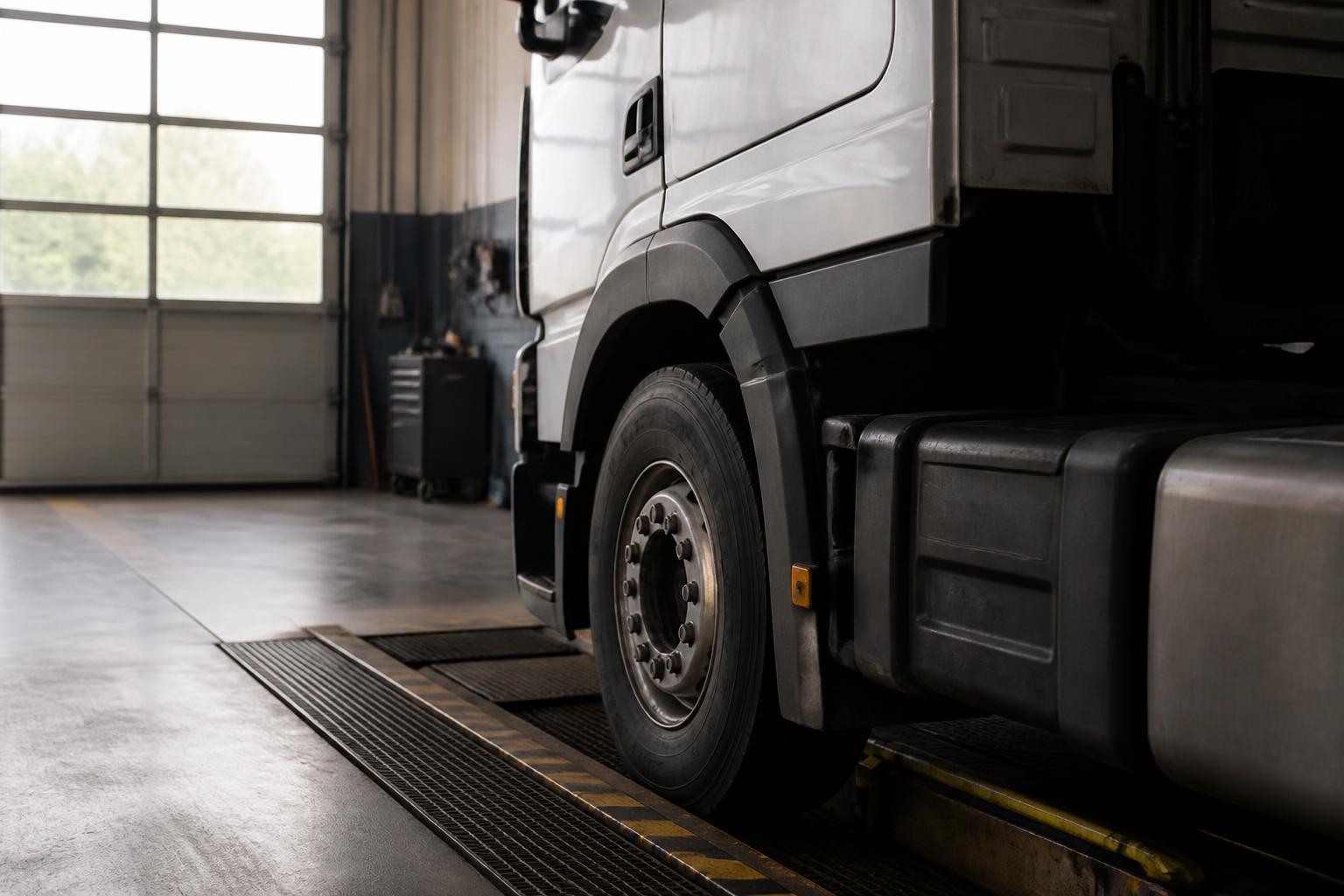
When operators search for a local lorry mechanic, they usually do not mean the nearest spanner in the nearest postcode. They mean a workshop that can take an HGV or trailer fault seriously, assess it properly, explain what has actually failed, and get them to a safe next step without wasting a day. If you are running along the A14, that decision is less about map distance and more about access, capability and how quickly the vehicle can be looked at.
At Woolpit Truck Repairs, we work with fleets, owner-drivers and route-based operators who need practical support near A14 J47. From Bridge Farm in Woolpit, Suffolk, we handle inspections, diagnostics, roller brake testing, repairs, MOT preparation, tyre support, air conditioning re-gas, fleet maintenance, and callout or recovery support enquiries for HGVs and trailers. If you are comparing workshops, these are the points that matter.
What operators usually mean by a local lorry mechanic
In practice, a local lorry mechanic is rarely just a mechanic who happens to be nearby. For most operators, the real requirement is an HGV workshop that can inspect, diagnose and repair commercial vehicles properly.
That matters because HGV faults are often not simple one-part failures. A brake warning may involve wear, adjustment, air leaks, actuator issues, ABS or EBS faults, trailer supply problems, or defects that only show up under test. A dashboard light may point to an electrical issue, but the real cause could sit in wiring, sensors, valves, wheel speed inputs or trailer connections. A tyre problem may be a puncture, but it may also be the visible result of alignment, brake drag, hub heat or suspension wear.
So when operators say they need a local lorry mechanic, they usually mean a workshop that can do three things well.
First, inspect the vehicle properly. That means understanding HGVs, rigids, artics and trailers, not treating them like oversized vans.
Second, diagnose before replacing parts. Guesswork costs time and often leads to repeat visits.
Third, advise on the practical next step. Sometimes that is a repair the same day. Sometimes it is making the vehicle safe, booking further work, preparing for MOT, or deciding whether a trailer can continue in service.
This is why workshop focus matters. At Woolpit Truck Repairs, we are HGV-and-trailer-only. That changes the conversation from the first phone call. We are not trying to work out whether we can handle a commercial vehicle issue. We are already in that world.
Distance matters, but downtime matters more
Nearest is not always quickest.
If you choose a workshop only by postcode, you can still lose hours if access is awkward, the booking process is slow, or the vehicle sits waiting before anyone assesses it. For operators on the A14, practical access often matters more than nominal distance. A workshop near the route, with straightforward entry for commercial vehicles and a realistic process for triage, can save more time than a garage that looks closer on a map.
This is especially true when the vehicle is not fully off the road, but is at risk of becoming so. A warning light, brake concern, trailer defect or tyre issue needs a quick decision. Can it be checked promptly? Is there enough information to decide whether it is safe to continue, whether it needs immediate repair, or whether it should come off the road? That is the point where downtime starts being controlled, or starts getting expensive.
We see this regularly with operators moving between Ipswich, Felixstowe, Stowmarket, Bury St Edmunds, Newmarket and Elmswell. The workshop that works best is often the one that fits the route, can take the vehicle in sensibly, and can assess the issue without turning a manageable fault into a full lost day.
Callout support also matters, but it needs to be understood properly. A callout is not a substitute for workshop capability. It is a way to assess, make safe, or recover where appropriate. If a vehicle is stuck off-road or cannot sensibly travel, being able to make a practical decision on callout or recovery support enquiries is part of choosing well.
This is why we tell operators to compare the whole process, not just the pin on the map. If you want a fuller checklist, our guide on how to compare HGV workshop support near A14 J47 sets out what to look for.
General truck garage or HGV-and-trailer workshop?
There is a real difference between a broad vehicle repair garage and a workshop focused on HGVs, rigids, artics and trailers.
A general truck garage may cover a wide range of work across different vehicle types. That can suit some jobs. But if your operation depends on commercial vehicles staying roadworthy, the more relevant question is whether the workshop deals day in, day out with HGV braking systems, trailer faults, inspection routines, MOT preparation, axle and running gear issues, air systems, electrical defects, and the practical realities of fleet maintenance.
A dedicated HGV-and-trailer workshop is usually better set up for the faults that stop operators moving. Trailer defects are the obvious example. A lot of garages can look at a unit. Fewer are truly set up to inspect and repair trailer-related issues properly, especially where the fault sits in braking, electrics, air lines, ABS or EBS systems, lighting, suspension components, or wear that only becomes clear during inspection.
The same applies to routine support. Fleet maintenance is not just carrying out repairs when something breaks. It is spotting the defect before it becomes downtime, understanding what will affect MOT, and planning work around operations where possible.
That is the reason for our workshop focus. At Woolpit Truck Repairs, we work on HGVs and trailers, full stop. We are set up for inspections, diagnostics, roller brake testing, repairs, MOT preparation, tyre support and commercial vehicle maintenance. That does not make every fault simple, but it does mean the workshop process is built around the sort of vehicles and defects operators actually bring in.
If your issue is trailer-specific, our article on choosing trailer repair near the A14 without losing a day may help you compare options more clearly.
How to compare diagnosis before repair
One of the easiest ways to waste money on vehicle maintenance is to approve repairs before anyone has properly diagnosed the fault.
Operators should expect a workshop to inspect first, explain what has been found, and separate confirmed defects from possible causes. That does not mean every issue can be fully diagnosed in minutes. Some faults are intermittent. Some require testing under load, brake test results, or more detailed electrical checks. But the workshop should still be able to explain what is known, what is not yet confirmed, and what the sensible next step is.
A good diagnosis process usually sounds plain, not dramatic. For example:
- We have confirmed an air leak at this point.
- Brake performance is uneven on this axle and needs further inspection.
- The ABS fault is active and we need to trace whether the issue is sensor, wiring or another component.
- The trailer has multiple defects and should not stay in service until these are addressed.
- The warning light is present, but the vehicle can be assessed further in the workshop before parts are ordered.
That kind of clarity matters because it lets you make commercial decisions. Do you authorise immediate repair? Do you move the vehicle onto a planned slot? Do you swap trailer, protect the route and return later? Do you need recovery support?
We put a lot of weight on practical triage for exactly that reason. Operators do not need vague reassurance. They need to know what the defect appears to be, what risks it creates, and what likely path gets the vehicle moving again safely.
When comparing workshops, ask yourself:
- Can they explain faults in plain terms without hiding behind jargon?
- Do they distinguish diagnosis from repair?
- Are they realistic about what can be confirmed immediately?
- Do they sound used to HGV and trailer defect patterns, or are they speaking in generalities?
- Will they tell you when a vehicle should not continue?
Those points matter more than polished sales language. If a workshop cannot explain the defect clearly, there is a fair chance they have not understood it clearly either.
What to check for brakes, MOT and trailer defects
Brakes, MOT deadlines and trailer defects are where workshop choice quickly becomes operational.
Start with brakes. On an HGV or trailer, brake concerns need more than a visual once-over. Roller brake testing gives a much clearer picture of performance and imbalance. If the issue is poor braking, pulling, uneven readings, suspected drag, or prep before MOT, a workshop with roller brake testing capability is in a stronger position to tell you what is actually happening.
This is important because brake defects are often linked. Low performance can tie back to wear, contamination, adjustment, seized components, air issues or trailer-side faults. Warning systems can involve ABS or EBS, but the electronic fault is not always the whole story. A proper brake assessment helps avoid replacing parts blindly.
For UK operators, MOT preparation also needs to be approached as a workshop process, not just a diary date. The test standard is specific, and preparation should focus on the defects most likely to cause failure or delay. That includes brakes, tyres, lights, suspension components, steering issues, leaks, warning lights, trailer condition and general roadworthiness items. In the UK, the HGV MOT regime is its own national system, so operators should follow UK requirements rather than relying on broader EU assumptions.
If you are close to test date, it helps to use a workshop that can combine inspection, brake testing and rectification planning. Our guide on where to get an HGV brake test near the A14 before MOT explains what to look for.
Tyres deserve the same practical approach. A tyre issue may be obvious, such as damage or low tread, but operators should also look at why it has happened. Repeated shoulder wear, heat-related damage, puncture history or abnormal wear patterns can point to further defects that need attention. Treating the tyre alone may get the vehicle moving, but not solve the underlying cause.
Trailer defects are another area where general garages and specialist workshops often differ. Common issues that put trailers off the road include brake imbalance, air leaks, electrical faults, ABS or EBS warning problems, damaged lines, worn components, lighting defects, tyre condition, and faults picked up during inspection before MOT or roadside checks.
For route-based operators, trailer support is not optional. A trailer fault can leave the unit available but the job still stopped. That is why regular inspection and clear defect reporting matter. If you want to reduce roadside risk, our article on trailer inspections near Woolpit that cut roadside risk covers the practical points.
When a Suffolk location works better for route-based operators
A Suffolk workshop is not only for Suffolk-based fleets.
For many operators, the better question is whether the location fits the route. If your vehicles are regularly running the A14, serving Ipswich or Felixstowe, crossing through Stowmarket, heading toward Bury St Edmunds or Newmarket, or operating around Elmswell, then a workshop near A14 J47 can be more useful than one that is technically closer to base but harder to reach operationally.
That is where Woolpit Truck Repairs often makes sense. We are based at Bridge Farm in Woolpit, close to A14 J47, which gives practical access for vehicles already moving on the route through Suffolk. For fleets, that can make planned inspections, brake testing, MOT preparation and defect rectification easier to fit around jobs. For owner-drivers, it can mean a more workable stop when a warning light, brake concern or trailer issue appears mid-route.
This route-based view is often missed when people search for a local lorry mechanic. Local to what, exactly? Local to the registered office is not always local to the vehicle. If the truck is running Felixstowe to the Midlands, or moving between Ipswich and Bury St Edmunds, the useful workshop is the one that the vehicle can sensibly reach without creating more downtime than the fault already has.
That is also why clear first-stage advice matters so much. If a vehicle can come in for assessment, we can inspect, diagnose and advise on the next step. If it cannot, the right conversation may be about callout or recovery support enquiries. Either way, the aim is the same, to stop uncertainty turning into avoidable lost time.
Woolpit Truck Repairs is part of FLEETA LIMITED, and our workshop offer is built around that practical operator need. We focus on HGV and trailer support, route access near the A14, and realistic workshop advice. Not every defect is small, and not every vehicle can be turned around instantly, but operators are usually better served by a workshop that tells them clearly what the issue is, what the risks are, and what happens next.
If you are comparing options near the A14, choose on capability first, access second, and postcode third. The nearest result is only useful if it can actually deal with the vehicle in front of you. For HGVs, rigids, artics and trailers, that usually means choosing a workshop that understands commercial defects, can test and inspect properly, and can help you make a sound decision quickly. That is exactly how we work at Woolpit Truck Repairs.
Is the nearest lorry mechanic always the best option?
Not always. For HGVs, the best option is often the workshop that can assess the fault properly, handle trailers if needed, and get you to a safe next step with less downtime.
What should I ask before booking an HGV workshop?
Ask what inspection or diagnostics they can carry out, whether they handle trailers, whether roller brake testing or MOT preparation is available, and how they explain defects and repair options.
Can one workshop deal with both truck and trailer faults?
Some can, some cannot. If your issue may involve trailer brakes, lights, ABS or EBS, check that the workshop regularly works on both HGVs and trailers before you book.
Why does route access matter for commercial vehicle repairs?
Easy access can reduce lost time, simplify recovery or callout decisions, and make it more practical to get an HGV or trailer into the workshop without adding unnecessary mileage.
Is MOT preparation different from a normal service?
Yes. MOT preparation is about finding and correcting defects likely to affect test outcome, such as brake performance, tyre condition, lights and other safety-related issues.