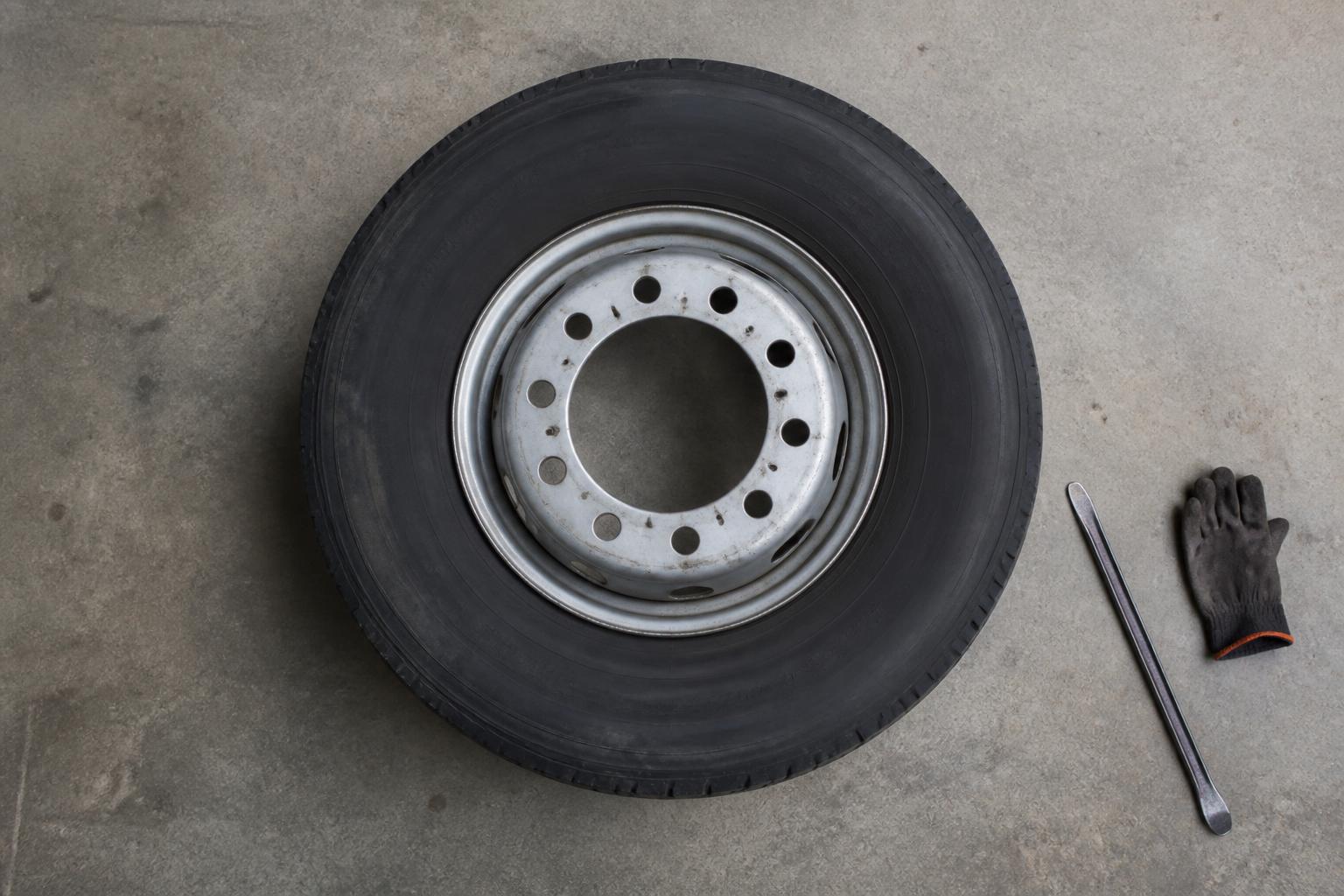
Tyre faults stop HGVs for two reasons. The obvious one is a puncture, a bulsted casing, or damage that makes the vehicle unsafe to move. The less obvious one is the defect that has been building for days or weeks, then turns into a roadside issue, a failed inspection, poor brake performance, or an MOT problem at the worst possible time. Good tyre management is not just about legal tread. It is about keeping steering predictable, braking stable, fuel use under control, and trailers moving when they should be earning.
At Woolpit Truck Repairs, we see the practical side of this every day around Woolpit, A14 J47, and the wider Suffolk routes. Operators coming in from Ipswich, Felixstowe, Stowmarket, Bury St Edmunds, Newmarket and Elmswell usually do not need theory. They need to know whether the tyre can stay in service, whether the vehicle needs standing down, and what else on the vehicle that wear pattern may be telling them.
What truck tyres do for safety, uptime and running costs
Truck tyres carry far more responsibility than many defects checks give them credit for. On an HGV or trailer, the tyre is part of braking, steering, suspension behaviour, fuel efficiency, axle loading, and vehicle stability. If the tyre is wrong in pressure, damaged, or wearing irregularly, the problem does not stay local to the rubber.
On the steer axle, tyre condition directly affects directional control. A casing with uneven wear, shoulder breakdown, or sidewall damage can make the vehicle wander, pull, or respond badly under braking. On a drive axle, poor grip or mismatched wear can affect traction and braking balance, especially in wet conditions or under load. On a trailer, tyre condition affects stability, rolling resistance, and how well the trailer tracks behind the unit.
Pressure matters as much as tread. Underinflation increases heat build-up, shoulder wear, casing stress, and fuel consumption. Overinflation can reduce the contact patch, increase centre wear, and make the tyre more vulnerable to impact damage. Either way, the operator pays twice, once in tyre life and again in downtime risk.
Load carrying is another point often missed. A tyre may still have visible tread but already be compromised by impact damage, sidewall cuts, exposed cords, or a slow pressure loss. If that tyre is carrying a loaded axle on trunk work, port work, or repeated regional runs, the risk is not just shortened life. It is a roadside stop, a delayed delivery, possible load transfer, and pressure on the rest of the axle set.
For fleets and owner-drivers, that is why tyre condition belongs in the same conversation as brakes and suspension. If a tyre is scrubbing because of an alignment issue, a worn bush, or a brake imbalance, replacing the tyre alone does not solve the running cost. It only resets the clock until the same defect damages the next one.
The tyre checks operators should make before a fault becomes a stop
The best tyre check is the one done early enough to change the day’s plan. For HGV and trailer operators, that means practical daily walk-round checks backed up by a more deliberate weekly look when the vehicle is in the yard or workshop.
Daily checks should include:
- A visual look at every tyre on the unit and trailer
- Obvious pressure loss or a tyre sitting low on the rim
- Cuts, bulges, tears, exposed cords, and sidewall damage
- Objects embedded in the tread, including screws, bolts, flints, and metal debris
- Matching condition across twin fitments
- Tread condition across the full width, not just a glance at one groove
- Signs of contact damage from kerbs, loading bays, mudguards, brake components, or bodywork
A pressure issue often shows itself before the tyre is flat. The sidewall may look slightly more deflected than the tyre opposite it. A twin set may show one tyre carrying more of the load. On trailers, drivers should be alert to a tyre that looks hotter than the others after a run, or one with fresh rubber dust around it from scrubbing.
Weekly checks should go further. This is where we would expect operators or maintenance providers to inspect for:
- Measured tread depth across the tyre, especially on steer axles
- Irregular wear patterns on inner and outer shoulders
- Feathering across tread blocks
- Flat spotting
- Sidewall cracking, cuts, or bulges
- Valve condition and signs of slow leaks
- Rim damage or signs of movement on the wheel
- Stones or debris trapped deep in grooves
- Evidence of previous puncture repairs that need review
This is also the point to compare tyre wear side to side and axle to axle. A tyre that is legal today may still be telling you the vehicle has an alignment, brake, bearing, or suspension issue.
Where operators use us for regular HGV and trailer inspections, that is often where these defects are caught before they become a breakdown or a prohibition risk. The useful part is not just finding the tyre issue. It is linking it to the likely cause and deciding what needs doing now, what can be planned, and what should not leave the yard.
What uneven tyre wear usually tells you about the vehicle
Uneven wear patterns are useful because they often point beyond the tyre itself.
Shoulder wear on both edges usually suggests underinflation. The tyre has been running with too much load on the shoulders and too much flex in the casing. If it is happening repeatedly, check inflation control first, but also consider loading patterns and whether the tyre is correctly specified for the work.
Centre wear usually points to overinflation. The middle of the tread is carrying more load than the shoulders. That reduces usable tread life and can affect grip. On some operations, repeated centre wear also raises the question of whether pressures are being set cold and then adjusted incorrectly after running.
One-sided shoulder wear often points to alignment or suspension issues. On a steer axle, that could mean toe settings, kingpin wear, bushes, spring issues, or axle geometry problems after impact damage. On a trailer, one-sided wear can indicate axle misalignment, worn suspension components, or damage that is making the trailer scrub as it runs.
Feathering across the tread blocks often suggests toe misalignment. If you run your hand across the tread and it feels smooth one way and sharp the other, that is a classic sign. Drivers may also report vague steering or a tendency to drift. Left alone, feathering can become noisy and accelerate wear quickly.
Flat spots usually point to braking issues. A wheel that is locking, dragging, or suffering intermittent brake application can mark the tyre fast. On modern vehicles, that means the tyre defect should be considered alongside ABS and EBS performance, brake balance, and any fault codes. A tyre with a fresh flat spot is not just a tyre conversation. It may be evidence of a brake defect or control issue that needs proper diagnosis.
Cupping or scalloped wear can suggest worn dampers, suspension looseness, imbalance, or wheel-end problems. On trailers especially, this can be missed until the tyre noise becomes obvious. By then, the tyre may already be beyond sensible recovery.
Wear on one tyre in a twin set can point to pressure loss, mismatch, or load sharing problems. If one tyre is doing more work than its partner, heat build-up and failure risk increase. It is not enough to replace the visibly worn tyre without checking why the pair was not sharing load correctly.
This is where workshop triage matters. If the wear pattern suggests a vehicle issue, we would usually want the tyre condition reviewed alongside brake performance, axle condition, and any warning lights or handling complaints. Our commercial vehicle diagnostics and workshop inspections are often the quickest way to separate a simple tyre replacement from a wider defect that will keep damaging tyres until the root cause is fixed.
When a truck tyre problem is still manageable and when it is not
Some tyre defects can be planned into the next workshop slot. Others need the vehicle stood down immediately or assessed before it moves again.
Usually manageable, subject to inspection and legal condition:
- Tread approaching replacement point but still above the legal minimum
- Mild, even wear with no structural damage
- A slow pressure loss where the tyre remains stable and the cause is not a sidewall or casing failure
- Minor embedded objects that have not penetrated deeply, pending proper inspection
- Early signs of irregular wear where the vehicle is still safe but needs workshop attention soon
Not manageable as a carry on and see defect:
- Exposed cords
- Sidewall bulges
- Deep cuts, especially to the sidewall
- Rapid pressure loss
- Separation, distortion, or signs of casing failure
- Serious flat spotting
- Damage from running underinflated
- Any tyre fouling bodywork or adjacent components
- Twin fitments where one tyre has failed and the other has been overloaded
- A steer axle tyre with damage that affects structural integrity or control
The legal minimum tread depth in the UK depends on vehicle type and application, and operators should work to current UK requirements rather than assume a general EU position. In practice, though, legal minimums are not a maintenance target. By the time a working HGV tyre is at the point where replacement is urgent, you have already lost planning flexibility.
If a driver reports vibration, pulling, repeated pressure loss, a burning smell, or visible sidewall damage, that should be treated as an operational decision, not just a tyre booking. The question is whether the vehicle remains safe to move, and whether moving it risks further tyre destruction, wheel damage, or a roadside intervention.
Where the answer is not clear, practical workshop assessment is the right next step. If the vehicle is mobile, we can inspect it at Bridge Farm and advise what can be repaired, what should be replaced, and whether there are wider brake or suspension concerns. If it is not mobile or should not be driven, operators may need roadside callout support for commercial vehicles or recovery arrangements depending on the fault and location.
How tyre faults affect MOT preparation and roadside compliance
Tyres are a common reason for avoidable MOT trouble because they are visible, measurable, and often linked to other defects. A tyre with insufficient tread, exposed cords, sidewall damage, or obvious structural weakness is straightforward. The less obvious problem is when tyre wear reveals a defect elsewhere that also affects the MOT outcome.
For example, if a tyre shows flat spotting from brake lock-up, there may be an underlying brake imbalance, sticking component, or control fault. If the tyre wear points to poor alignment or suspension wear, the same vehicle may also have issues that show up in steering, axle condition, or brake test behaviour. That is why we do not look at tyres in isolation during MOT preparation.
Roadside compliance is the same. A tyre defect can trigger a stop, but what follows may reach beyond the tyre itself. Enforcement attention can widen to brake performance, load security, maintenance records, and overall vehicle condition. For operators, the risk is not only the immediate prohibition or delayed journey. It is the pattern of preventable defects that creates avoidable scrutiny.
Tyres should therefore be checked alongside ABS and EBS concerns, not after them. If a driver reports a brake warning light, uneven braking, trailer instability, or repeated wheel lock symptoms, tyre condition may help tell the story. Fresh flat spots, scrub marks, or abnormal heat can all support a more accurate diagnosis.
Before test, we often pair tyre assessment with roller brake testing and brake performance checks and wider workshop inspection. For operators booking MOT preparation and presentation support, that joined-up approach matters. It reduces the chance of replacing a tyre, sending the vehicle to test, and then finding the real issue was elsewhere on the axle or brake system.
For fleets running mixed units and trailers, tyre records also matter commercially. If the same axle position keeps wearing tyres irregularly, that is a maintenance signal. If the same trailer keeps presenting with edge wear, that may justify a deeper look at alignment or suspension rather than another routine replacement.
Getting practical tyre support near the A14 in Suffolk
Operators around Woolpit, A14 J47 and the wider Suffolk network usually need one of three things when a tyre issue appears.
First, they may need a quick triage on whether the vehicle is safe to continue, safe only to travel to workshop, or should be stood down. That is often the key decision when the vehicle is between jobs, heading to Felixstowe, or trying to hold an MOT booking.
Second, they may need the tyre issue assessed in context. If the tyre is wearing badly, pulling, or showing signs of brake-related damage, the next step may be inspection, diagnostics, or brake testing rather than tyre replacement alone.
Third, they may need a realistic plan. That could mean replacing the affected tyre now and booking follow-on work for alignment, suspension, or brake defects. Or it could mean standing the vehicle down because the defect is beyond what should be nursed through another shift.
At Woolpit Truck Repairs, based at Bridge Farm in Woolpit near A14 J47, that is how we approach tyre support for HGV and trailer operators. We are not trying to turn every tyre concern into a generic sales pitch. We look at the condition, explain what the wear or damage is likely telling you, and set out the practical next step.
That matters for local operators and route-based traffic alike. Vehicles coming across from Ipswich, Felixstowe, Stowmarket, Bury St Edmunds, Newmarket and Elmswell often need workshop access that makes sense for the route, not a detour that adds more downtime. When the issue is tyre-related but may also involve brakes, warning lights, or trailer running gear, having HGV-and-trailer-only support in one place helps shorten the decision process.
We also understand that some enquiries come through fleet management structures, maintenance controllers, or third-party arrangements such as FLEETA LIMITED. The important point is still the same. What defect is present, is the vehicle safe, and what needs doing now versus next.
If you have a truck tyre concern near the A14, the useful first step is a proper assessment, not guesswork. A tyre that still holds air may still be telling you the vehicle has a brake, alignment, or suspension problem. Catch that early, and you protect uptime. Miss it, and the next stop may not be one you chose.
How often should HGV tyres be checked?
They should be checked as part of regular walkaround inspections, with closer attention if a vehicle has had a kerb strike, pressure loss, vibration or uneven wear.
What causes uneven wear on truck tyres?
Common causes include incorrect inflation, axle misalignment, worn suspension parts, brake issues, overloaded operation and defects that alter how the tyre meets the road.
Can a tyre issue affect MOT preparation?
Yes. Damage, exposed cords, low tread depth or wear linked to other defects can all create problems during MOT preparation and may point to wider vehicle issues.
Is a slow puncture safe to keep running?
Not safely to assume. A slow pressure loss can become a roadside failure, damage the casing and affect handling, so it needs assessing before the vehicle is relied on.
Why do trailer tyres wear differently from drive axle tyres?
They do different jobs. Trailer tyres can scrub during manoeuvring, while drive axle tyres handle traction loads, so wear patterns and likely causes are often different.