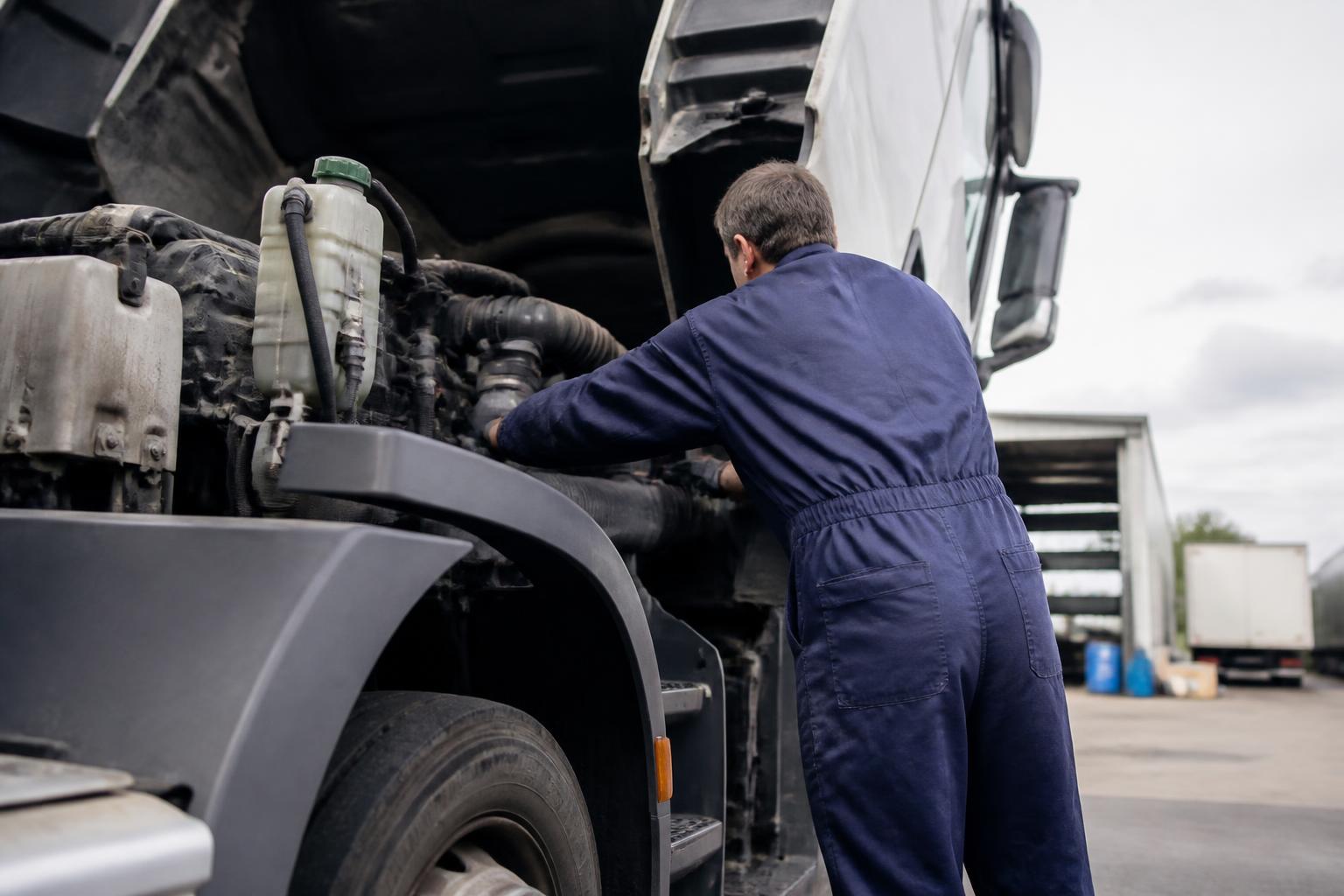
A coolant fault can put an HGV off the road very quickly. Sometimes the defect is obvious, with steam from the grille or coolant pouring onto the road. Just as often it starts with a warning light, a rising temperature gauge, a low coolant message, or a driver topping up more often than usual. The key point is simple, if the cooling system cannot control engine temperature or hold pressure, the risk moves from a minor repair to a breakdown, engine damage, or an unsafe vehicle movement decision.
At Woolpit Truck Repairs, we see coolant faults on vehicles working locally in Suffolk and on route traffic moving between Ipswich, Felixstowe, Stowmarket, Bury St Edmunds, Newmarket, Elmswell and the wider A14 corridor. Good decisions early on matter. Operators do not need guesswork or broad advice. They need a practical view on whether the vehicle is safe to move, what usually causes the fault, how proper diagnosis is carried out, and what repair path is most likely.
When a coolant fault is serious enough to stop the vehicle
The cooling system on an HGV does more than stop the engine overheating. It controls operating temperature, protects the cylinder head and block, supports emissions system performance, and on many vehicles it also ties into cab heating, retarder cooling, EGR cooling and other related systems. Once coolant is lost or circulation fails, the problem can escalate quickly.
In practical terms, we tell operators to treat the following as stop-now faults unless there is a clear and safe workshop-led reason to do otherwise:
- A high engine temperature warning with the gauge continuing to rise
- Steam from the grille, wheelarch, undercab area or expansion tank
- Coolant visibly running out
- Repeated low coolant warnings within a short distance after topping up
- Signs of coolant mixing with oil, or oil contamination in the coolant
- Loss of cab heat at the same time as temperature rise, which can point to low coolant level or circulation failure
- Coolant spraying under pressure when the system is hot
If the warning light comes on but the gauge remains normal, the right response still depends on what the vehicle is doing and what the driver can see. A low coolant level warning on its own may mean a slow leak, a faulty level sensor, or coolant movement in the tank. It does not automatically mean catastrophic failure, but it does mean the vehicle needs checking before the fault becomes an overheating event.
Where operators get caught out is trying to nurse the vehicle on because it is “only a few miles”. On a loaded unit on the A14, or a vehicle pulling away repeatedly in traffic, a minor coolant issue can become a head gasket failure, warped cylinder head, or seized water pump very quickly. If there is active overheating, steam, or sudden coolant loss, the safe answer is usually not to continue.
If the vehicle must be moved for safety, for example to clear a live lane or reach a nearby safe refuge, that is a different judgement from deciding it is fit to continue its route. Drivers should not remove a pressure cap from a hot system. They should report exactly what the dash showed, whether the heater went cold, whether there was steam, and how much coolant was lost. That information helps us triage properly if you call us for practical roadside support for commercial vehicles or recovery help when the vehicle should not be driven on.
The legal point in the UK is straightforward. If a defect means the vehicle is not in a safe and roadworthy condition, it should not be used on the road. That is the standard operators should judge against. This is not an area where there is a useful “EU generally” variation to rely on. The real issue is roadworthiness, risk of further damage, and whether the driver is making a safe movement decision.
What usually causes coolant loss on an HGV
Most coolant faults fall into two broad groups, external leaks and internal losses. External leaks are generally easier to spot. Internal losses can be more expensive and take more diagnosis.
The most common external causes include:
- Split or perished coolant hoses
- Loose, corroded or failed hose clips and clamps
- Radiator leaks, often from core damage, seam failure or corrosion
- Expansion tank cracks, cap seal failure or neck damage
- Water pump leaks from the shaft seal or housing gasket
- Thermostat housing leaks
- Heater hose or cab heater circuit leaks
- EGR cooler pipe leaks
- Coolant pipe chafing on brackets, chassis parts or other components
- Drain tap seepage after previous work
- Damage from road debris
We often see simple faults that have become serious because they were not caught early. A hose can rub through slowly until it opens under load. A clamp can lose tension and only leak when the system is hot and pressurised. A radiator can seep for weeks, leaving dried coolant staining on the core or lower frame, then fail properly on a hard pull or in warm traffic.
Trailer-related issues are different because a trailer has no engine cooling circuit of its own, but operators sometimes link “coolant fault” callouts with trailer defects because the whole combination is off the road. In practice, a unit overheating while pulling a loaded trailer may expose a marginal cooling system that looked acceptable on lighter work.
Internal coolant loss is where the fault path gets more serious. Common causes include:
- Head gasket failure
- Cracked cylinder head
- Liner seal issues on engines that use wet liners
- EGR cooler internal failure
- Oil cooler internal leakage
- Compressor or ancillary component faults on systems with coolant-fed units
- Automatic transmission or retarder heat exchanger faults, depending on vehicle design
Internal leaks do not always show up as obvious white smoke or “mayonnaise” under a filler cap. On a modern HGV, the first signs may be unexplained coolant loss, pressure building too quickly from cold, coolant contamination, repeated top-ups with no visible external leak, or fault codes linked to temperature control. Some engines will also push coolant out of the header tank under load before any major overheating event is seen on the dash.
Practical examples matter here. A vehicle running from Felixstowe with repeated heavy pulls may only lose coolant when fully hot and under sustained boost. A local rigid doing urban work around Ipswich may show the problem more in stop-start conditions because airflow is lower and fan demand is higher. A truck that has had previous front-end damage may later develop radiator or intercooler pack issues because mountings are out of line and the core is under stress.
How truck coolant repairs are diagnosed properly
Proper diagnosis starts with not assuming the first visible leak is the whole problem. Coolant systems fail in related ways. A burst hose may be the result of overpressure. A low coolant warning may be the result of a sensor fault, but it may also be warning of a genuine circulation issue. Good truck coolant repairs start with confirming the actual cause.
Our workshop process at Bridge Farm in Woolpit usually includes a combination of the following checks:
- Driver report and fault history review
- Visual inspection for staining, residue, wet joints and spray patterns
- Coolant level and condition check
- Pressure testing of the cooling system
- Pressure cap test where applicable
- Inspection of hoses, clips, radiator, water pump and housings
- Fan operation checks, including viscous, electric or electronically controlled systems depending on vehicle type
- Thermostat and circulation checks
- Fault code readout and live data review
- Combustion gas checks or cylinder pressure-related investigation if internal leakage is suspected
- Oil condition check and coolant contamination check
- EGR cooler and related circuit assessment where symptoms fit
- Warm-up and road test procedure where safe and necessary
Pressure testing is one of the most useful starting points, but it has to be interpreted properly. A system may hold pressure cold and still leak hot. A leak may only open when a hose moves under engine torque. A water pump can leak through the weep point intermittently. That is why visual evidence matters as much as the gauge on the tester.
On electronically managed vehicles, diagnostics help us see what the engine ECU was seeing. If the fan was commanded on early, if the coolant temperature sensor is reading implausibly, or if there are linked derate events, that changes the diagnosis. This is where proper commercial vehicle diagnostics for fault confirmation saves time and avoids replacing parts on guesswork.
We also check for related defects that can be mistaken for a coolant failure or can sit behind it. A blocked radiator pack from dirt and debris can cause overheating without any actual coolant leak. A failed fan clutch can produce the same complaint as a thermostat issue. A collapsed hose liner can restrict flow. A leaking EGR cooler can mimic head gasket symptoms.
For operators, the important part is clear explanation. The next step should be based on evidence. If the fault is a visible radiator leak, we will say that. If the system is overpressurising and there are signs pointing to combustion gases entering the coolant, we will say that too, along with what needs confirming before major strip-down. That practical triage is often the difference between a controlled repair and repeated downtime.
What the repair may involve and how downtime is affected
Repair time depends on access, parts, and whether the fault is isolated or part of a wider engine issue. Some truck coolant repairs are straightforward. Others become engine work.
At the simpler end, the repair may involve:
- Replacing a hose
- Renewing clips or clamps
- Replacing a pressure cap
- Repairing a minor pipe leak
- Renewing a level sensor or connector
- Draining, refilling and bleeding the system correctly
These jobs can still take time if access is poor. On some cabs and engine layouts, reaching a failed hose or housing is not a five-minute job. Coolant refill and bleed procedures also matter. Airlocks cause repeat overheating complaints and false confidence after repair.
The next level up usually includes:
- Radiator replacement
- Expansion tank replacement
- Thermostat housing replacement
- Water pump replacement
- EGR cooler replacement
- Fan clutch or cooling fan control component replacement
- Coolant pipework renewal
A radiator job may involve front panel strip-down and pack alignment checks. A water pump replacement may also call for belt inspection or renewal depending on the drive arrangement. If the coolant has been contaminated, the system may need a proper flush before refill with the correct specification coolant.
Then there are the deeper repairs:
- Cylinder head removal
- Head gasket replacement
- Pressure testing and machining checks on the head
- Liner seal or lower engine work
- Oil cooler or heat exchanger replacement with contamination clean-out
- Further engine investigation if overheating has already caused damage
This is where downtime can move from a workshop booking issue to a planning issue for the operator. If a vehicle has been driven while overheating, the repair is often larger than the original leak. That is why stopping early matters commercially, not just mechanically.
We are careful not to promise unrealistic turnaround where the diagnosis points to internal engine work. What we can do is give a realistic next-step view, whether that is a same-day hose repair, a booked radiator replacement, or a deeper investigation after pressure and contamination checks. Operators need that clarity to decide whether to reshuffle fleet work, arrange cover, or move the vehicle into planned downtime.
Where the vehicle also has inspection or test deadlines approaching, it often makes sense to combine jobs. If the truck is already in the workshop, we can align the cooling system repair with HGV and trailer inspection work to catch other defects while the vehicle is off the road and plan around MOT timing if needed.
How to reduce repeat coolant problems in fleet use
Repeat coolant faults usually come from one of three things, missed early signs, poor-quality previous repair, or incomplete diagnosis. Prevention is mostly about routine inspection and better reporting.
For fleet use, the basics are still the most effective:
- Check coolant level correctly at scheduled intervals
- Look for staining around hose joints, radiator edges and pump areas
- Inspect for hose chafing and poor routing
- Check clamp condition, not just whether the joint is wet today
- Keep radiator and cooling packs clear of heavy debris
- Watch for repeated top-up requests from the same vehicle
- Investigate low coolant warnings properly, even if they clear
- Replace aged hoses and suspect caps before failure where condition justifies it
- Use the correct coolant type and concentration
- Record what was topped up, how much, and how often
Driver reporting matters more than many fleets realise. “Used half a litre this week” is useful. “Warning came on climbing near Newmarket, heater went cold, then recovered after backing off” is much more useful. That kind of report points toward a fault that may only show under load. It gives us something to test for.
Pre-use checks should include looking under the front and under the parked vehicle after shutdown. Dried pink, red, blue or green residue around a joint is often the clue before a roadside failure. A sweet smell in the cab can point to heater circuit leaks. A pressure cap area that looks stained or crusted should not be ignored.
Maintenance planning also helps. Vehicles doing regular heavy route work between Felixstowe and inland depots, or repeated stop-start work around Ipswich and Stowmarket, put different demands on the cooling system. The service schedule should reflect the work the truck actually does, not just the calendar.
For operators based in Suffolk or running through A14 J47, practical access matters when a fault does appear. Being close to the route can save wasted time on an overheating vehicle that should not be pushed further. From Bridge Farm in Woolpit, we support fleets and owner-drivers who need a direct answer on whether the vehicle can be moved, what checks are needed, and what repair path is most likely.
At Woolpit Truck Repairs, that is how we approach coolant faults. We do not dress them up as minor if they are not minor, and we do not jump straight to worst-case engine failure if the evidence points to a hose, clamp or radiator issue. We assess the symptoms, confirm the fault properly, explain the defect clearly, and set out the realistic next step.
Whether the vehicle works locally around Elmswell, Bury St Edmunds and Woolpit, or runs the wider Suffolk route network via the A14, sound decisions on cooling system faults protect uptime, engine life and roadworthiness. For fleets operated through FLEETA LIMITED structures or independent owner-drivers managing their own maintenance decisions, the principle is the same. Catch the warning signs early, stop the vehicle when the symptoms say stop, and make sure the repair is based on diagnosis rather than assumption.
Can I keep driving if the coolant warning light comes on?
Not automatically. If temperature is rising, coolant is dropping quickly, or there is steam or a strong smell, stop and assess. Continuing can turn a repairable fault into major engine damage.
What are the first signs of a coolant leak on an HGV?
Common signs are low coolant level, temperature increase, visible drips, staining around hoses or the radiator, heater performance changes, and warnings linked to engine protection systems.
Are coolant faults always caused by a leaking hose?
No. Hoses are common, but faults can also involve the radiator, expansion tank, cap, water pump, thermostat housing, clips, pipework or an internal engine issue.
How do workshops confirm where coolant is going?
Diagnosis may include visual inspection, pressure testing, checking for staining or residue, inspecting related components and assessing whether there are signs of an internal fault rather than an external leak.
Can a coolant problem affect MOT preparation?
Yes. A vehicle with an active coolant fault may not be fit to present, especially if overheating risk or related defects are present. It is better to diagnose and repair it before MOT preparation.