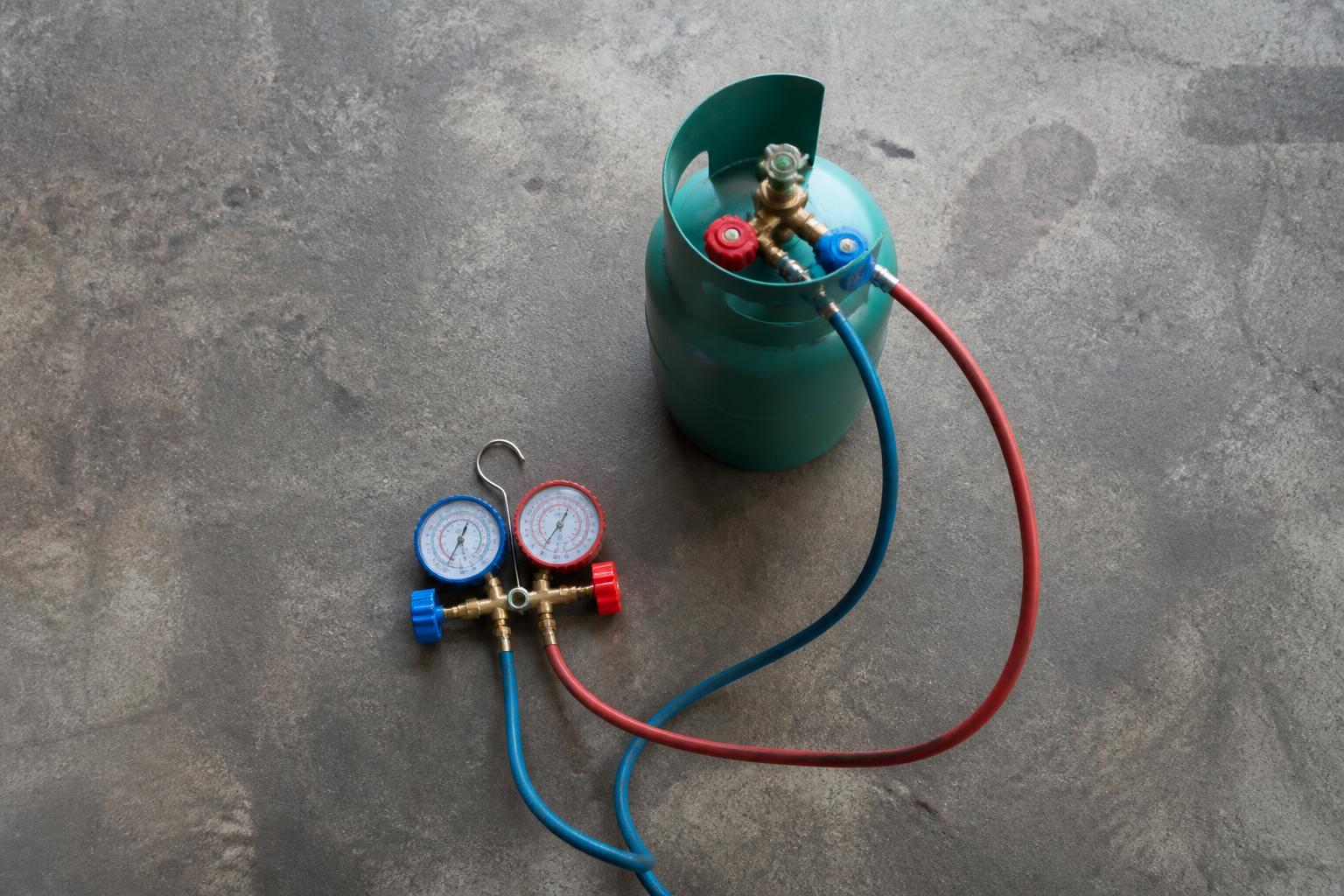
When a truck cab stops cooling properly, a regas can be the right fix, but only if low refrigerant is the actual fault. A proper HGV air conditioning visit should confirm whether the system is simply undercharged or whether the problem sits elsewhere, such as a leak, weak compressor, blocked condenser, pressure sensor issue or electrical fault. That distinction matters, because a quick top-up that ignores the real cause usually means the vehicle comes back off the road again.
For operators searching for HGV air conditioning regas near me, the useful question is not just who can add gas. It is who can assess an HGV system properly, explain what the checks show, and give realistic next-step advice that fits the job schedule. At Woolpit Truck Repairs, just off the A14 at A14 J47, we deal with trucks and trailers all day, so our approach is based on reducing downtime, not pushing a generic car air con service.
What an HGV air con regas actually fixes
An air con regas restores the refrigerant charge in the system to the correct level, provided the rest of the system is working as it should. In practical terms, that can fix poor cooling caused by gradual refrigerant loss over time, where the system still holds pressure well enough to operate but no longer has the correct charge to cool the cab effectively.
A proper regas is not just adding refrigerant blindly. The normal process is to recover what is left in the system, check the condition and quantity removed, vacuum test the system, and then recharge it with the correct refrigerant and oil quantity for that vehicle. On an HGV, getting that charge right matters. Too little refrigerant can mean weak cooling and poor compressor lubrication. Too much can also create pressure problems and poor performance.
What a regas does fix:
- Reduced cooling where refrigerant level has dropped but the system is otherwise sound
- A system that still operates but is no longer reaching proper vent temperature
- Performance that has declined over time rather than failed suddenly
What a regas does not fix:
- A failed compressor clutch or internal compressor fault
- A condenser blocked with road dirt, salt, insects or debris
- Damaged pipework or leaking seals
- Faulty pressure switches, sensors, relays or wiring
- Cab blower motor or control faults
- Blend flap issues inside the HVAC unit
- Electrical problems linked to warning lights or system cut-out
This is why we do not treat every non-cooling cab as a regas-only job. Refrigerant does not get used up like fuel. If the system is low, there is usually a reason. Sometimes that reason is slow loss over a long period. Sometimes it is an active leak that will undo the recharge quickly.
For fleet operators, that difference affects planning. If a vehicle needs a straightforward recharge, it may be turned around quickly. If the checks point to a leak or component failure, it is better to know that straight away than to send the truck back out with a temporary improvement and a likely return visit.
Signs your truck needs more than a regas
Some symptoms strongly suggest the issue is bigger than low refrigerant alone. The most obvious is cooling that disappears very quickly after a previous recharge. If the air con was regassed recently and cab temperature has already climbed again, the system may be leaking. In that case, topping it up again is not a sensible maintenance plan.
Another common sign is no compressor engagement. If the air con is switched on and the compressor clutch does not pull in, or the system does not respond at all, the fault may sit with electrical supply, control signals, pressure switches, sensors or the compressor itself. Low refrigerant can stop a compressor engaging, but so can other faults. That is why diagnosis matters before assuming the answer is more gas.
Watch for these practical signs that point beyond a simple regas:
- Air is warm all the time, with no brief period of cooling
- Cooling is intermittent, especially with engine speed or load changes
- Compressor noise, belt noise or obvious clutch issues
- Visible oil staining around air con pipe joints, condenser area or compressor
- Condenser fins heavily blocked or damaged
- System trips out repeatedly
- Fuse or relay issues linked to HVAC operation
- Strong difference between left and right side vent temperatures, where fitted
- Poor blower output or airflow problems even though refrigerant may be correct
On working trucks, condenser condition is often overlooked. HGVs pick up grime, road salt and debris quickly, especially on route work around Suffolk, into Ipswich, toward Felixstowe, or on repeated A14 mileage through Stowmarket, Bury St Edmunds and Newmarket. A blocked condenser cannot reject heat properly, so the system can underperform even when charge level is correct.
Leaks are another frequent issue. Pipework, seals, condenser stone damage and compressor shaft seals can all be involved. If there is dye residue or oily dirt around components, that can be a clue. So can a system that recovers very little refrigerant compared with its specified charge.
Electrical faults also matter more than many operators expect. Pressure transducers, temperature sensors, relays, control modules and wiring faults can all stop the system operating correctly. On modern vehicles, HVAC faults may sit alongside other electronic issues, though they are not necessarily connected to systems like ABS or EBS. The point is that a truck with poor cooling may need proper fault-finding, not just refrigerant.
If a driver reports that the cab cools only at speed, then gets warm in traffic or at idle, that can indicate condenser airflow issues, fan problems or pressure-related faults. If cooling cuts in and out over bumps, we would also consider wiring or connection issues.
How to judge a nearby workshop when the cab is not cooling
If you are searching locally because a vehicle is already underperforming, choose the workshop on HGV suitability first, not on whether the website mentions air con. Many car-focused air con services are not set up for the size, access and practical needs of an artic, rigid or fleet unit.
A nearby option needs to work in real HGV conditions. That means site access, room for commercial vehicles, and a team used to dealing with truck layouts rather than passenger cars. It also means understanding that the answer may be recharge, diagnosis, repair booking, or a decision to defer until parts and workshop time are aligned with the operator's schedule.
When judging a local workshop, ask practical questions:
- Can they take our type of HGV on site easily?
- Are they used to truck and trailer work rather than general cars and vans?
- Will they recover and measure refrigerant properly, not just add more?
- Can they explain whether the fault looks like low charge, leak, compressor issue or electrical issue?
- If the system needs more than a regas, can they advise realistic next steps?
- Is the location workable for route-based operators?
Our site at Bridge Farm in Woolpit is positioned for operators using the A14, including vehicles moving between Felixstowe, Ipswich, Stowmarket, Bury St Edmunds and Newmarket, and for local operators around Elmswell and the wider Suffolk area. That matters when a truck needs attention without losing half a day to poor access. If you are comparing options, our guide on how to choose an HGV workshop near the A14 sets out the broader points that affect downtime, not just air con work.
It is also worth being cautious of generic claims. A workshop that only talks about "cold air restored fast" without mentioning diagnosis, leak risk or HGV access may be selling a car-style service that does not translate well to commercial vehicles. We take a more practical view. If a regas is appropriate, we will say so. If the symptoms point elsewhere, we will say that as well.
That straightforward triage is usually what operators need most. The goal is not to sell the smallest job possible. It is to stop the vehicle coming back with the same complaint a week later.
What happens during an HGV air conditioning visit
A sensible HGV air conditioning appointment starts with the complaint as the driver or operator describes it. Has cooling faded gradually, failed suddenly, become intermittent, or disappeared after previous work? Those details help narrow the fault before any machine is connected.
The visit will usually include visual and functional checks first. We look for obvious damage, signs of leaks, condenser blockage, drive belt issues where relevant, and general system condition. We also check whether the compressor is engaging and whether the controls are commanding operation.
If the system is suitable for service, the refrigerant recovery and recharge process follows. In practical terms, that means:
- Recovering the existing refrigerant from the system
- Measuring how much refrigerant was actually present
- Pulling a vacuum to remove air and moisture
- Checking whether the system will hold under test conditions
- Recharging with the correct refrigerant and oil quantity for the vehicle specification
- Running the system and checking vent performance and operating behaviour
The amount recovered tells part of the story. If a system should hold a certain charge and the machine removes far less, that supports the suspicion of refrigerant loss. Vacuum behaviour can also indicate whether the system is likely to hold, although it is not a substitute for all leak diagnosis methods in every case.
Where the system does not behave as a straightforward regas job, the workshop should explain that clearly. For example:
- The system is empty or nearly empty, suggesting a significant leak
- The compressor does not engage after recharge conditions are met
- Pressures are not behaving normally
- Cooling remains poor after correct recharge
- A condenser or pipe section shows visible damage
- Electrical diagnosis is needed before any further parts decision
That explanation matters. Operators need to know whether the truck is ready to go, whether a repair is needed soon, or whether the fault is likely to return. We keep that conversation practical. If further work is required, we explain the defect and the realistic next step.
If you want a clear view of what we handle on this side of workshop support, our truck air conditioning re-gas service for HGVs and commercial vehicles sets out the service itself. And if the vehicle needs wider workshop attention at the same time, our article on choosing HGV and trailer repairs near A14 J47 explains how we approach commercial vehicle jobs more broadly.
One point worth stressing is that air con complaints sometimes arrive alongside other booked work. A truck may come in for inspection, diagnostics, tyre support, MOT preparation or brake concerns, and the driver mentions that the cab is not cooling properly. Where timing allows, that is often the best moment to address it, because the vehicle is already in the workshop environment and the issue can be assessed before it becomes a comfort and productivity problem on a longer run.
When to book air con work to avoid avoidable downtime
The worst time to think about air con is usually the first hot week when every operator decides at once. Seasonal demand is real. As temperatures rise, bookings tighten and a simple service can become harder to schedule around route commitments. If a vehicle already has marginal cooling in spring, leaving it until peak summer increases the chance of disruption.
For owner-drivers, the best time to act is when cooling first drops off, not when it fails completely. If the cab takes longer than usual to cool, if vent temperature is no longer what it should be, or if the system only works intermittently, get it checked before the truck is committed to longer days or heavier route pressure.
For fleets, it makes sense to build air con checks into wider maintenance planning. A complaint raised during routine workshop time is easier to deal with than a driver calling in from the road because the cab is unbearable in traffic. This is especially true for vehicles covering long A14 mileage, port work linked to Felixstowe, or repeated regional runs through Suffolk where driver comfort affects concentration and fatigue over the shift.
Early action also helps when the fault is not just refrigerant. If the issue turns out to be a condenser, compressor, sensor or electrical problem, finding that out before the busiest period gives more room to plan parts and workshop time sensibly. Waiting until total failure often means fewer options.
There is also a compliance and operational point here. Air con itself is not an MOT pass item in the same way as brakes, steering or lighting, but poor cab conditions still affect the working day. Drivers who spend hours in a hot cab are less comfortable, less focused and more likely to raise the issue once the truck is already committed. Good maintenance planning avoids that preventable interruption.
We regularly see vehicles where the warning signs were there earlier:
- Cooling was weaker than last year
- The system had not been checked for a long period
- A previous recharge did not last
- Condenser condition had deteriorated over winter
- The vehicle was about to go onto heavier seasonal work
That is the point to book it in. Not after the first long run in warm weather. Not once the driver is already uncomfortable. And not once every nearby workshop is dealing with the same seasonal rush.
At Woolpit Truck Repairs, we work with fleets, owner-drivers and route-based operators who need practical workshop decisions. From Bridge Farm at A14 J47 in Woolpit, we support commercial vehicles across Suffolk and on passing routes from Ipswich to Bury St Edmunds, Stowmarket, Newmarket, Elmswell and beyond. If the cab is not cooling, the useful next step is a proper HGV assessment, not guesswork.
For operators managing maintenance under a business structure, including those trading through entities such as FLEETA LIMITED, the principle is the same. A regas is valuable when it is the right fix. When it is not, clear diagnosis saves more downtime than a quick top-up ever will.
Will a regas fix warm air from the vents?
Not always. If refrigerant is low, it may restore cooling. But warm air can also come from leaks, compressor faults, blocked airflow, pressure issues or electrical defects.
How do I know if my HGV has an air con leak?
Repeated loss of cooling, a system that works briefly after recharge, or visible oily residue around components can all point to a leak. Proper checks are needed to confirm it.
Can a truck air con system lose gas over time?
Yes. Systems can lose performance gradually over time, but a significant drop may indicate a leak or another fault rather than normal ageing alone.
Is HGV air conditioning different from car air conditioning?
Yes. HGV systems can differ in layout, access and component size, and the vehicle’s operating pattern matters. A workshop used to commercial vehicles is better placed to assess them properly.
Why does location matter when booking air con work?
For operators, easy access matters because a cooling fault often needs quick checks without wasting route time. A workshop near A14 J47 can be more practical for Suffolk-based and passing vehicles.