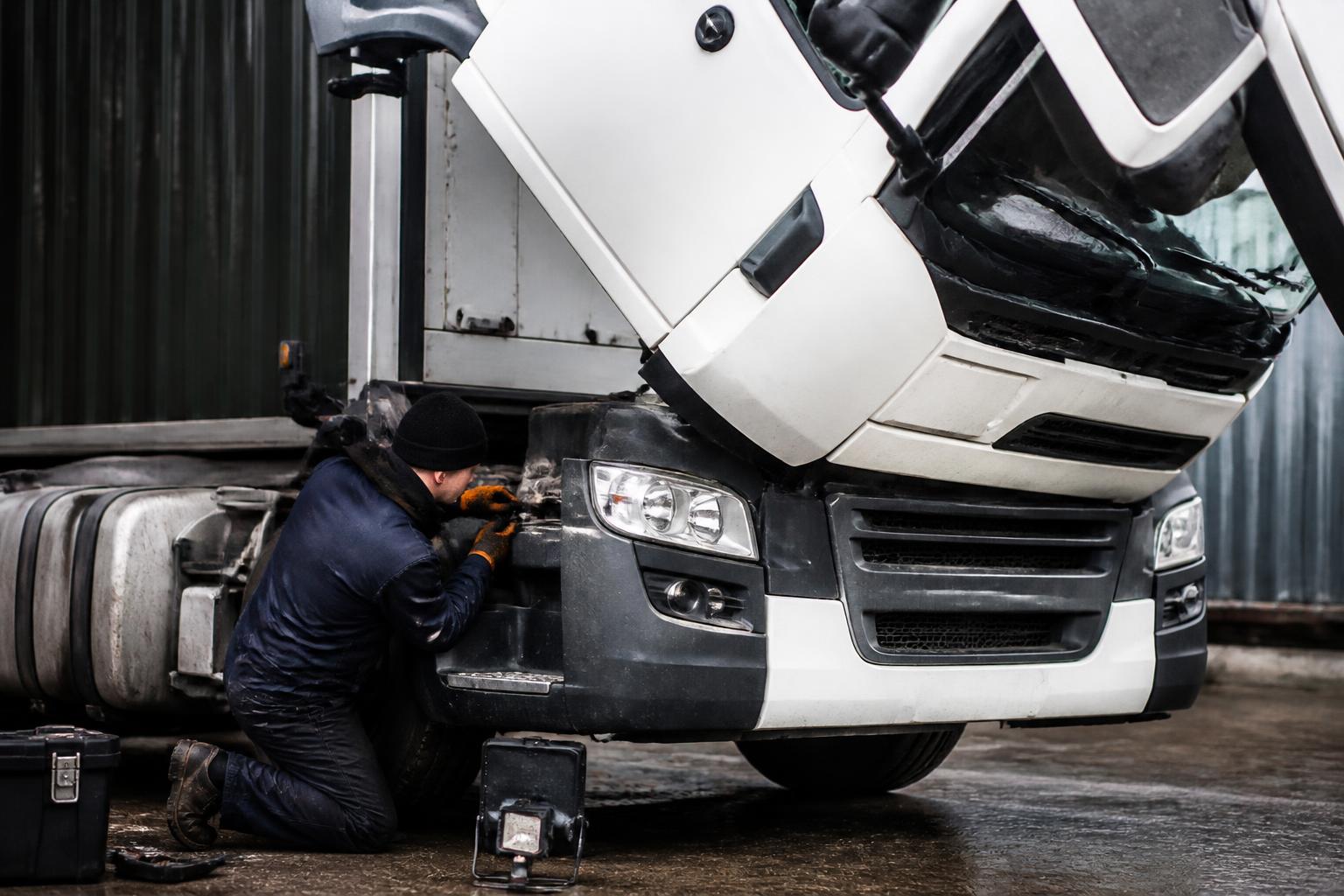
When an HGV stops on route, the aim is not simply to get somebody out quickly. The aim is to make the vehicle safe, understand what has actually failed, and decide the next step without wasting hours on the wrong one. Good roadside support should reduce downtime, not move it from the carriageway to a lay-by while everyone guesses.
At Woolpit Truck Repairs, we deal with operators who need practical answers around Woolpit, Suffolk and the wider A14 corridor, including Ipswich, Felixstowe, Stowmarket, Bury St Edmunds, Newmarket and Elmswell. Whether the issue is on a rigid, artic or trailer, proper HGV roadside repairs start with triage. Some defects can be dealt with where the vehicle stands. Some need controlled movement back to base or into a workshop. Some need recovery straight away. Knowing which is which is what saves time.
What roadside support should achieve for an HGV
The first job at the roadside is safety. That means checking whether the vehicle is in a position where anyone can work on it at all, whether the driver is safe, and whether the vehicle or trailer creates an immediate risk to traffic. A truck stopped on the hard shoulder or refuge area is one thing. A vehicle partly live in lane, on a narrow verge, or with a trailer leaning or unstable is another.
Once the scene is safe enough to assess, roadside support should establish the likely defect, not just react to a warning light in isolation. A brake warning, ABS lamp, EBS fault, air loss, wheel-end heat issue, tyre failure or trailer electrical fault can each have several causes. The right response depends on what else is happening with the vehicle. Is braking affected? Is air pressure building normally? Is the trailer communicating properly with the unit? Has the driver noticed pulling, noise, smoke, vibration or repeated warning resets?
From there, the decision should be one of three outcomes.
First, the vehicle may be safe to continue, sometimes with restrictions, if the defect is minor and legal roadworthiness is not affected. That decision needs care. It is never a case of clearing a fault code and hoping for the best.
Second, the vehicle may need a roadside repair. This is realistic where access is safe, the fault is clear enough, and the repair can be completed properly without workshop equipment. Typical examples include some tyre issues, certain lighting faults, a damaged suzie, a visible air line problem, or a straightforward electrical connection issue.
Third, the vehicle may need workshop support or recovery. If the fault affects braking performance, steering, wheel security, suspension integrity, coupling security, load stability or any issue that cannot be confirmed safely on site, sending it to proper workshop diagnostics is usually the fastest route overall. A vehicle that limps on and then fails again has not saved downtime.
That is why we treat roadside attendance as part of the repair process, not a separate box-ticking exercise. If the answer is that the truck needs commercial vehicle diagnostics and fault finding or a booked workshop repair, we say so clearly.
The first checks before anyone starts work
Before anyone picks up tools, the driver and operator should do a basic triage. This saves time and helps the attending technician arrive prepared.
Start with location risk. Exact location matters. "Near Stowmarket" is not enough if the vehicle is on the A14 eastbound, westbound, on-slip, off-slip, lay-by or local road. A safe and accurate location should include direction of travel, nearest marker post if available, junction reference such as A14 J47, and whether the vehicle is fully clear of live traffic. If the vehicle is in a dangerous position, that affects whether roadside repair is even possible.
Next, record what the driver saw and felt before stopping. Did a warning lamp appear first, or did the vehicle lose power, pull to one side, lose air, or show abnormal brake response? Was there a bang from a tyre, a smell of hot lining, a trailer warning buzzer, or repeated ABS or EBS messages? Driver observations often narrow the fault down faster than any generic breakdown description.
Warning lights should be noted exactly as shown. "Brake light on" is less useful than "red brake warning with low air buzzer" or "trailer EBS warning only". If the dashboard gave a text message or fault code, keep it. If the ignition has been cycled and the fault changed, note that too.
The trailer condition matters just as much as the unit. Check for leaning, obvious tyre damage, hanging mudwings, damaged air or electrical lines, unsecured load restraints, or signs that the trailer brakes have dragged. If the issue appeared after coupling, uncoupling, trailer swap or loading, say so. A callout for a unit fault can turn out to be a trailer supply, EBS or coupling issue.
Photos help. A picture of the warning display, damaged tyre, broken suzie, air line rub-through, or trailer lamp issue can save a wasted trip for parts. For fleets, getting the driver to send those images straight to the transport office is often the quickest way to support a callout decision.
The workshop or callout provider will usually need the following before attending:
- Registration of unit and trailer
- Make and model if known
- Exact location and whether access is safe
- Nature of the fault and any warning lights
- Whether the vehicle can move at all
- Whether it is loaded, and with what type of load
- Whether the trailer is coupled securely and sitting level
- Tyre size if tyre damage is involved
- Any previous recent repair or repeat fault
- Contact details for the driver and transport contact
Where the truck is near Woolpit, Bridge Farm or the wider Suffolk stretch of the A14, that sort of information lets us judge whether to attend for roadside callout support for HGVs and trailers or whether recovery is the more sensible first move.
Faults that commonly lead to roadside callouts
A large share of roadside jobs come down to a familiar group of defects. They vary in seriousness, but they all need a proper decision on roadworthiness.
Tyre damage is one of the most common. That includes punctures, sidewall damage, tread separation, impact damage, rapid pressure loss and dual-wheel issues that are not obvious until the vehicle is checked. Some tyre failures can be dealt with at the roadside. Some cannot, especially where there is wheel damage, suspected hub damage, or the vehicle has been driven on a deflated tyre. We have covered that in more detail in our guide to HGV tyre help by the A14 that cuts roadside downtime.
Brake concerns are another major trigger. A driver may report poor braking, dragging, overheating, imbalance, warning lamps or a trailer that feels as though it is holding back. At the roadside, you can inspect for obvious defects, air leaks, damaged chambers, connection issues and visible heat effects. What you cannot do at the roadside is replace proper brake performance testing where the fault is not obvious. If a vehicle needs confirmation of service brake or parking brake performance, workshop assessment and often roller brake testing are the right next step.
ABS and EBS warnings are common and are often misunderstood. An ABS or EBS lamp does not always mean the same thing. It may be a sensor issue, wiring damage, power supply fault, modulator problem, trailer communication issue or a low voltage event. Some faults leave the vehicle with conventional braking still available but reduced control functions. Others point to a broader braking system problem. The key question is not whether the light can be cleared, but why it came on and whether braking remains safe and compliant.
Air leaks are another regular callout cause. These may come from a damaged line, coupling head, trailer suzie, valve issue, suspension circuit or brake circuit. A driver may notice slow pressure build-up, constant compressor running, repeated low air warnings or the trailer dropping. Some leaks are visible and straightforward. Others need systematic tracing. If the leak affects brake reserve or the vehicle cannot maintain pressure, roadside attendance becomes a safety assessment first, repair second.
Lighting faults also stop vehicles, especially where they affect mandatory lamps or trailer lighting circuits. A simple bulb failure is one thing. A repeated fuse issue, water ingress, damaged socket, broken loom or intermittent trailer board fault is another. Operators often lose time when a "light fault" turns out to be a wider connection or earth issue between unit and trailer.
Coupling and trailer issues can range from damaged suzies and electrical connectors to landing leg problems, fifth wheel concerns, slider faults, or trailer brake and suspension defects. If there is any doubt about coupling security, kingpin engagement or trailer structural condition, that is not a roadside guesswork job.
When a roadside repair is realistic and when it is not
A roadside repair is realistic when four things line up.
The location must be safe enough to work. The fault must be identifiable with reasonable confidence. The repair must be achievable with roadside tools and parts. And once repaired, the vehicle must be able to return to service without needing workshop verification that cannot be done on site.
That makes roadside repair suitable for some tyre replacements, minor electrical repairs, replacing damaged suzies, some air line repairs, certain lamp faults, and other visible defects where the cause is clear.
It becomes unrealistic when diagnosis is uncertain, access is poor, the fault affects major safety systems, or the vehicle needs equipment that only a workshop can provide. That includes faults where proper brake assessment is needed, where electronic braking faults need deeper diagnostics, where there may be wheel-end damage, where repeated fault codes point to an underlying issue, or where MOT-related defects need full inspection and rectification.
Brake defects are the clearest example. If the problem is more than a simple visible issue, roadside attendance may confirm that the vehicle should not continue, but it will not replace a workshop brake inspection and, where needed, roller brake testing. The same applies where an ABS or EBS warning is part of a larger braking complaint.
MOT-related repairs also need realism. If the vehicle is close to test, or has already shown defects that would affect test outcome, it often makes more sense to move straight into MOT preparation and presentation support rather than patching one symptom at the roadside and discovering three more in the bay.
Recovery is not a failure of roadside support. Sometimes it is the efficient decision. If the truck or trailer cannot be made safe where it stands, if the defect risks further damage by moving it, or if workshop time and equipment will clearly be required, recovery avoids doubling the downtime. For some jobs, arranging recovery to workshop support is the quickest route back to service.
In the UK, roadworthiness expectations are set by domestic rules and DVSA enforcement practice, even where system components are common across European vehicles. That matters because operators should judge continuation on UK legal roadworthiness, not on assumptions about how a similar issue might be treated elsewhere in the EU generally.
How operators can cut downtime after the first fault
The first fault is only half the job. The way the operator records it decides how quickly the vehicle is properly returned to service and whether the same issue comes back next week.
Start with a clear defect description. "Truck broke down" is not useful in the workshop. Record the exact symptoms, when they started, whether they were intermittent, what warning lights appeared, and whether they changed after stopping or restarting. If the driver noticed the issue only under load, only when braking, only after coupling a different trailer, or only above a certain speed, that matters.
Keep a record of repeat symptoms. If the same unit has had previous ABS, EBS, brake, air or lighting faults, tell us. Repeat faults often point to loom damage, connector issues, poor previous repairs, or component failure that was developing over time. Fleets often have the history in their maintenance system, but it needs to be passed on at booking stage.
Note the route impact and operating urgency. A truck due into Felixstowe traffic, port work, timed delivery, trunking or a booked loading slot may need a different planning decision from a local vehicle that can stand overnight. That does not change the repair standard, but it does affect whether we prioritise roadside assessment, immediate workshop slotting, or recovery to avoid losing the next movement as well.
Be practical about parts decisions. If a tyre is damaged, confirm the size. If a trailer electrical lead is torn, say whether it is the service line, emergency line or electrical suzie, and if possible send a photo. If a lamp unit is damaged, identify which one. If a brake issue has already had parts fitted recently by another workshop, mention it. Parts guessing is one of the biggest causes of wasted downtime.
Plan the follow-on workshop stage before the vehicle leaves the roadside. If a temporary or limited repair gets the truck moving, ask what still needs doing. Does it need a booked inspection? Does it need diagnostics? Does it need brake testing? Does it need an MOT-related repair before test date? A roadside fix is often only the first step.
For fleets and owner-drivers using the A14 corridor through Suffolk, that planning matters because route pressure can tempt people into short-term decisions. Around Woolpit, A14 J47 and Bridge Farm, we see the benefit when operators move quickly from roadside triage into the right workshop action, whether the vehicle runs between Ipswich and Bury St Edmunds, heads toward Newmarket, or works locally around Elmswell and Stowmarket.
We also know many operators manage vehicles through group structures or outside fleet administration. Where names such as FLEETA LIMITED appear in records, bookings or support arrangements, the useful part is still the same, accurate defect information, clear authority for the next step, and a realistic decision on whether the vehicle needs roadside attention, workshop diagnostics or recovery.
Good HGV roadside repairs are not about promising that every fault can be fixed where it stops. They are about making the right call early, carrying out the work that is realistic on site, and moving quickly to workshop support when that is the better answer. That is how avoidable downtime is reduced.
What counts as a roadside repair for an HGV?
It usually means fault finding and practical repair work carried out where the vehicle has stopped, if the defect can be dealt with safely. If it cannot, the next step may be workshop attendance or recovery support.
Can an HGV with an ABS or EBS warning keep moving?
Sometimes, but not automatically. The warning needs proper assessment alongside braking performance, trailer behaviour and any other symptoms. A warning light on its own does not tell you whether continued operation is safe or compliant.
Is a tyre issue always a roadside job?
No. Some tyre problems can be handled on site, but sidewall damage, wheel-end concerns, repeated pressure loss or related brake and hub issues may mean the vehicle should not continue until further inspection.
What information should a driver give when calling for help?
Location, vehicle and trailer details, warning lights, what happened before the fault, whether air pressure is holding, whether brakes are dragging and whether the vehicle is loaded all help speed up triage.
When is workshop support better than a roadside fix?
When the fault needs deeper diagnostics, brake testing, multiple parts checks or a controlled repair environment. That is often the case with recurring defects, complex electrical issues or anything affecting MOT preparation.