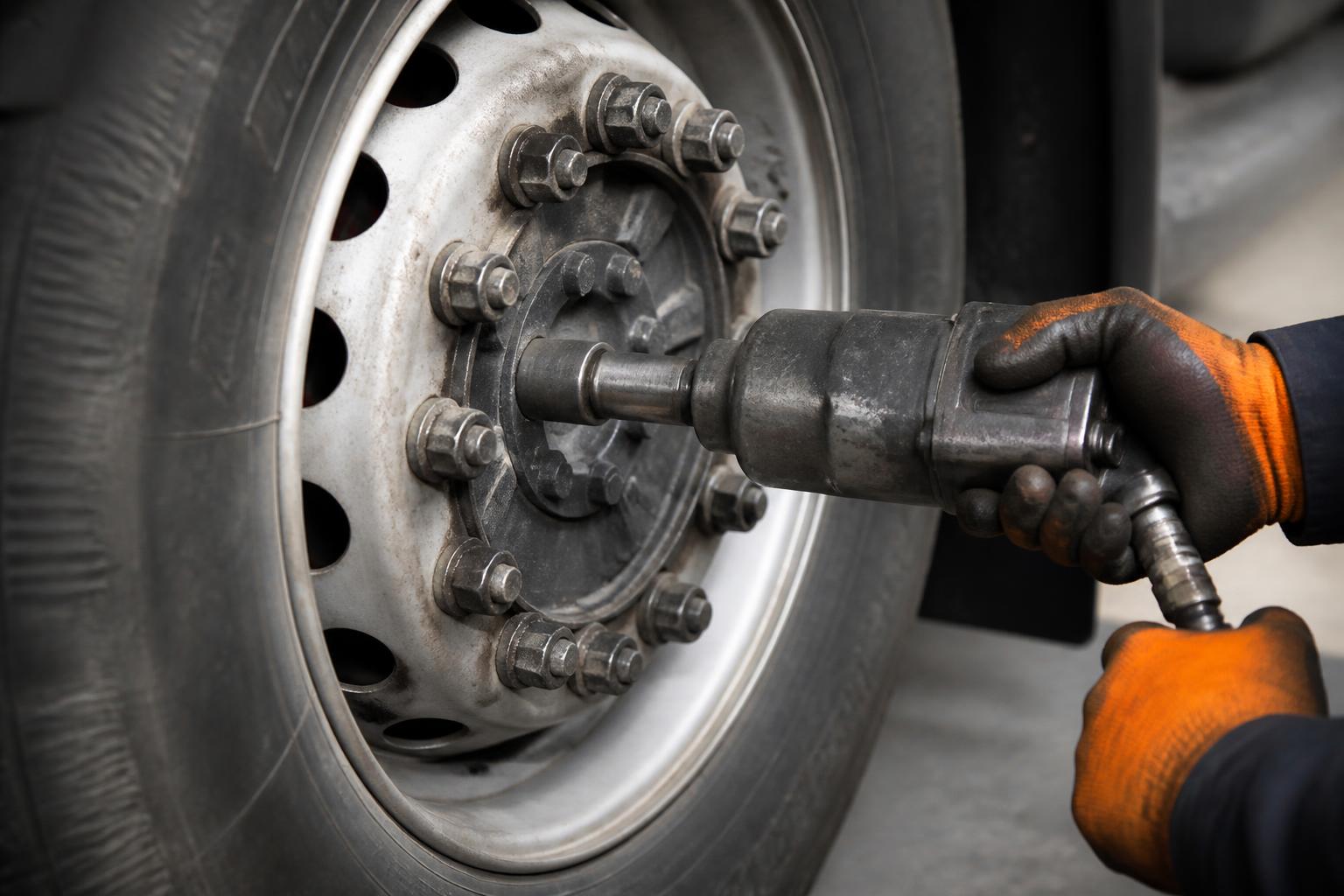
When a vehicle goes down, the first job is not finding the nearest pin on a map. It is finding a workshop that can tell you, quickly and clearly, whether the unit or trailer is safe to move, what the likely fault is, and what the fastest realistic route back into service looks like. For fleets, owner-drivers and route-based operators in Suffolk, that usually means looking for truck repairs near me in the practical sense, not just the postcode sense.
At Woolpit Truck Repairs, we work with HGV and trailer operators who need a next step they can act on. From Bridge Farm in Woolpit, near A14 J47, we support vehicles running between Ipswich, Felixstowe, Stowmarket, Bury St Edmunds, Newmarket and the wider Suffolk network. The aim is always the same, reduce downtime by making the right decision early.
What operators usually mean when they search locally
When an operator searches for local truck support, they are rarely asking a general question. They usually mean one of five things.
First, can someone tell us if the vehicle is safe to move?
Second, can the workshop take HGV and trailer work, not just light commercial repairs?
Third, can they diagnose the fault properly, rather than just guess from a warning light?
Fourth, can they handle the likely next job, such as brakes, tyres, trailer defects, inspection items or MOT preparation?
Fifth, can we get the vehicle there without losing half a day in the wrong direction?
That is why a local search matters differently in commercial vehicle work. If a rigid has an ABS warning, an artic has an EBS issue on the trailer, or a unit is due for MOT and showing brake imbalance, the question is not simply who is nearby. The question is who can triage the problem properly and either book it in, advise against movement, or help arrange the next step.
For operators on the A14 corridor, local often means accessible from the route you are already committed to. A workshop just off your line of travel can be more useful than one with a slightly shorter postcode distance but poor access for artics, awkward approach roads, or limited trailer capability. If you are comparing options, our guide on how to compare HGV workshop support near A14 J47 sets out what to look for.
How to decide if the vehicle can move or needs support first
Before you book a workshop, make a basic triage decision. That decision should be led by safety, defect severity and the risk of making the fault worse.
Start with the obvious safety-critical items.
If there is reduced braking performance, pulling under braking, severe air loss, a low air warning that does not recover, smoke, overheating, a wheel-end concern, or visible tyre damage such as cord exposure, sidewall failure or rapid deflation, stop and assess before moving. The same applies if there is steering abnormality, a suspected suspension issue affecting stability, or trailer defects that compromise control or security.
Warning lights matter, but not all warning lights mean the same thing. An ABS or EBS warning does not automatically tell you whether the vehicle can continue safely to a workshop. What matters is whether the fault is isolated to a system warning, or whether there is a wider braking or control issue alongside it. If the warning is accompanied by poor brake response, abnormal behaviour, or multiple system warnings, treat it as a higher-risk situation and get advice before moving.
Check the brakes and air system in practical terms. Is the air building normally? Is it holding? Are there audible leaks? Is the parking brake releasing and applying correctly? Has the driver reported a change in pedal feel or retardation? These observations help determine whether you need roadside support, recovery, or a controlled run to the workshop.
Tyres need the same practical approach. A slow puncture may still allow a managed journey if pressure is stable and the tyre condition is otherwise sound, but heat damage, sidewall cuts, exposed cords, or a tyre that has run flat can make movement unsafe. Trailer tyres are often missed in a quick walk-round, especially when the original call is about another fault, so they should be checked separately.
Trailer defects deserve their own decision point. Lighting faults, ABS or EBS faults, brake imbalance concerns, damaged suzies, airline leaks, body damage affecting security, landing leg issues, or axle-related defects can all change whether the trailer should move. If the issue is off-road, in a yard, customer site or depot, access and loading status also matter. A loaded trailer with a brake fault is a different problem from an empty one with a minor electrical issue.
For off-road breakdown situations, tell the workshop exactly where the vehicle is and whether access is restricted. A workshop may be able to help with callout and recovery support enquiries for commercial vehicles, but the advice will depend on whether the vehicle is on public highway, on private land, under a loading bay, or blocked in by site conditions.
The key point is simple. Do not turn a manageable defect into a roadside failure by moving too soon. Equally, do not assume every warning light means full recovery if a workshop can triage it properly and prepare for your arrival.
What to check before you book a truck workshop
Once you know the vehicle may be able to attend, compare workshops on capability, not just availability.
For HGV operators, the first check is whether the workshop genuinely focuses on HGV and trailer work. Commercial vehicle faults need different experience, equipment and workflow from car or van servicing. Brake performance, axle loads, trailer systems, inspection standards and MOT preparation all need a workshop that deals with them routinely.
Next, check trailer capability. Many operators call about the unit first, but the trailer is often part of the downtime problem. If you run artics, curtainsiders, box trailers, skeletal trailers or mixed combinations, ask whether the workshop can inspect and repair both sides of the outfit.
Diagnostics matter as much as spanners. A warning light without proper diagnostic work can waste time and parts. If the fault involves ABS, EBS, emissions-related warnings, electrical issues or intermittent defects, ask whether the workshop can carry out commercial vehicle diagnostics and explain what the fault codes actually mean in workshop terms.
Inspection capability is another useful filter. If the vehicle is already due a safety inspection, PMI, or defect follow-up, it often makes sense to combine fault diagnosis with a wider check. That helps avoid a second period off road a few days later for something that could have been picked up at the same visit. We often advise operators to book HGV and trailer inspections where the immediate fault may be part of a broader maintenance issue.
Ask about brake testing and MOT preparation. A workshop that can inspect braking performance properly and prepare the vehicle for test is more useful than one that can only replace parts and send you elsewhere for the next stage. The same applies if the problem is linked to recurring MOT failures, uneven brake readings, warning lamps, tyre wear or suspension-related defects.
Communication is not a soft extra. It is part of downtime control. You need to know whether the workshop will explain what they have found, what can be done now, what should be scheduled next, and whether the vehicle is likely to be same-day, next-day or a longer stop. Clear defect explanations help fleet managers authorise work quickly and help owner-drivers decide whether to repair, defer or reshuffle jobs.
If you want a fuller checklist before making that call, our article on choosing an HGV workshop near the A14 without guesswork breaks that process down in more detail.
Why route access matters as much as distance
Distance on a map does not always equal faster turnaround. For HGV operators, route access can be the difference between a straightforward workshop visit and a half-day lost getting in and out.
We see this regularly with vehicles running the A14 through Suffolk. An operator may be somewhere between Ipswich and Bury St Edmunds, or coming across from Felixstowe, Stowmarket, Newmarket or Elmswell. In that situation, access near A14 J47 can matter more than a workshop that looks slightly closer by postcode but sits behind town traffic, weight restrictions, awkward industrial estate turns or roads that are simply inconvenient for an artic and trailer.
The same applies to fleets planning workshop time around loaded work. If a vehicle can leave the route, attend a workshop at Bridge Farm, and get back onto the A14 without a long diversion, that may be the best commercial option even if another workshop appears nearer in a search result.
This is one reason operators searching for truck repairs near me often end up choosing based on route logic, not just locality. They need a place that fits the way the vehicle actually runs. For Suffolk-based fleets and passing traffic alike, Woolpit offers practical access for HGV and trailer work without dragging the vehicle deep into urban roads.
Access also matters when the fault is not a complete breakdown. If the issue is a warning light, tyre concern, inspection item or suspected brake defect, the ideal outcome is often a controlled trip into the workshop, prompt diagnosis, and a realistic decision on repair. Good route access supports that. Poor route access can turn a manageable workshop booking into more downtime than the repair itself.
What information helps a workshop diagnose the fault faster
The best way to speed up diagnosis is to arrive with useful information ready. A short, accurate brief saves time and helps us advise properly before the vehicle even turns in.
Have these details to hand:
Vehicle registration and trailer registration, if relevant.
Make, model and axle configuration of the unit. If it is a rigid, artic unit or specific trailer type, say so clearly.
Current location. If the vehicle is off-road, include the site name, postcode, and any access restrictions.
Whether the vehicle is loaded or empty, and broadly what the operating condition is. A loaded trailer, temperature-controlled body or site-specific load can affect the advice.
The exact warning lights or messages showing. If possible, send a photo of the dash or trailer display.
When the fault started. Was it sudden, intermittent, after coupling, after a tyre change, after wash, after standing, or under braking?
What the driver can feel, hear or smell. Air leak, vibration, brake pull, knocking, heat, reduced power, poor charging, or repeated warning resets all point in different directions.
Any recent work carried out. New brake components, electrical repairs, tyre work, MOT failure items, or a recently changed trailer can all be relevant.
Whether the defect affects roadworthiness now, or is currently only a warning or intermittent issue.
Your timing constraints. If the vehicle has a booked load, a test date, an inspection deadline or another committed job, say so early.
For fleets, it also helps to say who will authorise work and how quickly. Delays often come not from diagnosis, but from waiting for approval once the workshop has already identified the fault.
If the issue may involve compliance, include that context. For example, if the vehicle is due MOT shortly, has had repeat brake comments, or has recurring tyre and suspension wear, that changes the conversation from single-fault repair to broader maintenance planning.
When planned maintenance is the better answer than another reactive repair
A one-off repair is not always the right answer, even if it gets the vehicle moving again today.
If the same vehicle keeps returning with brake defects, warning lights, tyre wear, trailer electrical faults or inspection advisories, repeated reactive bookings usually cost more in downtime than a proper maintenance plan. The direct repair may be manageable, but the operational disruption builds up quickly when the same unit or trailer is off road again and again.
This is especially true around MOT deadlines. If a vehicle is approaching test with a list of known issues, it often makes more sense to schedule inspection, brake testing, repairs and preparation together rather than wait for another defect to force the timing. In Great Britain, MOT arrangements for HGV and trailers follow the domestic testing system rather than a general EU framework, so operators should plan around the UK test process and booking realities, not assume a wider EU approach applies.
Planned maintenance is also the better route when defects are linked. Uneven tyre wear may point to suspension or alignment concerns. Recurring ABS or EBS faults may trace back to wiring, connectors, sensor issues or trailer-side problems that need a proper inspection rather than another reset. Brake complaints may need measured testing and a wider look across the axle or trailer, not just a quick parts change.
For fleets, recurring downtime across several vehicles is usually the clearest signal. If units are being booked in piecemeal for defects that could be identified during scheduled inspections, the workshop relationship should move from reactive support to structured fleet maintenance. For owner-drivers, the trigger is often simpler. If every few weeks you are losing work to another unexpected defect, a planned inspection and maintenance approach is normally cheaper than continuing to chase faults one by one.
At Woolpit Truck Repairs, we keep that conversation practical. Sometimes the right answer is a straightforward repair and back out. Sometimes it is diagnosis plus inspection. Sometimes it is preparing properly for MOT. And sometimes it is recognising that repeat downtime is no longer a repair problem, it is a maintenance planning problem.
Woolpit Truck Repairs is operated by FLEETA LIMITED from Bridge Farm, Woolpit, Suffolk, near A14 J47. If you run HGVs or trailers around Ipswich, Felixstowe, Stowmarket, Bury St Edmunds, Newmarket or Elmswell, the fastest way to avoid unnecessary downtime is to make the right call early, get the fault triaged properly, and book the vehicle into a workshop that understands commercial vehicle work from the start.
What should I tell a workshop when I first call?
Give the registration, vehicle type, trailer details, fault symptoms, any ABS or EBS warnings, tyre or brake concerns, location, load status and whether the vehicle is safe to move.
Can a truck workshop help with trailers as well as the unit?
Some can and some cannot. If you run mixed combinations, check that the workshop handles both HGV and trailer inspections, diagnostics, repairs and MOT preparation.
Is the nearest workshop always the best option?
Not always. For commercial vehicles, route access, HGV capability, parts readiness and clear triage can matter more than being the closest pin on a map.
When should I stop driving and ask for support?
If you have brake concerns, a serious tyre issue, major warning lights, trailer instability, air loss or anything that makes the vehicle unsafe, stop and get proper advice first.
Can a workshop help before MOT if nothing has failed yet?
Yes. A pre-MOT inspection can identify defects early, reduce the risk of test failure and help you plan repairs around work rather than losing time unexpectedly.