When a truck or trailer is off the road, choosing a workshop should not come down to who answers first or who has the next empty bay. The right decision is usually the workshop that can tell you, quickly and clearly, what the fault is, whether the vehicle is safe to move, what the likely next steps are, and whether the job can be completed without avoidable delays.
For operators looking at an HGV workshop in Woolpit, the practical question is simple. Can the workshop deal properly with HGV and trailer faults, can it support the vehicle’s route and operating pattern, and can it help you avoid repeat downtime? At Woolpit Truck Repairs, that is how we approach every booking, inspection and breakdown enquiry from Bridge Farm near A14 J47.
What actually matters when comparing an HGV workshop - the practical criteria operators should use to compare an hgv workshop woolpit option when a truck or trailer is off the road
When an HGV is stopped with a warning light, brake issue, trailer defect or MOT deadline, the first comparison should be capability, not marketing claims. A workshop either has the right setup for commercial vehicles or it does not.
The first thing to check is whether the workshop is built around HGVs and trailers as day to day work. That affects everything from access and bay space to the way faults are assessed. A rigid with an ABS warning, an artic trailer with an EBS fault, or a brake imbalance issue before MOT needs a different process from a van or car repair booking.
The second point is diagnosis before parts changing. Operators lose time when a workshop starts from guesswork. If the problem is electrical, pneumatic or communication related, the useful question is not “can you fit us in today?” but “can you identify the defect properly and confirm what needs doing?” That matters especially with warning lights, brake faults, trailer system issues and intermittent defects.
The third point is whether the workshop explains defects in commercial terms. We find operators want clear answers to practical questions:
- Is it safe to move the vehicle?
- Is this likely to be a tractor fault, a trailer fault, or an interface issue between the two?
- Is this an MOT risk?
- Can the job be repaired now, or does it need staged work?
- If parts are required, can we keep the vehicle legal and productive in the meantime?
Those answers save more downtime than vague reassurance.
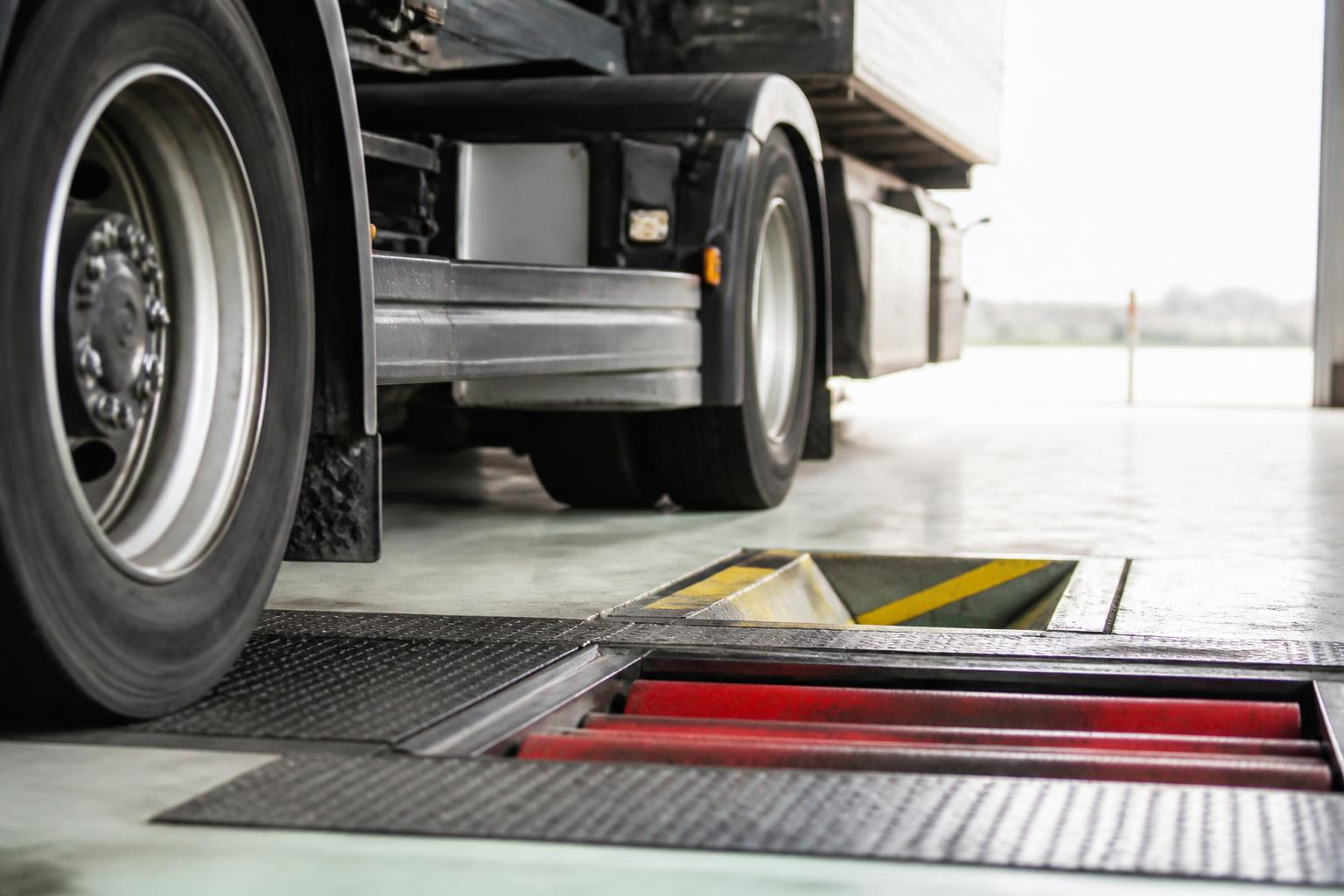
The fourth point is range of support. A workshop comparison should include more than repairs alone. If a vehicle comes in with one obvious issue, that is often not the full story. The useful workshop is the one that can support inspections, roller brake testing, diagnostics, MOT preparation, tyre issues, air conditioning re-gas where needed for cab comfort and driver use, and practical next-step advice if recovery or callout support is the better route. Our commercial vehicle services for HGVs and trailers are built around that joined-up approach.
Finally, compare route fit. For operators running through Suffolk or along the A14 corridor, location is not just a postcode detail. It affects whether a unit can divert in with minimal lost time, whether a trailer can be presented without a long detour, and whether a recovery decision makes sense.
General vehicle garage or HGV-and-trailer-only workshop - when a specialist HGV and trailer workshop is likely to be the better fit than a broader commercial or mixed vehicle garage
There are jobs a broader commercial garage can handle perfectly well. But there are also many cases where an HGV-and-trailer-only workshop is the better fit from the start.
A specialist workshop is usually the right choice when the fault sits in systems specific to heavy commercial vehicles and trailers. That includes ABS and EBS faults, brake performance concerns, trailer electrical issues, air system defects, axle or running gear concerns, and pre-MOT defect rectification on vehicles that are working close to test dates.
The reason is not branding. It is familiarity. A workshop dealing only with HGVs and trailers sees the same categories of failure repeatedly and can separate likely causes more quickly. For example, a warning light may point to a sensor issue, a wiring defect, a modulator problem, a supply fault, or a communication issue between unit and trailer. The diagnosis process needs the right equipment, but it also needs judgement based on heavy vehicle fault patterns.
A mixed vehicle garage may be able to offer a fast appointment, but if the workshop spends the first part of the booking establishing basics of the system or discovering access limitations, the early slot does not necessarily reduce downtime.
A specialist setup also matters for inspections. HGV and trailer checks are not just scaled-up car servicing. Operators need defect reporting that reflects commercial use, legal roadworthiness, brake condition, tyre condition, wear patterns, lights, air leaks, trailer connections and the practical consequences of each finding. Our HGV and trailer inspection support is designed around those operational decisions, not generic service checklists.
For fleets, there is another reason to use a dedicated HGV and trailer workshop. Consistency. If several vehicles or trailers pass through the same workshop approach, defects tend to be reported in a way transport teams can act on. That helps with maintenance planning, MOT preparation and deciding what needs immediate attention versus what can be scheduled.
For owner-drivers, the value is slightly different but just as important. You need to know whether a defect is a same-day repair, a planned repair, or a stop-now issue. A specialist workshop should be able to tell you that in plain language.
Fast booking versus accurate diagnosis - why the quickest available slot is not always the fastest route back into service if ABS, EBS, brake or warning light faults are involved
It is understandable to chase the earliest available slot when a vehicle is down. But with ABS, EBS, brake faults and warning lights, speed without diagnosis often creates a second delay after the first one.
We see this regularly with intermittent faults. The vehicle arrives with a dashboard warning, a trailer fault indication, or a brake concern that has already led to one or two assumptions elsewhere. If the workshop starts by replacing likely parts without confirming the cause, the operator can end up paying for time and parts while the vehicle remains off the road.
Accurate diagnosis matters most in four situations.
First, when the fault is intermittent. These are the jobs where a clear triage process matters. Did the warning appear under load, during braking, when coupling to a specific trailer, after washdown, or only at speed? Those details often help narrow the problem faster than rushing straight into replacement parts.
Second, when tractor and trailer may both be involved. A trailer ABS or EBS issue can present as a tractor-side concern, and the reverse can also happen. If the workshop is not used to tracing faults across both sides of the combination, time disappears quickly.
Third, when the fault affects braking performance or roadworthiness. A warning light is not just an inconvenience if it points to a brake control issue. The workshop needs to establish whether the vehicle should stay parked, whether limited movement is appropriate, and what testing is needed before it returns to work.
Fourth, when the job sits close to MOT or a booked inspection. In those cases, a rushed slot that does not fully resolve the defect can be more disruptive than a properly managed diagnostic booking. We would rather tell an operator the likely process up front than promise a fast turnaround that the fault does not justify.
That is why our approach is to triage first, explain the likely route, and then move to repair with evidence rather than assumption. For warning lights and system faults, our commercial vehicle diagnostics support is there to identify what is actually wrong and what the next step should be.
MOT preparation, inspections and brake testing compared - how to judge whether a workshop can help prevent MOT failure rather than only react after defects are found
A lot of avoidable downtime happens because workshops are brought in after an MOT failure, not before the test risk develops. The better comparison is not “can this workshop present a vehicle?” but “can this workshop help reduce the chance of failure in the first place?”
That starts with understanding the difference between inspection, brake testing and MOT preparation.
An inspection is the broader roadworthiness and condition check. It should identify visible and developing defects across the vehicle or trailer, including items that may not yet have caused a warning light or operating complaint.
Brake testing, including roller brake testing where appropriate, is about measured brake performance and imbalance. For HGVs and trailers, this is one of the most useful ways to assess issues before MOT, especially where the vehicle feels acceptable on the road but may still fail on efficiency or imbalance.
MOT preparation is the practical process of checking and rectifying likely test defects before presentation. In Great Britain, HGV and trailer annual testing follows the DVSA system rather than the passenger car MOT process most people think of first, but operators still commonly refer to it as MOT. In day to day workshop language, that is normal. The important point is whether preparation work is actually aimed at test readiness.
A workshop that helps prevent failure should be able to do three things well.
First, identify defects early enough to plan them. That means routine inspections and sensible defect reporting, not waiting for the annual test date to force the issue.
Second, connect brake test results to repair decisions. It is not enough to say “brakes need attention”. Operators need to know whether the issue points to adjustment, wear, contamination, air delivery, component performance, trailer brake response, or something else.
Third, present defects in order of operational importance. Some items are immediate roadworthiness concerns. Others are manageable if booked in promptly. Others can be monitored to the next scheduled maintenance point. If everything is reported as equally urgent, nothing is prioritised properly.
For operators working to annual test dates, our MOT preparation and presentation support is aimed at exactly that practical objective, reducing the chance of preventable failure and avoiding last-minute scrambling.
This matters even more for fleets with multiple units and trailers. A workshop that can feed back recurring brake, tyre, lighting or trailer defects gives you something useful operationally. You can spot patterns, review maintenance intervals, and avoid repeated failures across similar assets.
Location, access and support beyond the workshop door - how route position near A14 J47, Bridge Farm and links to Ipswich, Felixstowe, Stowmarket, Bury St Edmunds, Newmarket and Elmswell affect downtime and recovery decisions
Location matters most when the vehicle is not earning. For operators comparing an HGV workshop in Woolpit, the practical question is how easily the workshop fits the route the vehicle is already on.
Our position at Bridge Farm near A14 J47 is useful because it supports both Suffolk-based operators and vehicles moving through the corridor rather than based locally. If you are running between Ipswich and Bury St Edmunds, moving freight to or from Felixstowe, operating around Stowmarket, Newmarket or Elmswell, or covering wider Suffolk work, route access can make the difference between a manageable diversion and a major loss of time.
That affects several decisions.
If a warning light appears but the vehicle remains movable, a workshop close to the route may be the best option for controlled diagnosis before the issue escalates.
If the problem is trailer related, being able to get the trailer to a workshop without a long cross-country move can reduce both risk and lost hours.
If the defect is severe enough that movement may not be appropriate, location still matters because it informs whether callout, recovery or workshop intake is the right next step. In those situations, we focus on practical triage first. What is the fault? Where is the vehicle? Is it loaded? Is it tractor, trailer, or both? Can it be moved safely? Those answers drive the recovery decision, not guesswork. Where needed, operators can use our callout support for commercial vehicle faults or discuss the next step through our recovery enquiry route.
Access also matters in less dramatic cases. A workshop may look close on a map but still be awkward for artics, trailers or time-sensitive diversions. A route-friendly workshop near the A14 removes some of that friction.
For owner-drivers, this often comes down to one question. Can I get in, get a clear answer, and get back to work with the least wasted movement? For fleets, the question is broader. Can this workshop support our route pattern, trailer mix and maintenance planning in a way that reduces repeat downtime?
That is why we put so much emphasis on practical defect explanations and realistic next-step advice. Not every vehicle needs the same response. Some need immediate repair. Some need testing first. Some need planned workshop time. Some need recovery. The right workshop does not force every problem into the same process.
At Woolpit Truck Repairs, we work with fleets, owner-drivers and route-based operators who need exactly that, HGV and trailer support grounded in real workshop decisions, from our base in Woolpit at Bridge Farm near A14 J47. If you are comparing workshop options around Suffolk and the A14 corridor, the best choice is usually the one that can assess the fault properly, explain it clearly, and move the vehicle toward a safe return to service without unnecessary steps.
For a wider look at what reduces lost time when choosing a workshop, our article on how operators compare workshops to cut downtime sets out the same issue from the operator’s side.
What should I ask before booking an HGV workshop in Woolpit?
Ask what they need to diagnose the fault, whether they handle trailers as well as units, whether they can support MOT preparation, and how quickly they can inspect the vehicle.
Is the cheapest workshop rate usually the best option?
Not always. A lower rate can cost more overall if diagnosis is slow, defects are not explained clearly, or the vehicle needs repeat visits before it is roadworthy.
Why does trailer capability matter when choosing a workshop?
If the workshop can inspect and repair both HGV and trailer issues, operators avoid splitting work between sites and reduce delay when defects involve the full combination.
Can a workshop help before an MOT rather than after a failure?
Yes. Inspections, roller brake testing, defect identification and realistic repair planning can help operators deal with issues before the MOT appointment.
When is location near the A14 most important?
It matters most when a vehicle is already losing time on route, has a safety-related defect, or needs a practical stop near Woolpit rather than a long diversion.