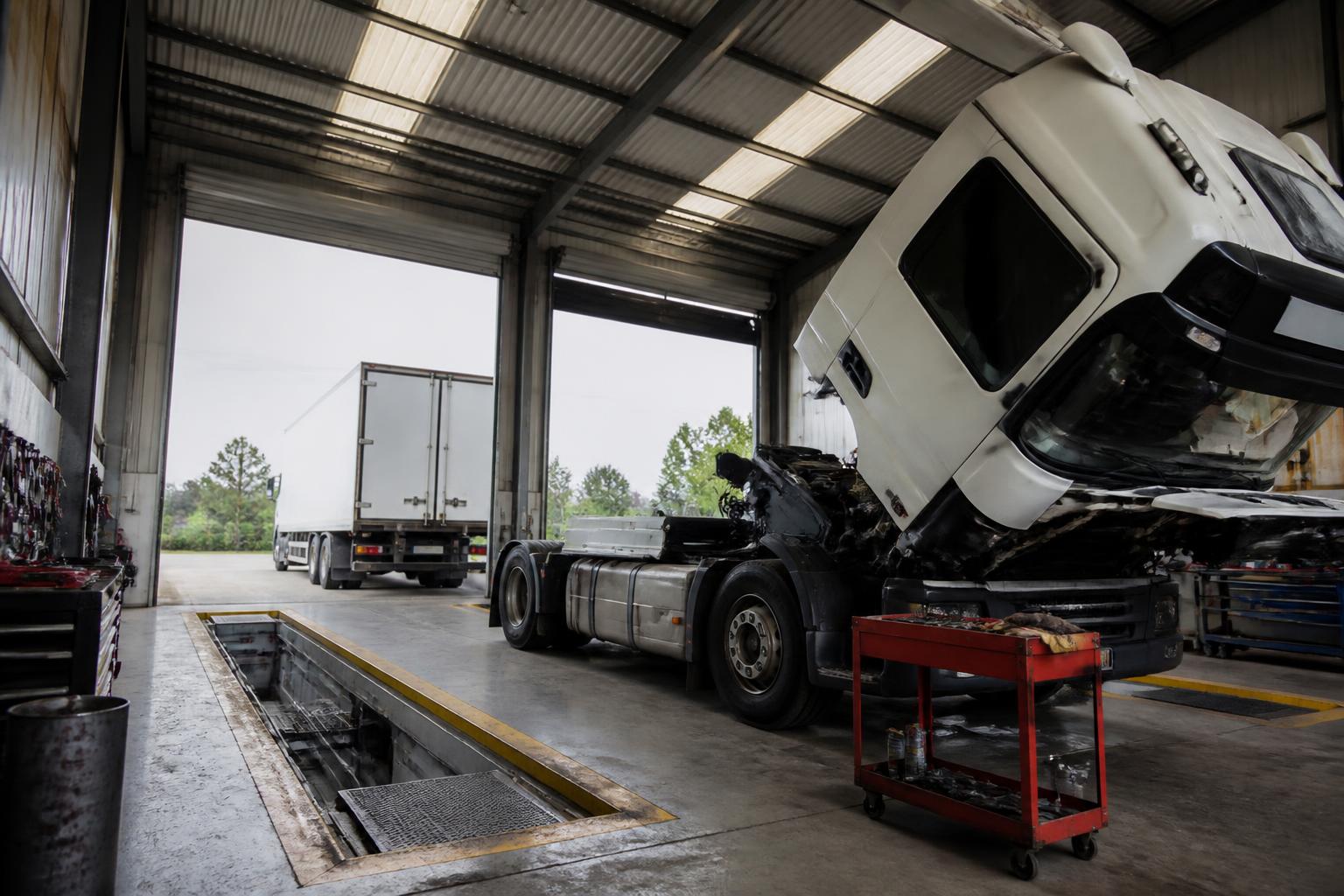
When operators look for local HGV fleet support, they are usually trying to stop a small fault turning into a lost day, a missed booking, or a failed MOT. The right workshop does not just offer labour. It gives you a practical next step fast, whether that is an inspection slot, proper diagnostics, a brake test, tyre support, a repair plan, or advice on whether the vehicle should move at all.
For fleets, owner-drivers, and route-based operators around Woolpit, Suffolk and the wider A14 corridor, the best choice is usually the workshop that can handle HGV and trailer work properly, explain defects clearly, and get to a sensible decision without drama. That is how we work at Woolpit Truck Repairs from Bridge Farm, close to A14 J47, with support built around HGVs, rigids, artics and trailers.
What operators usually mean when they search locally
When someone searches for fleet maintenance near them, they are rarely browsing. In most cases, they have an immediate operational problem to solve.
That problem might be a unit with an ABS warning light, a trailer with an EBS issue, a brake imbalance concern, a tyre problem, an approaching MOT date, poor air conditioning in the cab, or a defect picked up on a walkaround check that now needs workshop attention. Sometimes the vehicle is still moving and the job is to prevent a roadside stop. Sometimes it is already off the road and the priority is getting it assessed quickly and deciding whether to repair, recover, or reallocate work.
For HGV operators, local does not just mean close on a map. It usually means three practical things.
First, it means a workshop that understands commercial vehicles, not one that mainly works on vans and cars. HGV faults need the right equipment, the right access, and technicians used to dealing with heavy vehicle systems and trailer defects.
Second, it means somewhere that can take a sensible triage view. If a driver reports poor braking, a warning light, air loss, uneven tyre wear, or a trailer electrical fault, you need someone who can narrow down the likely cause and tell you what should happen next.
Third, it means access that fits the route the vehicle is already running. For operators moving through Ipswich, Felixstowe, Stowmarket, Bury St Edmunds, Newmarket and Elmswell, workshop location affects whether the vehicle can get in without adding unnecessary dead miles and delay.
That is why local workshop support is really about downtime control. The search may begin with fleet maintenance near me, but what the operator is actually buying is a faster, safer route back to service.
What a practical fleet maintenance service should include
A practical service for HGV fleets should cover the workshop jobs that directly affect roadworthiness, compliance, and uptime. It should also cover the support you need before a defect becomes a test failure or a roadside problem.
At a minimum, operators should expect routine inspections and defect assessment. That means looking properly at the reported issue, not just clearing a light or making assumptions from the first symptom. A brake concern could be adjustment, wear, an air issue, contamination, sensor faults, or something trailer-related. A warning light could be a genuine system fault, a wiring issue, or an intermittent problem that needs confirming under test.
Diagnostics should be part of the core offer, especially for modern HGVs and trailers where fault codes are only the start of the job. Good diagnostics means reading the system, checking the live condition of the vehicle, and linking the code to the actual defect. We cover that through our commercial vehicle diagnostics support, so operators get a clearer picture of what has failed and what needs doing next.
Roller brake testing should also be available. For HGVs, brake performance is too important to judge by feel alone. If there is a concern about service brakes, imbalance, trailer braking performance, or MOT readiness, a proper roller brake test gives a more reliable basis for repair decisions. It also helps avoid unnecessary parts changing where the fault lies elsewhere in the system.
Repairs are the obvious part, but the important point is range. A workshop should be able to deal with the faults that commonly stop commercial vehicles earning. That includes brake repairs, running gear issues, trailer defects, electrical faults, lighting, air system concerns, and the wear-and-tear items that become urgent when ignored.
MOT preparation matters because a vehicle does not fail in the test station by accident. It usually gets there with underlying defects that could have been found and dealt with earlier. A practical workshop checks the items likely to cause trouble, deals with reportable defects, and gives realistic advice if more work is needed before presentation.
Tyre support should be included because tyre faults often drive urgent workshop bookings. Uneven wear, damage, legal tread concerns, slow pressure loss, or trailer tyre condition all affect safety and uptime. Even where a full tyre replacement chain is not the workshop’s main role, operators still need sensible support and next-step advice.
Air conditioning re-gas is also worth including for fleet support, especially for vehicles spending long hours on the road. It is not a roadworthiness item in the same way as brakes, but poor cab air conditioning affects driver comfort and can become a practical issue in warm weather. We provide HGV air conditioning re-gas as part of our workshop support.
For operators comparing providers, it helps to look at the whole picture, not just whether the workshop can book a service. Our fleet maintenance support for HGVs and trailers is built around the jobs that actually reduce downtime.
How to judge whether a workshop can handle HGV and trailer faults properly
The first question is whether the workshop is genuinely set up for HGV and trailer work. That sounds obvious, but it matters. A business that splits its attention across many vehicle types may not have the same focus, equipment, or fault-finding habits as one dealing with heavy commercial vehicles day in, day out.
At Woolpit Truck Repairs, our workshop focus is HGV and trailer work. That matters when faults are not straightforward. A trailer ABS issue, a persistent EBS warning, a brake performance complaint, or an intermittent electrical defect needs people who have seen the pattern before and know where to start.
Trailer capability is a key test. Many operators do not need support for the unit alone. They need someone who can assess the complete working combination, including trailer braking, electrics, running gear, and defect interaction between unit and trailer. If a workshop can only partly deal with trailer faults, you may lose time moving the trailer elsewhere or trying to coordinate multiple providers.
Another good sign is how defects are explained. A proper workshop should be able to tell you what has been found, what that means in practical terms, and what the next step is. That does not mean dressing everything up in jargon. It means being clear. For example, if a warning light is present but the vehicle is still safe to move to workshop under controlled conditions, say so. If the fault points to a safety-critical issue and the vehicle should not continue, say that instead.
Realistic advice matters more than broad promises. Operators do not need to hear that every issue is simple. They need to know whether the likely next step is diagnosis, strip-down, brake testing, parts ordering, trailer inspection, or a callout and recovery decision.
ABS and EBS faults are a good example. These systems should be handled sensibly, not guessed at. Clearing a code without confirming the cause is not a repair. Equally, every warning light does not automatically mean the same level of risk. The workshop should assess the fault in context, confirm whether it is unit-side or trailer-side where relevant, and explain what can be checked on site and what needs workshop time.
You can also judge workshop fit by the questions you are asked. If the first conversation covers symptoms, warning lights, whether the fault is on the unit or trailer, whether braking feels normal, whether air pressure is holding, and whether the vehicle is loaded or route-critical, that is usually a good sign. It shows the workshop is already triaging the job, not just filling diary space.
Why location matters when a vehicle is off the road
When a commercial vehicle is off the road, distance is not just inconvenience. It affects recovery cost, driver time, route disruption, workshop access, and how quickly a proper diagnosis starts.
That is why location near the A14 matters in practical terms. A workshop near A14 J47 can be easier to reach for operators running across Suffolk or moving freight between inland routes and the port traffic around Felixstowe. It can also make decision-making simpler when a vehicle develops a fault near Woolpit, Stowmarket, Bury St Edmunds, Ipswich, Newmarket or Elmswell and needs assessing without a long diversion.
We operate from Bridge Farm in Woolpit, close to A14 J47, which gives straightforward route access for many HGV movements in the area. For some jobs, that means the vehicle can come in under its own power if safe to do so. For others, especially where braking, air, tyre, or warning light concerns make continued movement questionable, location helps with planning the right callout or recovery option rather than guessing.
This is especially relevant when the issue starts on the road rather than in the yard. A driver may report a trailer warning, poor brake feel, a puncture, or a fault light while already committed to a route. The nearest suitable workshop is not always the nearest pin on a phone. It is the nearest workshop that can actually handle HGV and trailer faults and can be reached sensibly from the road network the vehicle is on.
For operators around Suffolk, route access can also reduce the knock-on effects of a defect. A vehicle that can get to workshop quickly may still make a later booking. A vehicle sent too far for assessment may lose the whole shift. The same applies to trailers. If the trailer can be brought in with less delay, you have more chance of keeping the unit productive.
Where a vehicle cannot continue, early planning matters. We deal with callout or recovery support enquiries for commercial vehicles, so operators can make a practical decision based on the fault, the route, and the likely workshop requirement, rather than separating those decisions too late. If that is the issue you are facing, our commercial vehicle callout support explains how we handle those enquiries.
How to compare cost against downtime risk
The cheapest workshop slot is not always the lowest-cost option. For HGV operators, the real comparison is between planned cost and downtime risk.
Planned maintenance, routine inspections, and early defect diagnosis usually cost less than the chain of problems that follows delayed action. If a warning light is ignored, a brake issue is left until it worsens, or a trailer defect is carried forward until MOT time, the eventual cost is not just the repair. It is also the time off road, possible rescheduling, lost work, and the pressure of trying to solve a preventable problem urgently.
Missed MOT deadlines create the same issue. In the UK, MOT compliance for HGVs and trailers is part of keeping the vehicle legally and commercially usable. If a workshop only reacts when the test date is too close, your options narrow fast. Proper preparation gives more control over parts, labour time, and vehicle planning.
Repeat defects are another hidden cost. If a fault is not explained properly and the first repair does not address the actual cause, the vehicle may be back in the workshop again with the same issue. That means extra downtime, more administration, and less confidence in the vehicle. Good triage and proper diagnostics reduce that risk.
Roadside problems are often the most expensive kind because they remove your choices. Once the vehicle is immobilised or unsafe to continue, you are no longer comparing workshop efficiency. You are dealing with recovery, missed timings, and whatever slot is available after the event.
That is why cost should be judged against outcome. Ask which option is more likely to get the vehicle back safely, keep it compliant, and avoid the same fault returning. In many cases, the better value is the workshop that identifies the defect properly, gives a realistic repair path, and helps you avoid a second interruption.
What to ask before booking fleet maintenance
Before you book, it helps to gather the details that let the workshop triage the job properly.
Start with the vehicle type. Is it a rigid, artic unit, or trailer? If it is an artic, is the fault definitely on the unit, definitely on the trailer, or not yet clear? That one distinction can save time.
Then describe the symptom, not just your conclusion. Say whether there is a warning light, poor braking feel, air loss, vibration, tyre damage, uneven wear, poor cooling from the air conditioning, lighting failure, or a defect picked up during daily checks. If the issue is intermittent, say when it happens and whether load, speed, or coupling to a particular trailer affects it.
If there is a brake concern, be specific. Is it reduced performance, imbalance, pulling, trailer response, or something noticed on a previous inspection? If there is an ABS or EBS warning, note whether it is constant or intermittent and whether the fault appears with a specific trailer.
For tyre issues, say which axle position is affected, whether the tyre is damaged or losing pressure, and whether the vehicle is still safe to move. For trailer faults, mention electrics, braking, warning lights, air lines, or any issue with roadworthiness items that may affect MOT preparation.
Also say what deadline you are working to. If the vehicle has an imminent MOT, a booked route, or is already off the road, that changes the urgency and may change the recommended next step.
A useful booking conversation should leave you with answers to a few practical points:
Can the vehicle come in safely, or should movement be limited?
Is the first step an inspection, diagnostics, roller brake test, repair booking, or a callout and recovery decision?
Do you need to bring the trailer as well as the unit?
What information should the driver or transport office provide on arrival?
What is the likely sequence after the initial assessment?
That is the standard we work to at Woolpit Truck Repairs. We keep the conversation practical, explain defects clearly, and focus on the next sensible action for the vehicle in front of us. For operators running HGVs and trailers through Woolpit and the wider Suffolk route network, that is what cuts downtime, not guesswork.
Woolpit Truck Repairs is operated by FLEETA LIMITED from Bridge Farm, Woolpit, with workshop support built around HGV and trailer operators using the A14 corridor and nearby routes.
What counts as fleet maintenance for HGV operators?
It usually covers planned inspections, diagnostics, repairs, brake testing, MOT preparation, tyre support and dealing with defects before they cause downtime or a test failure.
Is fleet maintenance only for large fleets?
No. Owner-drivers and smaller operators often need it just as much, especially when one vehicle off the road has an immediate effect on work and delivery commitments.
Should HGV and trailer faults be dealt with by the same workshop?
Where possible, yes. Many downtime issues involve the vehicle and trailer together, so a workshop that understands both can speed up diagnosis and next-step decisions.
When should I book diagnostics instead of waiting for a bigger fault?
Book diagnostics when warning lights, braking concerns, ABS or EBS faults, repeated defects or unusual behaviour appear. Early checks can stop a smaller issue becoming a longer off-road job.
Why does workshop location matter so much?
For commercial vehicles, access matters. A workshop near the A14 can make it easier to get an HGV or trailer assessed quickly and reduce wasted time around recovery or transport planning.
What should I tell the workshop before arrival?
Give the registration, vehicle type, trailer details, fault symptoms, warning lights, whether it is safe to move, and any deadline such as an MOT or booked work.