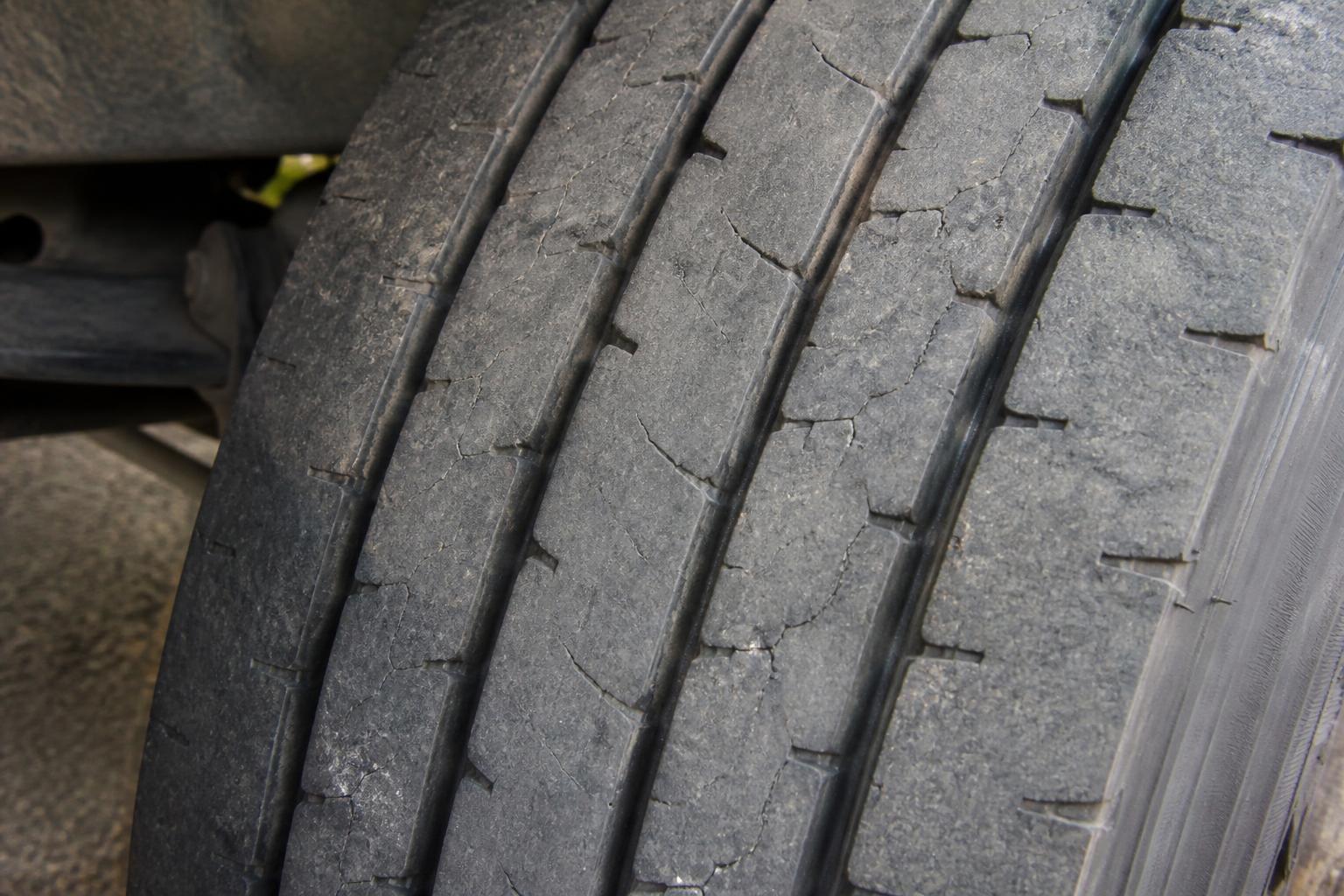
A truck rarely goes off the road because of one dramatic tyre failure out of nowhere. More often, roadside downtime starts with a tyre that has been wearing wrongly for weeks, running at the wrong pressure, or carrying the signs of another defect that has not yet been diagnosed. On HGVs and trailers, tyres are not just consumables. They are part of the vehicle’s braking, handling, stability and legal compliance.
That is why choosing and managing commercial truck tyres properly matters. The cheapest unit on the invoice can become the most expensive tyre on the vehicle if it wears out early, triggers a prohibition, damages a casing, or masks a brake or alignment problem that keeps coming back. At Woolpit Truck Repairs, we see this regularly with operators running through Woolpit, along the A14, and between Ipswich, Felixstowe, Stowmarket, Bury St Edmunds, Newmarket and Elmswell. The right next step is usually not just “fit another tyre”. It is to understand why that tyre failed, whether the vehicle is still safe to run, and what needs workshop attention now.
What operators need to know about commercial truck tyres
Commercial truck tyres do different jobs depending on axle position. On a steer axle, the tyre needs to hold a consistent contact patch, track straight, respond predictably and cope with scrub from turning. On a drive axle, it has to transmit torque to the road and deal with traction, braking forces and heat. On a trailer axle, it has to carry load steadily, resist irregular wear and cope with repeated manoeuvring scrub, especially on urban work, tight yards and port traffic.
That matters because a tyre issue is rarely isolated to rubber alone. A damaged or badly worn tyre can affect stopping distances, steering feel, fuel use, casing life and the likelihood of roadside enforcement action. If a tyre reaches the point of exposed cords, significant sidewall damage, or a defect that makes it unsafe, the vehicle may be unroadworthy and should not continue in service.
In the UK, operators also need to think in terms of vehicle roadworthiness every day, not just at annual test time. Tyres are checked during roadside inspections and as part of MOT preparation. Legal requirements on tread depth, condition and suitability apply in service, not only when the vehicle enters the test lane. If a defect would be considered dangerous, waiting until the next planned workshop visit is not a realistic option.
The other point worth making is cost. Buying on unit price alone can be false economy. The real cost of a tyre includes wear rate, casing condition, fuel effect, time off the road, callout cost, missed delivery windows and the workshop time needed if another fault is chewing through tyres. That is why our approach starts with inspection and triage. If you need a proper workshop check, our HGV and trailer inspection support gives you a clearer picture before the next failure happens.
The tyre faults that usually put a vehicle off the road
Some tyre defects are obvious, others are easy to miss until the vehicle is in trouble.
Uneven wear is one of the most common issues. On a steer axle, this may show as feathering, shoulder wear, one-sided wear or a saw-tooth pattern. On drive and trailer axles, it may appear as localised scrub, flat spots or irregular patches around the circumference. In practice, uneven wear often means the tyre is not meeting the road squarely or consistently. Alignment, suspension wear, wheel-end play, brake imbalance and inflation can all be involved.
Cuts matter because depth and location matter. A superficial cut in the tread is one thing. A deeper cut that reaches casing material is another. If cords are visible, the tyre is unserviceable. Cuts in the sidewall are especially serious because the sidewall flexes continuously under load. Even where there is no immediate air loss, structural damage can develop into a failure.
Bulges or blisters usually point to internal structural damage. That can follow impact damage, kerbing, potholes or previous underinflation. A bulge is not a cosmetic issue. It means the structure of the tyre may have been compromised, and the vehicle should not continue in service until the tyre has been assessed and, in most cases, replaced.
Punctures vary. A simple tread-area penetration may be repairable in some circumstances, depending on the tyre type, damage extent and whether the casing has been harmed. But a puncture that has been run underinflated can cause hidden internal damage. That is one reason why “just put air in it and carry on” often ends badly.
Exposed cords are a stop sign. Whether caused by wear, impact or previous damage, once reinforcement is visible the tyre is no longer fit for service. The same applies to significant tread separation or loose material.
Sidewall damage is often underestimated by drivers because the tyre may still hold pressure. In reality, sidewall cuts, cracking from service abuse, impact damage and abrasion from contact with bodywork or suspension components can all become immediate safety issues.
Pressure-related problems sit behind many of these defects. Underinflation causes excess flexing, heat build-up, shoulder wear and casing damage. Overinflation can reduce the contact patch and contribute to irregular centre wear and harsher impact loading. Persistent pressure loss usually means there is a cause that needs identifying, not just topping up.
If a vehicle is already off the road or you need a practical response near A14 J47, we can help with commercial vehicle callout support and advise whether the issue looks like a tyre-only problem or something wider.
Why tyres wear differently on steer, drive and trailer axles
Tyres do not wear evenly across a vehicle because each axle lives a different life.
Steer axle tyres are very sensitive to alignment and steering geometry. If toe settings are wrong, or if there is wear in steering or suspension components, the tyre can scrub continuously. That often shows up as rapid shoulder wear or feathering. A driver may also report a pull, off-centre steering wheel or vague steering feel.
Drive axle tyres deal with torque, braking effort and traction. Wear on these positions can be affected by differential action, route type, axle loading and how often the vehicle starts on gradients, loose yards or wet surfaces. If one position is wearing much faster than its mate, it is worth checking inflation, brake condition and whether there is a wheel-end or suspension issue causing that tyre to work harder.
Trailer axle tyres often tell a story about manoeuvring and suspension. Repeated reversing onto bays, tight turns in depots and roundabout-heavy routes can all produce scrub. On tri-axle trailers, one axle can suffer more than another depending on geometry and loading. If wear is severe or unusual, we also look beyond the tyre itself to axle alignment, bush wear, ride height and brake performance.
Loading makes a major difference. An axle that is repeatedly overloaded, or loaded unevenly across the vehicle, will not wear tyres normally. Route pattern matters too. A truck doing steady trunking from Suffolk to motorway distribution points will often show different wear from one doing mixed local work around Felixstowe, Ipswich and busy urban delivery points.
This is why the same visible tyre issue can point to a wider defect. A trailer tyre worn bald on one edge may not just need replacing. It may be telling you about a bent axle, worn suspension components or a braking issue that is dragging one wheel. Fitting another tyre without checking the cause often just restarts the clock.
How to check tyres before they become a roadside problem
A useful tyre inspection routine is simple, repeatable and built into normal vehicle checks.
For drivers, the walkaround should include all tyres on the unit and trailer, not only the obvious outside faces. Look for low tyres, cuts, bulges, embedded objects, exposed cords, sidewall abrasions, stones trapped between twin wheels where relevant, and any sign that a tyre has been running hot or flat. Check tread condition across the full width, not just the middle. Uneven wear at one shoulder is easy to miss if the vehicle is dirty or the check is rushed.
Also look for clues around the tyre. Is there rubber debris in the wheel arch? Are there signs of contact with mudwings, bodywork or suspension parts? Is one wheel hotter than the others after a run, suggesting a brake or bearing issue? Has a warning light appeared for ABS or EBS at the same time as the tyre problem?
For operators and workshop staff, pressure management needs to be deliberate. A tyre that repeatedly needs air has a fault until proved otherwise. Valve condition, bead sealing, puncture damage and wheel condition all need checking. If a tyre has been run significantly underinflated, internal damage is possible even if the outside does not yet look dramatic.
A vehicle should not continue in service if the tyre has exposed cords, a serious cut, a structural bulge, obvious tread separation, or damage likely to lead to failure. The same applies where the tyre is fouling another component, or where there is evidence that a brake or wheel-end defect is making the vehicle unsafe.
Workshop attention is also needed where wear patterns suggest alignment, suspension or brake faults, even if the tyre is not yet at the point of immediate failure. Early diagnosis is far cheaper than waiting for a roadside event. If you need that checked properly, our vehicle diagnostics and fault finding can help separate a tyre defect from the system behind it.
When a tyre problem is really a brake, ABS or EBS issue
One of the most expensive mistakes an operator can make is replacing a worn or damaged tyre without asking why it failed.
Brake imbalance is a common example. If one wheel end is doing more braking work than the others, the tyre can scrub, heat up and wear abnormally. A dragging brake can create localised heat damage, flat spotting and rapid wear. If a driver reports poor fuel use, a hot wheel, pull under braking or a burning smell, the tyre may be the symptom rather than the cause.
Wheel-end faults also matter. Bearing play, hub issues or mechanical looseness can let the tyre run out of true and wear irregularly. In those cases, another tyre fitted to the same position may start showing the same pattern surprisingly quickly.
ABS and EBS faults can be part of the picture too. If wheel speed information is unreliable, or if there is a fault in the braking control system, braking behaviour may not be what it should be under certain conditions. That does not mean every tyre wear issue comes from electronics, but when tyre damage appears alongside ABS or EBS warnings, it is sensible to investigate properly rather than treat them as separate events.
On trailers especially, operators sometimes see repeated tyre wear on one axle line and assume it is just route abuse. Sometimes it is. Sometimes roller brake testing and workshop inspection show a more specific problem, such as imbalance, poor brake release, or a defect affecting how that axle is behaving under load and braking.
This is where proper diagnosis matters. At Woolpit Truck Repairs, we would rather explain the defect clearly and identify the likely root cause than simply fit a replacement and send the same problem back onto the A14. If annual test time is approaching, this is also the right moment to deal with tyre-related defects alongside MOT preparation and presentation work, rather than hoping they stay manageable until test day.
Choosing the right next step for fleets and owner-drivers in Suffolk
The right next step depends on what stage the problem has reached.
If a driver has found a bulge, exposed cords, major sidewall damage or a tyre that has gone down quickly, treat it as an immediate roadworthiness issue. Do not assume it will get back to base safely just because it is still rolling. If the vehicle is stranded or unsafe to move, the priority is recovery, safe attendance and triage.
If the tyre is worn unevenly but still serviceable, the next step is usually inspection before replacement becomes urgent. That gives us the chance to check whether the tyre is being damaged by alignment, suspension, braking or wheel-end faults. For fleets, this is where planned inspections save the most downtime. For owner-drivers, it often prevents the more expensive pattern of replacing one tyre after another while the actual cause remains.
If there is a warning light for ABS or EBS, a pull under braking, signs of heat at one wheel, or repeated wear on the same axle position, book diagnosis rather than tyre fitting alone. The same applies if the tyre issue appeared after impact damage, kerbing or a brake complaint.
If annual test is close, combine tyre concerns with a broader roadworthiness check. Tyres, brakes and visible axle defects often travel together at MOT time. Dealing with them in one planned visit is usually more efficient than waiting for a failure or prohibition risk.
For operators based in Suffolk, or running regular routes through Woolpit and A14 J47, access matters as much as workshop capability. We are at Bridge Farm in Woolpit, with practical access for HGVs and trailers moving between Ipswich, Felixstowe, Stowmarket, Bury St Edmunds, Newmarket and Elmswell. That makes it easier to get a vehicle checked before a tyre issue becomes a roadside problem, and easier to act quickly when it already has.
Woolpit Truck Repairs is operated by FLEETA LIMITED, and our focus is straightforward. We work on HGVs and trailers, we explain defects clearly, and we help operators choose the next sensible step based on the condition in front of us. If that means inspection, we inspect. If it means diagnosis, brake testing, repair support or recovery planning, we will say so plainly. That practical approach is usually what cuts downtime most effectively, not just another tyre fitted in a hurry.
How often should commercial truck tyres be checked?
They should be checked during daily walkaround inspections and looked at more closely if there is vibration, pulling, pressure loss or visible damage. Workshop inspection is sensible if wear appears uneven or a defect keeps returning.
Can uneven tyre wear mean something other than a tyre problem?
Yes. Uneven wear can point to alignment issues, suspension wear, brake imbalance, wheel-end faults or loading problems. Replacing the tyre alone may not stop the same defect coming back.
What tyre damage means an HGV should stop running?
Exposed cords, bulges, serious cuts, rapid pressure loss, sidewall damage or any defect that makes the tyre unsafe means the vehicle should not continue until it has been properly assessed.
Do trailer tyres need the same attention as unit tyres?
Yes. Trailer tyres can suffer scrub, impact damage, poor wear and pressure loss just as easily. Because trailers may be used across different loads and routes, defects are easy to miss without regular checks.
Can tyre faults affect MOT preparation?
Yes. Tyre condition is a basic part of roadworthiness and MOT preparation. If wear or damage is found late, it can create avoidable downtime and delay other work needed before test.