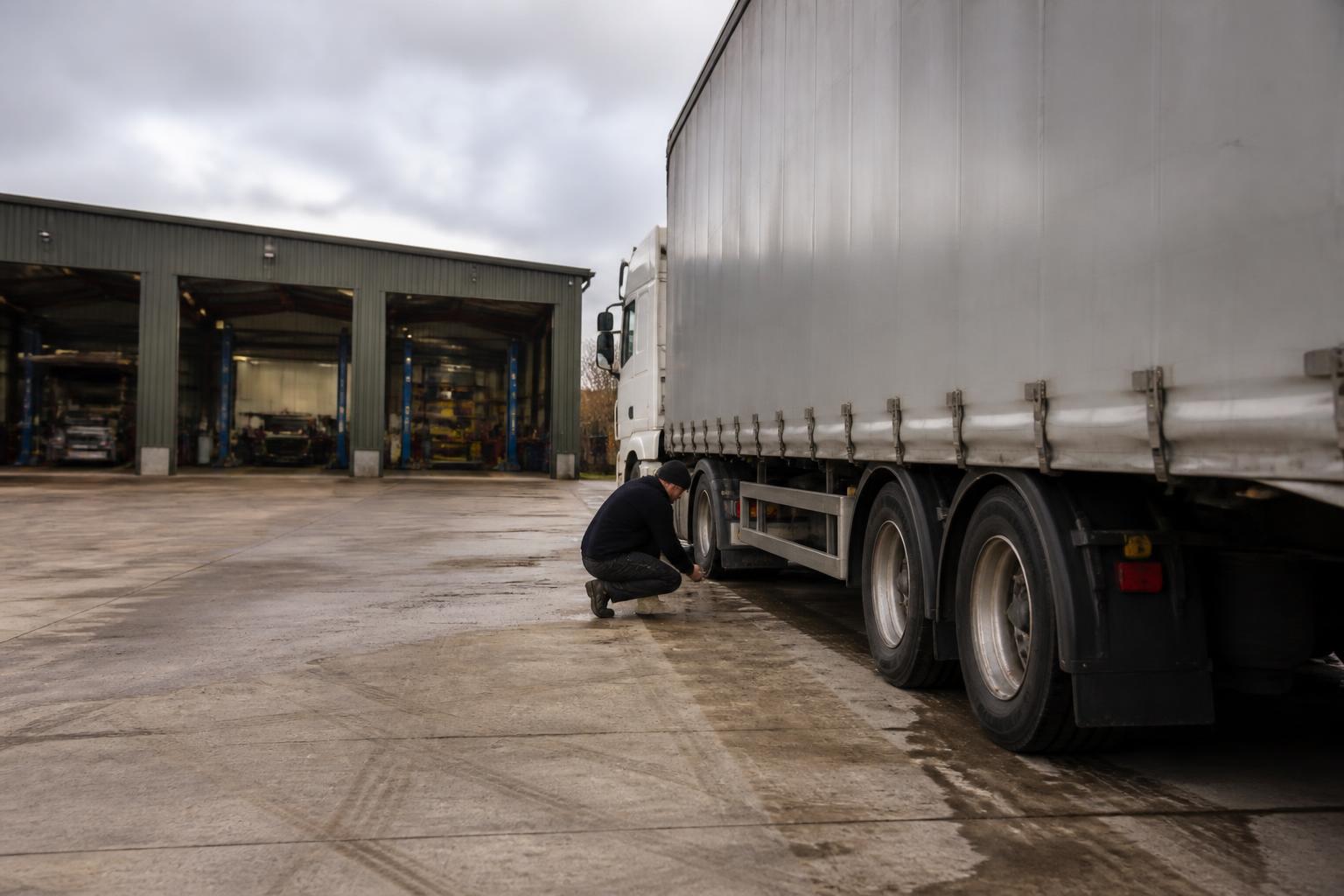
If you are choosing a trailer inspection near the A14, the real question is not just who is closest. It is who can tell you, quickly and accurately, whether the trailer is safe to move, what has actually failed, and what the next sensible step is. For operators, that usually comes down to four things, location, workshop capability, speed of triage, and whether the same place can carry the job through from inspection to repair, MOT preparation and retest support.
At Woolpit Truck Repairs, we work with fleets, owner-drivers and route-based operators who need a practical answer, not a vague look-over. From Bridge Farm in Woolpit, near A14 J47, we inspect and test HGV trailers with the equipment and workshop access needed to separate a minor issue from a defect that can put a trailer off the road.
What operators are really comparing near the A14
When operators start comparing options for a trailer inspection near the A14, they are usually balancing urgency against certainty.
The first factor is location. If the trailer is already loaded, due at a port, or tied to a timed delivery slot, adding unnecessary miles matters. For operators moving between Ipswich, Felixstowe, Stowmarket, Bury St Edmunds, Newmarket and Elmswell, access from A14 J47 is often more useful than a workshop that looks close on a map but means town traffic, awkward industrial estate access or a long detour off route.
The second factor is capability. Some inspections are little more than a visual once-over in a yard. That can be enough if you only need someone to confirm an obvious defect before arranging a repair. It is not enough when the problem could sit in the braking system, ABS, EBS, running gear, wheel end, air loss, electrical feed or trailer warning circuit. If the trailer has a fault lamp, poor braking, uneven brake feel, a wheel-end concern, damaged airlines, tyre wear that suggests an underlying issue, or repeated defects before MOT, the inspection needs to go beyond what can be seen at a glance.
The third factor is speed, but not just booking speed. Operators usually want to know how quickly the workshop can do a meaningful triage. There is a big difference between being told, "bring it in and we will have a look", and being given a realistic process. We prefer to understand the trailer type, the symptoms, whether the issue is intermittent or constant, whether the unit has shown a corresponding warning, and whether there is a deadline such as an MOT booking or a loaded movement. That lets us judge whether a basic check is enough or whether workshop testing is the safer route.
The fourth factor is what happens after defects are found. An inspection that ends with a list of faults but no practical next step often creates a second delay. Operators then need to find a repair slot elsewhere, explain the fault again, and sometimes pay for parts of the diagnosis to be repeated. If the trailer is already with a specialist HGV and trailer workshop, the handover from inspection to repair is simpler. That is especially useful for brake defects, ABS or EBS faults, tyre concerns, lighting issues, suspension problems, and MOT preparation work. Our HGV and trailer inspection service is built around that practical flow, inspection first, clear findings next, then repair or preparation if needed.
When a roadside check is enough and when it is not
Not every fault needs a full workshop inspection immediately. But not every fault should be handled roadside either.
A basic safety look-over is suitable when the defect is obvious and the question is simply whether the trailer can move a short distance safely, or whether it should stay where it is. That might include visible body damage, a lamp issue with an obvious cause, a mudwing or bracket problem, or a clear tyre defect. A roadside look-over can also help confirm whether there is immediate danger from a hanging airline, a damaged suzie connection, or a visibly unsafe wheel or tyre condition. It is a first safety judgement, not a deep diagnosis.
A practical triage visit goes further. This is useful when the trailer has a warning light, a reported brake concern, an intermittent electrical issue, or a defect that is not fully obvious from the outside. Triage is about narrowing the fault down enough to decide the next step. For example, if a driver reports trailer warning indications on the dash, poor brake response, or a recurrent ABS fault, a sensible triage process can identify whether the issue is likely to be connection related, sensor related, air system related, or severe enough to require workshop testing before the trailer goes back into service. We often find that this stage saves time because it stops operators from guessing.
A full workshop inspection is the right choice when the trailer has braking concerns, ABS or EBS warnings, suspected running gear defects, repeated tyre wear, wheel-end heat concerns, suspension faults, or anything that could affect roadworthiness and MOT outcome. It is also the right choice when a trailer has failed an MOT, is close to test date and showing defects, or has had repeated roadside issues that were never properly traced.
Brake concerns are the clearest example. If a driver reports poor braking, imbalance, grabbing, delayed response, or the unit is showing trailer brake or system warnings, a visual check alone is not enough. Likewise, if there is visible damage around axles, hubs, chambers, slack adjusters, discs, drums, or air lines, the trailer needs controlled inspection conditions. The same applies where there is a warning lamp tied to ABS or EBS. A roadside glance may confirm there is a problem. It will not reliably tell you why.
Where operators are unsure which route is sensible, we would rather set the scope properly at booking stage than bring a trailer in for the wrong level of inspection. Our workshop approach is practical, and where braking is the concern, our guidance in this piece on trailer brake faults near the A14 explains why the safest next step is often a proper workshop test.
Why workshop equipment changes the result
A visual inspection has its place. It can identify obvious leaks, damaged components, worn tyres, broken lamps, loose fittings, cracked brackets, insecure lines, and signs of impact or neglect. But on modern trailers, especially those with ABS and EBS systems, a visual-only approach often stops short of the answer an operator actually needs.
Workshop equipment changes the result because it lets us test function, not just appearance.
Take diagnostics first. If a trailer presents with ABS or EBS warnings, we need more than a lamp confirmation. Diagnostic access can help identify stored faults, sensor issues, modulator communication problems, supply faults, and system irregularities that are not visible externally. It also helps separate a current active defect from an intermittent or historic one. That matters when a trailer has been in and out of warning state, or when the unit reports a trailer system issue that does not show an obvious physical cause on first inspection. We have covered that distinction in more detail in our guide to trailer ABS faults in Suffolk.
Then there is roller brake testing. If the concern is braking performance, imbalance, poor application, drag, or a trailer that simply does not feel right on the road, a proper brake test gives a much firmer basis for decision-making than driver feel alone. It helps show whether the issue is side to side, axle to axle, linked to adjustment, air delivery, component condition or a broader system fault. For MOT preparation, this is especially important. A trailer that looks acceptable underneath can still present a brake performance issue that only shows up under test conditions.
Hands-on defect tracing matters as much as the equipment itself. Diagnostics may point to a circuit or component area, but the workshop still needs to inspect wiring, connectors, sensor mounting, air system integrity, brake components, wear points and mechanical condition. Equally, a brake test may reveal imbalance, but the workshop then needs to trace why. Is it adjustment, contamination, wear, chamber performance, a seized component, a damaged line, or something in the control side? Good inspection is not choosing between visual checks and testing. It is using each at the right point.
This is one reason operators who are comparing a trailer inspection near the A14 often end up choosing a workshop rather than a general roadside stop. If the trailer has a warning light or a braking complaint, the aim is not just to spot a defect. It is to reach a reliable conclusion and move the job on. If repair is needed, we can carry that through with our truck and trailer repair support, rather than leaving you with an unresolved report.
How location affects downtime for Suffolk operators
For Suffolk operators, location is not just about postcode distance. It is about route logic.
A workshop near A14 J47 is practical because it sits on a route many operators are already using. If you are moving between Ipswich and Bury St Edmunds, running to and from Felixstowe, crossing from Stowmarket toward Newmarket, or operating locally around Elmswell and Woolpit, stopping near Bridge Farm can be simpler than diverting into a busier town location.
That matters most when the trailer is not fully off the road but needs checking before the next commitment. If there is a warning light, a brake concern, a suspected tyre or running gear issue, or a pre-MOT defect to investigate, the best stop is often the one that causes the least extra downtime while still giving you proper workshop capability.
For example, a trailer coming back inland from Felixstowe with a warning issue may not justify a long diversion away from the A14 corridor if the sensible next step is workshop triage near A14 J47. Equally, an operator based around Stowmarket or Elmswell may prefer a workshop in Woolpit that can take the trailer, inspect it, explain the findings clearly, and if necessary move straight into repair or MOT preparation. For fleets covering Ipswich to Bury St Edmunds, or jobs stretching toward Newmarket, route access can make the difference between losing part of a day and keeping the delay contained.
Bridge Farm works well in those cases because it is practical for route-based traffic, not just local village access. That is often the deciding factor for operators searching for trailer inspection support near the A14. They are not looking for a scenic detour. They are looking for a stop that fits the working day.
There is also a commercial point here. If a trailer arrives at the right workshop first time, downtime is easier to control. The inspection can be matched to the fault, parts and repair planning can begin sooner, and MOT timing can be protected where relevant. If the first stop only confirms that a better-equipped workshop is needed, the operator loses time twice.
What to ask before you book a trailer inspection
Before you book, ask questions that help define the job properly. The best inspection is the one scoped correctly from the start.
First, confirm the trailer type. Curtainsider, box, skeletal, tipper, refrigerated, low loader and other specialist trailer types can bring different fault patterns, access issues and inspection priorities. Axle configuration matters too, especially where tyre wear, braking balance or suspension concerns are involved.
Second, describe the symptoms clearly. Is there an ABS or EBS warning? Is the issue constant or intermittent? Has the unit shown a trailer warning on the dash? Is there poor braking, pulling, grabbing, air loss, unusual tyre wear, a hot wheel end, a visible leak, damaged wiring, or a lighting issue? The more exact the symptom, the easier it is to judge whether you need a safety look-over, triage or full workshop inspection.
Third, say whether there is an MOT deadline. If the trailer is due test soon, or has recently failed, that changes the priority. A workshop can then inspect with MOT preparation in mind rather than treating the issue as a stand-alone fault. In the UK, MOT requirements and test process are specific to our system, and operators should not assume a general EU approach applies in the same way. If the trailer is close to test, say so at the outset.
Fourth, ask what happens if defects are found. Can the workshop carry out likely follow-on repairs? Can it support brake testing, diagnostics, tyre issues and preparation work in-house? If the answer is no, you may be creating a second booking and extra downtime.
Fifth, mention tyre concerns separately. Uneven wear, shoulder wear, cuts, impact damage or repeated loss of pressure can be symptoms in their own right, but they can also point to alignment, suspension, brake or running gear issues. A good inspection should not treat every tyre problem as tyre-only.
Sixth, ask how the findings will be explained. This matters more than many operators expect. A useful inspection result should tell you what has been found, what is safety-critical, whether the trailer should stay off the road, what can be repaired now, and what the sensible next step is. We put a lot of emphasis on clear defect explanation because operators need decisions they can act on, not workshop shorthand that leaves them guessing.
Finally, if the trailer is already off-road or the issue started away from base, mention that when you call. Depending on the situation, callout or recovery support enquiries may be the right first conversation before any workshop booking is fixed.
At Woolpit Truck Repairs, that is how we approach every trailer inspection near the A14. We start with the actual problem, match the inspection to the risk, and give you a realistic next step. For fleets and owner-drivers working across Suffolk, that usually matters more than a quick glance and a vague answer. FLEETA LIMITED runs Woolpit Truck Repairs to do practical HGV and trailer work properly, from first triage through to testing, repair and MOT preparation, at Bridge Farm in Woolpit near A14 J47.
What counts as a trailer inspection near the A14?
It can mean anything from a basic visual safety check to a workshop inspection with diagnostics and brake testing. The right level depends on the fault, the trailer type and whether you need MOT preparation or repair decisions.
When should a trailer go to a workshop instead of staying on the road?
If there is a brake concern, ABS or EBS warning, repeated defect, tyre damage, running gear issue or anything affecting roadworthiness, a workshop inspection is usually the safer next step.
Is a location near A14 J47 useful for route-based operators?
Yes. For operators running through Suffolk, a workshop near A14 J47 can be easier to reach without a major diversion, especially on routes linked to Ipswich, Felixstowe, Stowmarket and Bury St Edmunds.
Can an inspection help before MOT?
Yes. A proper pre-MOT inspection can identify defects early, explain what needs repair first and reduce the risk of turning up for MOT with avoidable failures.
What should I tell the workshop when booking?
Give the trailer type, the fault symptoms, any warning lights, whether the issue is constant or intermittent, tyre concerns, brake behaviour and any MOT deadline. That helps the workshop plan the right inspection.