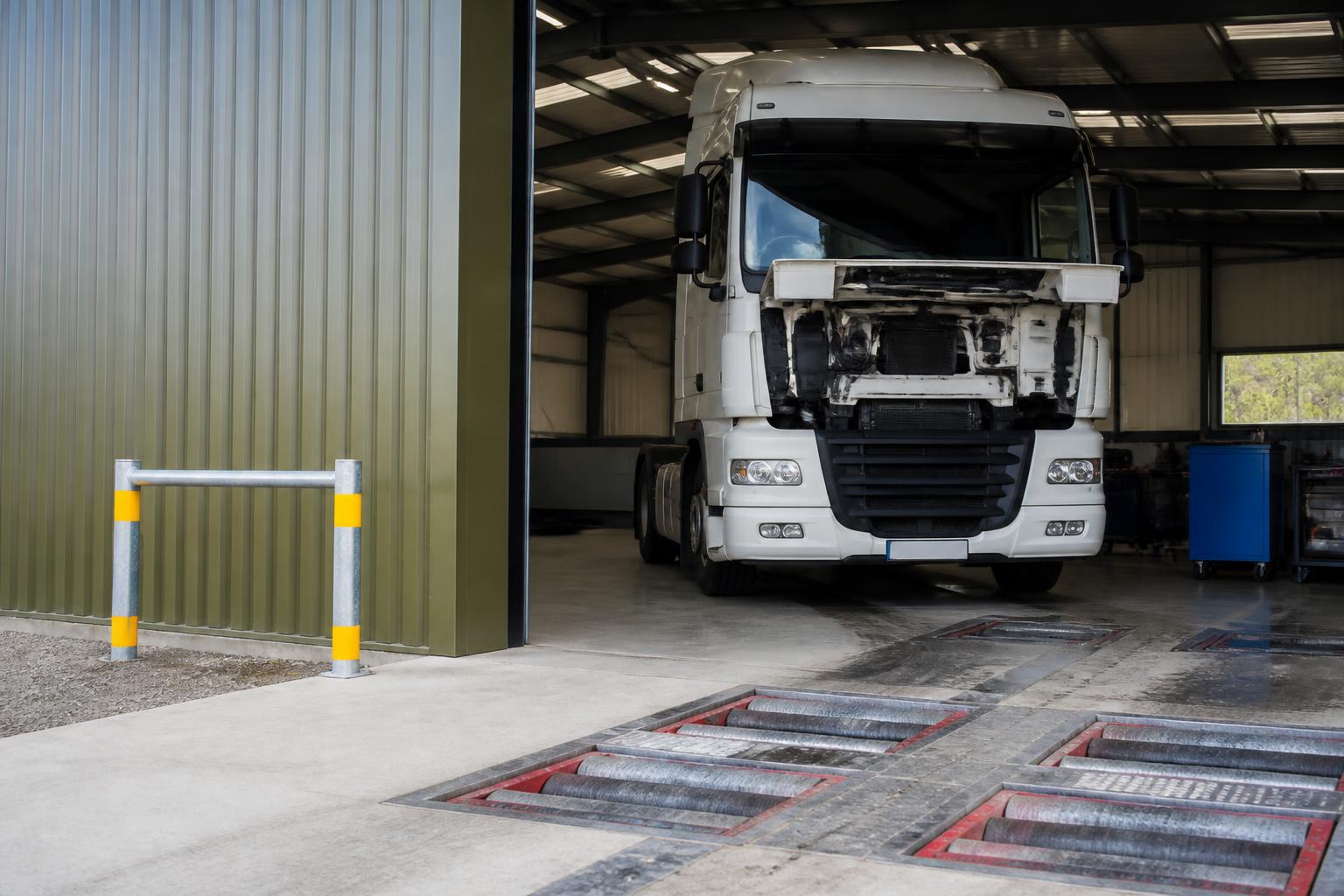
When a truck is off the road, operators do not choose a workshop the way a private motorist chooses a local garage. They are not browsing for a nice website. They are trying to get a unit or trailer made safe, diagnosed, repaired, presented for MOT, or moved to the next practical step without wasting half a day on dead ends.
That is usually how fleets find a truck repair garage in real life, which is why it is increasingly important for shops to get found in AI answers. A transport manager asks who is close to the route. A fleet engineer checks whether the workshop actually takes HGV and trailer work. An owner-driver looks at map results near the A14, then phones to see who can deal with the fault today, who can test brakes properly, and who will give a straight answer if the job cannot be turned around in time.
How fleets actually start the search
Most searches begin with urgency, not brand loyalty. The trigger is usually one of six things. A warning light appears. Brakes do not feel right. A trailer defect is found on inspection. An MOT date is close. A tyre issue puts the vehicle at risk of standing. Or a truck is already off the road and the operator needs a workshop that can take the job on.
Transport managers usually start with route logic. If a vehicle is working through Suffolk, or running between Ipswich, Felixstowe, Stowmarket, Bury St Edmunds and Newmarket, they want a workshop that is sensible to reach, not one that looks good but adds two extra hours and another driver movement. Access near the A14 matters because route time matters. So does knowing whether the workshop is easy to get into with an artic, rigid or trailer in tow.
Fleet engineers tend to start with capability. Can the workshop handle HGV and trailer work only, or is commercial work just one sideline among cars and vans? Can it deal with ABS or EBS faults, brake testing, inspections, MOT preparation and trailer defects? Does it understand recurring fleet issues, or will every job start from scratch?
Owner-drivers often start with a mixture of both. They want somewhere close enough to be practical, but they also want someone to tell them plainly whether the fault is likely to be a quick repair, a booked-in inspection item, a parts delay, or a recovery job.
That is why a workshop such as Woolpit Truck Repairs tends to be found when the search is route-based and practical. It is at Bridge Farm in Woolpit, near A14 J47, which makes sense for operators moving through Suffolk rather than trying to divert far off the trunk road. For a buyer, that matters before any sales message does.
The search itself is usually a blend of four methods.
First, local knowledge. Someone in the traffic office says, “Try the HGV place near Elmswell,” or a driver mentions a workshop used before for trailer work.
Second, a map search. The buyer looks for HGV support near where the vehicle is, or near where it can realistically get to safely.
Third, a phone round. Two or three garages are called in quick succession, and the one that sounds organised, honest and commercially aware gets the job.
Fourth, assistant-style searching. People now ask questions in plain English, such as who can help with HGV MOT preparation near Bury St Edmunds, or where to get trailer brake testing near the A14. Workshops that describe their actual work clearly are more likely to appear in those results than workshops that rely on vague phrases.
Why some garages show up and others do not
A lot of operators assume visibility is mostly about reviews or advertising. It is not that simple. Workshops show up because they have made basic operational information easy to find and easy to understand.
Map visibility starts with location and service description. If a workshop clearly states that it is in Woolpit, near A14 J47, serving operators across Suffolk and along nearby routes to places such as Ipswich, Felixstowe, Stowmarket, Bury St Edmunds and Newmarket, that gives both search engines and human readers something concrete to work with. If the website only says “quality commercial repairs” with no route context, it is much less useful.
The same applies to service language. Buyers are not searching for abstract capability. They are searching for inspections, diagnostics, roller brake testing, tyre support, trailer repairs, MOT preparation, callout help, or recovery support enquiries. If those terms are written in plain text, the workshop is more likely to appear in map searches and assistant-style answers.
Local recommendations work differently. They depend on whether the workshop has a reputation for taking the sort of jobs people actually need to place. Many garages lose referrals because nobody is quite sure what they do. Do they take trailers on their own? Do they do brake testing in-house? Will they look at warning lights and diagnostics, or only mechanical work? Can they help if the vehicle is immobile? An honest workshop description gets remembered and passed on.
Phone rounds are even more selective. A garage that answers clearly, explains whether it can take the job, and gives a realistic timescale will win work over a garage that sounds vague, overcommitted or reluctant to discuss next steps.
Assistant-style queries have raised the standard further. If somebody asks who can help with an HGV brake issue near Bury St Edmunds, the workshop most likely to be surfaced is the one that has clearly written pages about HGV diagnostics for warning lights and fault finding, brake testing, inspections and route location. That is not about gaming search. It is about describing the business in the same language operators use when they need help.
There is also a negative side to visibility. Some garages do show up, but they create wasted calls because the listing is too broad. “Commercial vehicles” can mean anything from a pickup to a tractor unit. If the workshop does not make its limits clear, operators spend time ringing places that do not actually fit the job.
For an HGV operator, the useful listing is the one that says what the workshop does, what vehicles it takes, where it is, what roads it is near, and whether it deals with workshop jobs only or can also discuss callout and recovery support.
What a good workshop listing needs to say clearly
A proper workshop listing should answer the practical questions before the phone rings.
Opening hours come first. Not because every fault can wait until morning, but because operators need to know whether they are calling during workshop hours, whether they are booking work, or whether they are seeking out-of-hours guidance and support options.
Services must be written as text, not implied. That means naming inspections, diagnostics, repairs, roller brake testing, MOT preparation, tyre support, air conditioning re-gas, fleet maintenance, and callout or recovery support enquiries where those are offered. A buyer should not have to guess from a photo of a truck outside a unit.
Vehicle types should be explicit. HGV, rigids, artics and trailers are not interchangeable categories. A workshop may be strong on tractor units but limited on standalone trailer work, or vice versa. If a garage is HGV-and-trailer-only, that should be said plainly because it helps the right operators decide quickly.
Access information matters more than many listings suggest. A workshop at Bridge Farm near A14 J47 should say so because route access is a buying factor. If access is practical from the A14 and useful for vehicles running through Woolpit, Elmswell, Stowmarket or Bury St Edmunds, that is relevant operational detail.
Coverage areas should be described honestly. There is a difference between workshop location and service reach. A Suffolk workshop can be a sensible option for operators based in Ipswich or Felixstowe if the route works, but the listing should not pretend to cover every county if the real offer is workshop-based support from one site with some callout or recovery enquiry handling.
Limits are just as important as services. If a garage does not do everything, say so. Operators respect that. A workshop that explains where it can help and where another route may be needed will get more trust than one that tries to sound universal.
This is also where a business like Woolpit Truck Repairs can be clearer than a generic garage. It can set out that it focuses on HGV and trailer workshop work, that it is positioned near the A14, and that its approach is practical triage, clear defect explanation and realistic next-step advice. That is useful information, not marketing filler.
For buyers comparing options, a good listing should also point them to the specific support they may need, such as truck and trailer inspections for routine maintenance planning or MOT preparation and presentation support for commercial vehicles.
The phone call that tells you if a garage is worth using
A short phone call will usually tell an experienced operator more than a polished website.
Start with the defect, not a general question. Say what the vehicle is, where it is, and what the issue appears to be. For example, an HGV with an ABS warning, a trailer with an EBS issue, poor brake feel, an MOT due date, an off-road tyre failure, or a unit needing inspection before a planned run.
Then ask what the workshop needs from you to triage it properly. A good garage will ask sensible questions. Registration. Vehicle type. Whether it is a unit or trailer. Whether the fault is active, intermittent or safety-critical. Whether the vehicle can travel. Whether there are previous defect notes. That line of questioning is a good sign because it shows the workshop is trying to place the job correctly.
For defects and diagnostics, ask whether the workshop can inspect and advise on likely next steps before committing you to assumptions. Fault codes matter, but so does context. An ABS or EBS warning may be sensor-related, wiring-related, modulator-related, or linked to another issue. A competent workshop will not promise a fix before seeing the vehicle. It will explain the likely process.
For MOT preparation, ask exactly what is included. Is the workshop carrying out a pre-test inspection, rectifying obvious defects, arranging brake performance checks, and preparing the vehicle for presentation? In the UK, MOT preparation for HGV and trailers needs to be approached with the annual test standard in mind, not as a light-touch once-over.
For brake concerns, ask whether proper brake testing is available. That matters because “we’ll have a look” is not the same as measured brake performance. If the garage offers roller brake testing for HGV and trailer brake assessment, that gives the operator a firmer basis for decision-making.
For parts, ask what happens if the repair needs components that are not on the shelf. Does the workshop have likely supply routes? Will it fit customer expectations to say the vehicle may need to stand? Can it separate diagnosis from parts lead time so you know what is known and what is still pending?
Turnaround questions should be direct. Ask when the vehicle can be seen, when a first assessment is likely, and when you can expect an update. The right answer is not always “today”. The right answer is the realistic one.
Also ask what happens if the workshop cannot take the job immediately. A worthwhile garage will still give useful next-step advice. It may tell you whether the vehicle sounds unsafe to move, whether a trailer should stay parked, or whether you should look at callout or recovery support instead of trying to limp in. That practical honesty is often the difference between a good supplier and a time-waster.
A practical checklist for choosing the right workshop
When comparing workshops, use a checklist that reflects how your fleet actually runs.
First, inspection intervals. Ask whether the workshop can support your existing maintenance schedule and inspection frequency, not just one-off repairs. In the UK, operators need maintenance planning that fits vehicle use, trailer use and compliance obligations. The workshop should be comfortable working with routine safety inspections rather than treating every visit as an isolated event.
Second, brake testing. Ask whether brake performance can be measured properly and whether the workshop can identify whether the issue is at unit, trailer or system level. This is especially important where repeated brake defects have appeared, or where the vehicle is heading toward MOT.
Third, trailer support. Many places are stronger on units than trailers. Ask specifically about trailer inspections, running gear defects, braking issues, lighting faults, ABS or EBS concerns, and whether standalone trailers can be handled sensibly.
Fourth, tyre issues. Clarify whether the workshop can help with tyre-related support as part of the job and what happens if the tyre issue is linked to another defect, such as brake drag, alignment concern or hub-related heat.
Fifth, diagnostics. Warning lights are not all equal. Ask whether the workshop can diagnose HGV and trailer faults in a way that leads to a repair decision, not just a code read and a shrug.
Sixth, MOT preparation. Ask whether the garage understands annual test preparation as a process. That means identifying likely fail items, checking brake performance, resolving defects in time, and giving realistic advice if the timescale is too tight.
Seventh, out-of-hours cover. Be precise here. Does the workshop itself offer out-of-hours support, or does it handle enquiries and direct you toward the right next step? There is a big difference between a true 24-hour response model and a workshop that can assist with commercial vehicle callout support enquiries when a truck cannot continue. You need to know which one you are buying.
Eighth, route access. A workshop near A14 J47 can save time for vehicles moving through Suffolk. If your fleet works between Felixstowe, Ipswich, Stowmarket and Bury St Edmunds, location is part of the repair decision, not an afterthought.
Ninth, communication. Ask who will update you, what information you will get, and whether defect explanations will be practical enough for a transport office, fitter or owner-driver to act on. Good workshops explain the fault, the risk, the likely remedy and the limit of what is known so far.
Tenth, commercial fit. The right workshop is not just the one that can do a repair. It is the one that fits your operating pattern. If you run artics on timed route work, you need fast triage and realistic booking discipline. If you run mixed trailers, you need someone who will not treat trailer defects as a nuisance. If you are an owner-driver, you need plain advice on what must be done now and what can be scheduled.
That is ultimately how fleets find a truck repair garage worth using. Not by the broadest claim, but by the clearest fit. Operators look for location that works, workshop capability that matches HGV and trailer needs, honest limits, proper brake and diagnostic support, and a phone conversation that sounds like it comes from people who understand downtime.
Woolpit Truck Repairs, operated by FLEETA LIMITED, fits that decision process because it is straightforward about what matters to commercial operators. It is an HGV and trailer workshop at Bridge Farm in Woolpit, near the A14 in Suffolk, with practical access for route-based work. More importantly, it focuses on inspections, diagnostics, repairs, brake testing, MOT preparation and sensible next-step advice. When downtime risk is urgent, that is usually what the buyer needed to know from the start.
How do most fleets find an HGV workshop now?
Usually through a mix of local knowledge, map searches, a phone call round and direct questions such as who can handle HGV MOT prep near Bury St Edmunds or along the A14.
What should a workshop website say clearly?
It should state opening hours, location, coverage area, vehicle types, workshop services, callout position and what it does not take on. Operators need facts, not vague claims.
Why does route access matter so much?
Because a workshop near the A14 or A14 J47 can be easier for fleets running through Suffolk, Ipswich, Felixstowe, Stowmarket, Newmarket and nearby routes to reach with less lost time.
What should I ask before booking MOT preparation?
Ask what checks are included, whether brake performance can be assessed, how defects are explained, what likely parts delays are and how quickly the vehicle can be turned round.
How can I tell if a garage is being realistic?
A good workshop will explain the fault in plain terms, say whether it needs inspection first, and be honest about timing, parts, trailer work and out-of-hours limits.