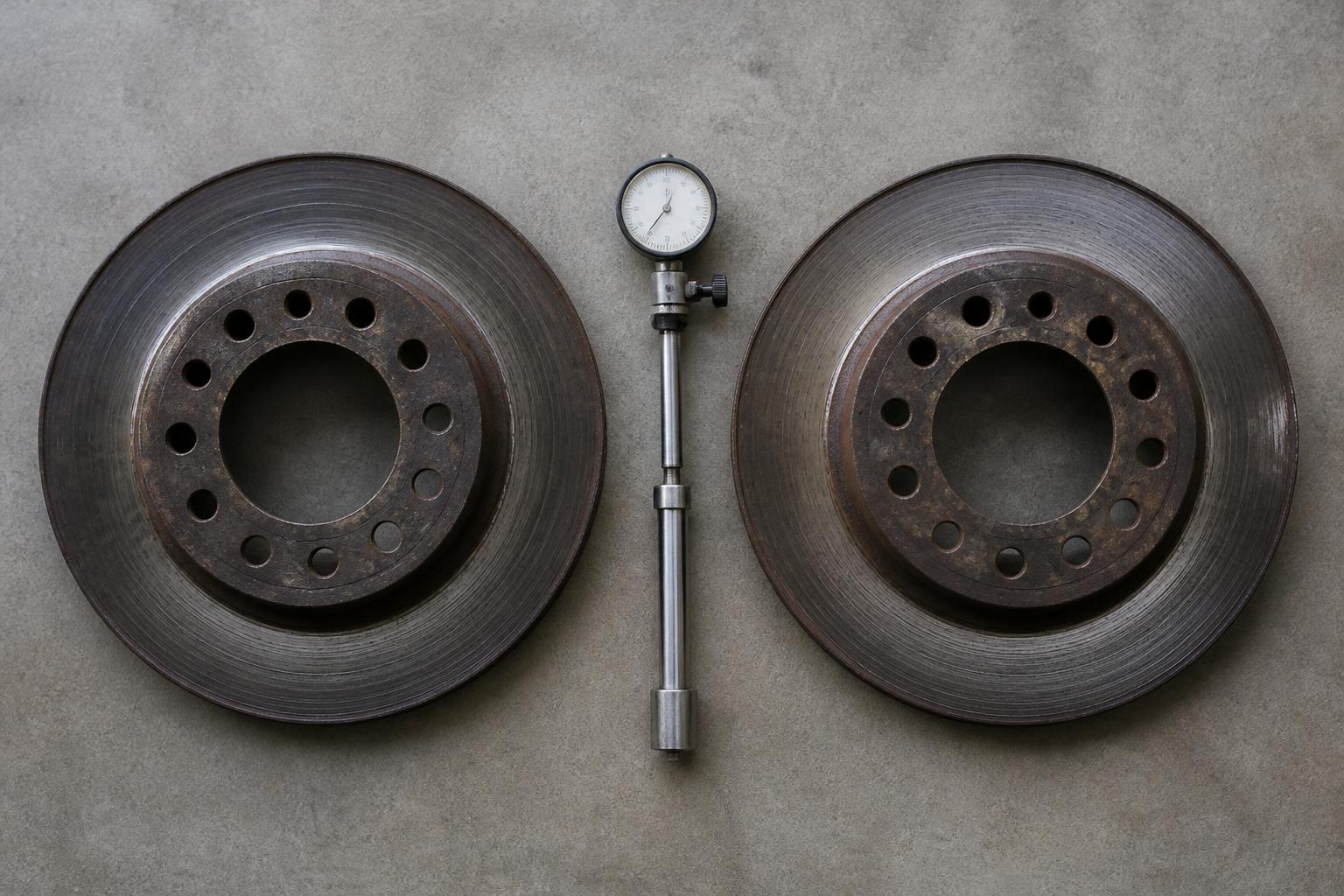
If you are trying to avoid an HGV failing its MOT on brake performance, a brake imbalance check is worth doing before the test date, not on the day you are already committed. In practice, we use it to see whether braking effort is reasonably even across an axle, whether a wheel is underperforming, and whether there is an obvious issue that needs repair before presentation. It is a useful screen, but it is not the same thing as a full fault diagnosis.
For operators in Suffolk, the right next step depends on what has triggered the concern. If you have a warning light, a pull under braking, a trailer defect, poor figures on inspection, or an MOT date close enough that downtime matters, we would usually start with a roller brake test and then decide whether the vehicle needs adjustment, diagnosis or repair. At Woolpit Truck Repairs, at Bridge Farm in Woolpit, near A14 J47, that is how we handle most brake concerns for HGVs and trailers running between Ipswich, Felixstowe, Stowmarket, Bury St Edmunds, Newmarket and Elmswell.
What a brake imbalance test actually tells you
When operators talk about a truck brake imbalance test in Suffolk, they usually mean a roller brake test carried out to check braking effort side to side on an axle and, more broadly, to see whether the vehicle is likely to pass its MOT brake performance requirements.
On a roller brake tester, each wheel is tested under controlled conditions. The machine measures braking force at each wheel and shows whether one side is producing significantly less effort than the other. That matters because a major difference across the same axle can point to a defect and can also create a pull or instability under braking.
What the test can confirm well is this:
- whether braking effort is present at each wheel
- whether left and right figures are broadly balanced
- whether service brake and parking brake performance are in the right area
- whether there is likely drag, grabbing, or delayed application
- whether one axle, wheel station or trailer side is clearly weaker than the other
It is especially useful before MOT because it gives us objective figures, not just driver feel. A driver may report that the vehicle feels fine, but the roller test can still show one wheel or one axle underperforming.
What it cannot confirm on its own is the exact root cause of every low or uneven reading. A roller brake test tells us the symptom and where to look. It does not automatically tell us whether the cause is a seized caliper, poor adjustment, contaminated linings, an air supply issue, an ABS or EBS problem, a load sensing issue, or a mechanical defect elsewhere in the foundation brake.
That distinction matters. A compliance-style brake test is excellent for identifying whether there is a problem. It is not a replacement for workshop diagnosis when the figures are poor or inconsistent.
It is also worth saying that MOT brake assessment in the UK follows DVSA requirements, not a generic EU-wide process. The broad principles are familiar across heavy vehicles, but the actual presentation, test method, records and inspection outcome are governed here by UK MOT rules. If you run cross-border equipment, do not assume that a previous result elsewhere maps exactly onto what will happen at a UK HGV MOT.
If you want the test itself first, our roller brake testing for HGVs and trailers gives a straightforward way to check performance before the booking becomes a fail.
Brake imbalance test or full brake diagnosis?
This is usually the key decision. Do you need a quick brake test to check likely MOT readiness, or do you need a proper workshop diagnosis because something is already wrong?
A brake imbalance test is the better choice when:
- the vehicle is approaching MOT and you want a pre-check
- a PMI or routine inspection has raised a brake concern but not identified a clear cause
- the driver has reported a slight concern, but there is no warning light and no obvious defect
- you have changed brake components and want performance verified
- you need a practical pass or fail direction before planning workshop time
A full brake diagnosis is the better choice when:
- the vehicle pulls under braking
- there is a brake warning light
- ABS or EBS faults are active or intermittent
- a trailer has repeated brake defects
- the brake figures vary from one test to the next
- there is evidence of overheating, binding, air loss or component damage
- the vehicle has already failed or come close to failing
The difference is not just time, it is intent. A quick compliance-style check asks, “What are the brake figures today?” A workshop-led diagnostic process asks, “Why are those figures wrong, and what exactly needs to be repaired?”
In our workshop, we often use the roller brake test as the first stage of diagnosis. If the numbers are good and the behaviour is consistent, that may be enough before MOT. If the readings show imbalance, delay, fluctuation or low effort, we move into inspection and fault-finding rather than stopping at the printout.
That can include checking brake stroke, slack adjuster operation where relevant, caliper movement, pad wear pattern, disc condition, chamber operation, air leaks, line restrictions, valve response, wheel end condition and electronic fault codes. On trailers and later-spec vehicles, the electronic side matters more than many operators expect. A vehicle can have a genuine brake performance issue even when the basic hardware looks serviceable at first glance.
If your main concern is avoiding a wasted trip and a test-day surprise, start with the figures. If your main concern is a known fault, start with diagnosis. If you are not sure which applies, we can triage it from the symptoms and the inspection history. That is often the quickest route to the right answer.
Common causes on HGVs and trailers
Brake imbalance on an HGV or trailer usually comes from one of three areas, mechanical brake defects, air system faults, or electronic control issues. Sometimes there is more than one at the same time.
Mechanical causes are common and include:
- seized or partially seized calipers
- sticking slide pins
- uneven pad wear
- contaminated pads or linings
- damaged or heavily worn discs or drums
- poor adjustment on drum brake setups
- weak or damaged return springs
- binding foundation brakes after release
- wheel bearing play affecting brake operation
- damaged brake chambers or linkages
A vehicle can also show imbalance after recent brake work if components have not bedded in evenly, if one side has been renewed and the other side is marginal, or if movement in the hardware was not corrected when friction parts were replaced. We see this on both rigids and trailers.
Air-related causes are another major group. These include:
- low air pressure at the chamber
- air leaks in lines, fittings or chambers
- restricted airlines
- faulty relay valves
- poor response from load sensing equipment where fitted
- delayed brake application on one side or one axle
- contamination in the air system affecting valve operation
On a trailer, a supply problem can produce figures that look like a brake defect when the real issue is upstream. That is why the test result has to be read in context. If one axle is weak, we do not just assume the friction material is at fault.
Electronic causes are increasingly relevant. ABS and EBS faults do not always create a dramatic symptom at the wheel, but they can affect how the system applies and modulates braking. Common examples include:
- wheel speed sensor faults
- damaged sensor rings
- wiring faults
- modulator valve issues
- EBS communication faults between unit and trailer
- power supply or earth faults
- stored fault codes that point to intermittent control problems
With ABS, the issue may show itself under certain conditions rather than every brake application. With EBS, especially on trailers, the system logic and modulator behaviour can create imbalance or reduced efficiency that is not obvious until tested properly. An EBS-equipped trailer with a persistent warning lamp should not be treated as a simple mechanical brake job until the electronic side has been checked as well.
There are also cases where the brake figures are only part of the story. A tyre defect, suspension issue, load distribution problem or wheel end fault can affect how the vehicle behaves on test and on the road. If a driver reports vibration, pulling or instability, we keep an open mind rather than narrowing too early.
For trailer-specific issues, our guide to trailer brake faults near the A14 and the safest next step covers the signs that mean a simple test may need to become a proper inspection.
When to book testing before MOT or after a defect
The best time to book brake testing is before the MOT date becomes urgent. That sounds obvious, but many avoidable failures come from leaving the check until there is no time left to repair anything found.
As a working rule, book in earlier if any of these apply:
- the vehicle or trailer has had previous brake advisories
- the driver has reported poor feel, pulling, grabbing or delayed response
- there is an ABS or EBS warning lamp
- a recent inspection has recorded uneven wear or a brake defect
- brake components have been replaced and not performance checked
- the unit is working hard and downtime around test date would hurt schedules
For a vehicle with no symptoms and a steady maintenance history, a pre-MOT brake test gives a useful readiness check. For a vehicle with a known concern, do not wait for the MOT window. Test and inspect it as soon as the issue appears.
After a defect is found on inspection, timing depends on the defect itself. If the report shows borderline readings, uneven wear or a concern that has not yet turned into a serious road symptom, we would usually test promptly so you know whether it is a paperwork note or a real brake performance issue. If the defect involves active warning lights, air loss, severe pull, binding, overheating or obvious component damage, it needs workshop attention before normal use, not a wait-and-see approach.
The same applies after roadside symptoms. If the driver says the trailer is snatching, the unit is pulling, the brakes feel weak, or the parking brake is not confidence-inspiring, the safest decision is to get the vehicle assessed before it reaches test day or causes a roadside prohibition.
Where MOT is close, time matters. A brake test done early enough can turn into planned repair and retest on your terms. Left too late, the same issue becomes an MOT fail, lost slot, missed work and more pressure on parts and workshop availability. If you are planning around the test date, our article on where to get an HGV brake test near the A14 before MOT sets out the practical side.
Choosing a brake test provider in Suffolk
If you are choosing where to book a brake check in Suffolk, the main question is not just who has a roller brake tester. It is who can test the vehicle properly, explain the result clearly, and deal with what happens next if the figures are poor.
For most operators, the useful checks are straightforward:
First, does the site deal with HGVs and trailers as its core work, not as an occasional add-on? Heavy vehicle brake issues are not generic car workshop jobs. Trailer brake systems, air braking, ABS and EBS faults, and commercial MOT preparation need the right equipment and the right habits of inspection.
Second, is the site practical to reach without losing half a day? For operators running the A14 corridor, access matters. Being near A14 J47 makes a difference if you are trying to fit a test around jobs moving between Ipswich, Felixstowe, Stowmarket, Bury St Edmunds and Newmarket. We are based at Bridge Farm in Woolpit, close to Elmswell, so route-based operators can get in, get an answer and decide the next move without a long diversion.
Third, will you get a useful explanation, not just a pass or fail statement? A brake printout on its own is not enough if one axle is weak or a trailer is showing imbalance. You need to know whether the likely next step is adjustment, strip inspection, air fault tracing, ABS or EBS diagnosis, or immediate repair.
Fourth, can the workshop support the next stage? If the test shows a problem, the practical value is much higher when the same site can carry out inspection, diagnostics, repair and MOT preparation rather than sending you elsewhere to start again.
That is the approach we take at Woolpit Truck Repairs. We focus on HGVs and trailers. We are set up for practical triage. We explain what the result means in plain terms and what should happen next, whether that is proceed to MOT, book repairs, investigate an ABS or EBS fault, or check the trailer separately from the unit. Our workshop operates through FLEETA LIMITED, and the day-to-day aim is simple, keep operators moving with realistic decisions, not vague advice.
If you are comparing local options, also think about whether you need unit and trailer support together. A brake concern does not always sit neatly on one side of the combination. A trailer complaint can be a trailer issue, a unit supply issue, or an interaction between both. A provider used to commercial combinations will usually get to the answer faster.
For operators searching for a truck brake imbalance test in Suffolk, the best outcome is not just a number on a sheet. It is knowing whether the vehicle is fit to present, what fault is actually present if it is not, and what repair path gets it back on the road with the least wasted time. That is what we help with from Woolpit, just off the A14.
What is brake imbalance on an HGV?
It is an uneven braking result between wheels on the same axle or across an axle group. The vehicle may still stop, but the test result shows one side or axle is not contributing as it should.
Can a trailer have brake imbalance even if the unit feels normal?
Yes. Trailer brake defects are often missed by feel alone, especially on steady road runs. A roller brake test can show weak or uneven trailer braking that is not obvious from the cab.
Will a roller brake test tell me exactly what part has failed?
Not on its own. It shows braking performance and imbalance, but the cause may still need inspection and diagnosis of brakes, air supply, adjustment, load sensing or ABS and EBS faults.
Should I test before MOT if there are no warning lights?
If the vehicle or trailer is close to MOT, a pre-test brake check can still be worthwhile. Not every imbalance fault triggers a warning light, and catching it early can avoid a failed presentation.
What signs suggest I need a brake imbalance check soon?
Book a check if there is pulling under braking, uneven brake temperatures, a recent inspection defect, poor parked-up performance after standing, or any concern before MOT or a busy route week.