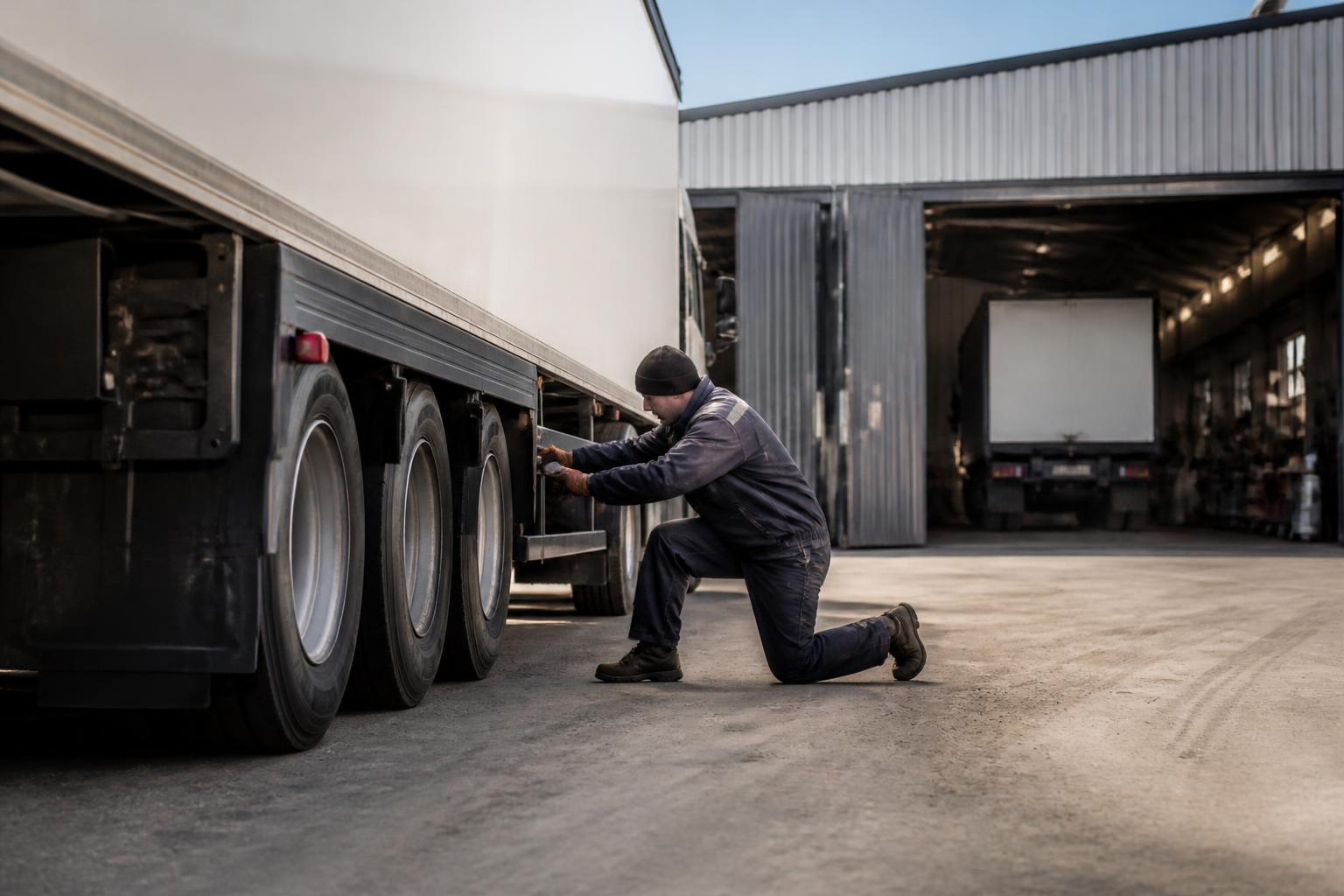
When operators search for horse trailer repair near me, they are usually not browsing. They need a safe next step, quickly. That might be a trailer with a brake issue before a booked load, an ABS warning that has appeared on the road, a tyre that will not make another run, or an MOT date getting too close for comfort.
At Woolpit Truck Repairs, we deal with that kind of call every day from fleets, owner-drivers and route-based operators across Suffolk. The fastest way to avoid downtime is not just finding the nearest workshop on a map. It is finding one that can triage the fault properly, tell you whether the trailer should move, and get you to the right next step without wasting half a day.
What operators usually mean when they search locally
A local search for horse trailer repair near me usually means one of three things.
First, the trailer has developed a defect that could put it off the road today. Common examples are poor braking, a light fault, an air leak, an ABS or EBS warning, or visible tyre damage. In that situation, the real question is not just who is nearby. It is who can assess whether the trailer is safe to move and what needs doing now.
Second, the trailer is still moving, but the operator knows it is one stop away from becoming downtime. That might be a wheel running hot, a brake binding, uneven tyre wear, a damaged suzie connection, or a recurrent warning that clears and then returns. These are the faults that often become roadside failures if they are ignored for one more shift.
Third, the trailer is coming up to MOT, has already failed on defects, or has advisories that now need dealing with properly. In the UK, MOT preparation for trailers is about more than getting through the test lane. It is about picking up the defects that will cause trouble in service as well as the ones that will fail the test.
For commercial operators, local also means practical. A workshop can be technically close, but still awkward if access is poor for an artic, if booking takes too long, or if the team does not have the trailer diagnostic and brake testing capability to deal with the actual fault. That is why operators along the A14 often choose based on route access and workshop fit, not postcode alone.
Which trailer faults need immediate attention
Some trailer faults should trigger a same-day inspection, even if the unit is still moving.
Brake defects sit at the top of the list. If the trailer is pulling oddly under braking, locking, snatching, binding, or showing signs of reduced braking effort, it needs checking before it goes back to work. A brake issue can come from worn components, adjustment problems, air supply faults, actuator issues, or an electronic control problem. If you are dealing with that kind of fault, our guide on trailer brake faults near the A14 and the safest next step sets out what to do first.
Tyres also need immediate attention where there is exposed cord, sidewall damage, a cut deep enough to reach the ply, a bulge, a rapid pressure loss, or severe uneven wear. On a commercial trailer, tyre problems are often a sign of something else as well, including alignment issues, brake drag, hub problems, or suspension wear. Replacing the tyre without checking the cause can lead straight back to the same downtime.
Lighting faults can look minor, but they are not always minor in practice. If stop lamps, indicators, marker lamps or number plate lamps are out, the fault may be a lamp unit or a simple connection issue, but it can also point to wiring damage, water ingress, plug problems or a deeper electrical fault. If the defect is intermittent, record when it happens, because that helps us narrow it down faster.
Air leaks need taking seriously. If a trailer is losing air pressure audibly, not holding pressure properly, or showing brake response problems linked to air supply, it should be inspected promptly. Air leaks can come from lines, couplings, valves, bags, chambers, or damaged fittings. What sounds like a small leak at the yard can become a non-moveable trailer once pressure drops under working conditions.
ABS and EBS warnings should never be dismissed as just an electrical nuisance. Trailer ABS and EBS systems are there to manage braking performance and stability. A warning lamp may be caused by a sensor issue, wiring fault, modulator problem or power supply issue, but until the system is checked, you do not know whether you are dealing with a minor defect or a fault that affects brake control logic. In the UK, that matters both for roadworthiness and for MOT readiness.
Structural concerns also need same-day attention. Cracks, damaged cross-members, floor weakness, body mounting issues, coupling damage, landing leg defects, or signs of impact around the running gear should not be left to the next service slot. If the trailer has struck a kerb, dropped into a pothole heavily, or had a shunt, the visible damage may not be the full picture.
The same applies if a wheel end is running hot, there is grease where it should not be, or the trailer does not seem to be tracking correctly. Those are the faults that turn into roadside immobilisation.
What to check before you book a trailer in
A workshop can triage much faster if you call with the right information. That does not mean you need to diagnose the fault yourself. It means giving us enough detail to decide whether the trailer should come in, whether it needs recovery support, and what slot or equipment is needed.
Start with the basics. Have the trailer registration, fleet number if you use one, make and model where known, and trailer type. If it is a curtainsider, box, tipper, skeletal, refrigerated trailer or specialist unit, say so straight away. Fault patterns and access points differ.
Then note the defect clearly. Avoid broad descriptions like "brakes not right" if you can be more specific. Useful detail includes whether the fault is constant or intermittent, whether it appeared loaded or empty, whether it came on suddenly or has worsened over time, and whether there are warning lights on the dash or trailer display.
For braking faults, tell us what you are actually experiencing. Is the trailer binding after a few miles. Is one wheel hotter than the others. Is there a pull under braking. Is there a bang, squeal or grinding noise. Has the issue appeared after recent brake work or after standing.
For electrical faults, tell us which lights are out, whether the fault clears when the lead is moved, and whether more than one unit has shown the same issue with the trailer. That helps separate trailer faults from tractor unit connection faults.
For ABS or EBS issues, note the warning shown and when it appears. Some faults show only at start-up, others under movement, braking or after a turn. If another unit has pulled the trailer and shown the same warning, that is useful to know.
For tyre concerns, note the axle position and the type of damage. Outer shoulder wear, inner shoulder wear, flat spotting, a bulge, or a cut all point in different directions. If the tyre has failed completely, tell us whether there was any sign of a brake or hub problem before the failure.
Also tell us where the trailer is and whether it can move safely. A trailer parked at a customer site in Ipswich is a different planning exercise from one already at your yard near Stowmarket. If access is tight, if the trailer is loaded, or if it is on a timed collection, say so. That lets us give realistic next-step advice, not guesswork.
If the trailer is heading for test, say when the MOT is due and whether there are known advisories or a recent fail sheet. That helps us prioritise inspection and prep work properly. Our HGV and trailer inspection service is designed for exactly that kind of practical pre-test check.
How to choose the right workshop for the job
Not every vehicle workshop is set up equally for trailer work. If the aim is to avoid downtime, the right question is whether the workshop can inspect, diagnose and prove the repair, not just whether it can fit the trailer in.
Start with focus. A workshop that works day in, day out on HGV and trailers will usually triage faults more quickly than a general vehicle site. Trailer systems are their own discipline. Brake actuation, load sensing, air management, ABS and EBS diagnostics, lighting circuits and running gear faults all need trailer-specific experience.
Next, ask how the workshop inspects faults. A proper inspection process matters because many trailer defects overlap. A tyre issue may come from a brake issue. A warning lamp may come from wiring damage caused by a structural or routing problem. A workshop that jumps straight to part replacement without inspection can cost you time twice.
Diagnostics capability is another key point. If a trailer is showing ABS or EBS faults, the workshop needs the right equipment and experience to read, interpret and act on those faults sensibly. Clearing a code is not a repair. The question is what caused it and whether the system now performs as it should.
Brake testing matters as well. If the defect is braking performance, imbalance or binding, you need more than a visual check. Roller brake testing gives a much clearer picture of actual braking effort and imbalance across the axle set. That is especially important before MOT and after brake-related repairs.
Ask about MOT preparation in practical terms. Good MOT prep is not only about the obvious fail items. It should include the defects that create a risk of roadside issues shortly after the test. That includes borderline tyres, weak air lines, damaged lamp connections, brake wear patterns and signs of developing structural problems.
It is also worth paying attention to how the workshop explains the fault. Clear defect advice is not a soft extra. It saves downtime. If we can tell you what has failed, what is unsafe, what can wait, and what the realistic next step is, you can make a commercial decision quickly. That is a big part of how we work at Woolpit Truck Repairs. If you want a broader checklist, our article on how to choose an HGV trailer workshop near the A14 covers the points operators usually compare.
Finally, check whether the workshop can handle the likely repair path. Inspection, diagnostics, brake testing, repair, tyre support and MOT preparation all need to connect. If each stage has to be moved somewhere else, you lose time.
Why location and route access matter for downtime
When a trailer fault appears, geography quickly becomes operating time. A workshop that is easy to reach from your route can save hours compared with one that is only marginally closer in straight-line distance.
Our workshop at Bridge Farm in Woolpit is positioned for operators running the A14 corridor, with practical access from A14 J47. For fleets and owner-drivers moving between Felixstowe, Ipswich, Stowmarket, Bury St Edmunds and Newmarket, that matters. It often means a trailer can be diverted for inspection or repair without losing a full working day to cross-route travel, congestion or awkward local access.
That is especially relevant for trailers moving to and from the port side of Suffolk. If you are operating out of Felixstowe or running containers inland, route access can make the difference between a controlled workshop stop and an unplanned roadside problem later in the shift. The same applies to operators based around Ipswich who need a trailer looked at without sending it deep off route.
For operators nearer Elmswell, Stowmarket or Bury St Edmunds, being close to A14 J47 often helps with booking flexibility as well. If a trailer can be brought in between jobs, or checked on the way back through, you have more options than if the workshop requires a long diversion through town traffic or poor access roads.
Location also matters for recovery and callout enquiries. If the trailer is already off-road or not safe to move, what matters is not just who answers the phone but who can assess the location, the fault and the realistic next step quickly. That may be workshop booking, on-site attendance, or recovery support depending on the issue and where the trailer is standing.
For many operators, the best result is not same-minute repair. It is fast triage, a clear decision on whether the trailer can move, and a route-aware plan that gets the defect dealt with with minimum disruption. That is why we put so much emphasis on practical advice at first contact.
If you are weighing up where to send a faulty trailer, our page on choosing trailer repair near the A14 without losing a day goes into the route and booking side in more detail.
At Woolpit Truck Repairs, we support operators across Suffolk with trailer inspections, diagnostics, roller brake testing, repairs, MOT preparation, tyre support and commercial vehicle workshop advice grounded in what actually gets trailers back to work. Woolpit Truck Repairs is a trading name of FLEETA LIMITED. If you have a trailer defect and need a safe, practical next step, the quickest way to avoid downtime is to start with a proper triage conversation and move from there.
Can a trailer be repaired the same day?
Sometimes, but it depends on the defect, parts needed and whether the trailer is safe to move. Tyres, minor lighting faults and some air issues may be quicker than brake or structural work.
What should I tell a workshop when I call?
Give the trailer type, registration, fault symptoms, warning lights, whether it is loaded, whether it can move safely, and any deadline such as MOT or a booked job.
Do ABS and EBS faults always mean the trailer must stop?
Not always, but they should be assessed quickly. The risk depends on the fault, any warning indications and whether braking performance or legal roadworthiness is affected.
Is brake testing worth doing before MOT?
Yes. A roller brake test can help identify imbalance, weak performance or other issues before MOT, giving you a clearer repair plan and reducing the chance of avoidable failure.
What if the trailer is off-road and cannot get in?
Ask about callout or recovery support enquiries. The first step is usually to confirm the fault, location and whether the trailer can be made safe enough to move.