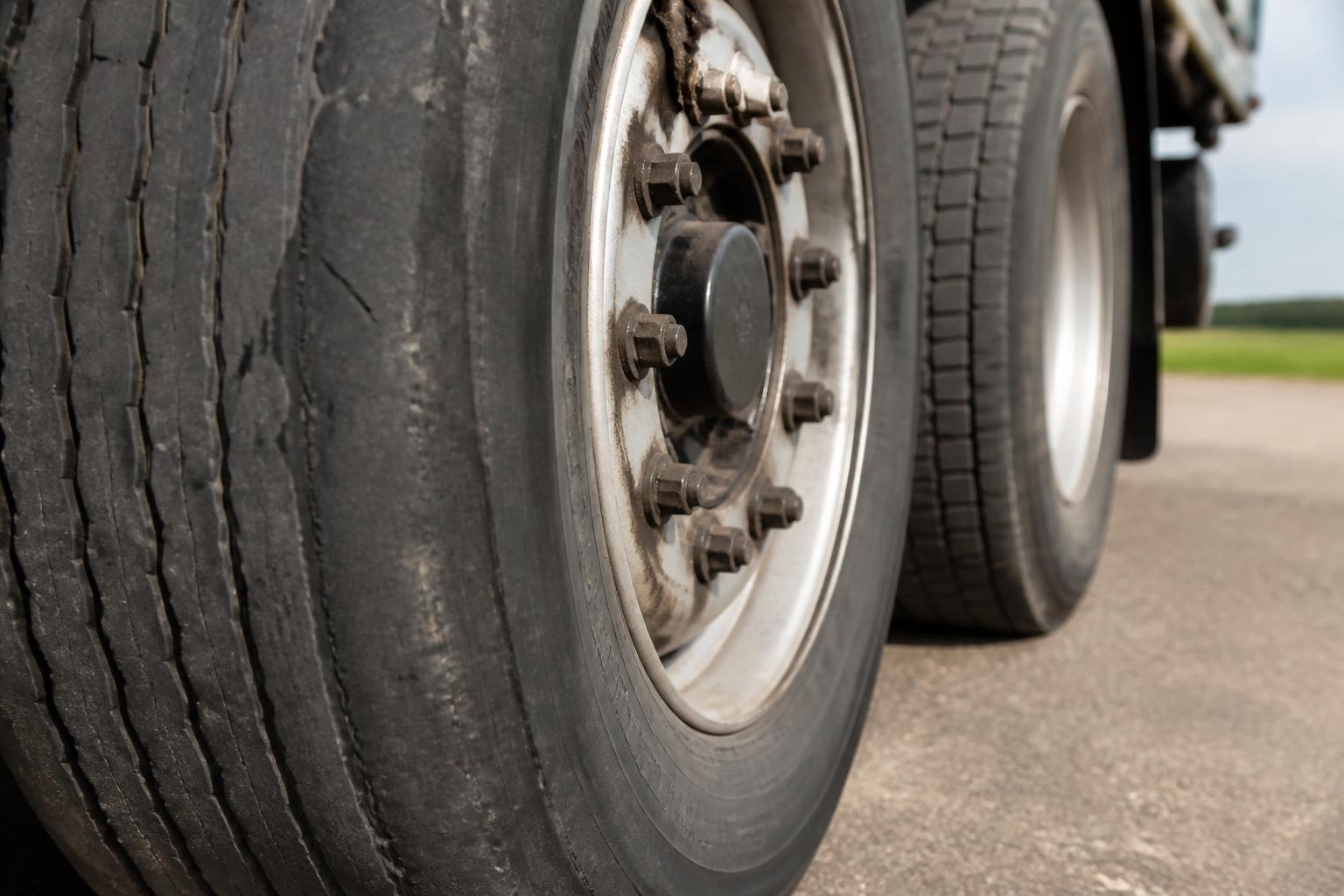
A trailer tyre problem rarely starts as a tyre-only problem. It starts as lost time, a missed slot, a loaded trailer standing in a lay-by, or a driver trying to work out whether the unit can move safely to a workshop. When people search for trailer tyre repair near me, they usually need a practical answer quickly, not a generic list of tyre terms.
At Woolpit Truck Repairs, we handle this the way operators need it handled. We ask the right triage questions, work out whether the issue is likely to be a repair or a replacement, and give a clear next step based on location, load, wheel position and visible damage. From Bridge Farm in Woolpit, near A14 J47, we support HGV and trailer operators moving through Suffolk and along the A14 corridor, including Ipswich, Felixstowe, Stowmarket, Bury St Edmunds, Newmarket and Elmswell.
What operators usually mean when they search for local trailer tyre help
Most operators do not start by thinking about tyre categories or repair standards. They start with a defect that risks downtime.
Sometimes it is obvious. A trailer has picked up a puncture, the pressure has dropped quickly, and the tyre is visibly flat. Sometimes it is less clear. A driver notices a slow pressure loss during checks, a shoulder wearing faster than expected, or damage to the tread after contact with debris, a kerb or a pothole. In other cases, the tyre itself is only part of the problem. A wheel may be damaged, a valve may be leaking, or a brake or hub issue may have caused heat that has affected the tyre and casing.
That is why a search for local trailer tyre help often covers several situations at once:
- A roadside puncture that has stopped the trailer moving safely
- A slow leak that keeps needing air
- A cut, bulge or exposed cords
- Uneven wear that suggests an alignment, suspension or axle issue
- A suspected run-flat, where the tyre has been driven underinflated
- Heat damage after a brake binding or hub defect
- A twin wheel issue where one tyre has failed and the paired tyre may also be compromised
On commercial trailers, tyre defects also have a direct compliance angle. If tread depth, condition, exposed ply, sidewall damage or inflation state put the vehicle outside legal or safe operating condition, the question is not just whether the trailer can complete the next job. It is whether it should move at all before inspection.
In the UK, the legal minimum tread depth for goods vehicles over 3.5 tonnes is 1mm across at least three quarters of the breadth of the tread, around the entire circumference. That is the legal floor, not a sensible maintenance target. In practice, most operators do not want to run a trailer tyre close to that point, especially on high-mileage route work or where a damaged casing could turn a manageable workshop job into a roadside failure.
A tyre issue can also be the first visible sign of a wider trailer defect. If a tyre has scrubbed out on one edge, we may be looking at worn suspension components, axle alignment problems, seized brake components or hub issues. If there is feathering, irregular wear or signs of overheating, the next step should not be to fit rubber and ignore the reason it failed.
What to check before you call for tyre support
Before you call, a few checks make the next step faster and safer.
First, confirm the exact location. On the roadside, that means road name, carriageway, nearest marker post, junction reference or a recognisable access point. Around the A14, saying only that you are near Bury St Edmunds or near Stowmarket is often not enough. If you are on a site, yard or customer premises, note any access restrictions, gate codes, booking procedures or space limits for service access.
Second, confirm whether the trailer is loaded, part-loaded or empty. Load condition affects whether the trailer can be moved safely, whether axle weights may be concentrated over the damaged wheel position, and whether a roadside attendance is more realistic than limping to a workshop. If the load is abnormal, temperature-sensitive, time-critical or difficult to tranship, say so at the start.
Third, identify the wheel position. Nearside rear, front axle offside outer, centre axle nearside, and so on. On tri-axle and multi-axle trailers, exact wheel position matters because it changes both the risk assessment and the likely cause.
Fourth, look at the tyre condition without putting anyone in danger. We need to know whether the issue is:
- Fully flat or partially deflated
- Losing pressure slowly or suddenly
- Damaged in the tread area
- Damaged in the sidewall
- Showing a bulge, split or exposed cords
- Worn unevenly
- Showing signs of having been run underinflated
If you can see obvious wheel rim damage, a cracked valve, missing valve cap, signs of impact, or rubber debris around the wheel area, mention that too.
Fifth, decide whether the trailer can move safely at all. If the tyre is flat and the trailer has been run on it, if the sidewall is damaged, if cords are visible, or if there is any doubt about wheel security, brake drag or hub temperature, stop there and ask for advice rather than trying to nurse it in. A short move on a damaged commercial tyre can destroy a casing that might otherwise have been assessed properly, and it can also damage the wheel.
Drivers should also be alert to related defects. If there has been an ABS or EBS warning, a hot hub, a burning smell, poor brake release, or signs of one wheel running much hotter than the others, tell us that at the start. A tyre that has failed because a brake has bound up needs a different response from a clean puncture in the tread area.
If you want to reduce repeat roadside issues, regular trailer inspection support for commercial fleets helps catch wear, brake issues and tyre condition before they become a roadside stop.
Can a trailer tyre be repaired or does it need replacing?
This is usually the first question after safety, and the honest answer is that it depends on what the inspection shows.
Commercial trailer tyre repairability is judged on more than whether there is a hole in the tyre. We look at the position of the damage, the condition of the casing, whether the tyre has been run flat, current tread depth, the age and overall state of the tyre, and whether the wheel or valve has also been affected.
A repair is most likely to be considered where the damage is a straightforward puncture in the repairable tread area and the tyre has not been run underinflated long enough to damage the casing. The tyre must be removed and inspected internally before a proper decision is made. External appearance alone is not enough.
A replacement is usually the safer and more realistic outcome where we find:
- Sidewall cuts, bulges or splits
- Exposed cords or ply
- Shoulder damage outside the repairable area
- Signs of run-flat damage
- Heat damage
- Internal casing breakdown
- Severe irregular wear
- Tread depth already near replacement point
- Bead damage
- Wheel or rim damage that has affected seating
- Valve failure combined with tyre damage
Run-flat damage is one of the biggest issues on trailer tyres. If a tyre has been driven while significantly underinflated, the sidewalls flex excessively and the internal structure can be compromised even if the outside does not look catastrophic at first glance. In that case, patching the puncture is not a proper fix.
Wheel and valve condition matter as well. A leaking valve, damaged extension, corroded wheel seat or distorted rim can mimic a tyre puncture or turn a simple pressure-loss job into a replacement. If the wheel itself is bent or cracked, the tyre decision is only part of the job.
Tread depth also affects the call. A technically repairable puncture in a tyre that is already close to the end of its useful life may not be worth repairing on a working trailer. Operators usually need the option that reduces repeat downtime, not the option that keeps one worn tyre in service for a little longer.
Where the defect points to a wider issue, we will say so plainly. If the tyre has worn because of alignment, suspension, brake or hub problems, replacing the tyre without addressing the cause is false economy. Our commercial tyre replacement and assessment service is built around that workshop view, not a tyre-only view.
How local workshop and roadside support should work
Good support starts with the first call. We need enough detail to help you make a safe decision quickly.
The useful information is straightforward:
- Exact location
- Trailer type
- Loaded or empty
- Wheel position
- What the driver can see
- Whether the tyre is holding any pressure
- Whether the trailer has moved on the damaged tyre
- Any ABS or EBS warnings
- Any signs of brake drag, heat or hub trouble
- Whether you need roadside attendance, workshop inspection, or advice on whether to move
From there, the next step should be realistic. Sometimes that means arranging attendance where the trailer stands. Sometimes it means bringing the trailer into the workshop if it can be moved safely. Sometimes it means stopping movement until a wider defect is checked.
At Woolpit Truck Repairs, we do not treat every tyre call as just a tyre sale. If the description suggests the defect may involve brakes, wheel end components or trailer running gear, we say that early. That matters because a tyre destroyed by a seized caliper, hub issue or suspension fault will not be solved by replacing the tyre alone.
Once the trailer is in the workshop, the inspection should be methodical. We check the damaged tyre and wheel assembly, but we also look at the surrounding condition. Depending on the defect, that can include:
- Tyre removal and internal casing inspection
- Valve and wheel condition
- Adjacent tyre condition on the same axle
- Brake condition and signs of overheating
- Hub play or heat damage
- Wheel bearing concerns
- Suspension wear
- Axle tracking or scrub indications
- ABS and EBS faults if warning systems or wheel speed issues are involved
This matters especially with repeated tyre failures, uneven wear, or a tyre that has failed after a reported brake issue. A trailer with an EBS fault, intermittent ABS issue or dragging brake can quickly turn one damaged tyre into a pattern of avoidable downtime.
If your trailer has had other recent defects, or if the tyre issue has exposed wider condition concerns, it is often worth combining the job with trailer repair work that avoids losing another day. That is usually the more commercial decision than dealing with each fault separately as it surfaces.
For UK operators, the practical standard is simple. The trailer must return to service in a roadworthy condition, and any tyre repair must be suitable for the tyre type and damage found. If there is any doubt over casing integrity, sidewall condition or related wheel end defects, replacement is the correct route.
Choosing trailer tyre support around Woolpit and the A14
If you are running trailers through Suffolk, local support only helps if it actually understands HGV and trailer work.
That means looking for a provider that deals with commercial vehicles every day, understands trailer axle and wheel-end issues, and can give honest triage rather than guessing from a distance. It also means practical access. For route-based operators, workshop location matters when every diversion costs time.
We are based at Bridge Farm in Woolpit, close to A14 J47, which makes us a practical option for operators moving along the A14 or working across Ipswich, Felixstowe, Stowmarket, Bury St Edmunds, Newmarket and Elmswell. That location helps, but the more important point is the type of work we do. Woolpit Truck Repairs is focused on HGV and trailers, so tyre defects are assessed in the context they actually happen in, loaded trailers, wheel-end heat, brake faults, suspension wear, MOT preparation, and route pressure.
That matters for fleets, owner-drivers and trailer operators alike.
If you run a fleet, you need consistent defect reporting and a clear record of what was found, what was changed and what still needs attention. If you are an owner-driver, you need a direct answer on whether the trailer can move, whether the tyre is likely to be repairable, and whether a bigger defect is sitting behind it. If you are passing through from Felixstowe or heading toward Newmarket, you need the nearest sensible next step, not a vague promise.
When comparing options, look for four things.
First, HGV-and-trailer focus. A commercial trailer tyre issue is not the same as a car tyre puncture. Wheel positions, load, braking systems and casing condition all matter.
Second, realistic triage. The provider should ask where you are, what the trailer is carrying, which wheel is affected, whether it has been run flat, and whether there are any related warnings or signs of heat.
Third, workshop capability beyond the tyre itself. If the real cause is brake drag, hub trouble, axle scrub or an ABS or EBS issue, you need somewhere that can inspect and repair the wider defect.
Fourth, route access. If your work takes you along the A14, near A14 J47 is a useful place to know when downtime starts costing you.
If you want a broader view of what to look for in a local workshop, our guide on choosing an HGV and trailer workshop near the A14 sets out the practical points that matter.
Woolpit Truck Repairs is part of FLEETA LIMITED, and our approach is straightforward. We explain the defect clearly, tell you whether the trailer looks safe to move, inspect properly before calling a repairable tyre a repair, and flag the wider issues if the tyre damage points to more than a puncture. That is what cuts roadside downtime in the real world, quick decisions, proper inspection, and no guessing about the next step.
Can a trailer tyre be repaired at the roadside?
Sometimes, but only if the damage is suitable for repair and the tyre has not suffered casing or sidewall damage. Many faults still require replacement or a fuller workshop inspection.
When should a trailer stay parked after a tyre problem?
Keep it parked if there is sidewall damage, rapid air loss, exposed cords, wheel damage, signs of overheating, or any doubt about whether the trailer can move safely under load.
What information should I have ready when I call?
Have the trailer location, tyre size if known, wheel position, nature of the fault, whether it is loaded, and whether the trailer is safely accessible for inspection or recovery support.
Can a tyre issue point to another trailer defect?
Yes. Uneven wear or repeat failures can point to brake drag, axle or suspension issues, wheel-end problems, inflation faults, or defects that need wider inspection.
Do local operators near Woolpit need workshop support as well as tyre help?
Often yes. A tyre failure may be the visible symptom, but the trailer may also need checks linked to hubs, brakes, ABS, EBS or MOT preparation before it returns to service.