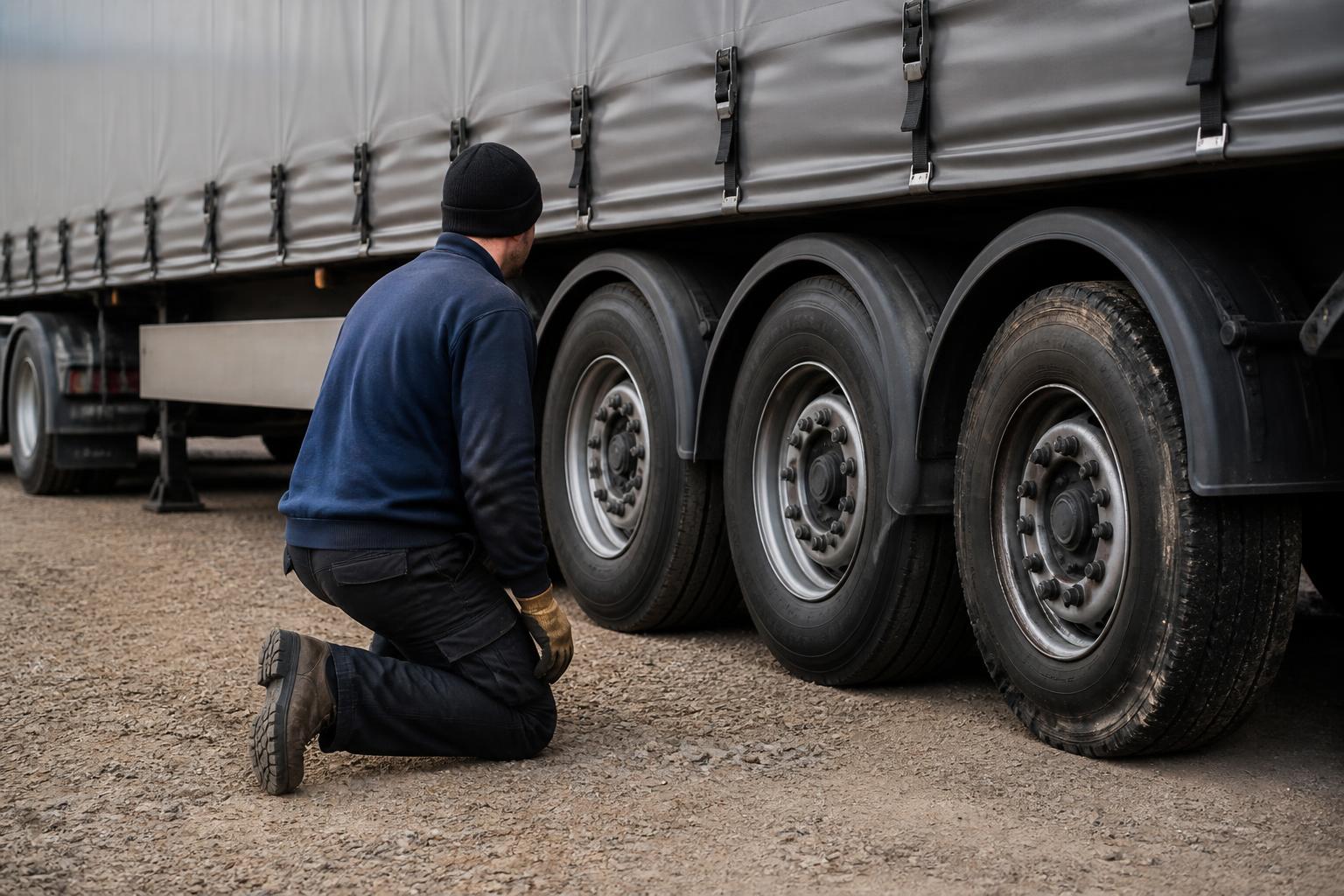
A trailer tyre usually needs changing before it actually fails. By the time a tyre lets go on the A14, the operator has often had warning signs for days or weeks, uneven wear, low pressure, a cut that has reached the casing, or heat damage from a separate fault. The expensive part is rarely just the tyre. It is the missed slot, the roadside delay, the damaged mudwing, the brake or hub problem found afterwards, and the trailer that cannot move until someone has made it safe.
For operators looking for trailer tyre replacement in Suffolk, the practical question is not just “can I get one more run out of it?” but “is this tyre still safe and legal to run, and if not, what else needs checking before the trailer goes back to work?” That is where a workshop used to HGV and trailer defects matters. Woolpit Truck Repairs, at Bridge Farm near A14 J47 in Woolpit, deals with working trailers that need a clear next step, not guesswork.
How to tell when a trailer tyre is no longer safe to run
Some tyre defects are immediate stop defects. Others are warning signs that the tyre is near the end and should be changed before it causes downtime. On a commercial trailer, you need to look at both legality and condition.
Start with tread depth. In the UK, heavy vehicle tyres must meet the legal minimum tread requirements that apply to the vehicle class and tyre position. If a trailer tyre is down near the limit, it should not be left to “just get through the week”. Trailer tyres wear differently from drive axle tyres, and once they get low they are more vulnerable to damage, especially in yard work, tight turns and kerbing. If wear is not even across the tread, the reason matters as much as the remaining depth.
Cuts are another common point where a tyre moves from serviceable to unsafe. A superficial cut in the tread rubber is one thing. A cut deep enough to reach the casing, or any cut where cords are visible, is different. Exposed cords mean the structure of the tyre is compromised. That tyre needs replacement, and the trailer should not be treated as roadworthy until it has been dealt with.
Bulges in the sidewall or tread area are a serious warning sign. A bulge usually means internal structural failure, often from impact damage, running underinflated, or casing separation. A bulged trailer tyre can fail without much further warning. If you find one during a walkaround or while loading, do not move the trailer until the tyre has been assessed and replaced.
Sidewall damage needs proper judgement. Trailer sidewalls take abuse from kerbs, yard edges, potholes and scrub during reversing. Scuffing alone does not always mean replacement, but splits, chunking, deep abrasions, cracking that has progressed into the structure, or any sign the sidewall has weakened mean the tyre is no longer fit to run. Sidewall damage is especially important on trailers because they can look acceptable from one angle and be close to failure from another.
Uneven wear tells you more than just “this tyre is worn”. Wear on both shoulders can point to underinflation. Wear in the centre can suggest overinflation. Feathering or rapid wear on one edge can indicate axle alignment issues, worn suspension components, or a bent axle. Flat-spotted areas can come from wheel lock, brake imbalance, or a trailer that has been dragged with a seized brake. If you replace the tyre and ignore the cause, the next one may not last long either.
Pressure-related damage is often missed until the tyre is already beyond saving. A trailer tyre run too soft builds heat. Heat damages the casing, weakens the structure and can lead to separation or blowout. You may see shoulder wear, heat cracking, a wrinkled sidewall, or signs the tyre has been run partially deflated. A tyre that has been badly run-flat should not simply be reinflated and sent back out.
Any tyre with obvious impact damage, exposed cords, a bulge, severe sidewall defect, or damage associated with heat should be treated as an immediate replacement case. If there is any doubt, a proper commercial workshop inspection is the sensible route. If you need someone to assess and carry out commercial trailer tyre replacement support, it is worth having the trailer looked at as a whole rather than treating the tyre as an isolated part.
What usually causes trailer tyre failure on working trailers
Most trailer tyre failures are not random. They are symptoms of a defect, an operating pattern, or a maintenance gap.
Underinflation is one of the biggest causes. Trailer tyres lose pressure gradually, and unless pressures are being checked properly, a tyre can spend days running below its correct operating pressure. That creates heat, accelerates shoulder wear and weakens the casing. On a busy fleet, the problem is often not one dramatic puncture but repeated small pressure losses that nobody catches early enough.
Overload is another straightforward cause. Even if the gross trailer weight is legal, poor load distribution can overload one axle or one side. That puts extra stress into the tyres and can create heat and abnormal wear. Operators moving mixed loads, plant, pallets or uneven freight need to think about axle loading, not just total weight.
Brake drag is a common hidden cause of tyre damage. A binding brake generates heat in the drum, disc, hub and wheel area. That heat transfers into the tyre. If one wheel end is running hotter than the others, the tyre on that position may show premature wear, rubber degradation or outright failure. If a tyre has failed and there are signs of heat, the brake assembly needs checking, not just the rubber changing.
Axle alignment problems also show up in the tyres first. A trailer axle that is out of line, even slightly, can scrub tyres badly. You may see one-sided wear, feathering, or rapid wear across several tyres on the same trailer. Alignment issues can come from impact damage, worn bushes, previous repairs, or suspension movement. Tight yard manoeuvring causes normal scrub on some trailer types, but abnormal wear patterns should not be dismissed as “just trailer tyres”.
Suspension wear is closely linked. Worn bushes, damaged hangers, weak components or movement where there should be none can alter how the axle tracks and how the tyre meets the road. Again, changing the tyre without addressing the root cause is just delaying the next failure.
Long periods standing are another major factor on commercial trailers, especially spare trailers, seasonal equipment, or units parked waiting for work. A trailer standing for weeks or months can develop flat spots, weather cracking, moisture-related wheel issues and tyres that look acceptable until they are put back into service under load. Standing also increases the chance that a slow puncture goes unnoticed until the tyre is already damaged.
Then there is simple age and use pattern. Trailer tyres may age out before they wear out. A tyre that has spent years exposed to weather, UV, standing loads and repeated kerbing can become a reliability risk even if the tread still looks usable. That is why routine trailer inspections matter. A workshop carrying out HGV and trailer safety inspections should be looking for the causes behind tyre wear, not just ticking off tread depth.
What to do if a tyre issue is found on the road in Suffolk
If a tyre defect is found on the road, the first decision is whether the trailer can be moved at all. That depends on the nature of the defect.
Do not move the trailer if the tyre has exposed cords, a sidewall bulge, major sidewall split, significant run-flat damage, a tread separation, or damage that makes the tyre visibly unstable. The same applies if the wheel or hub area shows signs of serious overheating, if part of the tyre has broken away, or if the trailer is leaning because a tyre has failed under load. Moving it can turn a tyre job into wheel end, brake, mudguard or body damage.
If you are near Woolpit, Elmswell, Stowmarket, Ipswich, Felixstowe, Bury St Edmunds or Newmarket, or stopped on or near the A14, get the trailer into the safest possible position without continuing to run on a damaged tyre. If you are already in a lay-by, services area, yard or safe hardstanding, stay there. If you are on the live carriageway or in an unsafe location, follow breakdown and highway safety procedure first.
Once safe, inspect without putting yourself at risk. Confirm which axle and wheel position is affected. Check whether the tyre is simply punctured, visibly shredded, flat from valve failure, or damaged by another mechanical issue. Look for obvious heat at the hub, smell from brakes, loose debris, or signs that the mudwing or airline area has also been affected.
If the tyre has gone because of a puncture but the casing and wheel end appear otherwise normal, the next step may be straightforward replacement. If there are signs of brake drag, bearing trouble, wheel damage or suspension issues, the job is no longer just a tyre call. The trailer may need a workshop repair or recovery decision instead.
This matters on route work in Suffolk because operators are often trying to decide whether to limp to a yard, get a roadside tyre, or arrange a full repair. The wrong decision can waste hours. A practical workshop will usually want clear defect information, your location, trailer type, axle position, and whether the trailer is loaded. That helps decide whether a callout, workshop attendance or recovery enquiry is the right route. Woolpit Truck Repairs handles commercial vehicle callout enquiries and practical roadside next steps for operators around Woolpit and the A14 corridor.
If the trailer is close to Bridge Farm at A14 J47, it may make sense to have it brought in for a fuller check, especially if the failed tyre may be the result of a brake, hub or suspension defect. If the trailer is farther out toward Felixstowe or Ipswich and time-critical, the key is to avoid moving it on a tyre that is no longer structurally safe.
What a proper trailer tyre replacement should include
A proper trailer tyre replacement is not just removing one casing and fitting another. On a working trailer, the wheel position needs checking so the new tyre is not immediately put at risk.
First, the wheel itself should be inspected. Look for cracks, distortion, corrosion around the bead seat, damage from impact, and elongated stud holes if there has been previous wheel movement. A tyre fitted to a damaged wheel is asking for repeat trouble.
The valve should also be checked and replaced if needed. Valve leaks are a common cause of gradual pressure loss. On commercial work, there is little point fitting a sound tyre and leaving a suspect valve in place.
The mating tyre on the same axle line should be assessed too. If one tyre has failed through wear, underinflation or age, the opposite side may not be far behind. Even where immediate replacement of only one tyre is acceptable, the workshop should tell the operator honestly what condition the paired tyre is in.
The hub area matters. If there are signs of grease leakage, bearing movement, abnormal heat, discolouration, or contamination around the wheel end, those need attention. Heat marks on the wheel, drum or hub can point to dragging brakes or bearing issues. If the failed tyre has been run hot, the brake components should not be assumed sound without inspection.
Brake heat signs are especially important. Blueing, burnt smell, excessive dust on one wheel end, or a wheel too hot compared with the others all suggest the tyre failure may be secondary to a brake defect. In that case, the trailer may need wider work, not just a replacement casing. This is where a workshop used to truck and trailer defect repairs can save repeat downtime.
ABS and EBS also deserve separate thought. A tyre change does not in itself fix an ABS or EBS fault. But if a wheel speed sensor has been heat-affected, wiring damaged, or warning lights were already present, those faults need diagnosing in their own right. Equally, a locking wheel or repeated flat spotting may be linked to brake control issues that need further inspection. The right approach is to separate the tyre replacement from any electronic braking fault, while still checking whether they are connected.
On UK trailers, legal roadworthiness standards apply regardless of whether the trailer has just had a tyre fitted. If there is a wider defect, the job is not complete just because the wheel now holds air.
How operators can reduce repeat tyre failures and avoid extra downtime
Most repeat tyre failures can be reduced with basic discipline and early workshop input.
Start with walkaround checks. Drivers should be looking at tread condition, obvious cuts, sidewall damage, bulges, foreign objects, and whether one tyre appears lower than the rest. A quick visual check catches a lot. It is not a substitute for measured pressure checks, but it stops obvious defects from being missed until they become roadside jobs.
Pressure management needs to be routine, not occasional. Trailer pressures should be checked to the correct specification for the tyre and application, with any repeated losses investigated. A tyre that needs topping up regularly has a defect somewhere, puncture, valve, wheel sealing issue, or casing damage.
Defect reporting has to be clear enough that the workshop can act on it. “Tyre low” is less useful than “NS rear trailer tyre visibly low, outer shoulder worn, slight sidewall cut”. Fleets that give drivers a simple way to report tyre position and defect type usually get quicker, more accurate repairs.
Scheduled inspections matter because trailers often hide tyre-related causes that only show up on a proper check. Alignment concerns, worn suspension parts, brake imbalance and wheel end heat signs are easier to deal with in the workshop than on the roadside. This is particularly true for trailers doing mixed work between local Suffolk routes and trunking via the A14 to Ipswich or Felixstowe.
Owner-drivers and smaller fleets can also save time by asking for workshop advice before a marginal tyre becomes a failed one. If a tyre is wearing oddly, if one wheel end has been running hot, or if a trailer has been standing and is about to go back into service, get it looked at. A planned stop is usually cheaper than an unplanned one.
That practical approach is what many operators want from Woolpit Truck Repairs and FLEETA LIMITED. The point is not to sell work that is not needed. It is to identify whether the tyre itself is the problem, or whether the tyre is warning you about something else on the trailer. For fleets and owner-drivers running HGV trailers through Woolpit, Stowmarket, Bury St Edmunds, Newmarket, Ipswich and Felixstowe, that kind of triage can be the difference between a simple tyre job and a full day lost.
If you are weighing up trailer tyre replacement in Suffolk, the sensible time to act is when the tyre first shows it is no longer right, not when it finally gives up on the road.
What is the legal minimum tread depth for a trailer tyre in the UK?
For most HGV and trailer tyres, the legal minimum is 1mm across at least three-quarters of the tread breadth, around the full circumference. Damage can still make a tyre unroadworthy before it reaches that limit.
Can I keep running if only one trailer tyre looks worn?
Not safely by default. One worn tyre can point to inflation, alignment, brake or suspension issues. Replacing only the failed tyre without checking the cause can lead to another roadside problem soon after.
Should both tyres on the same axle end be changed together?
Not always, but it is often worth checking both carefully. If the paired tyre shows similar wear, age or damage, changing both may reduce the risk of another stop and further downtime.
Can a bulge or exposed cords be repaired?
No. A bulge, exposed cords or serious sidewall damage means the tyre should be replaced, not repaired. Those defects indicate structural failure risk and should be treated as an immediate safety issue.
Do ABS or EBS warnings mean the tyre is the only problem?
No. A tyre failure can happen alongside other faults, but ABS or EBS warnings need their own diagnosis. A replacement tyre does not by itself resolve electrical, sensor or braking system defects.